
The 11th Round of India-Australia Comprehensive Economic Cooperation Agreement (Ind-Aus CECA) negotiations was held in New Delhi from 18-23 August 2025, further advancing the shared objective of strengthening bilateral trade and economic partnership.
Building on the progress achieved in earlier rounds and intersessional meetings, the negotiations covered a wide range of areas including Goods, Services and Mobility, Digital Trade, Rules of Origin, Legal and Institutional Provisions, Environment, Labour, and Gender, bringing greater understanding for convergence in the remaining provisions.
Both sides reaffirmed their commitment to advancing the India-Australia CECA and ensuring that it delivers meaningful benefits, economic opportunities, and a balanced outcome for both sides. To maintain momentum and achieve convergence both partners will continue the negotiations in virtual intersessions.
Looking ahead, with shared ambition and mutual understanding to work towards a future ready framework, India and Australia remain strongly aligned to the early conclusion of a mutually beneficial Comprehensive Economic Cooperation. As India steadily advances its footprint through multiple trade agreements, this round reflects a steadfast commitment to enhance economic partnerships anchored with national priorities and global aspirations.
Shri Amit Agrawal, Secretary, Department of Pharmaceuticals chaired the session yesterday on “Leveraging Inter-sectoral Networking for Med-Tech Innovations” as part of the two-day South East and South Asia regional meet on “Health Research and Innovations in Public Health: Exchange of Good Practices across RESEARCH Platform” organised by the Department of Health Research and the Indian Council of Medical Research (ICMR) at Sushma Swaraj Bhawan, New Delhi. The session brought together senior health functionaries from the governments and public health agencies from India, Nepal, Sri Lanka, Bhutan and Timor-Leste to deliberate on strengthening health research systems, facilitate exchange of good practices and promote cross-border collaboration in South and Southeast Asia. The meeting is part of the Regional Enabler for South and Southeast Asia Research for Health (RESEARCH) Platform, which aims to foster solidarity, knowledge-sharing and collaboration among participating countries.
Addressing the session, Shri Amit Agrawal, Secretary, Department of Pharmaceuticals underscored that “health knows no boundaries”. He observed that the COVID-19 pandemic has shown the critical need for collaboration, across borders, between sectors and among government departments and public health agencies, in creating resilient and strong healthcare systems.
Shri Agrawal emphasised the need to strengthen the medical device sector ecosystem not only through technology and skilled manpower, but also by establishing internationally accredited laboratories, adopting globally harmonised standards and supporting clinical investigations for innovative devices to achieve economies of scale but aggregating demand beyond national borders. With the ongoing development of medical device parks in India and ICMR’s MedTech Mitra and Patent Mitra initiatives, clinical trial support schemes and strengthened research platforms, India is systematically laying the foundation to emerge as a significant MedTech innovation hub.
The Secretary also highlighted the contributions of the National Institutes of Pharmaceutical Education and Research (NIPERs) in developing skilled human capital. Specialised courses in medical devices are now being offered across seven NIPERs, and these have been opened to foreign nationals as well.
Shri Agrawal stated that medical technologies will increasingly move beyond hospitals into households through digitalisation, thereby making healthcare more accessible and affordable. He also highlighted the importance of the Academia to Industry: Discovery Marketplace platform developed by the Department of Pharmaceuticals, which aims to enable connect industry, startups, academic and research institutes and other stakeholders in the pharma-MedTech sector for partnerships, collaborations and tie-ups for innovative products and promote breakthroughs for both commercial and public good.
Shri Agrawal summed up the session by stressing the importance of RESEARCH PLATFORM in making the South East and South Asian region a global powerhouse for MedTech innovations.


The Department of Health Research (DHR) and the Indian Council of Medical Research (ICMR) inaugurated a two-day regional meeting titled “Health Research and Innovations in Public Health: Exchange of Good Practices across RESEARCH Platform.” The event, held at the Sushma Swaraj Bhawan, brought together senior representatives from Nepal, Sri Lanka, Bhutan, and Timor-Leste to deliberate on strengthening health research systems, facilitate the exchange of good practices and promote cross-border collaboration in South and Southeast Asia. The meeting is part of the Regional Enabler for South and Southeast Asia Research for Health (RESEARCH) Platform, which aims to foster solidarity, knowledge-sharing, and collaboration among participating countries.

Delivering the plenary address, Dr. V.K. Paul, Member, NITI Aayog commended the participating countries for their significant progress in advancing the health and well-being of their citizens. “The progress we see across these countries is a testament to their commitment to health. There is tremendous scope for us to learn from each other, co-create research products, and translate science into action. By working together, we can accelerate progress towards achieving Sustainable Development Goals across the region,” said Dr. Paul.
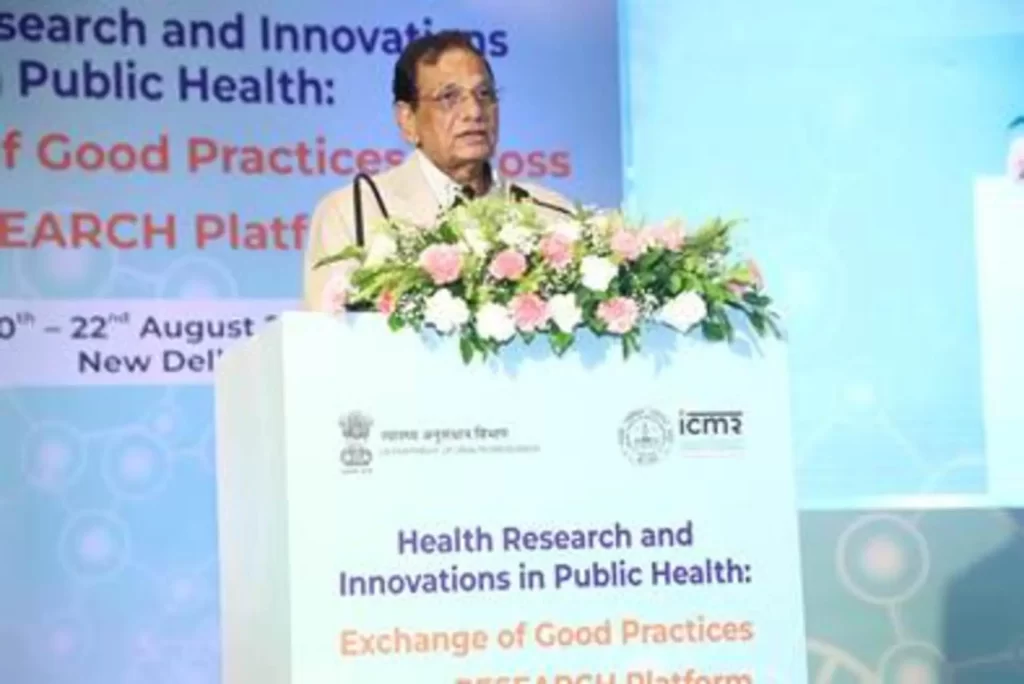
Dr. Rajiv Bahl, Secretary, Department of Health Research and DG, ICMR, stated, “The issues we face are common to all of us, and it is time for our region to move towards shaping its own narrative. Research is the way forward, and by learning from each other’s research ecosystems, we can build stronger systems, generate knowledge that reflects our realities, and translate it into better health for our people,” he said.
Representatives from Nepal, Sri Lanka, Bhutan, and Timor-Leste also delivered opening remarks, drawing attention to the health concerns that affect their populations and the region as a whole, such as anaemia, maternal and child health, tuberculosis, vector-borne diseases and non-communicable diseases. They emphasized the vital role of governments in ensuring public trust in science, highlighted the importance of sustained investments in capacity building alongside expanding infrastructure, and reiterated their commitment to regional solidarity in advancing health research and innovations.

On the occasion, Dr. Paul also launched an exhibition showcasing medical innovations supported by ICMR’s Medical Device and Diagnostics Mission Secretariat (MDMS). The exhibition highlights a range of innovative products and technologies developed by Indian innovators to address pressing public health challenges and modernize healthcare delivery in the country.

Over the next two days, the meeting will include deliberations on diverse aspects of health research systems, including governance structures, research financing, mechanisms for prioritizing research agendas, and approaches to ensuring transparency and ethics. Countries will also discuss strategies to foster medical technology innovations, translate research into policy and programmes, and strengthen collaboration across sectors and with international partners.
This first-of-its-kind gathering marks a significant milestone in fostering regional cooperation and knowledge-sharing in health research. By coming together under the RESEARCH Platform, the participating countries have signalled their intent to learn from one another, co-create solutions, and jointly harness the power of science and innovation to improve public health and accelerate progress towards universal health coverage.
Ayushman Bharat - Pradhan Mantri Jan Arogya Yojana (AB-PMJAY) is governed on a zero-tolerance policy towards fraud and abuse and various steps are taken for prevention, detection and deterrence of different kinds of irregularities that could occur in the scheme at different stages of its implementation. A robust anti-fraud mechanism has been put in place and National Anti-Fraud Unit (NAFU) has been established at National Health Authority (NHA) and works in close coordination with State Anti-Fraud Units (SAFU) to investigate and take joint action against issues related to fraud and abuse.
A total of 3,167 hospitals were found guilty of irregularities/violations since inception of the scheme, and suitable actions including de-empanelment of 1114 hospitals, levying penalty worth Rs. 122 crores on 1504 errant hospitals and suspension of 549 hospitals have been taken against fraudulent entities as reported by the States/UTs.
NHA provides all States and Union Territories with access to robust real time dashboard monitoring thereby enhancing transparency and accountability.
The Union Minister of State for Health and Family Welfare, Shri. Prataprao Jadhav stated this in a written reply in the Rajya Sabha today.
The Ministry of Health & Family Welfare through National Rabies Control Program (NRCP) is undertaking strengthening of surveillance of all animal bites in all States/UTs. Data on dog and other animal bite cases and related deaths are reported by all States/UTs, through Integrated Health Information Platform (IHIP).
Under the National Health Mission (NHM), States and UTs are supported through budgetary provisions for the implementation of the National Rabies Control Programme (NRCP). Funding includes capacity building of healthcare staff, procurement of rabies vaccines, printing of Information, Education, and Communication (IEC) materials on rabies and dog-bite prevention, data entry support, review meetings, monitoring and surveillance, and establishment of Model Anti-Rabies Clinics and wound-washing facilities.
Life-saving drugs such as Anti-Rabies Vaccine (ARV) and Anti-Rabies Serum (ARS)/Rabies Immunoglobulin (RIG) are provided free of cost in the public health facilities under National Free Drug Initiative of NHM. These drugs are also included in both the National and State Essential Drug Lists.
Also under Central Sector component, National Centre for Disease Control implements rabies control activities through awareness, lab strengthening, guidelines and training materials etc.
Further to strengthen involvement of veterinary sector under “National One Health Programme For Prevention and Control of Zoonosis” committees have been formed in all States and veterinary laboratories to strengthen diagnosis of animal Rabies.
To create awareness among public and healthcare professionals Dog bite protocols, IEC materials, and training videos on the management of animal bite/dog bite cases have been created and disseminated across the country.
The Union Minister of State for Health and Family Welfare, Shri. Prataprao Jadhav stated this in a written reply in the Rajya Sabha today.
In order to promote the use of Nano Fertilizers, including Nano Urea and Nano DAP, and to increase their adoption amongst all the farmers, the following steps have been taken:
i. Use of Nano Fertilizers, including Nano Urea and Nano DAP, are promoted through different activities such as awareness camps, webinars, field demonstrations, Kisan Sammelans and films in regional languages etc.
ii.Nano Fertilizers, including Nano Urea and Nano DAP, are made available at Pradhan Mantri Kisan Samridhi Kendras (PMKSKs) by concerned companies.
iii. Nano Fertilizers has been included under monthly supply plan issued by Department of Fertilizers regularly.
iv. ICAR through Indian Institute of Soil Science, Bhopal recently organized National Campaign on “Efficient and Balanced Use of Fertilizer (including Nano-fertilizers)”.
v.For ease in application and utilization of Nano fertilizers like Nano Urea through foliar application, initiatives such as innovative spraying options like 'Kisan Drones' and distribution of battery operated Sprayers at retail points are undertaken. For this purpose, pilot training and custom hiring spraying services through Village Level Entrepreneurs are actively promoted.
vi. DoF in collaboration with fertilizer companies has initiated a Maha Abhiyan for adoption of Nano DAP in all 15 agro-climatic zones of the country through consultations and field level demonstrations. Further, DoF in collaboration with fertilizer companies has also launched campaign for field level demonstrations and awareness programs of Nano Urea plus in 100 districts of the country.
Furthermore, State-wise sales data of Nano Urea and Nano DAP in the country, since inception upto 31.07.2025, is placed at Annexure.
Annexure
The State-wise Sales data for Nano Urea and Nano DAP
(In lakh Bottles of 500ml each)
| S.No | State Name | Nano Urea | Nano DAP |
| 1 | Uttar Pradesh | 136.390 | 30.56 |
| 2 | Maharashtra | 99.094 | 51.01 |
| 3 | Punjab | 94.331 | 9.84 |
| 4 | Gujarat | 86.653 | 14.41 |
| 5 | Rajasthan | 86.421 | 21.09 |
| 6 | Madhya Pradesh | 85.441 | 27.80 |
| 7 | West Bengal | 77.589 | 21.62 |
| 8 | Bihar | 70.068 | 8.81 |
| 9 | Karnataka | 60.255 | 25.61 |
| 10 | Haryana | 49.592 | 3.98 |
| 11 | Tamil Nadu | 36.192 | 7.50 |
| 12 | Uttarakhand | 33.890 | 17.19 |
| 13 | Assam | 33.210 | 2.67 |
| 14 | Odisha | 31.894 | 9.56 |
| 15 | Chhattisgarh | 25.114 | 5.97 |
| 16 | Telangana | 23.431 | 12.89 |
| 17 | Andhra Pradesh | 18.459 | 18.69 |
| 18 | Jharkhand | 12.968 | 1.30 |
| 19 | Jammu and kashmir | 9.454 | 0.92 |
| 20 | Himachal Pradesh | 6.391 | 0.34 |
| 21 | Kerala | 3.765 | 0.49 |
| 22 | Mizoram | 0.848 | 0.08 |
| 23 | Delhi | 0.708 | 0.02 |
| 24 | Manipur | 0.707 | 0.00 |
| 25 | Tripura | 0.212 | 0.00 |
| 26 | Puducherry | 0.110 | 0.10 |
| 27 | Meghalaya | 0.013 | 0.01 |
| 28 | Nagaland | 0.008 | 0.00 |
| 29 | Goa | 0.004 | 0.00 |
| 30 | Arunachal Pradesh | 0.003 | 0.00 |
| 31 | Andaman & Nicobar | 0.000 | 0.00 |
| 32 | Chandigarh | 0.000 | 0.00 |
| 33 | Dadra and Nagar Haveli | 0.000 | 0.00 |
| 34 | Daman and Diu | 0.000 | 0.00 |
| 35 | Lakshadweep | 0.000 | 0.00 |
| 36 | Sikkim | 0.000 | 0.00 |
| GRAND TOTAL | 1083.214 | 292.455 | |
This information was given by the Union Minister of State for Chemicals and Fertilizers Smt Anupriya Patel in Rajya Sabha in a written reply to a question today.
The key outcomes and the details regarding companies, incentive outlays and domestic capacity added since inception are as follows:
The Department of Pharmaceuticals is implementing the scheme for Promotion of Research and Innovation in Pharma MedTech Sector (PRIP), with financial outlay of ₹5,000 crore. Under this, seven Centres of Excellence (CoEs) have been set up, one at each of the seven National Institute of Pharmaceutical Education and Research, with total budgetary outlay to the tune of ₹700 crore, for creating research infrastructure and promoting R&D in identified areas. Till July 2025, CoEs have approved 106 research projects.
The Government is actively working to integrate India’s Ayush systems with the global health intervention framework. The establishment of Global Traditional Medicine Centre of World Health Organization (WHO) at Jamnagar serves as an international hub for research, innovation and policy dialogue on traditional medicine. Further, a Memorandum of Understanding has been signed with WHO in May 2025 for developing the International Classification of Health Interventions module to facilitate standardised global coding of AYUSH interventions. These platforms are meant to enhance international acceptance, improve clinical data comparability and support integration of Ayush into public health systems, with phased outcomes in the future.
This information was given by the Union Minister of State for Chemicals and Fertilizers Smt Anupriya Patel in Rajya Sabha in reply to a question today.
The National TB Elimination Programme (NTEP) is implemented under the aegis of the National Health Mission (NHM). To identify undiagnosed TB cases, reducing TB-related deaths and preventing new infections across the country, the NTEP has implemented a renewed approach which includes mapping of vulnerable population, screening with Chest X-ray, upfront Nucleic Acid Amplification Test (NAAT) for all presumptive TB cases, prompt & appropriate treatment initiation, differentiated TB care for managing high-risk TB cases and provide TB preventive treatment to household contacts and eligible vulnerable population.
Under NTEP free screening, diagnosis and treatment are provided to all TB patients in public health facilities and identified private healthcare facilities. TB services have been decentralized to the level of Ayushman Arogya Mandir (AAM).
Community engagement is ensured through the comprehensive primary care package of services provided by AAM. Intensive Information, Education and Communication (IEC) activities are conducted to educate the public and raise awareness about symptoms, TB prevention and the importance of timely treatment for TB. Jan Bhagidari activities are implemented with involvement of Schools, Panchayati Raj Institutions, Self Help Groups, Anganwadis, local Non-Government Organisations and Civil Society Organizations.
The Union Minister of State for Health and Family Welfare, Smt. Anupriya Patel stated this in a written reply in the Rajya Sabha today.
It is the constant endeavour of the Government to boost India’s exports including promoting of MSME participation in global trade though export incentives, trade promotion events, and digital platforms to streamline processes. A major thrust has been placed on expanding market access through Free Trade Agreements (FTAs). Notably, India signed the Comprehensive Economic and Trade Agreement (CETA) with the United Kingdom on 24th July 2025, marking a significant milestone in bilateral trade relations. Meanwhile, negotiations for the India-European Union Free Trade Agreement is ongoing with an aim to conclude by end of the year.
To strengthen domestic manufacturing and export capabilities, the Government has implemented Production Linked Incentive (PLI) schemes for 14 key sectors including Electronics, IT hardware, Pharmaceuticals, Bulk Drugs, High-Efficiency Solar PV Modules, Automobiles & Auto Components, White Goods, Telecom and Networking Products to enhance India's Manufacturing capabilities and Exports. These schemes have incentivized domestic manufacturing, leading to increased production, job creation, and a boost in exports. They have also attracted significant investments from both domestic and foreign players.
To enhance the efficiency of logistics and reduce associated costs across the country, the Government of India has launched landmark initiatives of National Logistics Policy (NLP) and PM Gati Shakti designed to streamline the movement of goods and people by addressing bottlenecks, improving coordination among various stakeholders, and leveraging technology for smarter logistics management. The PM Gati Shakti National Master Plan plays a pivotal role in the integrated development of multimodal infrastructure to ensures seamless connectivity, faster transportation, and optimized resource utilization for boosting economic productivity and exports. Complementing these efforts is the National Industrial Corridor Development Programme (NICDP), a transformative initiative aimed at establishing globally competitive manufacturing hubs with robust connectivity to domestic and international markets. These corridors are envisioned to catalyse industrial growth, attract investments, generate employment, and position India as a key player in global supply chains. Moreover, technology tools like Logistics Data Bank have improved transparency and efficiency. Together, these initiatives represent a strategic vision to modernize India’s logistics ecosystem and industrial base, fostering long-term economic growth and global competitiveness.
Grassroots initiatives such as Districts as Export Hubs (DEH) and E-Commerce Export Hubs (ECEHs) are enabling SMEs including start-ups to compete globally through reduced costs and simplified regulations.
The Government has taken measures to promote exports from the districts under the Districts as Export Hubs Initiative. It includes identification of the products and services with export potential in all the districts of the country in consultation with all stakeholders including the States/UTs. An institutional mechanism has been set up in all States/UTs by forming the State Export Promotion Committee (SEPC) and District Export Promotion Committee (DEPC) at the District level. Under the initiative, District Export Action Plans detailing the existing bottlenecks in the supply chain and identifying possible interventions to mitigate the existing gaps have been prepared for 590 districts and are being prepared for the rest of the districts.
The E-Commerce Export Hubs (ECEHs) initiative, aims to provide dedicated zones for facilitating cross-border e-commerce exports from India. The objective is to support SMEs, artisans, and small businesses by reducing the cost and time associated with logistics, streamlining regulatory processes, and simplifying re-imports for e-commerce returns or rejects. ECEHs shall provide integrated services at a single location, encompassing customs clearance, quality certification, packaging, and off-port warehousing. DGFT has issued Trade Notice No. 14/2025 dated 22.08.2024, inviting detailed proposals for these pilots. Five ECEH pilot projects have been proposed for implementation.
The initiatives taken by the Government have led to decline in dependency on imports and boosting exports in several sectors. For example, under the PLI Scheme for medical devices, 21 projects have started manufacturing of 54 unique medical devices, which include high end devices such as Linear Accelerator (LINAC), MRI, CT-Scan, Heart Valve, Stent, Dialyzer Machine, C-Arm, Cath Lab, Mammograph, MRI Coils, etc. Further, the PLI Scheme for Large Scale Electronics Manufacturing has significantly impacted Mobile manufacturing sector in India particularly in transforming India from a net importer to a net exporter of mobile phones. The export of mobile phones has increased from Rs. 1,500 cr in 2014-15 to more than Rs. 2 lakh cr in 2024-25. Bharat is now the second largest mobile manufacturing country in the world. In addition, the pharmaceuticals sector has witnessed cumulative sales of Rs.2.66 lakh crore which includes exports of Rs.1.70 lakh crore achieved in the first three years of the scheme. The scheme has contributed to India becoming a net exporter of bulk drugs (2280 cr.) from net importer (-1930 cr.) as was the case in FY 2021-22. It has also resulted in significant reduction in gap between the domestic manufacturing capacity and demand of critical drugs.
This information was given by the Minister of State for the Ministry of Commerce & Industry, Shri Jitin Prasada in a written reply in the Lok Sabha today.
The National Accreditation Board for Testing and Calibration Laboratories (NABL), a constituent board of the Quality Council of India (QCI), today launched its new Medical Application Portal designed for ISO 15189:2022 applicant laboratories. The online portal was unveiled during a virtual event titled “GOING LIVE”, marking a major step in NABL’s mission to enhance ease, efficiency, and transparency in the accreditation process.
The newly launched NABL Medical Application Portal has been reimagined to mirror the real-world operations of medical laboratories, offering a streamlined application process with improved user experience, reduced timelines, and greater accuracy. The portal introduces several enhancements including a restructured application flow, standardized templates, a comprehensive pre-registration checklist, an intuitive interface, and a multi-user access feature that enables laboratories to assign multiple users with distinct access rights. This is expected to accelerate data entry, enhance oversight, and ensure accountability throughout the accreditation lifecycle.
Chairperson, QCI, Shri Jaxay Shah said that with the new NABL Medical Application Portal, tasks that once took weeks or even months can now be completed within just two to three hours. He added that this marks one of the most significant disruptions in the quality ecosystem and that the same approach will now be extended to other sectors, embedding technology-driven efficiency, innovation, and responsiveness at the heart of India’s quality journey.
Chairperson, NABL, Dr. Sandip Shah said that the portal is a transformational step towards making the accreditation process more transparent and efficient. He added that with multi-user access and simplified features, NABL is enhancing ease of doing business for laboratories and reinforcing its commitment to India’s quality ecosystem.
The initiative is expected to benefit hundreds of medical laboratories across India, providing them with an intuitive, transparent, and efficient digital platform for accreditation under ISO 15189:2022. The launch event included a live demonstration of the portal, a walkthrough of its features, and an interactive Q&A session with participants from medical laboratories nationwide.