
PM GatiShakti National Master Plan (PMGS NMP) was launched in October 2021. Since the launch, substantial progress has been made, which includes development of the geospatial platform, integration of multiple georeferenced data, provision of planning tools/software for planning infrastructure projects (including socio-economic infrastructure), and capacity building. Mechanism of Network Planning Group(NPG) has been institutionalised, under which infrastructure projects are evaluated for integrated planning, multimodality, inter-modality, synchronization of efforts, whole of Government approach and Last-mile connectivity in and around the project catchment area. So far, 293 infrastructure projects amounting to Rs. 13.59 Lakh Crore have been evaluated through the NPG mechanism.
Under PM GatiShakti initiative, as on date, 57 Central Ministries/Departments including 8 Infrastructure, 22 Social and 27 Economic & other Ministries/Departments have been onboarded on PMGS NMP. 36 States/UTs have also been onboarded on PMGS NMP. About 1700 data layers, including 969 layers from States/UTs and 731 layers from Central Ministries/Departments, have been mapped and integrated on the PMGS NMP. Year wise progress made under PMGS is given in Annexure-A
The PM GatiShakti National Master Plan has no specific or separate fund allocation. However, Ministry of Finance, Department of Expenditure through Part- II of the "Scheme for Special Assistance to States for Capital Investment for 2022- 23" made a provision of ₹ 5000 crores for disbursement among the States for PMGS related infrastructure development.
36 new Ministries/Departments, in addition to initial 21, have been included in the PMGS-National Master Plan. As on date, total 57 Central Ministries/Departments have been onboarded on PMGS NMP. The details are given in Annexure-B
This information was given by the Minister of State for Ministry of Commerce & Industry, Shri Jitin Prasada, in a written reply in the Lok Sabha today.
*****
Abhishek Dayal/Abhijith Narayanan/Shabbir Azad
ANNEXURE-A
ANNEXURE REFERRED TO IN REPLY TO PART (a) OF THE LOK SABHA UNSTARRED QUESTION 2658 FOR ANSWER ON 01.08.2025.
Year 2021 - 2022
Year 2022 - 2023
Year 2023 - 2024
Year 2024 - 2025
Year 2025 - 2026
ANNEXURE-B
ANNEXURE REFERRED TO IN REPLY TO PARTS (c) & (d) OF THE LOK SABHA UNSTARRED QUESTION 2658 FOR ANSWER ON 01.08.2025.
List of Ministries onboarded on PMGS NMP
| INFRASTRUCTURE (8 Ministries/Departments) | ||
| Sr. No | Name of Ministry | Department |
| 1. | Ministry of Railway (MoR) | |
| 2. | Ministry of Road Transport and Highways (MoRTH) | |
| 3. | Ministry of Civil Aviation (MoCA) | |
| 4. | Ministry of Port, Shipping and Waterways (MoPSW) | |
| 5. | Ministry of Petroleum and Natural Gas (MoPNG) | |
| 6. | Ministry of Communication | Department of Telecommunication (DoT) |
| 7. | Ministry of Power (MoP) | |
| 8. | Ministry of New and Renewable Energy (MNRE) | |
| SOCIAL (22Ministries/Departments) | ||
| 1. | Ministry of AYUSH | |
| 2. | Ministry of Culture | |
| 3. | Ministry of Education | Department of Higher Education, |
| Department of School, Education & Literacy | ||
| 4. | Ministry of Health and Family Welfare | Department of Health & Family Welfares Facilities |
| Department of Health Research | ||
| 5. | Ministry of Jal Shakti | Department of Drinking Water & Sanitation |
| Department of Water Resources, River Development & Ganga Rejuvenation | ||
| 6. | Ministry of Labour and Employment | |
| 7. | Ministry of Housing and Urban Affairs (MoHUA) | |
| 8. | Ministry of Minority Affairs (MoMA) | |
| 9. | Ministry of Panchayati Raj (MoPR) | |
| 10. | Ministry of Rural Development (MoRD) | |
| 11. | Ministry of Skill Development and Entrepreneurship (MSDE) | |
| 12. | Ministry of Social Justice and Empowerment | Department of Social Justice |
| Department of Empowerment of Persons with Disabilities | ||
| 13. | Ministry of Sports and Youth Affairs (MoSYA) | Department of Sports |
| Department of Youth Affairs | ||
| 14. | Ministry of Tribal Affairs (MoTA) | |
| 15. | Ministry of Tourism | |
| 16. | Ministry of Women and Child Development (MoWCD) | |
| 17. | Ministry of Communication* *Ministry already counted in Infra ministries | Department of Post |
| ECONOMIC (20 Ministries/Departments) | ||
| 1. | Ministry of Commerce and Industries (MoCI) | Department for Promotion of Industry and Internal Trade (DPIIT) |
| Department of Commerce | ||
| 2. | Ministry of Agriculture and Farmers Welfare | |
| 3. | Ministry of Chemical and Fertilizers | Department of Fertilizers |
| Department of Chemical and Petrochemicals | ||
| Department of Pharmaceuticals | ||
| 4. | Ministry of Consumer Affairs and Public Distribution | Department of Food and Public Distribution |
| Department of Consumer Affairs | ||
| 5. | Ministry of Coal | |
| 6. | Ministry of Earth Science | |
| 7. | Ministry of Electronic and Information Technology (MEITY) | |
| 8. | Ministry of Fisheries, Animal Husbandry and Dairying | Department of Animal Husbandry, Dairying |
| Department of Fisheries | ||
| 9. | Ministry of Food Processing Industries | |
| 10. | Ministry of Heavy Industries | |
| 11. | Ministry of Mines | |
| 12. | Ministry of Steel | |
| 13. | Ministry of Textile | |
| 14. | Ministry of Micro, Small and Medium Enterprises (MSME) | |
| 15. | Ministry of Finance | Department of Revenue |
| OTHER (7 Ministries/Departments) | ||
| 1. | Ministry of Defence | |
| 2. | Ministry of Development of North Eastern Region | |
| 3. | Ministry of Co-operation | |
| 4. | Ministry of Environment, Forest and Climate Change | |
| 5. | Ministry of Home Affairs | |
| 6. | Ministry of Information Broadcasting | |
| 7. | Ministry of Personnel, Public Grievance & Pensions | Department of Personnel & Training |
The Ministry of Health and Family Welfare has informed that the Central Drugs Standard Control Organisation is not in receipt of information about such rumours. It has further informed that the drug Paracetamol is not banned in the country, although in the recent past various Fixed Dose Combinations, including such combinations of Paracetamol with other drugs, have been banned in the country, and the list of all such banned combinations is available on the website of the Central Drugs Standard Control Organisation (www.cdsco.gov.in ).
The National Pharmaceutical Pricing Authority (NPPA) under the Department of Pharmaceuticals fixes and monitors the prices of drugs, including OTC drugs, under the Drugs (Prices Control) Order, 2013 (“DPCO, 2013”), in the following manner:
The Ministry of Health and Family Welfare has informed that to ensure availability of essential drugs and reduce out-of-pocket expenditure of patients visiting the public health facilities, including government hospitals and rural primary health centres, Government has rolled out the Free Drugs Service Initiative under the National Health Mission. Under this, financial support is provided to States and Union territories for provision of free essential medicines in public health facilities based on the requirements posed by them in their Programme Implementation Plans within their overall resource envelope for the said Mission. Support under the said initiative is available for procurement of drugs and strengthening or setting up of robust systems of procurement, quality assurance, supply chain management and warehousing, prescription audit and grievance redressal, and for the dissemination of standard treatment guidelines and establishment of the information-technology enabled platform named Drugs and Vaccine Distribution Management System (DVDMS), which is used for monitoring the actual status of procurement and availability of essential medicines. To facilitate monitoring of supply chain management activity at the national level, a central dashboard has been developed. Some States have also implemented the roll-out of the DVDMS portal till Sub Health Centres for monitoring the status of procurement and availability of essential medicines.
The Ministry of Health and Family Welfare has recommended facility-wise Essential Medicines List to be made available at public healthcare facilities, including government hospitals and rural primary health centres. The recommended Essential Medicines List for Sub Health Centres, Primary Health Centres, Community Health Centres, Sub-District Hospitals and District Hospitals consist of 106, 172, 300, 318 and 381 drugs respectively, with flexibility to States to add more medicines.
To ensure uninterrupted supply chain of essential drugs in government hospitals and rural health facilities, the Medical Stores Organisation (MSO) / Government Medical Store Depots (GMSDs) has active rate contracts for 697 drug formulations. MSO has 1,152 registered indenters across India, including government hospitals and rural primary health centres, who may place demands for supply of drugs to MSO/GMSDs through MSO-DVDMS application software four times in a financial year.
This information was given by the Union Minister of State for Chemicals and Fertilizers Smt Anupriya Patel in Rajya Sabha in reply to a question today.
The E-Commerce Export Hubs (ECEHs) initiative, aims to provide dedicated zones for facilitating cross-border e-commerce exports from India. The objective is to support SMEs, artisans, and small businesses by reducing the cost and time associated with logistics, streamlining regulatory processes, and simplifying re-imports for e-commerce returns or 2 rejects. ECEHs shall provide integrated services at a single location, encompassing customs clearance, quality certification, packaging, and off-port warehousing.
DGFT has issued Trade Notice No. 14/2025 dated 22.08.2024, inviting detailed proposals for these pilots. Five ECEH pilot projects have been proposed for implementation.
The Government has undertaken several steps to streamline customs, logistics, and compliance procedures for small exporters, particularly in the context of e-commerce exports:
• Chapter 9 of the Foreign Trade Policy (FTP) 2023 provides for the promotion of crossborder trade in the digital economy.
• The Trade Connect ePlatform (https://trade.gov.in) has been launched to provide small exporters with access to international trade-related information. It integrates inputs from Indian Missions, Export Promotion Councils, and Commodity Boards. Outreach through Niryat Bandhu programmes and handbooks on e-commerce exports have also been undertaken.
• The CBIC, via Notification No. 23/2023-Customs dated 31.03.2023, enhanced the value limit for courier exports to ₹10 lakh. Export duty remissions such as Duty Drawback and RoDTEP have been extended to courier-mode exports from 12.09.2024.
• The Department of Posts, in coordination with CBIC, has established Dak Ghar Niryat Kendras (DNKs) to assist exporters with documentation, packaging, and regulatory compliance. A total of 1,013 DNKs have been notified. The International Tracked Packet Service covers 41 countries, with volume-based discounts to benefit small exporters.
• Further, the Reserve Bank of India has issued a draft circular proposing procedural relaxations for small-value exporters under the Export Data Processing and Monitoring System (EDPMS). The circular shall enable Authorised Dealer (AD) banks to close shipping bills up to ₹10 lakh based on quarterly declarations from exporters confirming realisation and value adjustments, thereby reducing compliance burden and streamlining reconciliation for small consignments.
Some of the proposed ECEHs are to be implemented directly by logistics service providers to ensure integrated delivery of warehousing, packaging, and regulatory facilitation. In addition, the Government has entered into Memoranda of Understanding (MoUs) and signed Letters of Intent (LoIs) with key stakeholders, including global e-commerce platforms and domestic logistics providers. These partnerships focus on building awareness, enhancing export readiness, and promoting cross-border e-commerce, particularly among MSMEs. Regional Authorities of DGFT have also conducted outreach and capacity-building programs in collaboration with these entities to support the onboarding of SME sellers and familiarise them with export procedures.
This information was given by the Minister of State for Ministry of Commerce & Industry, Shri Jitin Prasada, in a written reply in the Lok Sabha today.
Rashtriya Bal Swasthya Karyakram (RBSK) is a program to improve the overall quality of life of children and provide comprehensive care to all the children in the community. This program involves screening of children from birth to 18 years of age for four Ds- Defects at birth, Diseases, Deficiencies and Development delays, spanning 32 common health conditions for early detection and free treatment and management, including surgeries at tertiary level. Children diagnosed with identified health conditions are provided early intervention services and follow-up care at the district level.
According to the Sample Registration System (SRS) report by the Registrar General of India at national level, the Under-5 Mortality Rate (U5MR) in the rural areas has declined from 51 per 1,000 live births in 2014 to 34 per 1,000 live births in 2022.
The Union Minister of State for Health and Family Welfare, Smt. Anupriya Patel stated this in a written reply in the Rajya Sabha today.
As reported by States/UTs on AAM portal, a total of 1,78,154 Ayushman Arogya Mandirs (AAMs) have been operationalized in India across urban and rural areas.
Through Ayushman Arogya Mandir, comprehensive primary healthcare is provided by strengthening Sub Health Centres (SHCs) and Primary Health Centres (PHCs). These AAMs provide preventive, promotive, rehabilitative and curative care for an expanded range of services encompassing Communicable diseases, non-communicable diseases (NCDs), reproductive and child healthcare services and other health issues.
The home visits by primary healthcare teams for identification of risk factors followed by screening at AAMs ensures early detection of NCDs, followed by referral to PHCs and higher centres for management by specialist doctors.
The teleconsultation services, available at all operational AAMs across the country including rural areas, enables people to access the specialist services closer to their homes addressing concerns of physical accessibility, shortage of service providers and to facilitate continuum of care. Total teleconsultations conducted at AAM are 38.13 crore.
Beyond the management of illnesses, promotive and preventive health is an integral part of comprehensive primary health care. Wellness-related activities like Yoga, cycling, and meditation are conducted in AAMs. A total of 5.79 crore wellness sessions has been conducted at AAMs.
The Union Minister of State for Health and Family Welfare, Shri Prataprao Jadhav stated this in a written reply in the Rajya Sabha today.
The Government of India is encouraging the concept of balanced and judicious use of fertilizer. Soil Health and Fertility Scheme introduced in the year 2014 with objective to assist states in promoting Integrated Nutrient Management (INM) through judicious use of chemical fertilizers including secondary and micro nutrients in conjunction with organic manures & bio-fertilizers for improving soil health and its productivity. Soil Samples are processed following standard procedures and analyzed for various parameters viz, pH, electrical conductivity (EC), Organic Carbon, available Nitrogen, Phosphorous, Potassium, Sulphur and micronutrients (Zinc, Copper, Iron, Manganese & Boron). Soil Health Card provides information to farmers on soil nutrient status of their soil and recommendation on appropriate dosage of nutrients to be applied for improving soil health and its fertility. Under the scheme, 25.13 Cr. soil health cards have been issued to farmers. 93781 farmer's trainings, 6.80 lakh demonstrations, 7425 farmer's melas/campaigns on soil health card recommendations have been organized across the country.
The Government of India has notified alternative fertilizers namely, Organic Fertilisers, Bio-fertilisers, De-oiled cake, Organic Carbon Enhancer and Nano fertiliser in The Fertiliser Control Order, 1985 to encourage nutrient management.
Organic farming is promoted through Paramparagat Krishi Vikas Yojana (PKVY) in all the States/UTs except North Eastern States and Mission Organic Value Chain Development for North Eastern Region (MOVCDNER) for the North Eastern States. Under PKVY assistance of Rs. 31,500 per hectare in 3 years is provided for promotion of organic farming. Out of this, assistance of Rs. 15,000 per ha is provided to farmers through Direct Benefit Transfer for on- farm /off -farm organic inputs including organic compost. Under MOVCDNER, assistance of Rs. 46,500 per hectare in 3 years is provided for creation of Farmers Producer Organization, support to farmers for organic inputs etc. Out of this, assistance @ Rs. 32500 per hectare is provided to farmers for off -farm /on-farm organic inputs under the scheme including Rs. 15,000 as Direct Benefit Transfer to the farmers.
The Cabinet Committee on Economic Affairs (CCEA), on June 28, 2023, approved the "PM Programme for Restoration. Awareness Generation, Nourishment, and Amelioration of Mother Earth (PM PRANAM)”. The initiative aims to support the mass movement initiated by States and Union Territories (UTs) to preserve the health of Mother Earth through the promotion of sustainable and balanced fertilizer use, adoption of alternative fertilizers, promotion of organic farming, and implementation of resource conservation technologies.
All States/UTs are covered under the PM-PRANAM scheme. Under the PM-PRANAM scheme, there is a provision to provide incentives to States/UTs for reduction of consumption of chemical fertilizers (Urea, DAP. NPK, MOP) in a given financial year, compared to the average consumption over the previous three years, equivalent to 50% of the fertilizer subsidy saved.
This information was given by the Union Minister of State for Chemicals and Fertilizers Smt Anupriya Patel in Rajya Sabha in a written reply to a question today.
In order to prevent and control major Non-Communicable Diseases (NCDs), National Programme for Prevention and Control of Non-Communicable Disease (NP-NCD), erstwhile NPCDCS was launched by the Department of Health and Family Welfare with focus on strengthening infrastructure, human resource development, health promotion, early diagnosis, management and referral to an appropriate level of healthcare facilities.
The details of infrastructure set up at district and Community Health Centre levels under NP-NCD are as below:
| S. No. | Type of facility | Cumulative no. of facilities established | ||
| As on 31st March, 2023 | As on 31st March, 2024 | As on 31st March, 2025 | ||
| 1 | State NCD Cell | 36 | 36 | 36 |
| 2 | District NCD Division | 708 | 731 | 753 |
| 3 | District NCD Clinics | 724 | 753 | 770 |
| 4 | Cardiac Care Units (CCU) | 210 | 222 | 233 |
| 5 | District Day Care Centers | 326 | 356 | 364 |
| 6 | CHC NCD Clinics | 6110 | 6238 | 6410 |
As per National NCD Portal disease-wise data of screening, diagnosed and put on treatment till date for five common NCDs against the target population of 30 years and above is as under:
| Indicator | Hypertension | Diabetes | Oral Cancer | Breast Cancer | Cervical Cancer |
| Screening Conducted | 38,95,74,840 | 38,77,15,539 | 32,80,67,132 | 17,21,13,785 | 10,20,93,675 |
| Diagnosed | 5,13,47, 549 | 3,45,62,655 | 1,87, 939 | 41,386 | 90,291 |
| Under treatment | 4,74,89,354 | 2,83,74,805 | 1,76,866 | 61,742* | 97,085* |
* some cases were diagnosed at tertiary cancer centre which were not entered in the portal.
A population-based initiative for prevention, control and screening for common NCDs has been rolled out in the country under National Health Mission (NHM) as a part of Comprehensive Primary Health Care. Under the initiative, persons more than 30 years of age are targeted for their screening.
Prevention, control & screening services are being provided through trained frontline workers like Accredited Social Health Activist (ASHA) & Auxiliary Nurse and Midwife (ANM), and the referral support and continuity of care is ensured through Community Health Centres, District Hospitals and other tertiary care institutions. Training Modules on screening, management and awareness generation for NCDs have been developed for training of various categories of health staff viz. ASHAs, ANMs, Community Health Officers, Nurses and Medical Officers.
Under the “Strengthening of Tertiary Cancer Care Centres Facilities” scheme, financial assistance is provided as a one-time grant of up to ₹120 crore for State Cancer Institutes (SCIs) and up to ₹45 crore for Tertiary Cancer Care Centres (TCCCs), including the State share. As of now, 19 SCIs and 20 TCCCs have been approved across the country. These institutions serve as critical hubs for advanced cancer care, diagnosis, research, and capacity building and are equipped with specialized infrastructure and expert manpower. TCCCs and SCIs play a pivotal role in delivering high-quality care and strengthening the public health infrastructure.
Further, as per the announcement of Union Budget 2025-26, the government plans to set up Day Care Cancer Centres (DCCCs) in district hospitals in the next 3 years, out of which 200 centres are to be set up in Financial Year 2025-26.
The Union Minister of State for Health and Family Welfare, Shri Prataprao Jadhav stated this in a written reply in the Rajya Sabha today.
Under the Ayushman Bharat Digital Mission (ABDM), health data exchange between the intended stakeholders is allowed only after the patient’s consent. Also, prior to integrating with ABDM, digital health applications are validated in a sandbox environment and undergo security audits such as WASA (Web Application Security Audit) ensuring that they are secure, protect sensitive patient data, and comply with ABDM's Health Data Management Policy (HDM Policy), 2020.
The Health Information Exchange and Consent Manager (HIECM) gateway has been developed which enables interoperability of health records between different health providers by prescribing common data standards. The Unified Health Interface (UHI) is another gateway with standards-based protocol for services built under ABDM to enable interoperability of health services. Besides, aiming uniform standard-based system for creation and maintenance of electronic health records (EHR), Ministry of Health and Family Welfare released HER standards for India in December 2016 subsequent to earlier notified standards in September 2013. Further, to accelerate and promote the adoption of EHR standards in India, Centre of Excellence named as National Resource Centre for EHR standards (NRCeS) has also been established.
Various steps have been taken to ensure that the benefits of the mission reach every citizen. The ABHA portal [abha.abdm.gov.in] and the government PHR (personal health record) application (ABHA app) have been made multi-lingual and intuitive to use, to address the lack of digital literacy. The mission also provides for assisted and offline mode for creation of ABHA for areas with limited internet connectivity/hardware.
The Union Minister of State for Health and Family Welfare, Shri Prataprao Jadhav stated this in a written reply in the Rajya Sabha today.
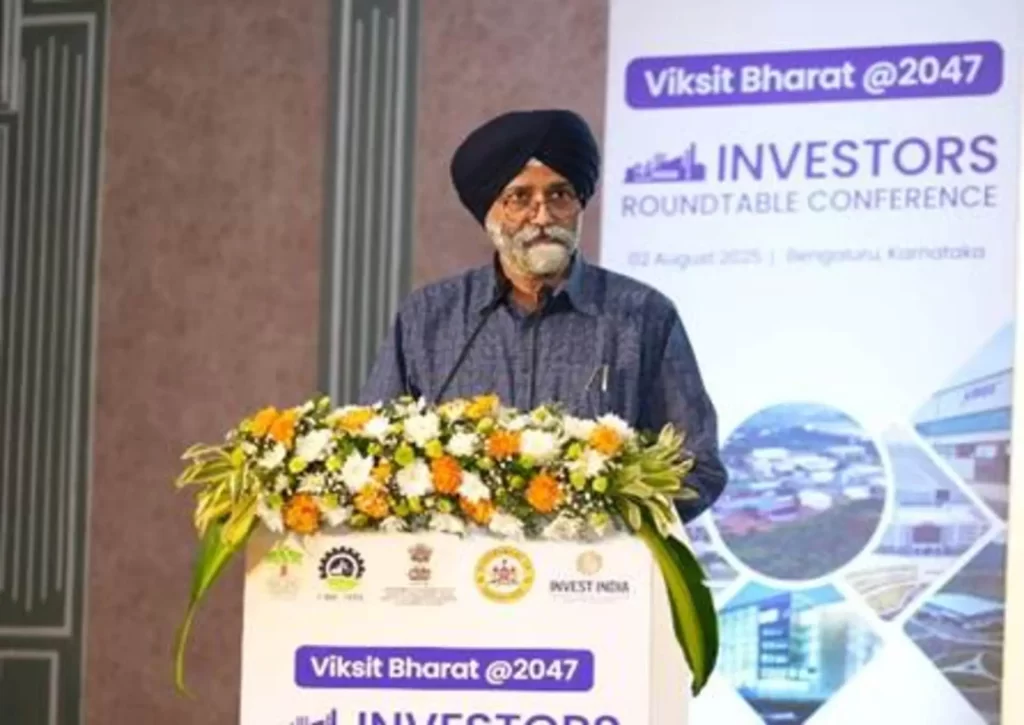
A high-level Investors Roundtable Conference was held in Bengaluru under the chairmanship of Secretary, Department for Promotion of Industry and Internal Trade (DPIIT), Shri Amardeep Singh Bhatia. The meeting was organised as part of efforts to realise the vision of Viksit Bharat @2047 and served as a platform to showcase the potential of southern industrial nodes under the National Industrial Corridor Development Programme (NICDP) and to strengthen Centre-State collaboration for industrial growth.
The roundtable served as a key platform to showcase the potential of southern industrial nodes under the National Industrial Corridor Development Programme (NICDP) and to strengthen Centre-State collaboration for industrial growth.
Senior DPIIT officials also shared updates on national initiatives including Start-Up India, Business Reforms Action Plan (BRAP), National Single Window System (NSWS), Logistics Ease Across Different States (LEADS), and Invest India, which are enabling reforms and strengthening investor confidence.
The roundtable featured discussions with key stakeholders including CII, FICCI, ASSOCHAM, Invest India, Peenya Industrial Association, and KASSIA. Industry leaders, MSMEs, and startups engaged in state-specific dialogue, explored opportunities, shared challenges, and discussed how NICDC’s smart industrial cities can serve as platforms for advanced manufacturing and innovation.
On the sidelines of the event, Secretary, DPIIT, Shri Amardeep Singh Bhatia held a high-level meeting with senior officials from southern States and Union Territories. The discussions focused on accelerating industrial node development, aligning state policies with national objectives, and addressing key implementation requirements to fast-track investments and infrastructure creation.
The DPIIT delegation also visited the K-tech MeitY Nasscom Centre of Excellence for IoT & AI to interact with startups and incubation leaders. The visit aimed to understand emerging innovations, challenges, and opportunities for policy support. Further visits are scheduled to the Tumakuru Industrial Area and Devanahalli Aerospace SEZ, including a walkthrough of Dynamatic Technologies, a leading aerospace components manufacturer, to gain insights into advanced manufacturing and India’s growing industrial capabilities.
In his address, Secretary, DPIIT, Shri Amardeep Singh Bhatia laid out the roadmap for world-class industrial infrastructure, innovation-led growth, and a thriving startup ecosystem. He highlighted the growth of DPIIT-recognised startups, support for MSMEs, and the role of deep-tech ventures in shaping future industries. He emphasised the need for strong Centre-State partnerships to accelerate industrialisation and attract global investments.

Presenting the vision of next-generation industrial cities, CEO & MD, NICDC, Shri Rajat Kumar Saini showcased NICDC’s greenfield industrial nodes, designed with advanced infrastructure, digital governance, and investment-ready ecosystems. Six strategic southern nodes—Tumakuru, Krishnapatnam, Kopparthy, Orvakal, Palakkad, and Zaheerabad—were highlighted as key drivers of growth for sectors such as electronics, automobiles, pharmaceuticals, clean-tech, food processing, and logistics.
The event witnessed participation from senior officials of Andhra Pradesh, Telangana, Karnataka, Kerala, Puducherry, and Andaman & Nicobar Islands, along with industry leaders, startup founders, and representatives of MSMEs. Prominent dignitaries included Special Chief Secretary, Telangana, Shri Sanjay Kumar; Principal Secretary, Karnataka, Dr. S. Selvakumar; Secretary, Andhra Pradesh, Dr. N. Yuvaraj; and CEO & MD, NICDC, Shri Rajat Kumar Saini.

About Tumakuru Industrial Area
The Tumakuru Industrial Area, a flagship node under the Chennai–Bengaluru Industrial Corridor (CBIC), spans 8,484 acres and is being developed in three phases. Phase A, covering 1,722 acres, is already underway. With excellent connectivity via NH-48, railways, and Bengaluru International Airport, Tumakuru is envisioned as a future-ready smart industrial city, driving the vision of ‘Make in India, Make for the World’.
Basel, 01 August 2025 - Roche (SIX: RO, ROG; OTCQX: RHHBY) announced today new, five-year efficacy, safety and durability data from the Phase III Portal study, a long-term extension of the Phase III Archway study, of Susvimo® (ranibizumab injection) for the treatment of people with nAMD.1 Results show that Susvimo’s immediate and predictable durability was sustained over five years, with approximately 95% of people receiving treatment every six months requiring no supplemental treatment before each refill. The data were presented at the American Society of Retina Specialists (ASRS) 2025 Annual Meeting in Long Beach, California, United States.
“These long-term results reinforce Susvimo’s ability to maintain vision and retinal drying over a long period of time for people with nAMD, the leading cause of vision loss in people over age 60,” said Levi Garraway, MD, PhD, Roche’s chief medical officer and head of Global Product Development. “These robust data reinforce our confidence in Susvimo's unique therapeutic approach, providing an effective alternative to regular eye injections while preserving vision in a sustained manner.”
“People with nAMD often experience suboptimal outcomes with real-world anti-VEGF treatment, largely due to the frequency of injections,” said study investigator John Kitchens, M.D., Retina Associates of Kentucky, who presented the data at ASRS. “Continuous delivery of treatment with Susvimo may preserve vision in patients with nAMD for longer in real-world clinical use than IVT injections.”
In the Portal study (n = 352), people originally treated with Susvimo in Archway continued to receive Susvimo refills every six months (Susvimo cohort; n = 220), while those originally treated with monthly intravitreal (IVT) ranibizumab injections in Archway received Susvimo and then refills every six months (IVT-Susvimo cohort; n = 132).
Five-year results showed consistent and sustained disease control and retinal drying in a population who entered Archway with vision at or near peak levels after receiving an average of five intravitreal injections per standard of care. In the Susvimo cohort, best-corrected visual acuity (BCVA) was 74.4 letters at baseline and 67.6 letters at 5 years. In the IVT-Susvimo cohort, BCVA was 76.3 letters at baseline and 68.6 at 5 years. Half of all patients had better than 20/40 vision at five years (Snellen visual acuity test). Average central subfield thickness (CST) remained stable, with a 1.0 (95% CI: -13.1, 11.1) µm reduction from baseline in the Susvimo cohort, and a 10.3 (95% CI: -25.7, 5.0) µm reduction in the IVT-Susvimo cohort.
The cohort of people who entered the Portal study from Archway is the largest cohort of people with nAMD to be followed prospectively and continuously for five years in a clinical study.1
Susvimo provides continuous delivery of a customised formulation of ranibizumab via the Port Delivery Platform, while other currently approved treatments may require eye injections as often as once per month. The Port Delivery Platform is a refillable eye implant surgically inserted into the eye during a one-time, outpatient procedure, which introduces medicine directly into the eye, addressing certain retinal conditions that can cause vision loss.
About the Archway study and its open-label extension study (Portal)1,2
Archway (NCT03677934) was a randomised, multicentre, open-label phase III study evaluating the efficacy and safety of Susvimo refilled every six months at fixed intervals, compared to monthly IVT ranibizumab 0.5 mg in 415 people living with nAMD. Patients were randomized 3:2 to Susvimo (n = 248) or IVT ranibizumab injections (n = 167). Patients enrolled in Archway were responders to prior treatment with anti-VEGF therapy. In both study arms, patients were treated with at least three anti-VEGF injections within the six months prior to their Archway screening visit, with an average of five anti-VEGF injections before randomization. The primary endpoint of the study was the change in BCVA score from baseline at the average of Week 36 and Week 40. Secondary endpoints include safety, overall change in vision (BCVA) from baseline and change from baseline in centre point thickness over time. Patients who completed the study at week 96 were eligible to enter the Portal open-label extension study. In Portal, people originally treated with Susvimo in Archway continued to receive Susvimo refills every six months (Susvimo cohort), while those originally treated with monthly intravitreal (IVT) ranibizumab injections in Archway received the Susvimo implant and then refills every six months (IVT-Susvimo cohort). Portal is ongoing.
About neovascular age-related macular degeneration
Age-related macular degeneration (AMD) is a condition that affects the part of the eye that provides sharp, central vision needed for activities like reading.3 Neovascular or ‘wet’ AMD (nAMD) is an advanced form of the disease that can cause rapid and severe vision loss if left untreated.4,5 It develops when new and abnormal blood vessels grow uncontrolled under the macula, causing swelling, bleeding and/or fibrosis.5 Worldwide, around 20 million people are living with nAMD – the leading cause of vision loss in people over the age of 60 – and the condition will affect even more people around the world as the global population ages.3,6,7
About Susvimo® (Port Delivery System with ranibizumab)
Approved in the United States by the Food and Drug Administration (FDA) for nAMD, diabetic macular edema (DME) and diabetic retinopathy (DR), Susvimo is a refillable eye implant surgically inserted into the eye during a one-time, outpatient procedure.8,9 Susvimo continuously delivers a customised formulation of ranibizumab over time.8,9 Ranibizumab is a VEGF inhibitor designed to bind to and inhibit VEGF-A, a protein that has been shown to play a critical role in the formation of new blood vessels and the leakiness of the vessels.8-10
The customised formulation of ranibizumab delivered by Susvimo is different from the ranibizumab IVT injection, a medicine marketed as Lucentis® (ranibizumab injection)*, which is approved to treat nAMD and other retinal diseases.11
About Roche
Founded in 1896 in Basel, Switzerland, as one of the first industrial manufacturers of branded medicines, Roche has grown into the world’s largest biotechnology company and the global leader in in-vitro diagnostics. The company pursues scientific excellence to discover and develop medicines and diagnostics for improving and saving the lives of people around the world. We are a pioneer in personalised healthcare and want to further transform how healthcare is delivered to have an even greater impact. To provide the best care for each person we partner with many stakeholders and combine our strengths in Diagnostics and Pharma with data insights from the clinical practice.
For over 125 years, sustainability has been an integral part of Roche’s business. As a science-driven company, our greatest contribution to society is developing innovative medicines and diagnostics that help people live healthier lives. Roche is committed to the Science Based Targets initiative and the Sustainable Markets Initiative to achieve net zero by 2045.
Genentech, in the United States, is a wholly owned member of the Roche Group. Roche is the majority shareholder in Chugai Pharmaceutical, Japan.
For more information, please visit www.roche.com.
All trademarks used or mentioned in this release are protected by law.
*Lucentis® (ranibizumab injection) was developed by Genentech, a member of the Roche Group. Genentech retains commercial rights in the United States and Novartis has exclusive commercial rights for the rest of the world.
References
[1] Kitchens J, et al. Five Year Outcomes in nAMD Patients Enrolled in the Archway Study and Treated With the PDS. Presented at: The American Society of Retina Specialists (ASRS) 2025 Annual Meeting; 2025 August 01; Long Beach, California, United States.
[2] Regillo C, et al. Archway Phase 3 Trial of the Port Delivery System with Ranibizumab for Neovascular Age-Related Macular Degeneration 2-Year Results. Ophthalmology. 2023;130(7):735-747.
[3] Bright Focus Foundation. Age-related macular degeneration (AMD): facts & figures. [Internet; cited July 2025]. Available from: https://www.brightfocus.org/macular/article/age-related-macular-facts-figures
[4] Pennington KL, et al. Epidemiology of AMD: associations with cardiovascular disease phenotypes and lipid factors. Eye and Vision. 2016;3:34.
[5] Little K, et al. Myofibroblasts in macular fibrosis secondary to nAMD - the potential sources and molecular cues for their recruitment and activation. EBioMedicine. 2018;38:283-91.
[6] Connolly E, et al. Prevalence of AMD associated genetic risk factors and four-year progression data in the Irish population. British Journal of Ophthalmology. 2018 Feb;102:1691-95.
[7] Wong WL, et al. Global prevalence of AMD and disease burden projection for 2020 and 2040: a systematic review and meta-analysis. The Lancet Global Health. 2014 Feb;2:106-16.
[8] US Food and Drug Administration (FDA). Highlights of prescribing information, Susvimo. 2021. [Internet; cited July 2025]. Available from: https://www.accessdata.fda.gov/drugsatfda_docs/label/2021/761197s000lbl.pdf
[9] Holekamp N, et al. Archway randomised phase III trial of the PDS with ranibizumab for neovascular age-related macular degeneration (nAMD). Ophthalmology. 2021.
[10] Heier JS, et al. The angiopoietin/tie pathway in retinal vascular diseases: A review. The Journal of Retinal and Vitreous Diseases. 2021;41:1-19.
[11] US FDA. Highlights of prescribing information, Lucentis. 2012. [Internet; cited April 2025]. Available from: https://www.accessdata.fda.gov/drugsatfda_docs/label/2012/125156s0069s0076lbl.pdf
[12] US FDA. Highlights of prescribing information, Vabysmo. 2024. [Internet; cited April 2025]. Available from: https://www.accessdata.fda.gov/drugsatfda_docs/label/2024/761235s005lbl.pdf
[13] European Medicines Agency. Summary of product characteristics, Vabysmo. [Internet; cited April 2025]. Available from: https://www.ema.europa.eu/en/documents/product-information/vabysmo-epar-product-information_en.pdf
Roche Global Media Relations
Phone: +41 61 688 8888 / e-mail: media.relations@roche.com
| Hans Trees, PhD Phone: +41 79 407 72 58 | Sileia Urech Phone: +41 79 935 81 48 |
| Nathalie Altermatt Phone: +41 79 771 05 25 | Lorena Corfas Phone: +41 79 568 24 95 |
| Simon Goldsborough Phone: +44 797 32 72 915 | Karsten Kleine Phone: +41 79 461 86 83 |
| Kirti Pandey Phone: +49 172 6367262 | Yvette Petillon Phone: +41 79 961 92 50 |
| Dr Rebekka Schnell Phone: +41 79 205 27 03 |
Roche Investor Relations
| Dr Bruno Eschli Phone: +41 61 68-75284 e-mail: bruno.eschli@roche.com | Dr Sabine Borngräber Phone: +41 61 68-88027 e-mail: sabine.borngraeber@roche.com |
| Dr Birgit Masjost Phone: +41 61 68-84814 e-mail: birgit.masjost@roche.com |
Investor Relations North America
| Loren Kalm Phone: +1 650 225 3217 e-mail: kalm.loren@gene.com |