
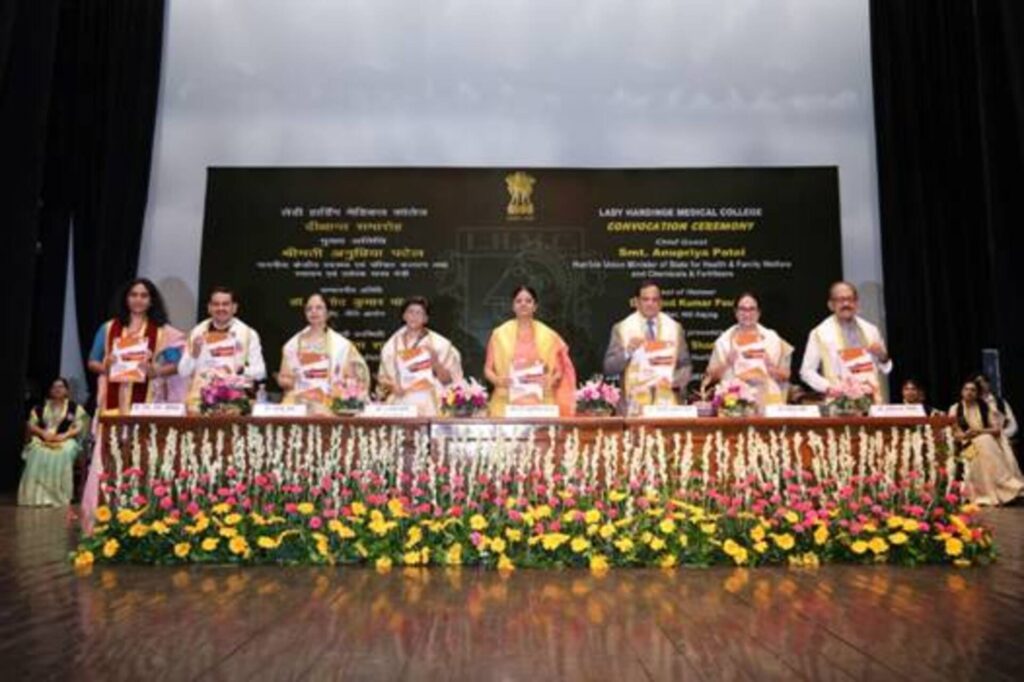
Union Minister of State for Health & Family Welfare and Chemicals & Fertilizers, Smt. Anupriya Patel graced the Annual Convocation Day ceremony of Lady Hardinge Medical College (LHMC) as the Chief Guest, here today. The event was also attended by Dr. Vinod Kumar Paul, Member, Niti Aayog as the Guest of Honour and Dr. Sunita Sharma, Director General Health Services as special guest.
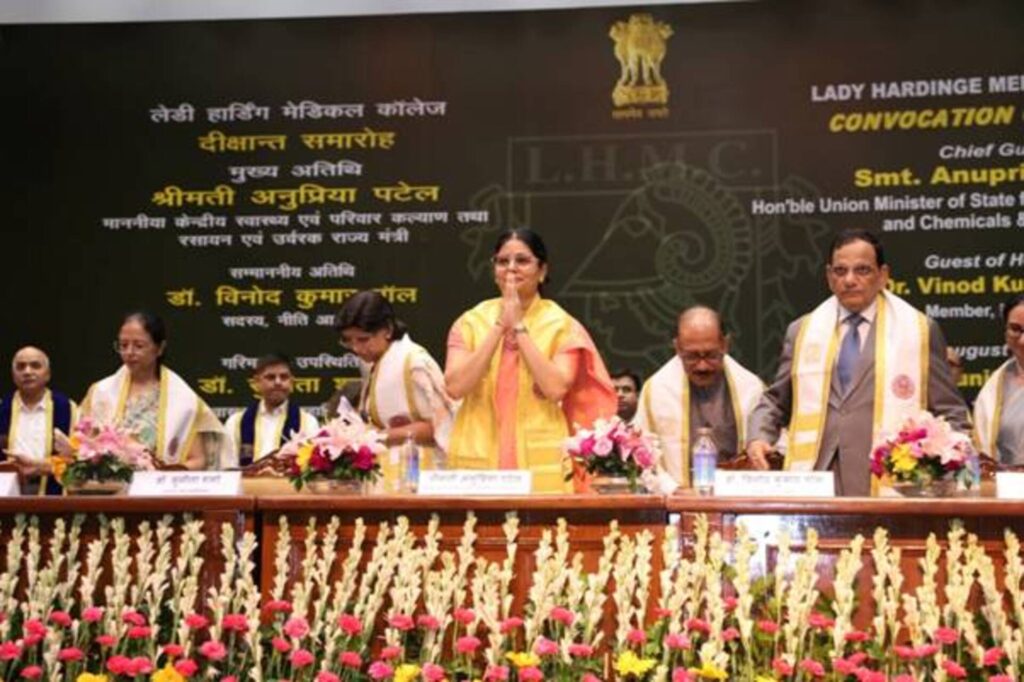
Speaking on the occasion, Smt. Anupriya Patel stressed upon the fact that “as an institution, Lady Hardinge Medical College has stood for women empowerment, and has contributed immensely to the growth of the nation.” She added that “LHMC holds a distinguished status as one of the oldest medical institutions in the country, predating landmarks like Connaught Place, Parliament House, and Rashtrapati Bhavan. Over the past 110 years, the college has evolved and today it is a unique blend of the old infrastructure and the new buildings that dot the landscape of the LHMC campus.”
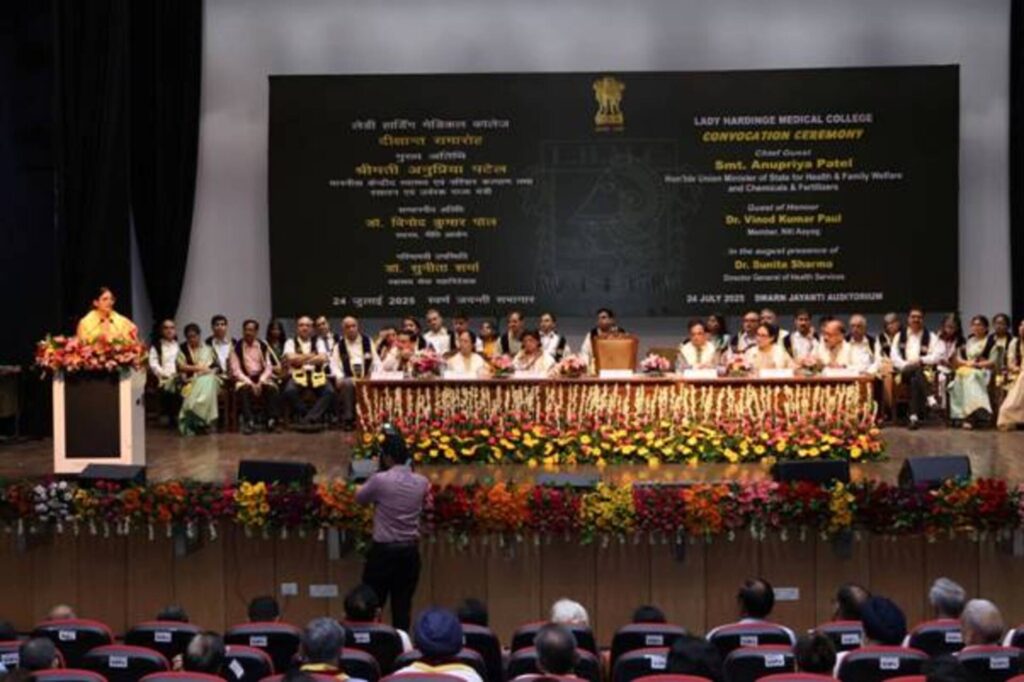
Smt. Patel underlined that “LHMC has maintained its unique character retaining the focus on women’s empowerment admitting all female students in MBBS, and contributing for gender equality through post graduates and specialty courses. It is noteworthy that LHMC is awarding undergraduate degree to 240 students and specialty degrees to close to 200 doctors annually, providing the nation and the world doctors who are skilled competent professionals who will shape the healthcare for the next half century.”
Addressing the students, Smt. Patel stated that “since you have worked during the most difficult time of COVID 19 pandemic, this will help you in navigating through the real life challenges and will contribute to their personal growth and paying back to the society.” She also added that "medical profession is unique blend of privilege and responsibility as doctors are highly regarded in the society and while shouldering the responsibility of upholding highest ethical values in their professional life and serve the underprivileged in the society. The values that you carry forward from the institution will help you in becoming compassionate healers." Smt. Patel also congratulated the parents, faculty and everyone who contributed to the successful pursuit of goals of the passing out students.
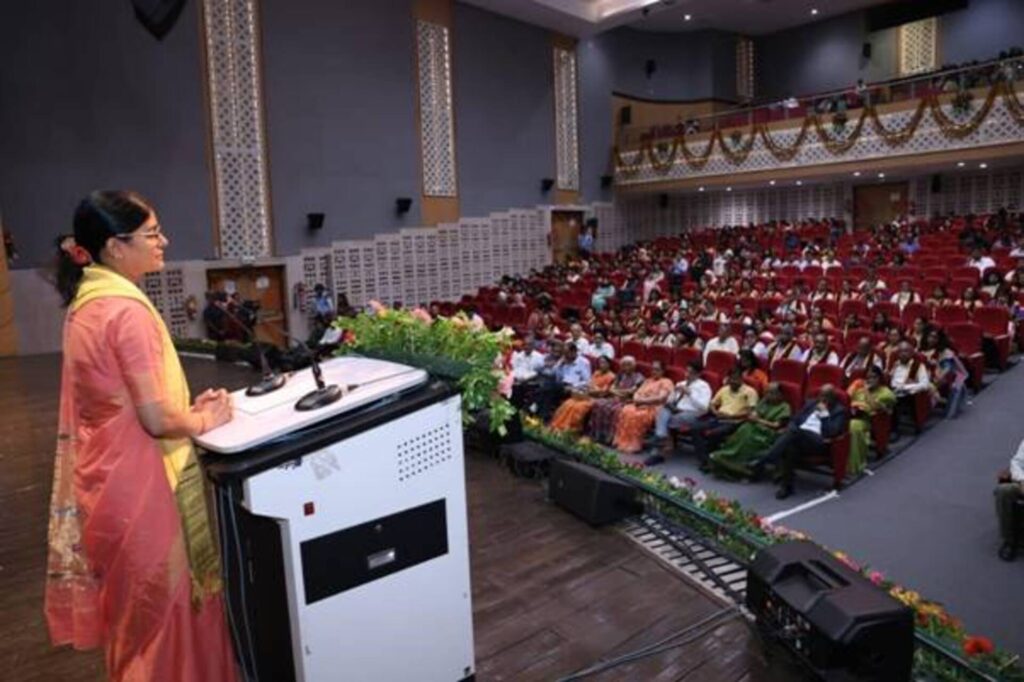
Smt. Patel emphasized that “Hon’ble Prime Minister Shri Narendra Modi has the vision of a developed India by the year 2047, as we no longer want to continue with the identity of a developing nation any further. Healthcare contributes significantly to this goal, as only a healthy nation can truly be a developed nation.”
Smt. Patel urged all the students to know about the healthcare landscape of the country and the transition it has gone through in the past 11 years. She stated that “the first and most important step in this direction was the introduction of a new National Health Policy in 2017 that is in line with the evolving healthcare landscape in the world.” “The government is moving forward with a comprehensive approach towards health that is not just curative and preventive, but also promotive, palliative and rehabilitative, with preventive component being the most significant among the others”, she further added.
Underlining the government’s efforts for ensuring universal healthcare, Smt. Patel stated that “for a huge country like India with a population of 140 crores, the Government is working tirelessly to ensure quality and affordable healthcare to all its citizens. With a strong political commitment, increased government funding, right policy and right strategy, the government expenditure on health has increased to almost 2% of the GDP, and we are steadily moving towards the goal of 2.5% spending as stated in the National Health Policy.”
Smt. Patel also stressed on the fact that the government is improving on all social indicators like housing, clean drinking water, sanitation and availability of clean cooking fuel as all these factors contribute to health. She also highlighted the strides made in the healthcare landscape of the country and stated that “the government is filling the critical gaps in the healthcare infrastructure and is addressing the shortage of specialist doctors in the hard-to-reach areas of the country. We are moving forward to ensure the doctor-population ration as per the WHO recommendations. Primary healthcare has been revolutionized through the Ayushman Arogya Mandirs; number of AIIMS have been increased from 7 to 23; and digital solutions are being adopted to get better healthcare outcomes.”
Highlighting the initiatives of the government to improve access, availability, and quality of healthcare services, Smt. Patel stated that “AB PM-JAY is the world’s largest health assurance scheme catering to the healthcare needs of 55 crore people, 40% of the total population, frontline healthcare workers and senior citizens above the age of 70 years. While with the Jan Aushadhi Kendras access to quality medicines is being ensured at discounted prices. Collectively, the initiatives of the government have led to significant decrease in out-of-pocket expenditure of the citizens on healthcare.” She also emphasized India's quick and robust response during the COVID 19 pandemic and stated that “India set an example by establishing fastest and biggest vaccination and administered over 220 crore doses of COVID vaccines.”
Smt. Patel stressed that “healthy India and Health for All are not just slogans, but the commitment of the government and a shared vision, a collective agenda of all stakeholders. Investment in health is one of the biggest investments for a developed India.”
Smt. Patel urged the students to be agents of change through different ways like indulging in medical research to prepare the country for upcoming health challenges; adopting digital technology and innovations to increase citizens' access to healthcare. She extended regards for the passing out students for their future and to carry forward the legacy of LHMC and serve the nation with distinction and become compassionate healers contributing to the vision of a Viksit Bharat.
Addressing the gathering, Dr. Vinod K Paul stated that “this is truly a momentous occasion in the lives of our students, their proud parents, and dedicated teachers. This day marks a major transition from being students to becoming doctors, and from graduates to postgraduates. For MBBS graduates, it is the first opportunity to serve both humanity and the nation. It is a moment filled with responsibility, promise, and pride.”
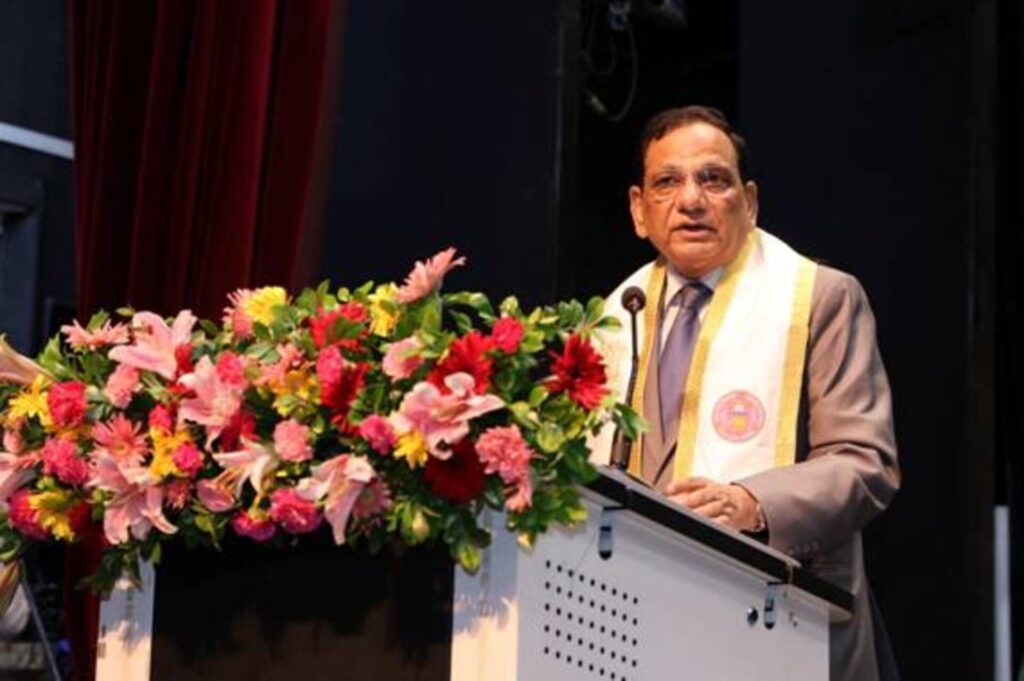
Dr. Paul praised the institution for releasing comprehensive Antibiotic Policy and guidelines on the rational use of antibiotics and stated “this is a significant achievement, especially considering the challenge of achieving consensus across departments. The implementation of antimicrobial stewardship programs and tracking antibiotic usage are vital steps forward. With the graded authority to prescribe antibiotics, we can ensure more rational, responsible, and effective usage. Strict measures in this domain are not optional, they are essential. I urge that antimicrobial stewardship be adopted across all medical institutions, and LHMC should take the lead in this effort. With its legacy and expertise, LHMC has the potential to set national benchmarks in this area.”
Dr. Paul added that “this generation has a special responsibility in realizing the dream of Viksit Bharat by 2047, as envisioned by our Hon’ble Prime Minister. The path to a developed India includes improvements in life expectancy, reduction in under-five mortality rates, and ensuring citizen-centric, accessible, and quality healthcare.”
Dr. Sunita Sharma, DGHS said it was a proud moment for her, being from this institute only serving here as a faculty for close to three decades, and now seeing the students taught by her getting degrees on this Convocation Day. She congratulated all the students for getting their degrees and urged them to move forward with character, conviction, commitment, courage and courtesy and serve the nation.
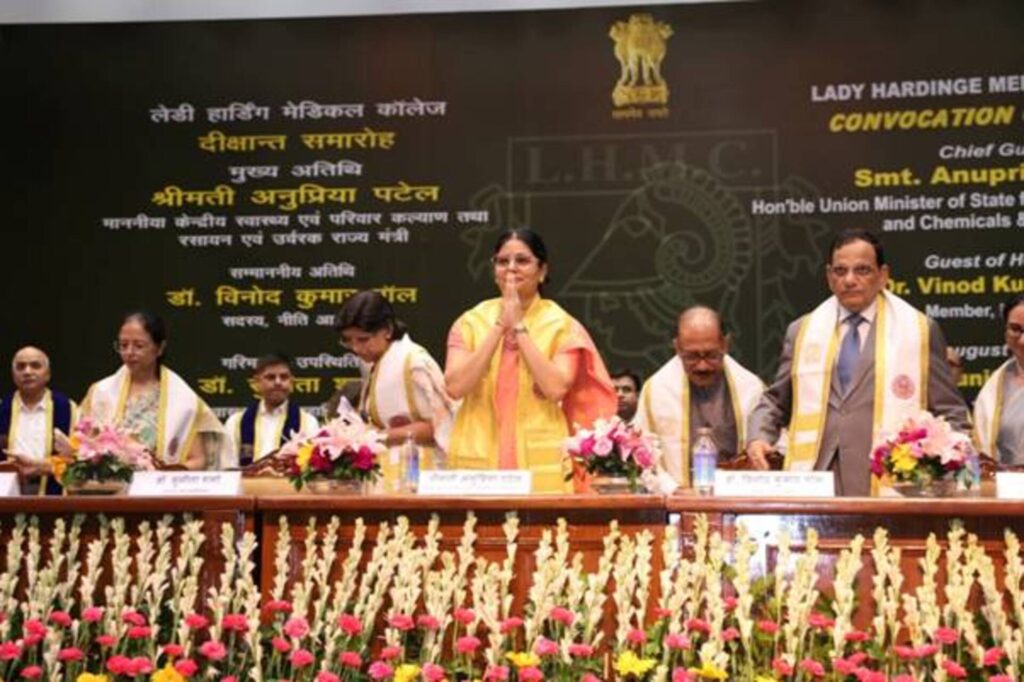
Over 600 degrees students received their MBBS, MD, MS, MDS and DM/MCh degrees during the Convocation ceremony. The Annual Report of Lady Hardinge Medical College for the year 2024 and Antibiotics Policy of LHMC was also launched at the event.
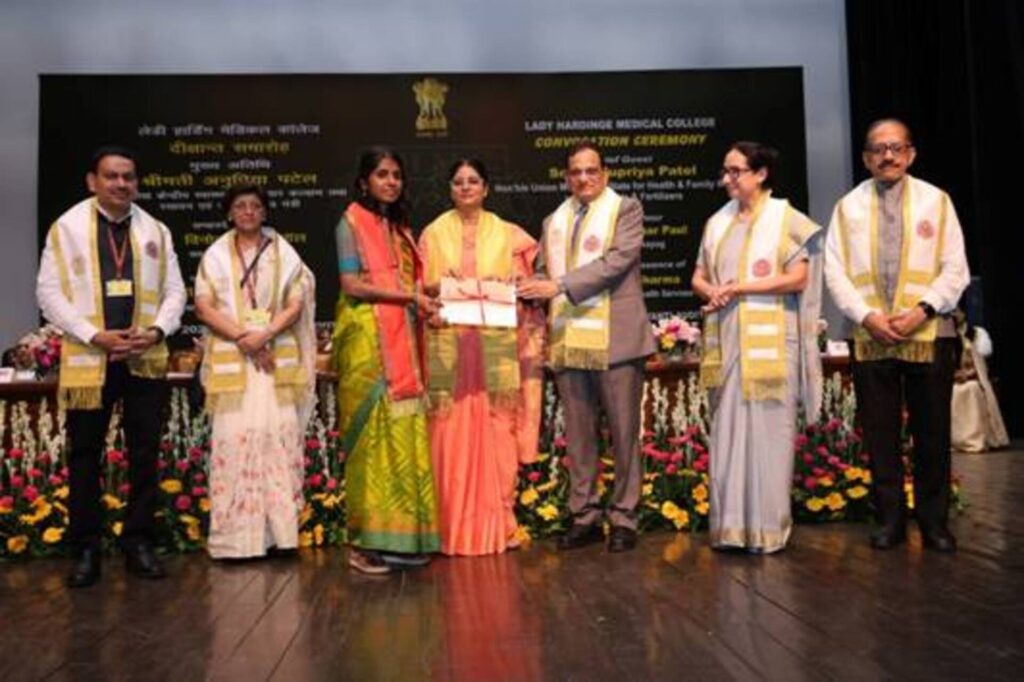
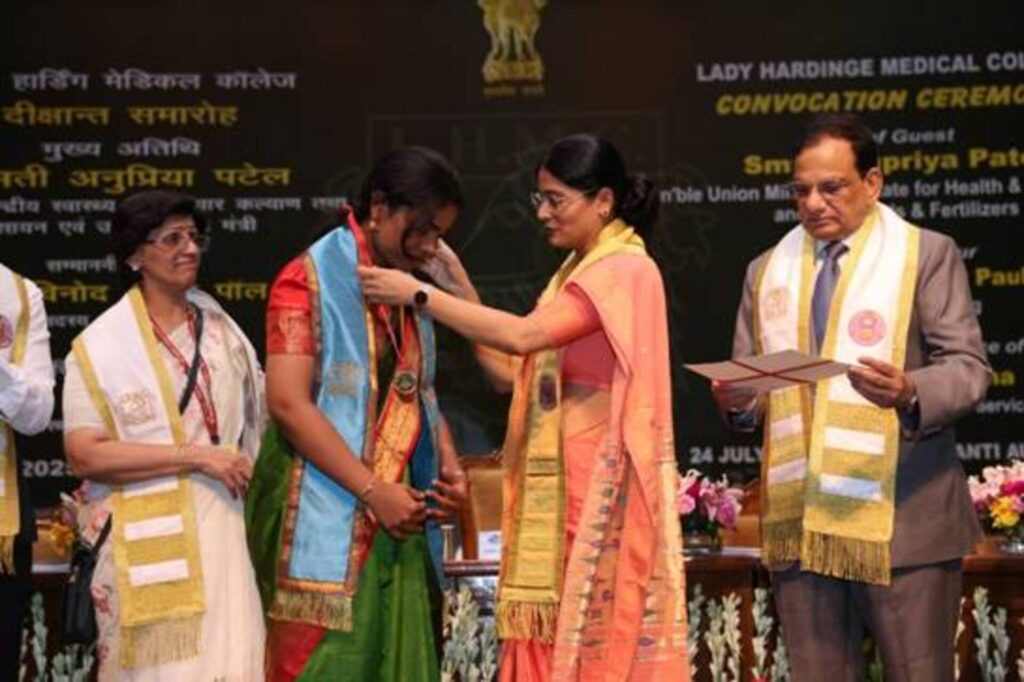
Dr. Sarita Beri, Director, Lady Hardinge Medical College, Dr. Anju Seth, Principal LHMC, senior officers from the Government of India, Heads of the institutions from the Central Government Hospitals and Medical Colleges of Delhi NCR were also present at the occasion.
Union Minister of State for Health & Family Welfare and Chemicals & Fertilizers, Smt. Anupriya Patel graced the Annual Convocation Day ceremony of Lady Hardinge Medical College (LHMC) as the Chief Guest, here today. The event was also attended by Dr. Vinod Kumar Paul, Member, Niti Aayog as the Guest of Honour and Dr. Sunita Sharma, Director General Health Services as special guest.
Speaking on the occasion, Smt. Anupriya Patel stressed upon the fact that “as an institution, Lady Hardinge Medical College has stood for women empowerment, and has contributed immensely to the growth of the nation.” She added that “LHMC holds a distinguished status as one of the oldest medical institutions in the country, predating landmarks like Connaught Place, Parliament House, and Rashtrapati Bhavan. Over the past 110 years, the college has evolved and today it is a unique blend of the old infrastructure and the new buildings that dot the landscape of the LHMC campus.”
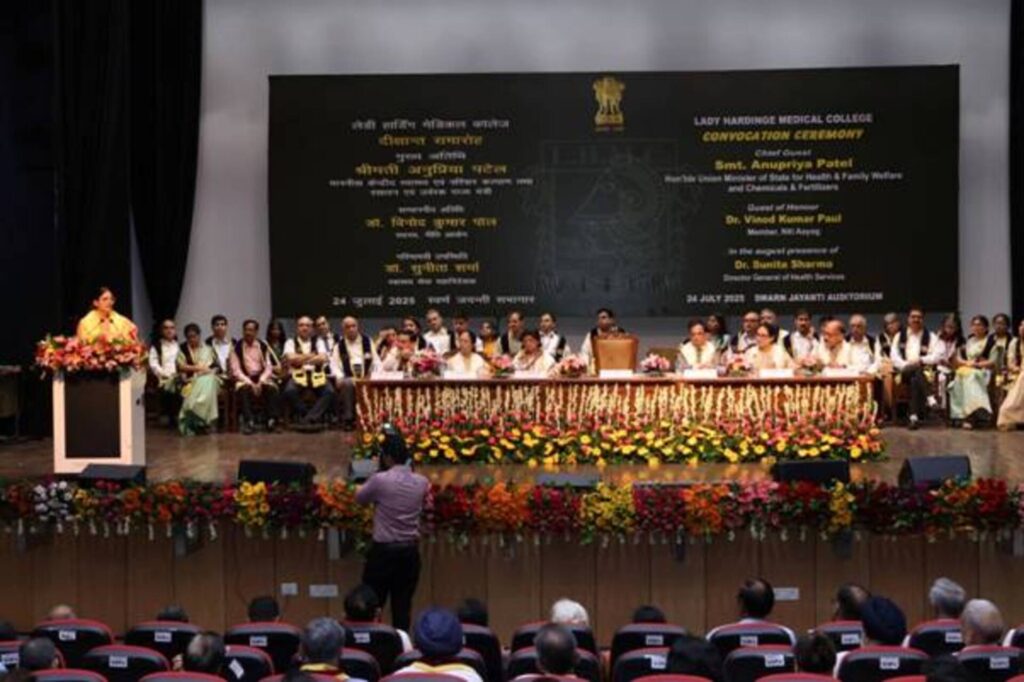
Smt. Patel underlined that “LHMC has maintained its unique character retaining the focus on women’s empowerment admitting all female students in MBBS, and contributing for gender equality through post graduates and specialty courses. It is noteworthy that LHMC is awarding undergraduate degree to 240 students and specialty degrees to close to 200 doctors annually, providing the nation and the world doctors who are skilled competent professionals who will shape the healthcare for the next half century.”
Addressing the students, Smt. Patel stated that “since you have worked during the most difficult time of COVID 19 pandemic, this will help you in navigating through the real life challenges and will contribute to their personal growth and paying back to the society.” She also added that "medical profession is unique blend of privilege and responsibility as doctors are highly regarded in the society and while shouldering the responsibility of upholding highest ethical values in their professional life and serve the underprivileged in the society. The values that you carry forward from the institution will help you in becoming compassionate healers." Smt. Patel also congratulated the parents, faculty and everyone who contributed to the successful pursuit of goals of the passing out students.
Smt. Patel emphasized that “Hon’ble Prime Minister Shri Narendra Modi has the vision of a developed India by the year 2047, as we no longer want to continue with the identity of a developing nation any further. Healthcare contributes significantly to this goal, as only a healthy nation can truly be a developed nation.”
Smt. Patel urged all the students to know about the healthcare landscape of the country and the transition it has gone through in the past 11 years. She stated that “the first and most important step in this direction was the introduction of a new National Health Policy in 2017 that is in line with the evolving healthcare landscape in the world.” “The government is moving forward with a comprehensive approach towards health that is not just curative and preventive, but also promotive, palliative and rehabilitative, with preventive component being the most significant among the others”, she further added.
Underlining the government’s efforts for ensuring universal healthcare, Smt. Patel stated that “for a huge country like India with a population of 140 crores, the Government is working tirelessly to ensure quality and affordable healthcare to all its citizens. With a strong political commitment, increased government funding, right policy and right strategy, the government expenditure on health has increased to almost 2% of the GDP, and we are steadily moving towards the goal of 2.5% spending as stated in the National Health Policy.”
Smt. Patel also stressed on the fact that the government is improving on all social indicators like housing, clean drinking water, sanitation and availability of clean cooking fuel as all these factors contribute to health. She also highlighted the strides made in the healthcare landscape of the country and stated that “the government is filling the critical gaps in the healthcare infrastructure and is addressing the shortage of specialist doctors in the hard-to-reach areas of the country. We are moving forward to ensure the doctor-population ration as per the WHO recommendations. Primary healthcare has been revolutionized through the Ayushman Arogya Mandirs; number of AIIMS have been increased from 7 to 23; and digital solutions are being adopted to get better healthcare outcomes.”
Highlighting the initiatives of the government to improve access, availability, and quality of healthcare services, Smt. Patel stated that “AB PM-JAY is the world’s largest health assurance scheme catering to the healthcare needs of 55 crore people, 40% of the total population, frontline healthcare workers and senior citizens above the age of 70 years. While with the Jan Aushadhi Kendras access to quality medicines is being ensured at discounted prices. Collectively, the initiatives of the government have led to significant decrease in out-of-pocket expenditure of the citizens on healthcare.” She also emphasized India's quick and robust response during the COVID 19 pandemic and stated that “India set an example by establishing fastest and biggest vaccination and administered over 220 crore doses of COVID vaccines.”
Smt. Patel stressed that “healthy India and Health for All are not just slogans, but the commitment of the government and a shared vision, a collective agenda of all stakeholders. Investment in health is one of the biggest investments for a developed India.”
Smt. Patel urged the students to be agents of change through different ways like indulging in medical research to prepare the country for upcoming health challenges; adopting digital technology and innovations to increase citizens' access to healthcare. She extended regards for the passing out students for their future and to carry forward the legacy of LHMC and serve the nation with distinction and become compassionate healers contributing to the vision of a Viksit Bharat.
Addressing the gathering, Dr. Vinod K Paul stated that “this is truly a momentous occasion in the lives of our students, their proud parents, and dedicated teachers. This day marks a major transition from being students to becoming doctors, and from graduates to postgraduates. For MBBS graduates, it is the first opportunity to serve both humanity and the nation. It is a moment filled with responsibility, promise, and pride.”
Dr. Paul praised the institution for releasing comprehensive Antibiotic Policy and guidelines on the rational use of antibiotics and stated “this is a significant achievement, especially considering the challenge of achieving consensus across departments. The implementation of antimicrobial stewardship programs and tracking antibiotic usage are vital steps forward. With the graded authority to prescribe antibiotics, we can ensure more rational, responsible, and effective usage. Strict measures in this domain are not optional, they are essential. I urge that antimicrobial stewardship be adopted across all medical institutions, and LHMC should take the lead in this effort. With its legacy and expertise, LHMC has the potential to set national benchmarks in this area.”
Dr. Paul added that “this generation has a special responsibility in realizing the dream of Viksit Bharat by 2047, as envisioned by our Hon’ble Prime Minister. The path to a developed India includes improvements in life expectancy, reduction in under-five mortality rates, and ensuring citizen-centric, accessible, and quality healthcare.”
Dr. Sunita Sharma, DGHS said it was a proud moment for her, being from this institute only serving here as a faculty for close to three decades, and now seeing the students taught by her getting degrees on this Convocation Day. She congratulated all the students for getting their degrees and urged them to move forward with character, conviction, commitment, courage and courtesy and serve the nation.
Over 600 degrees students received their MBBS, MD, MS, MDS and DM/MCh degrees during the Convocation ceremony. The Annual Report of Lady Hardinge Medical College for the year 2024 and Antibiotics Policy of LHMC was also launched at the event.
Dr. Sarita Beri, Director, Lady Hardinge Medical College, Dr. Anju Seth, Principal LHMC, senior officers from the Government of India, Heads of the institutions from the Central Government Hospitals and Medical Colleges of Delhi NCR were also present at the occasion.
India and the United Kingdom have taken a major step in building a stronger economic partnership with the signing of the Comprehensive Economic and Trade Agreement (CETA) today under the visionary leadership of Prime Minister Shri Narendra Modi. The agreement was signed by Commerce and Industry Minister, Mr. Piyush Goyal and Secretary of State for Business and Trade, Mr. Jonathan Reynolds in the presence of the two Prime Ministers.
This FTA marks a significant milestone in India’s engagement with major developed economies and reflects a shared commitment to strengthening economic integration. As the world’s fourth and sixth largest economies respectively, India and the UK’s bilateral engagement holds global economic significance. The signing of the India-UK CETA follows the successful conclusion of negotiations announced on 6th May 2025. The bilateral trade between the two countries stand at nearly USD 56 billion, with a joint goal to double this figure by 2030.
CETA secures unprecedented duty-free access for 99% of India’s exports to the UK, covering nearly the entire trade basket. This is expected to open new opportunities for labour-intensive industries such as textiles, marine products, leather, footwear, sports goods, toys, and gems and jewellery, alongside fast-growing sectors like engineering goods, auto components, and organic chemicals.
The services sector, a strong driver of India’s economy, will also see wide-ranging benefits. The agreement provides greater market access in IT and IT-enabled services, financial and legal services, professional and educational services, and digital trade. Indian professionals, including those deployed by companies to work in UK across all services sectors, professionals deployed on contracts such as architects, engineers, chefs, yoga instructors, and musicians, will benefit from simplified visa procedures and liberalised entry categories, making it easier for talent to work in the UK.
Union Minister for Commerce and Industry, Mr. Piyush Goyal, conveyed profound gratitude to the Prime Minister Shri Narendra Modi for his visionary leadership and resolute commitment, which have been instrumental in achieving this historic agreement. He stated:
“This CETA marks a milestone in the trade relations between two major economies, setting an ambitious and balanced framework. It unlocks tariff-free access on 99% of Indian exports to the UK, covering nearly 100% of trade value- including labour-intensive sectors advancing the ‘Make in India’ initiative and setting the stage for bilateral trade to double by 2030. It includes ambitious commitments in goods and services, covering various sectors, while enhancing mobility for Indian professionals by simplifying access for contractual service providers, business visitors, and independent professionals. The innovative Double Contribution Convention will exempt Indian workers and their employers from UK social security contributions for three years, boosting competitiveness and earnings. This FTA will serve as a catalyst for inclusive growth, benefiting farmers, artisans, workers, MSMEs, startups, and innovators while safeguarding India’s core interests and accelerating our journey towards becoming a global economic powerhouse.”
India has also secured an agreement on the Double Contribution Convention. This will exempt Indian professionals and their employers from social security payments in the UK for up to three years, improving the cost competitiveness of Indian talent.
The agreement has been designed to make trade more inclusive. Women and youth entrepreneurs, farmers, fishermen, startups, and MSMEs will gain new access to global value chains, supported by provisions that encourage innovation, promote sustainable practices, and reduce non-tariff barriers.
CETA is expected to boost trade volumes significantly in the coming years, creating jobs, expanding exports, and supporting a deeper, more resilient economic relationship between India and the United Kingdom.
In an effort to galvanize States to work towards ensuring safe food for citizens, Union Minister for Health and Family Welfare Shri Mansukh Mandaviya released Food Safety and Standards Authority of India (FSSAI)’s 3rd State Food Safety Index (SFSI) to measure the performance of States across five parameters of food safety.
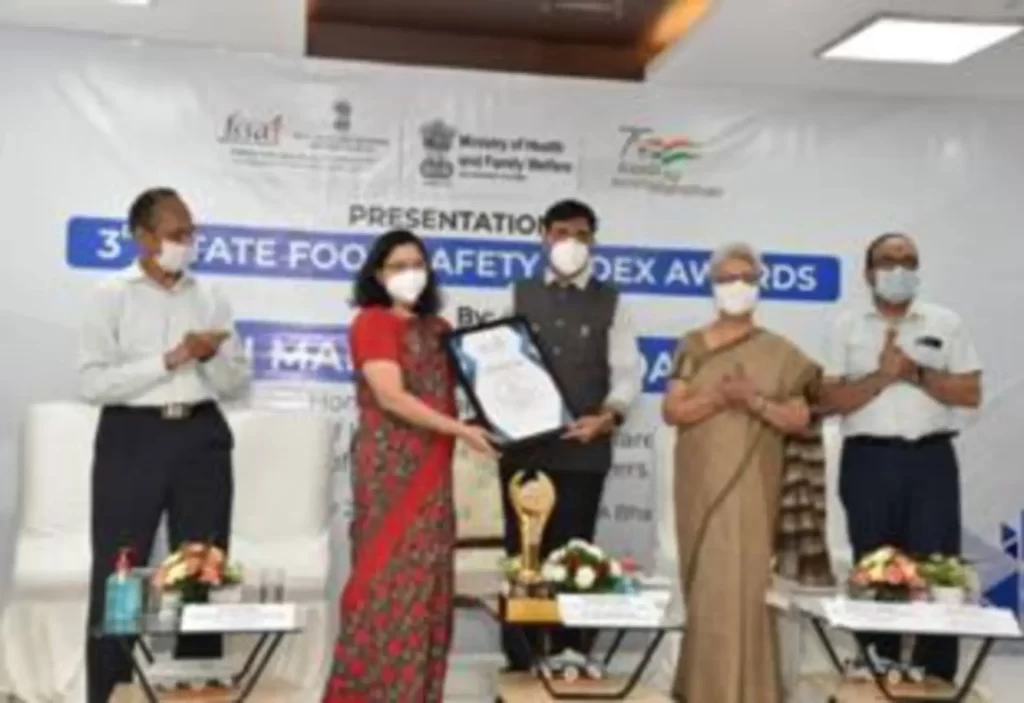
The Union Minister for Health and Family Welfare felicitated nine leading States/UTs based on the ranking for the year 2020-21 for their impressive performance. This year, among the larger states, Gujarat was the top ranking state, followed by Kerala and Tamil Nadu. Among the smaller states, Goa stood first followed by Meghalaya and Manipur. Among UTs, Jammu & Kashmir, Andaman & Nicobar Islands and New Delhi secured top ranks.
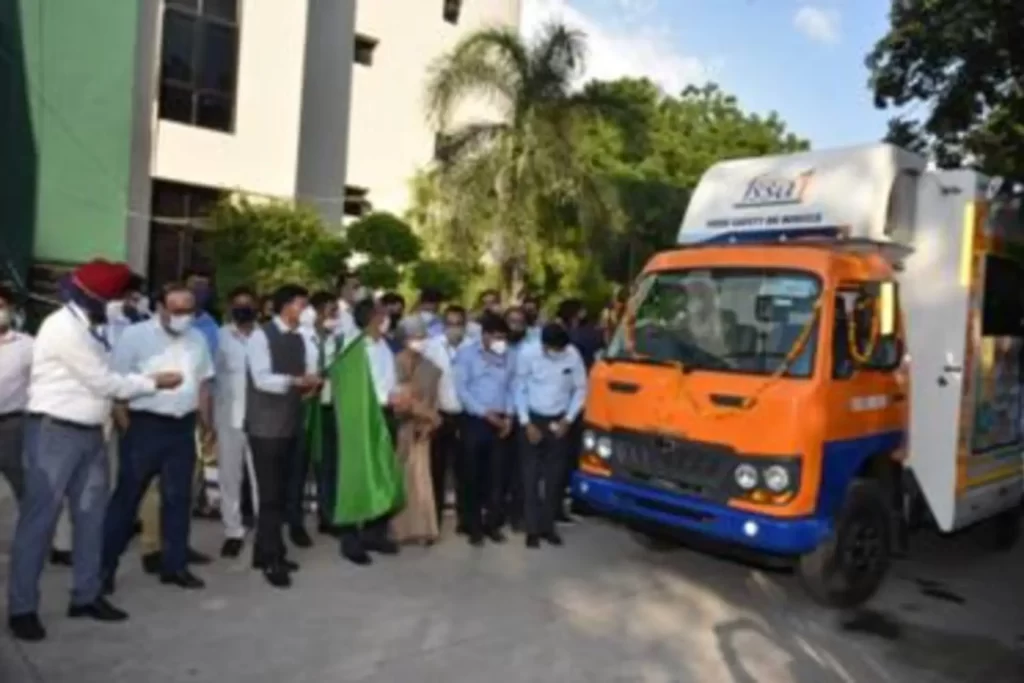
He also flagged off 19 Mobile Food Testing Vans (Food Safety on Wheels) to supplement the food safety ecosystem across the country taking the total number of such mobile testing vans to 109.
Speaking on the occasion, Shri Mandaviya observed that food is an essential component of health in a holistic sense. “Balanced nutrition is an integral part of Health,” he stated. He expressed hope that the mobile food testing laboratories will not only help functionaries in the States/UTs to enhance their outreach and conduct surveillance activities even in the far-flung areas, but will also be utilized as an effective tool for training and awareness generation activities amongst citizens.
He emphasized that the citizens are a stakeholder for food safety along with Government and Industry. Shri Mandaviya noted, “Pradhan Mantri Shri Narendra Modi Ji says that when one person takes a step forward, only a single step is achieved; however, when the whole country takes just one step forward, the country leaps by 130 Cr steps. People who bring attention to issues like food adulteration and low-quality standards automatically benefit other unconscious consumers who might be harmed.” He applauded the action taken by the organisation along with industry partners to take the country forward in Food Safety.
The Union Minister released the results of PAN-India survey for identifying the presence of industrially produced trans fatty acid content in the selected foods. Samples of various packaged food items under six pre-defined food categories were collected from 419 cities/districts across 34 States/UTs. Overall, only 84 samples, i.e. 1.34%, have more than 3% industrially produced trans fats from the total of 6245 samples; India is on the right track of becoming industrial trans fats free in the 75th year of India’s independence.
Shri Mandaviya also launched various innovative initiatives by FSSAI including the Eat Right Research Awards and Grants to encourage and recognize high-quality research in the area of food safety and nutrition in India; a logo for Vegan Foods for easy identification and distinction from non-vegan foods for empowering consumers to make informed food choices. Further, the Minister also released various e-books that advocate and captures recipes around local seasonal food items, indigenous millets and plant-based sources of protein.
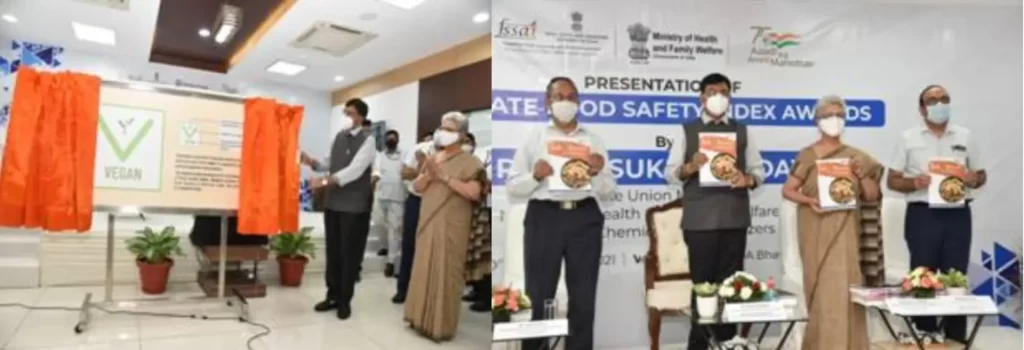
As part of the ongoing efforts to engage industry on the issue of plastic in food packaging, 24 food businesses signed a pledge on becoming “Plastic Waste Neutral” by collecting, processing and recycling of 100% post-consumer plastic waste from across the sources. 21 companies have committed themselves to reduce the levels of virgin plastic in the food and beverage sector.
Ms Rita Teaotia, Chairperson, FSSAI, Shri Arun Singhal, Chief Executive Officer and Member Secretary, FSSAI, Shri Vikash Sheel, Additional Secretary (Health) were also present.
“Streamlined coordination between Centre and States can bring out the best output in healthcare delivery. The Centre is committed to supporting States through financial and technical resources in efficient and effective implementation of health programmes aimed towards quality healthcare”. This was stated by Union Minister for Health & Family Welfare Dr Mansukh Mandaviya as he chaired the seventhmeeting of Mission Steering Group (MSG) of National Health Mission (NHM), here today. The MSG is the apex decision-making body of NHM that takes decisions on policies and program implementation under the Mission. Shri Gajendra Singh Sekhawat, Union Minister of Jal Shakti, Dr Virendra Kumar, Union Minister of Social Justice & Empowerment, Dr. Bharati Pravin Pawar, Minister of State for Health & Family Welfare and Dr V K Paul, Member (Health), NITI Aayog were among the members who attended the meeting. Secretaries of Ministries of Government of India including MoHFW, AYUSH, DoNER and senior officers from WCD, Drinking Water and Sanitation, Panchayati Raj, Rural Development, Urban development, Department of Higher Education, Social Justice and Empowerment,Health Secretaries of State Governments and eminent public health professionals also attended the meeting.
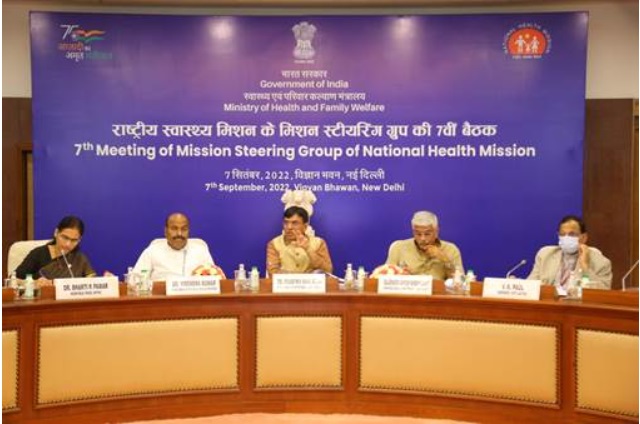
Addressing the meeting, Dr Mandaviya noted that India is the only country in the world with a four-layer health infrastructure in place with a 10-lakh strong ASHA workforce at the grassroots. “These powerful foot soldiers of our health force have played a pivotal role in India’s COVID management and COVID vaccination campaigns”. He added that strengthening incentivisation of the healthcare workers who work with communities at the cutting edge can give an impetus to various programmes. He underscored moving ahead with sharpened focus on timely elimination of diseases such Kala Azar, Leptospirosis etc., as these diseases largely impact the poorest households and communities in the country.
The MSG was apprised about the achievements made under NHM during the past few years:
- More than 1.20 lakh Sub Health Centres and Primary Health Centres have been transformed as Ayushman Bharat – Health & Wellness Centres (AB-HWC) providing Comprehensive Primary Care with a footfall of more than 100.8 Cr.
- The Pradhan Mantri National Dialysis Program (PMNDP) has been implemented in615 Districts of 36 States/UTs at 1136 centres by deploying 7809 hemo-dialysis machines.
- Notification of TB cases increased from 18.2 lakh in 2017 to 21.35 lakh in 2021 with Rs. 1651.27 Crore disbursed (under DBT scheme) to 62.71 Lakh TB patients for nutritional support (since 2018).
- In 2021, the treatment success rate of TB had reached 83%, the highest ever.
- Major interventions in health have led to reduction of Out-Of-Pocket-Expenditure (OOPE) from 69.4% to 48.8% as per NHA estimates.
- 31 states have achieved replacement TFR as per NFHS-5 report.
- 3.16 lakh human resources including doctors, nurses, lab technicians etc. (excluding ASHA workers) in States and UTs being supported by NHM.
- Maternal Mortality Ratio (MMR) of India has declined by 453 points – from 556 per one lakh live births in 1990 to 103 in 2017-19 (SRS 2017-19). Seven states have achieved the SDG target of MMR.
- Under-5 Mortality Rate (U5MR) has declinedfrom 126 per 1000 live births in 1990 to 35 per 1000 live births in 2019. Eight states have achieved the SDG target of U5MR.
- Malaria cases have reduced from over 11 lakh cases to 48,000 cases.
The 7th MSG of the NHM discussed various agenda points including Sickle Cell Disease among tribals. It was decided to implement sickle cell screening programme in mission mode. Emphasis was given on National TB Elimination Programme and it was decided that all necessary actions will be taken up to end TB by 2025 as per Hon’ble Prime Minister’s vision of achieving the target of TB Elimination by the year 2025. The MSG also deliberated upon costing norms for National Ambulance Services and Mobile Medical Units (MMUs). It was decided to incentivize ASHA for creation and seeding of ABHA IDs in various IT portals of MoHFW. Additionally, the MSG discussed malnutrition among children, awareness and capacity for prevention and control of snakebite and reviewed the status of Prime Minister National Dialysis Programme.
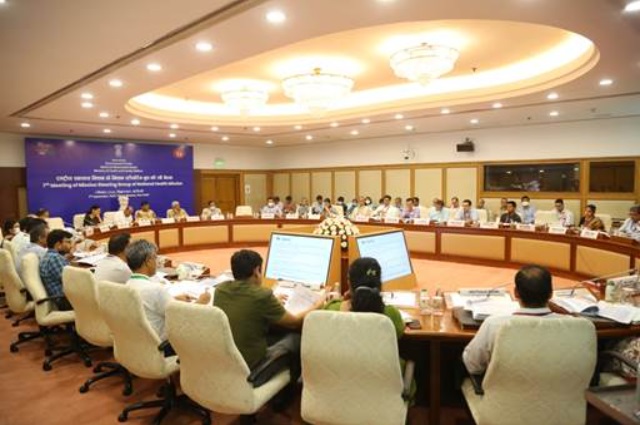
The member Union Ministers appreciated progress made under NHM through focused programmes and support provided to states over the years. Several suggestions were proffered including refinement and monitoring of fund flow from state treasury to districts;ensuring inclusion of left-out population such as nomads, street dwellers, various divyang persons in PM-JAY scheme;accelerating filling vacancies of technicians and paramedics in health facilities;incentivizing mechanisms; and enhancing the synergy between Centre and states for timely matching fund allocation from the latter.
Dr. Mansukh Mandaviya noted that the decisions taken in today’s meeting of MSG will strengthen the delivery of healthcare services in all three levels of healthcare – primary, secondary and tertiary, which will provide citizens with universal access to equitable, affordable & quality health care services that are accountable and responsive to people’s needs of the country in both rural and urban areas. He further added that the feedback and suggestions from the meeting would be considered to guide the roadmap on interventions to be taken up.
Union Health Minister Shri Jagat Prakash Nadda distributed appointment letters to Delhi Nursing Officers and Allied Healthcare Professionals and flagged off Ayushman Bharat Registration Vans, in the presence of Smt. Rekha Gupta, Chief Minister, Government of NCT Delhi, at Vigyan Bhawan, today. The event was also attended by Ministers of Government of NCT Delhi, Dr. Pankaj Kumar Singh, Minister, Health and Family Welfare & Transport and Information Technology, Shri Ravinder Indraj Singh, Minister, Social Welfare, Welfare for SC & ST, Cooperative and Election and Shri Manjinder Singh Sirsa, Minister, Industries, Food & Supplies, Environment, Forest & Wild Life, Members of Parliament (Shri Ramvir Singh Bidhuri, Shri Praveen Khandelwal, Shri Yogender Chandolia and Smt. Bansuri Swaraj).
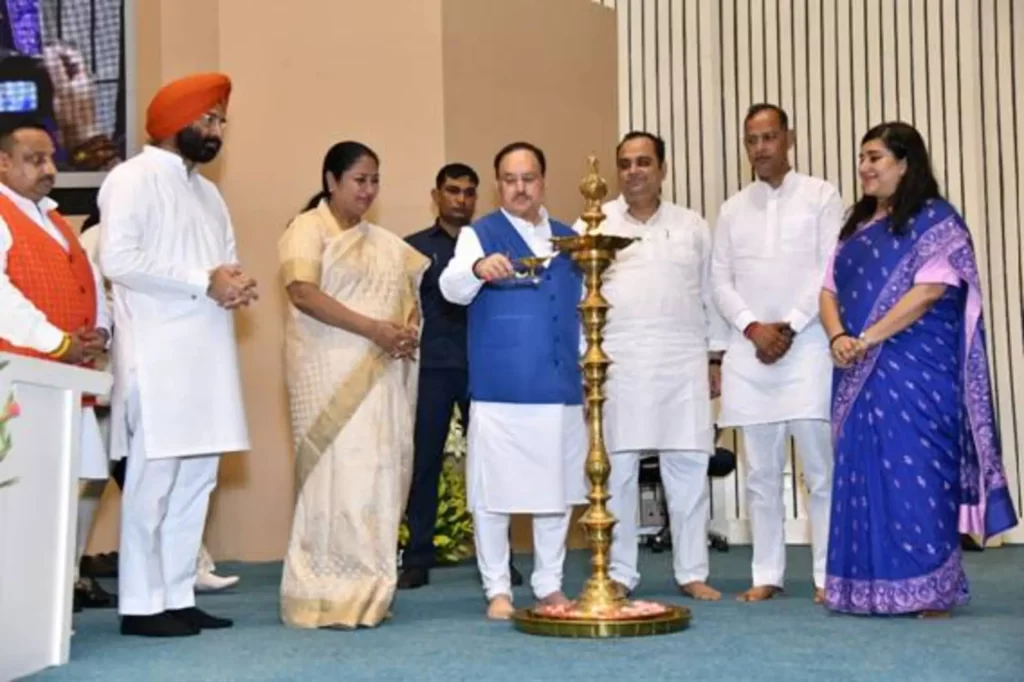
Addressing the gathering, Shri Nadda stated that “this is a momentous occasion as today, after 15 years, our nursing officers and allied healthcare professionals are receiving appointment letters. With this, Delhi government is working towards strengthening the healthcare system by recruiting specialized workforce.”
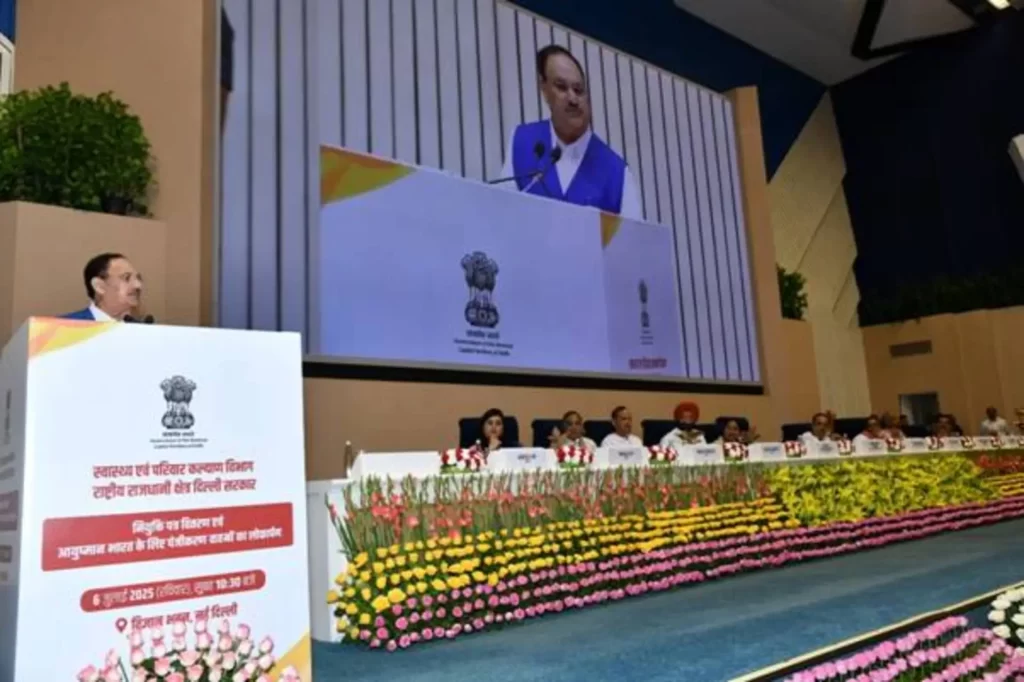
Shri Nadda underlined that Delhi observes the highest healthcare load as people across the country come to Delhi for treatment and earlier the healthcare system faced negligence. He commended the efforts of the current Delhi government for strengthening the healthcare infrastructure and implementing Ayushman Bharat- Pradhan Mantri Jan AarogyaYojana (AB-PMJAY) and Pradhan Mantri Ayushman Bharat Health Infrastructure Mission (PM- ABHIM).
He stated that “under the leadership of Hon’ble Prime Minister Shri Narendra Modi, Ayushman Vay Vandana was introduced to ensure healthcare to the senior citizens above the age of 70. The Delhi government is working in this direction of ensuring the right to be healthy throughout life with dignity under Vay Vandana. Till date, 4 lakh Ayushman Cards have been issued in Delhi, with 2 lakh cards issued under Vay Vandana.” He urged all stakeholders to work dedicatedly towards implementing PM-ABHIM in Delhi and fulfill the target of opening 1100 Ayushman Arogya mandirs till 31st March, 2026.
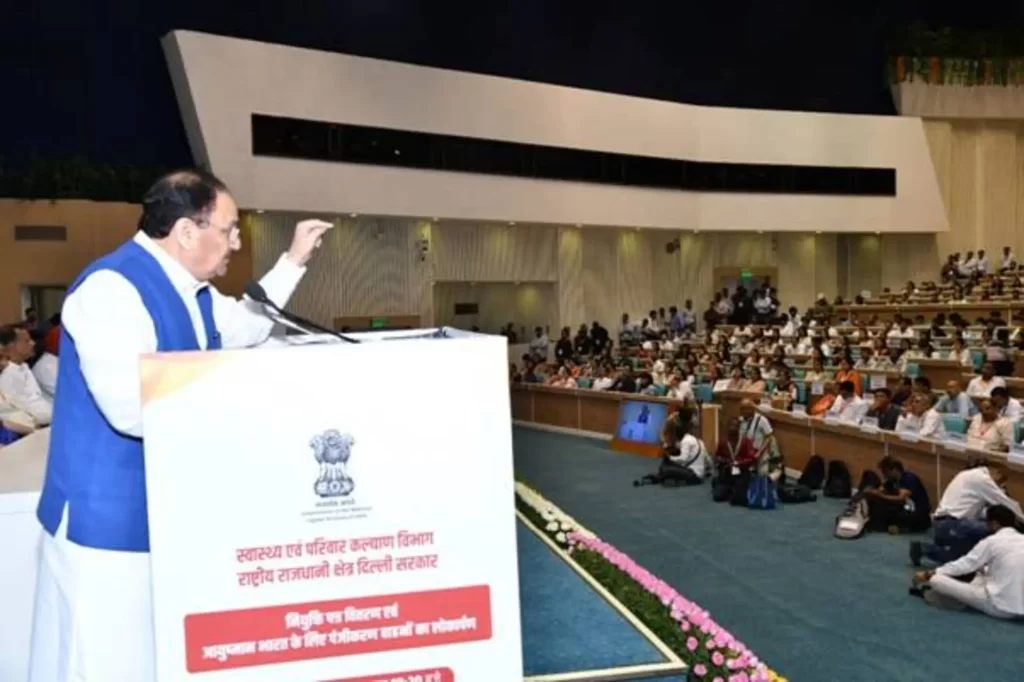
Shri Nadda underlined that “in 1997, the Health Policy focused primarily on curative care while under the visionary leadership of PM, the New Health Policy 2017 was introduced with a philosophy of comprehensive care—preventive, promotive, curative, rehabilitative, and palliative— with a special focus on geriatric care. “
Shri Nadda emphasized the important role of Ayushman Arogya Mandirs in providing equal, affordable and accessible healthcare for all. He highlighted that “special emphasis is being given to preventive healthcare under which initiatives for early diagnosis for different diseases have been undertaken. We are focusing on screenings of individuals over the age of 30 and working towards stalling the spread of diseases through early diagnosis. Till now, 18 crore screenings for hypertension, 17 crore screenings for diabetes, 15 crore screenings for oral cancer, 7.5 crore screenings for breast cancer and 4.5 crore screenings for cervical cancer have been conducted.”
Highlighting the strides made in the direction of maternal and child care, Shri Nadda highlighted that “through the Ayushman Arogya Mandirs from conception to child birth to early childhood care is being provided. Regular checkups and immunization have led to significant improvements. Maternal Mortality Ratio (MMR) has declined from 130 to 88 per lakh live births while Infant Mortality Rate (IMR) dropped from 39 to 26. Under-Five Mortality Rate (U5MR) has declined with a rate of 42% while the global decline is 14%. Neo-natal mortality rate has declined with a 40% rate while the global average decline was 11%.”
Shri Nadda also added that “TB incidence has reduced by 17.7% which is more than the double of global decline rate of 8.3%, which is confirmed by the WHO Global TB Report 2024.”
Highlighting the substantial growth in medical education and infrastructure, Shri Nadda stated that “earlier India only had 7 All India Institute of Medical Sciences (AIIMS) till 2014, but today, 20 AIIMS are operational. The number of medical colleges have increased from 387 in 2014 to 780; the number of medical seats has increased from 51,000 to 1,18,000. aiming for a total increase of 75,000 seats over the next five years.”
Commending the initiative of Ayushman Bharat Registration Vans, Shri Nadda stated that “running of 70 specially designed Vans in all assembly constituencies is a novel initiative in order to cover all eligible beneficiaries of PM Jan Arogya Scheme. 20 specially designed mobile vans are being flagged off. 70 such Vans will cover 70 assembly constituencies where they will collect and generate data for issuance of Ayushman Card and register the beneficiaries at their doorsteps.” Shri Nadda also highlighted the importance of the nursing and allied healthcare professionals in the healthcare landscape, and urged the newly appointed officers present to work dedication and empathy towards implementing the healthcare schemes.
Speaking on the occasion, Smt. Rekha Gupta stated, “Till now, 4 lakh Ayushman cards have been distributed under the Ayushman Arogya Yojana, which includes 2 lakh Vay Vandana Cards issued to the senior citizens of Delhi. A total of 2,258 individuals has already received medical treatment 108 hospitals of Delhi have been empanelled under the scheme.”
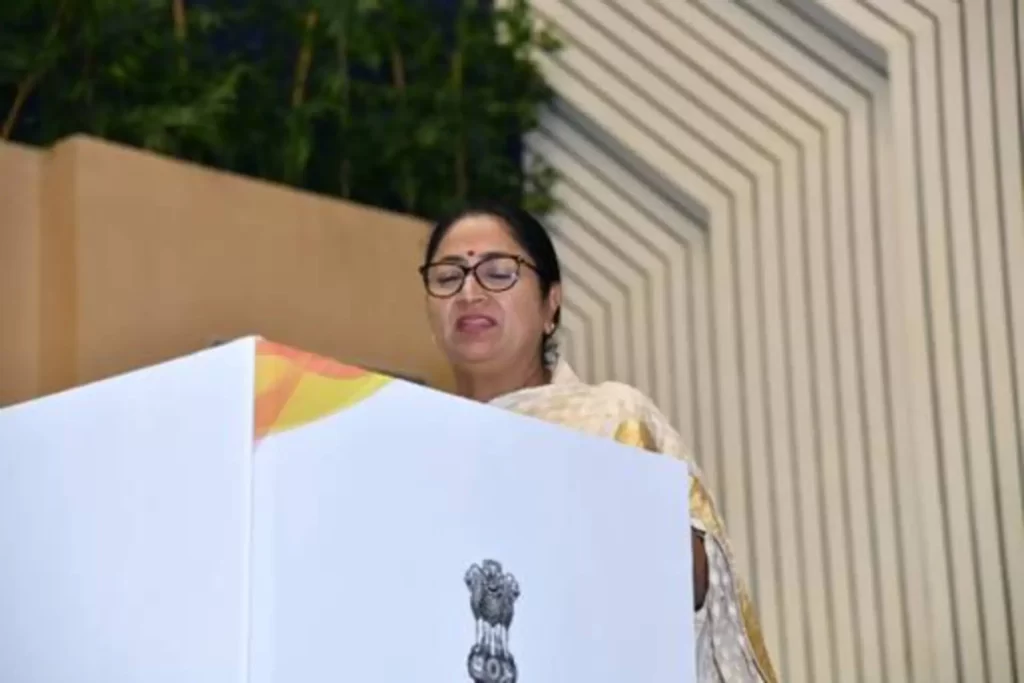
She also informed that “by 31st March, 2026, a total of 1100 Ayushman Arogya Mandirs (AAMs) will be established in Delhi using the 1700 crore Rupees allocated for Delhi under PM-ABHIM. 100 AAMs are ready, out of which 34 have been already inaugurated and the rest will be launched in this month only. Delhi government is working with a goal of inaugurating 100 AAMs every month with 15 AAMs in each Assembly constituency and 150 in each parliamentary constituency.”
Smt. Gupta also underlined that “every hospital of Delhi has a Jan Aushadhi Kendra now that ensures access to medicines to all.” She also highlighted the efforts of the Delhi government to ensure transparency in the healthcare system while keeping corruption at bay.
Following sustained efforts by all stakeholders, the Department of Health and Family Welfare, NCT Delhi has issued Offers of Appointment to 1,388 Nursing Officers and 41 Paramedical Officers selected through the Delhi Subordinate Services Selection Board (DSSSB). Till now, 1,270 candidates have accepted the offers, and their document verification process is currently underway.
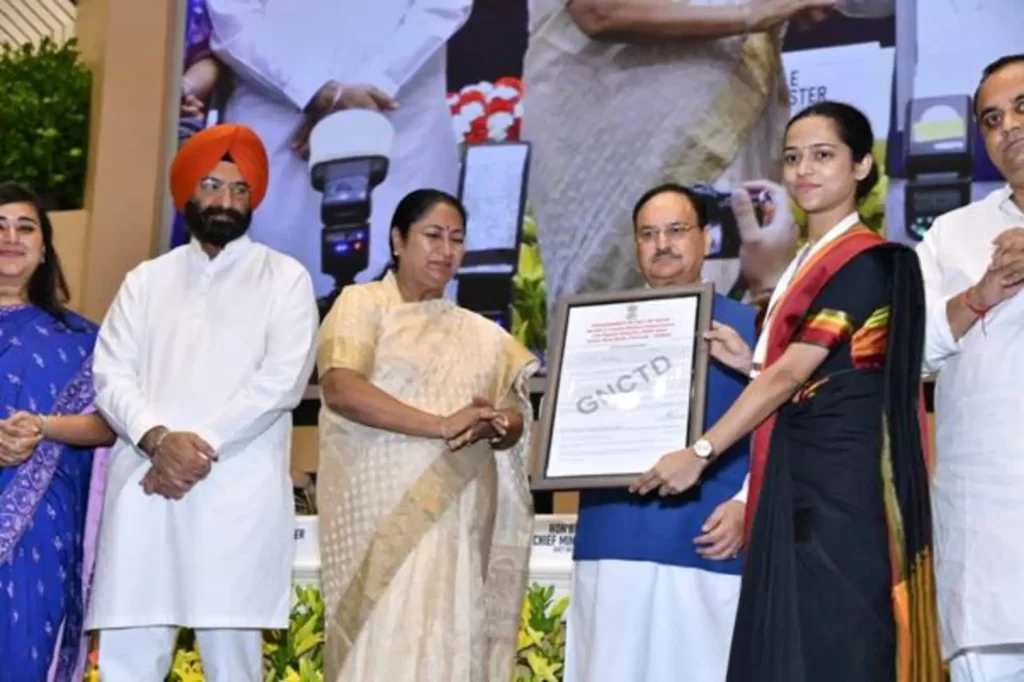
As of July 3, 2025, 557 Nursing Officers and 20 Paramedical Officials have successfully completed document verification. This significant recruitment drive is expected to address the acute shortage of nursing and allied healthcare professionals in Delhi’s hospitals to a great extent. In parallel, continuous efforts are being made to fill all existing and anticipated vacancies of doctors, nursing, and allied healthcare professionals arising due to retirements, promotions, and the creation of new posts. These actions are being undertaken proactively and simultaneously.
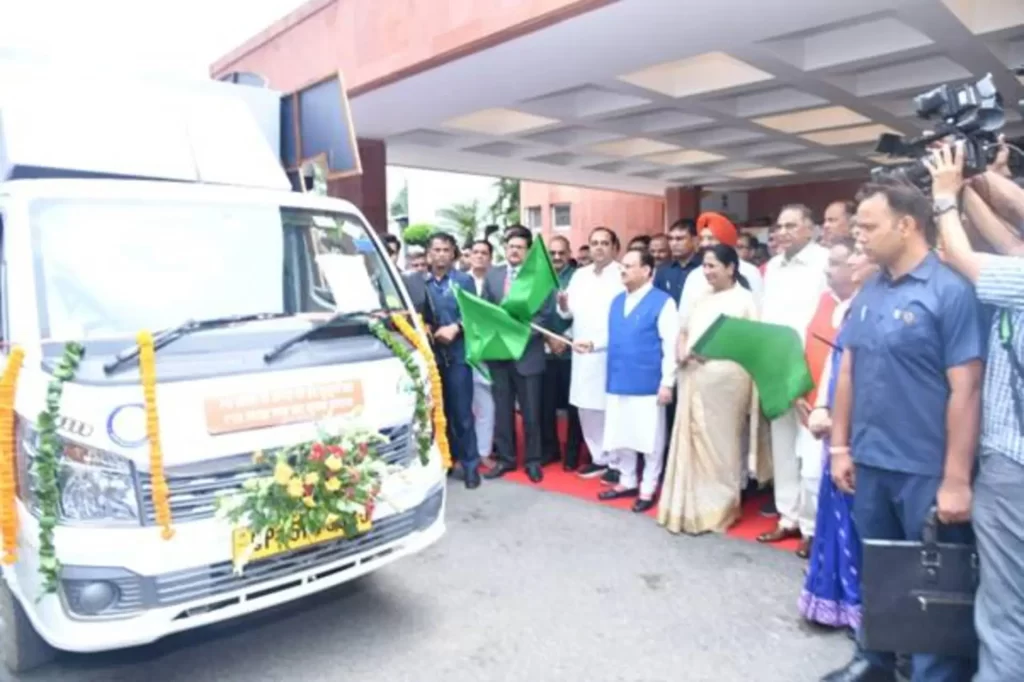
To accelerate the registration process and ensure maximum outreach, the deployment of 70 IEC (Information, Education & Communication) vans, each equipped with on-the-spot registration facilities and awareness campaign materials, is being undertaken. These vans will cover all 70 Assembly Constituencies of Delhi, facilitating registration for eligible low-income families and senior citizens. This initiative is expected to significantly expedite the generation of Ayushman Cards within the shortest possible timeframe. Each constituency has been allocated one dedicated IEC van for a duration of 30 days.
Senior officers from the Ministry and the government of NCT Delhi were also present at the occasion.
“Streamlined coordination between the centre and states can bring out the best output in healthcare delivery. The centre is committed to supporting states through financial and technical resources in the efficient and effective implementation of health programmes aimed towards quality healthcare.” This was stated by Union Minister for Health & Family Welfare Dr. Mansukh Mandaviya as he chaired the seventh meeting of the Mission Steering Group (MSG) of the National Health Mission (NHM) here today. The MSG is the apex decision-making body of NHM that makes decisions on policies and program implementation under the Mission. Shri Gajendra Singh Sekhawat, Union Minister of Jal Shakti; Dr. Virendra Kumar, Union Minister of Social Justice & Empowerment; Dr. Bharati Pravin Pawar, Minister of State for Health & Family Welfare; and Dr. V. K. Paul, Member (Health), NITI Aayog, were among the members who attended the meeting. Secretaries of Ministries of Government of India, including MoHFW, AYUSH, and DoNER, and senior officers from WCD, Drinking Water and Sanitation, Panchayati Raj, Rural Development, Urban Development, the Department of Higher Education, Social Justice and Empowerment, Health Secretaries of State Governments, and eminent public health professionals also attended the meeting.
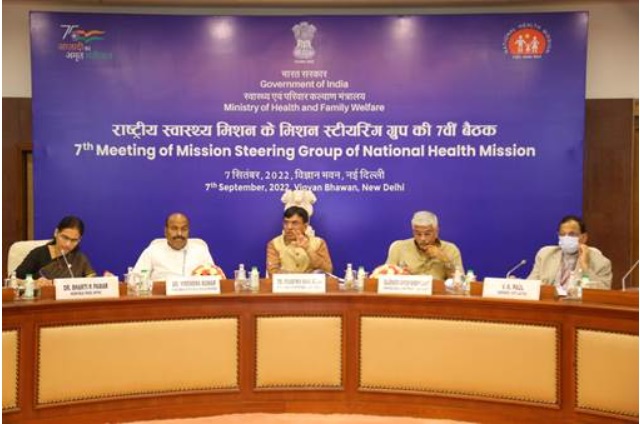
Addressing the meeting, Dr Mandaviya noted that India is the only country in the world with a four-layer health infrastructure in place with a 10-lakh strong ASHA workforce at the grassroots. “These powerful foot soldiers of our health force have played a pivotal role in India’s COVID management and COVID vaccination campaigns”. He added that strengthening incentivisation of the healthcare workers who work with communities at the cutting edge can give an impetus to various programmes. He underscored moving ahead with sharpened focus on timely elimination of diseases such Kala Azar, Leptospirosis etc., as these diseases largely impact the poorest households and communities in the country.
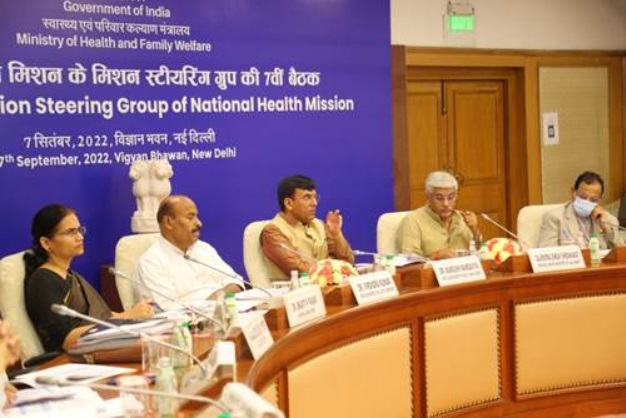
The MSG was apprised about the achievements made under NHM during the past few years:
The 7th MSG of the NHM discussed various agenda points, including sickle cell disease among tribals. It was decided to implement a sickle cell screening program in mission mode. Emphasis was given to the National TB Elimination Programme, and it was decided that all necessary actions will be taken to end TB by 2025 as per the Hon’ble Prime Minister’s vision of achieving the target of TB elimination by the year 2025. The MSG also deliberated upon cost norms for National Ambulance Services and Mobile Medical Units (MMUs). It was decided to incentivize ASHA for the creation and seeding of ABHA IDs in various IT portals of MoHFW. Additionally, the MSG discussed malnutrition among children, awareness and capacity for prevention and control of snakebite, and reviewed the status of the Prime Minister's National Dialysis Programme.
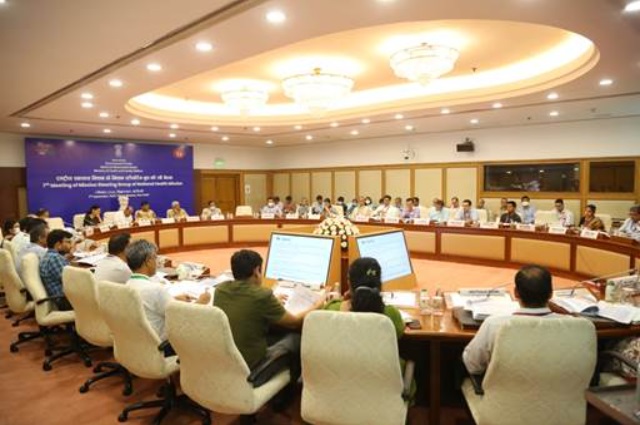
The member union ministers appreciated the progress made under NHM through focused programmes and support provided to states over the years. Several suggestions were proffered, including refinement and monitoring of fund flow from state treasury to districts; ensuring inclusion of left-out populations such as nomads, street dwellers, and various divyang persons in the PM-JAY scheme; accelerating filling vacancies of technicians and paramedics in health facilities; incentivizing mechanisms; and enhancing the synergy between the Centre and states for timely matching fund allocation from the latter.
Dr Mansukh Mandaviya noted that the decisions taken in today’s meeting of MSG will strengthen the delivery of healthcare services in all three levels of healthcare – primary, secondary and tertiary – which will provide citizens with universal access to equitable, affordable & quality health care services that are accountable and responsive to people’s needs of the country in both rural and urban areas. He further added that the feedback and suggestions from the meeting would be considered to guide the roadmap on interventions to be taken up.
Vaccination remains one of the most powerful and cost-effective public health interventions. India’s unwavering commitment to immunization is evident through its Universal Immunization Programme (UIP), which provides free vaccination services annually to 2.9 crore pregnant women and 2.6 crore infants (0–1 year). Our healthcare workers ASHAs and ANMs conduct over 1.3 crore immunization sessions across the country. As a result of the continued, sustained efforts and intensified implementation of vaccination drives and campaign across the country, the percentage of Zero-dose children to the total population has declined from 0.11% in 2023 to 0.06% in 2024. The approach remains progressive, and continuous efforts are being made in the current year to further reduce the burden of zero-dose children in the country.
These achievements have positioned India as a global exemplar in child health, as acknowledged by the UN Inter-agency Group for Child Mortality Estimation (UN IGME) in its 2024 report. India has been bestowed with the prestigious Measles and Rubella Champion Award by The Measles and Rubella Partnership (American Red Cross, BMGF, GAVI, US CDC, UNF, UNICEF, and WHO) at the American Red Cross Headquarters in Washington DC, USA on March 6th, 2024 for its committed endeavors.
The effect of the increased number of lifesaving vaccines in reducing Mortality and morbidity in children due to diarrhea, pneumonia, meningitis & encephalitis is also clearly observable.
As per the latest SRS (2020-22), Maternal Mortality Ratio (MMR) of India has declined from 130/lakh live births in 2014-16 to 88/lakh live births in 2020-22. As per the United Nations Maternal Mortality Estimation Inter-Agency Group (UN-MMEIG 2000-2023) report, the MMR of India stands at 80 per lakh live births, reflecting an 86% decline relative to the global reduction of 48% since 1990.
As per the United Nations Inter-Agency Group for Child Mortality Estimation (UNIGME 2024 Report), India achieved a 78% decline in the Under-Five Mortality Rate (U5MR) surpassing the global reduction of 61% and 70% decline in the Neonatal Mortality Rate (NMR) compared to 54% globally during 1990 - 2023.
In addition to focused attention on increasing vaccination coverage, India’s Universal Immunization Programme (UIP) embodies a comprehensive range of vaccines recommended by the World Health Organization (WHO). Till 2013, there were only 6 available vaccines in the program. From 2014, six new vaccines (namely Inactivated Polio-virus Vaccine, Rotavirus Vaccine (RVV), Pneumococcal Conjugate Vaccine (PCV), Measles-Rubella Vaccine, Adult Japanese Encephalitis Vaccine and Tetanus-Diphtheria Vaccine) have been introduced in the programme. Currently, India’s UIP covers 12 vaccine-preventable diseases and has seen significant expansion.
With continued focus on improving vaccine coverage, India has taken a proactive and inclusive approach to reach underserved populations. The Govt. of India in consultation with all States/UTs, has launched targeted campaigns to address challenges among zero-dose children, particularly in urban slums, peri-urban areas, migratory populations, hard-to-reach regions, and communities affected by vaccine hesitancy. These efforts are also aligned with the National goal of eliminating Measles and Rubella.
To amplify our reach, we are leveraging technology and community engagement. The U-WIN platform tracks immunization status digitally, ensuring no child is missed. Public awareness campaigns are being intensified using mass media, community radio, social media, and even street plays to educate families. Healthcare workers, ASHAs, and ANMs will go door-to-door, not just to vaccinate, but to sensitize the beneficiaries about the benefits of vaccination.
Some key initiatives include-
The annual birth cohort in India (2.6 crore) exceeds the total population of several countries, including New Zealand, Australia, Finland, and Switzerland. Given the varying sizes of the countries across the globe, the percentage comparison shows it at par with the vaccination coverage levels observed in many high-income countries for e.g., New Zealand (DTP-1 93%), Germany & Finland (DPT-3 91%), Sweden (MCV-1 93%), Luxembourg (MCV-2 90%), Ireland (PCV-3 83%), United Kingdom of Great Britain and Northern Ireland (Rota C 90%). (WUNEIC report 2023).
Annexure:1 demonstrates that India’s antigen-wise immunization coverage surpasses global averages across all antigens. In particular, national coverage for DTP1 and DTP3 ranks among the highest compared to other countries with the largest number of zero-dose children (Annexure 2). According to WUENIC 2023, India with high population size and socio-geographical diversity, National DTP-1 (Penta-1) has a coverage of 93% that is 2.47 crore out of 2.65 crore infants have been vaccinated even though during equivalent period which is significantly higher than Nigeria’s 70%. There is a commensurate decrease in dropout percentage from DTP-1 to DTP-3 from 7% in 2013 to 2% in 2023 and increased coverage of Measles from 83% in 2013 to 93% in 2023.
The comparative results of countries on zero dose children as a percentage of the total population shows that Yemen (1.68%), Sudan (1.45%), Angola (1.1%), Afghanistan (1.1%), Nigeria (0.98%), DR Congo (0.82%), Ethiopia (0.72%), Indonesia (0.23%), Pakistan (0.16%) have far more zero dose children as a percentage of their population compared to India’s (0.11% during 2023 as per the last Wuneic report released.
Any comparison of India with any other countries with high burden zero dose children needs to take into consideration India’s large population size and high vaccination coverage rate. Therefore, any interpretation or analysis based on isolated factors does not lend credence to the country’s progress on its immunization program.
The Universal immunization program has always been prioritized by the Govt. of India to ensure that the children of our country are protected against deadly diseases. Elimination of Polio in 2014 and Maternal & Neonatal Tetanus in 2015 and the recent launch of Measles Rubella campaign in 2025 is a testament of the fact. With focused strategies and committed healthcare workers, the endeavor will always be last mile delivery to ensure comprehensive vaccination coverage.
****
MV
HFW/ Zero Dose Children/28 June 2025/1
Annex- 1
Antigen wise comparison between India and Global coverage (%)
(WUENIC 2023)

Annex-2
Comparison between India and 9 Countries with high number of zero dose children for DTP 1 & 3 (%) (WUENIC 2023)

The Standing National Committee on Medicines (SNCM) was constituted to review and revise the National List of Essential Medicines by way of additions and deletions in the existing NLEM in the context of contemporary knowledge of the use of therapeutic products in the health & hygiene of the general public. The SNCM submitted its final report on 10.09.2022. The Government of India has accepted the recommendations of the Committee, and the National List of Essential Medicines (NLEM), 2022 became operational vide notification dated 13.09.2022. The current National List of Essential Medicines (NLEM, 2022) contains 384 medicines. In NLEM 2022, 34 medicines have been added and 26 medicines have been deleted from NLEM 2015.
The details are available on the website of Ministry of Health and Family Welfare at https://main.mohfw.gov.in/newshighlights-104
The Government of India has taken the following initiatives to increase awareness about antibiotics:
ICMR has initiated an antibiotic stewardship program (AMSP) on a pilot project basis in 20 tertiary care hospitals across India to control misuse and overuse of antibiotics in hospital wards and ICUs.
DCGI has banned 40 fixed-dose combinations (FDCs) that were found inappropriate.
ICMR worked in collaboration with the Indian Council of Agricultural Research, the Department of Animal Husbandry, Dairy and Fisheries, and the DCGI to ban the use of colistin as a growth promoter in animal feed in poultry.
Various IEC activities like public conclaves and poster and quiz competitions have been conducted by the National Centre for Disease Control (NCDC) in schools, colleges, and health melas to create awareness about AMR, its containment & prevention, and the judicial use of antibiotics among the common public. To raise awareness among the community and the health care providers, communication material including posters, videos, and radio jingles has been developed with emphasis on prevention of irrational use of antibiotics during viral illnesses and also on infection prevention through hand hygiene to prevent the spread of infections. Under the National Programme for Containment of Antimicrobial Resistance, NCDC supports institutes to conduct surveillance of antibiotics consumed in their respective hospitals.
The Union Minister of State for Health and Family Welfare, Dr. Bharati Pravin Pawar, stated this in a written reply in the Lok Sabha today.
The Department of Health and Family Welfare (DoHFW) has been conducting Special Campaign 3.0 on Swachhata and disposal of pending matters within the Department (HQ) and all its Attached & Subordinate Offices, Autonomous Bodies and CPSE located in various parts of the country. The objectives of the campaign are to minimize pendency, institutionalize swachhata, strengthen internal monitoring mechanism, train officers in records management, digitize physical records for improved records management. During the campaign, special focus is being given to field offices of DoHFW and various activities under the campaign have been undertaken by these field offices.
Regular reviews are being done by Shri Sudhansh Pant, Union Health Secretary and Shri Elangbam Robert Singh, Joint Secretary (Health) and Nodal Officer of Special Campaign 3.0 to ensure efficient implementation of the campaign.

Cleanliness Drive at AIIMS, New Delhi

Beautification of office space at National Institute of TB and Respiratory Disease (NITRD), New Delhi

Swachhata Awareness Campaign at Mother’s Public School by AIIMS, Bhubaneswar, Odisha

Awareness session on Swachhata & Plastic free campus for the patients and their attendants at AIIMS, Mangalagiri, Andhra Pradesh

Awareness campaign on Swachhata for patients and caregivers at LGB Regional Institute of Mental Health (LGBRIMH), Tezpur, Assam
The progress of implementation phase of the Campaign is reported on the SCDPM portal (https://scdpm.nic.in) of the Department of Administrative Reforms & Public Grievances (DARPG) by DoHFW regularly.
As on 17.10.2023, as per data of achievement reported on the DARPG’s portal, DoHFW has disposed of 65 References from MPs and 2,073 public grievances. 14,908 physical files have been reviewed and 4,131 files have been weeded out. Also, 864 Cleanliness Campaigns have been conducted by different offices of DoHFW and 11,078 sq. ft. of space has been freed for use of offices. Revenue of Rs. 3,52,408/- has also been earned by selling of scrap materials. The campaign is in full swing to achieve the targets set by DoHFW during the Campaign period.