
A young male patient, who recently travelled from a country currently experiencing Mpox (monkeypox) transmission, has been identified as a suspect case of Mpox. The patient has been isolated in a designated hospital and is currently stable.
Samples from the patient are being tested to confirm the presence of Mpox. The case is being managed in line with established protocols, and contact tracing is ongoing to identify potential sources and assess the impact within the country.
The development of this case is consistent with the earlier risk assessment conducted by the NCDC and there is no cause of any undue concern. The country is fully prepared to deal with such isolated travel related case and has robust measures in place to manage and mitigate any potential risk.
Prime Minister Shri Narendra Modi has been continuously monitoring the MPox situation.
As advised by the Prime Minister Shri Narendra Modi, Dr. P. K. Mishra, Principal Secretary to Prime Minister, chaired a high-level meeting to review the status of preparedness for Mpox in the country and related public health measures.
It may be noted that the World Health Organization (WHO) has again declared Mpox Public Health Emergency of International Concern (PHEIC) on 14th August 2024 in view of its prevalence and spread across many parts of Africa. As per an earlier statement from WHO, globally since 2022 from 116 countries, 99,176 cases and 208 deaths had been reported due to Mpox. Subsequently, they have reported that Mpox cases have been steadily increasing in the Democratic Republic of Congo. Last year, the reported cases increased significantly, and already the number of cases reported so far this year has exceeded last year’s total, with more than 15, 600 cases and 537 deaths. Since the 2022 declaration of Public Health Emergency of International Concern by WHO, 30 cases were reported in India. The last case of Mpox was detected in March 2024.
The high-level meeting was briefed that as of now, there is no reported case of Mpox in the country. As per the present assessment, the risk of a large outbreak with sustained transmission is low.
Principal Secretary to Prime Minister was informed that Mpox infections are generally self-limiting lasting between 2-4 weeks; Mpox patients usually recover with supportive medical care and management. Mpox transmission happens through prolonged and close contact with an infected patient. It happens largely through the sexual route, direct contact with body/lesion fluid of the patient, or through the contaminated clothing/linen of an infected person.
It was informed by the Health Secretary that the following steps have already been taken in the last one week:
A meeting of experts was convened by the National Centre for Disease Control (NCDC) on 12th August, 2024 to assess the risk for India.
A Communicable Disease (CD) Alert on Mpox issued earlier by the NCDC is being updated to capture the newer developments.
Sensitization of the health teams at International Airports (Ports of Entry) has been undertaken.
It was also informed that today morning, a Video Conference was convened by the Director General Health Services (DGHS) with more than 200 participants. The health authorities at state level including the Integrated Disease Surveillance Programme (IDSP) units in the States and at the Ports of Entry etc. were sensitized in this regard.
Principal Secretary to Prime Minister, Dr. P. K. Mishra directed that surveillance be enhanced and effective measures be taken for prompt detection of cases. He further directed that the testing laboratories network should be geared up for early diagnosis. Presently 32 labs are equipped for testing.
Dr P.K. Mishra directed that the protocols for prevention and treatment of the disease may be disseminated on a large scale. He further emphasised an awareness campaign amongst the healthcare providers regarding the signs and symptoms of the disease and the need for timely notification to the surveillance system.
The meeting was attended by Dr. V.K. Paul, Member NITI, Shri Apurva Chandra, Secretary (Health & Family Welfare), Dr Rajiv Bahl, Secretary (Health Research), Shri Krishna S Vatsa, Member Secretary (National Disaster Management Authority), Shri Sanjay Jaju, Secretary (Information & Broadcasting) and Shri Govind Mohan, Home Secretary designate, along with officers of other ministries.
The representatives of Federation of Resident Doctors Association (FORDA), Indian Medical Association (IMA) and Resident Doctors’ Associations of Governmental Medical Colleges & Hospitals of Delhi have met the Union Ministry of Health & Family Welfare at New Delhi in the aftermath of the incident against a resident doctor in RG Kar Medical College and Hospital, Kolkata.
The Associations have put forth their demands regarding their concern over the safety and security of healthcare workers at the workplace. The Union Ministry of Health & Family Welfare has heard the demands of the representatives and assured them of all possible efforts to ensure the security of healthcare professionals. The representatives of all the Associations were informed that the Government is well aware of the situation and is sensitive to their demands. It was observed that 26 States have already passed legislation for protection of healthcare workers in their respective states. In view of the concerns expressed by the Associations, the Ministry assured them of constituting a Committee to suggest all such possible measures for ensuring the safety of healthcare professionals. Representatives of all stakeholders including the State Governments will be invited to share their suggestions with the Committee.
The Ministry requested the agitating doctors to resume their duties in the larger public interest and in view of the rising cases of Dengue and Malaria.
In view of the World Health Organization (WHO) having declared Monkeypox a Public Health Emergency of International Concern (PHEIC) on 14th August 2024, a detailed review of the Monkeypox situation and the preparedness was taken by the Union Minister of Health & Family Welfare, Shri Jagat Prakash Nadda in a meeting with the senior officials of the Ministry, here today.
There are no reported cases of Monkeypox in India as of date.
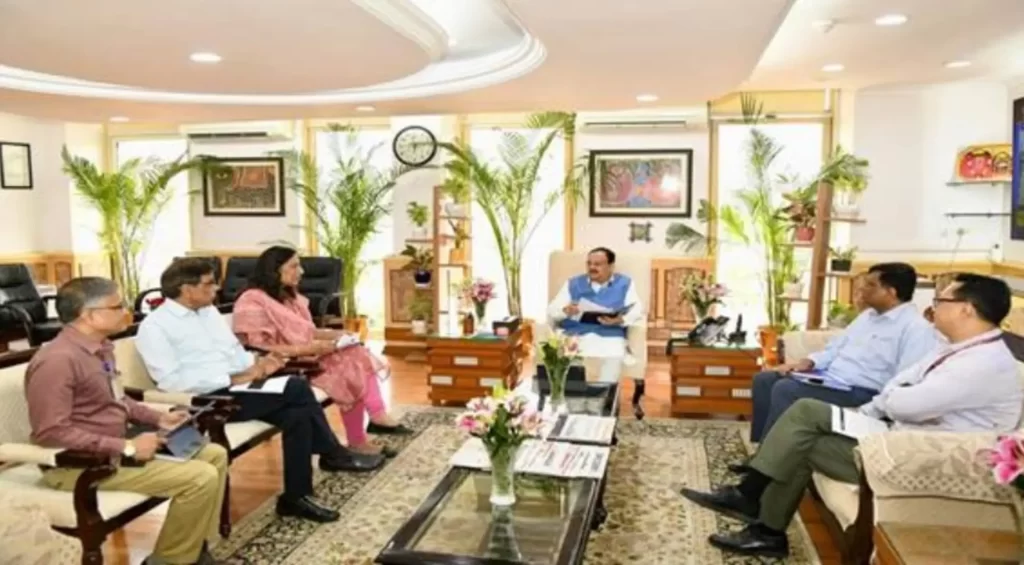
In the meeting chaired by the Union Health Minister, it was decided that as a matter of abundant caution, certain measures [such as sensitizing the health units at all the airports, seaports, and ground crossings; readying the testing Laboratories (32 in no.); gearing up health facilities for detecting, isolating and managing any case, etc.] are put in place.
In the meeting, it was noted that Monkeypox infections are usually self-limiting lasting between 2-4 weeks and patients generally recover with supportive management. The transmission requires prolonged close contact with an infected case and is generally through the sexual route, direct contact with body/lesion fluid, or contaminated clothing/linen of an infected person.
WHO had earlier declared Monkeypox as a Public Health Emergency of International Concern (PHEIC) in July 2022 and subsequently revoked the same in May 2023. Globally since 2022, WHO has reported 99,176 cases and 208 deaths due to Monkeypox from 116 countries. Since the 2022 declaration by WHO, a total of 30 cases were detected in India with the last case in March 2024.
A Joint Monitoring Group Meeting under the Chairmanship of the Director General of Health Services consisting of experts from relevant fields was held on 16th August 2024 to review the situation. The meeting was attended by experts from the National Centre for Disease Control (NCDC), World Health Organization (WHO), Indian Council of Medical Research (ICMR), National Centre for Vector Borne Disease Control Programme (NVBDCP), Directorate General of Health Services (Dte.GHS), Central Government Hospitals, All India Institute of Medical Sciences AIIMS etc. Although the possibility of a few imported cases being detected in the coming weeks is not entirely ruled out, it was assessed that the risk of a large outbreak with sustained transmission is presently low for India.
The situation is being monitored closely by the Ministry.
As part of the Independence Day celebrations in New Delhi, 50 Nurses along with their family members from across the country were invited as Special Guests to witness and participate in the celebrations from the ramparts of the Red Fort. These Special Guests were part of the 1800 special guests from various walks of life ranging from Sarpanches, teachers, farmers, and fishermen.
Prime Minister, Shri Narendra Modi appreciated the nurses, doctors and others for their efforts for changing the fortunes of the country. He said that Covid has taught us that development of the world is not possible without a human centric approach.
Accentuating the efforts of the government to improve the Universal Health Coverage of the country, he said that the government has invested Rs. 70,000 crores in Ayushman Bharat which provides Rs.5 lakh annual health guarantee to the BPL families.
Addressing the nation on the occasion, he lauded the exemplary contribution of health workers specially Anganwadi workers and ASHA workers for their dedication and persistent efforts in achieving the milestone of over 200 crore Covid vaccinations. “Helping the world during and after COVID has established India as a friend to the world", he further noted.
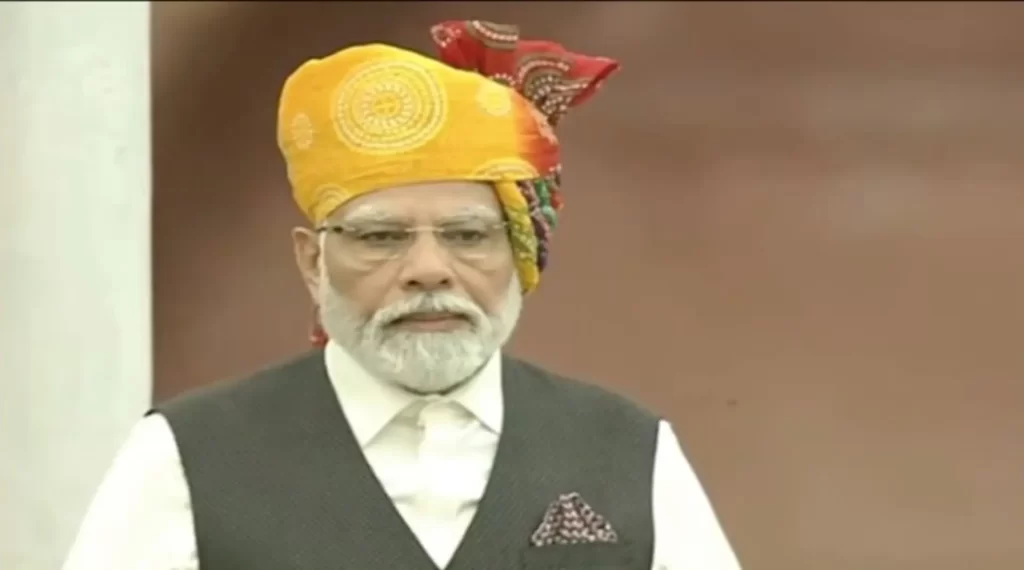
Highlighting the vision of One Earth, One Health and One Future, he said “Jan Aushadhi Kendras have given new strength to the middle class of the country by savings of Rs. 20,000 crores. He affirmed that nation is going to work in the coming days with the target of increasing the number of Jan Aushadhi Kendras to 25,000 from the present number of 10000 Kendras.
The Indian Council of Medical Research (ICMR) and Panacea Biotec have announced the initiation of the first-ever Phase 3 clinical trial for a dengue vaccine in India. This landmark trial will evaluate the efficacy of India’s indigenous tetravalent dengue vaccine, DengiAll, developed by Panacea Biotec. The first participant in this trial was vaccinated today at Pandit Bhagwat Dayal Sharma Post Graduate Institute of Medical Sciences (PGIMS), Rohtak.
Commenting on this milestone, Union Minister of Health & Family Welfare, Shri J.P. Nadda, said, “The initiation of this Phase 3 clinical trial for India's first indigenous dengue vaccine marks a critical advancement in our fight against dengue. It reflects our commitment to protecting our citizens from this pervasive disease and underscores India's capabilities in vaccine research and development. Through this collaboration between ICMR and Panacea Biotec, we are not only taking a step towards ensuring the health and well-being of our people but also reinforcing our vision of Atmanirbhar Bharat in the healthcare sector.”
Currently, there is no antiviral treatment or licensed vaccine against dengue in India. The development of an effective vaccine is complex due to the need to achieve good efficacy for all four serotypes. In India, all four serotypes of Dengue virus are known to circulate or co-circulate in many regions.
The tetravalent dengue vaccine strain (TV003/TV005), originally developed by the National Institutes of Health (NIH), USA, has shown promising results in preclinical and clinical trials worldwide. Panacea Biotec, one of three Indian companies to receive the strain, is at the most advanced stage of development. The company has worked extensively on these strains to develop a full-fledged vaccine formulation and holds a process patent for this work. Phase 1 and 2 clinical trials of the Indian vaccine formulation were completed in 2018-19, yielding promising results.
In collaboration with ICMR, Panacea Biotec will conduct the Phase 3 clinical trial across 19 sites in 18 States and Union Territories of India, involving more than 10,335 healthy adult participants. The trial, primarily funded by ICMR with partial support from Panacea Biotec, is set to follow up with participants for two years. This initiative represents a significant step towards developing an indigenous vaccine for one of India’s most pressing public health challenges and exemplifies the nation’s commitment to Atmanirbhar Bharat.
Dengue is a major public health concern in India, ranking among the top 30 countries with the highest incidence of the disease. The global incidence of dengue has been steadily increasing over the past two decades, with more than 129 countries reporting dengue viral disease by the end of 2023, according to the World Health Organization (WHO). In India, approximately 75-80% of infections are asymptomatic, yet these individuals can still transmit the infection through the bite of Aedes mosquitoes. Among the 20-25% of cases where symptoms are clinically apparent, children are at a significantly higher risk of hospitalization and mortality. In adults, the disease can escalate into severe conditions like dengue hemorrhagic fever and dengue shock syndrome. The dengue virus has four serotypes, 1-4, with low cross-protection against each other, meaning individuals can experience repeated infections.
The Government conducted the National Mental Health Survey (NMHS) of India through the National Institute of Mental Health and Neurosciences (NIMHANS), Bengaluru in 2016 as per which the prevalence of mental disorders in adults over the age of 18 years is about 10.6%.
The District Mental Health Programme (DMHP) component of the National Mental Health Programme (NMHP) has been sanctioned for implementation in 767 districts for which support is provided to States/UTs through the National Health Mission with the objectives that include suicide prevention services, work place stress management, life skills training and counselling in schools and colleges. Facilities made available under DMHP at the District Hospitals, Community Health Centre (CHC) and Primary Health Centre (PHC) levels, include outpatient services, assessment, counselling/ psycho-social interventions, continuing care and support to persons with severe mental disorders, drugs, outreach services, ambulance services etc. In addition to above services there is a provision of 10 bedded in-patient facility at the District level.
Further, to enhance the capacity of mental health services in the country, the Government of India is implementing the NMHP. Under the Tertiary care component of NMHP, 25 Centres of Excellence have been sanctioned to increase the intake of students in PG departments in mental health specialities as well as to provide tertiary level treatment facilities. The Government has also supported to establish / strengthen 47 PG Departments in mental health specialties in 19 Government medical colleges/institutions. Mental Health Services are also provisioned for in 22 new AIIMS.
As per the available information, there are 47 Government run mental hospitals in the country, including 3 Central Mental Health Institutions, viz. National Institute of Mental Health and Neuro Sciences, Bengaluru, Lokopriya Gopinath Bordoloi Regional Institute of Mental Health, Tezpur, Assam and Central Institute of Psychiatry, Ranchi.
In addition to the above, the Government is also taking steps to strengthen mental healthcare services at primary healthcare level. The Government has upgraded more than 1.73 lakh Sub Health Centres (SHCs) and Primary Health Centres (PHCs) to Ayushman Arogya Mandirs. Mental health services have been added in the package of services under Comprehensive Primary Health Care provided at these Ayushman Arogya Mandirs.
Besides the above, the Government has launched a “National Tele Mental Health Programme” (NTMHP) on 10th October, 2022, to improve access to quality mental health counselling and care services in the country. As on 23.07.2024, 36 States/ UTs have set up 53 Tele MANAS Cells and have started tele mental health services. More than 11,76,000 calls have been handled on the helpline number.
The Union Minister of State for Health and Family Welfare, Shri Prataprao Jadhav stated this in a written reply in the Lok Sabha today.
Medicines supplied under PMBJP are procured from World Health Organization – Good Manufacturing Practices (WHO-GMP) certified suppliers only, for ensuring quality of the products. Each batch of drugs, after its receipt at the warehouses, is tested at laboratories accredited by ‘National Accreditation Board for Testing and Calibration Laboratories’ (NABL). Only after passing the quality tests, the medicines are dispatched to Jan Aushadhi Kendras (JAKs). Any batch not meeting the quality parameters is returned back to the supplier. Only quality medicines are supplied through JAKs.
Pharmaceuticals & Medical Devices Bureau of India (PMBI), the implementing agency of Pradhan Mantri Bhartiya Janaushadhi Pariyojana is spreading awareness about the features of PMBJP and benefits of Jan Aushadhi generic medicines through various types of advertisements such as Print Media, Radio advertisements, TV advertisements, Cinema Advertisements and Outdoor publicity like Hoardings, Bus Queue Shelter branding, Bus branding, Auto wrapping, etc. In addition to this, PMBI is also educating the public about the benefits of Jan Aushadhi generic medicines through social media platforms like Facebook, Twitter, Instagram, YouTube, etc. regularly.
Furthermore, PMBI is also educating citizens of the country about the benefits of Jan Aushadhi generic medicines by organizing Jan Aushadhi Diwas every year on 7th March. Workshops and seminars are organized during various event celebrations such as Azadi Ka Amrit Mahotsav, National Unity Day week, etc. to educate the consumers about the PMBJP Scheme.
The sales of medicines and other items sold through Jan Aushadhi Kendras have increased from Rs. 7.29 cr. in 2014 to Rs. 1470 cr. by July 2024. Number of JAKs has increased from 80 in 2014 to 13113 till 31.07.2024, which shows the popularity of the Scheme. Over the last 10 years, sale of medicines worth Rs. 5,600 crores have been made through JAKs, which has led to estimated savings of Rs. 30,000 crore to the consumers.
Till 31.07.2024, 912 Jan Aushadhi Kendras have been opened in aspirational districts, which covers backward and SC/ST dominated areas.
This information was given by the Union Minister for Chemicals and Fertilizers Shri Jagat Prakash Nadda in Lok Sabha in reply to a question today.
The Production Linked Incentive (PLI) Scheme for Promotion of Domestic Manufacturing of critical Key Starting Materials (KSMs)/ Drug Intermediates and Active Pharmaceutical Ingredients (APIs) in the Country with a financial outlay of Rs. 6,940 crores was approved by the Cabinet to boost domestic manufacturing of bulk drugs in the country, reduce import dependence and improve our supply chain resilience. The production period under the scheme is from FY 2022-23 to FY 2028-29.
Under the scheme, 249 applications were received, of which 48 projects have been selected for manufacturing of identified bulk drugs. 13 of these projects are implemented by 10 Micro, Small and Medium Enterprises (MSMEs).
Under the scheme, 32 projects have been completed with cumulative installed capacity of 56,679 MT per annum. 16 projects are under development and have been supported for facilitating regulatory approvals such as environmental clearance and drug manufacturing licenses with the help of state governments. Against the targeted investment of Rs. 3,938 crores, investments worth Rs. 4,024 crores have been made under the scheme. The details of state-wise approved projects under the scheme are attached at Annexure.
Ministry of Health & Family Welfare launched National Policy for Rare Diseases (NPRD) in March 2021. The key features of NPRD, 2021 are as under:
● The rare diseases have been identified and categorized into 3 groups as below:
Group 1: Disorders amenable to one-time curative treatment.
Group 2: Diseases requiring long term/lifelong treatment with relatively lower cost of treatment.
Group 3:- Diseases for which definitive treatment is available but challenges are to make optimal patient selection for benefit, very high cost and lifelong therapy.
● 12 (Twelve) Centres of Excellence (CoEs) have been identified so far, which are premier Government tertiary hospitals with facilities for diagnosis, prevention and treatment of rare diseases. List of Centres of Excellence (CoEs) is at Annexure I.
● In order to receive financial assistance for treatment of rare disease, the patient may approach nearby or any Centre of Excellence to get registered.
● Ministry of Health and Family Welfare has obtained exemption from Department of Expenditure on Goods & Services Tax (GST) and Basic Customs Duty on drugs imported for Rare Diseases for individual use and through CoE.
● As envisaged in the policy, Department of Health Research has established the National Consortium for Research and Development on Therapeutics for Rare Diseases (NCRDTRD) for streamlining the research activities for rare diseases.
Currently, 63 rare diseases are included under National Policy for Rare Diseases on recommendation of Central Technical Committee for Rare Diseases (CTCRD). The list of rare diseases is at Annexure II. Financial support of up to Rs. 50 lakhs per patient is provided for the treatment at the notified Centres of Excellence (CoEs) for Rare Diseases.
Since the launch of the policy, a total number of one thousand one hundred and eighteen (1,118) patients have benefited under NPRD. Patients can approach any CoE across the country as per their convenience.
List of Centres of Excellence (CoEs)
1. All India Institute of Medical Sciences, New Delhi
2. Maulana Azad Medical College, New Delhi
3. Sanjay Gandhi Post Graduate Institute of Medical Sciences, Lucknow
4. Post Graduate Institute of Medical Education and Research, Chandigarh
5. Centre for DNA Fingerprinting & Diagnostics with Nizam’s Institute of Medical Sciences, Hyderabad
6. King Edward Medical Hospital, Mumbai
7. Institute of Post-Graduate Medical Education and Research, Kolkata
8. Center for Human Genetics(CHG) with Indira Gandhi Hospital, Bengaluru
9. Institute of Child Health and Hospital for Children (ICH & HC), Chennai
10. All India Institute of Medical Sciences (AIIMS), Jodhpur
11. Sree Avittam Thirunal Hospital (SAT), Government Medical College, Thiruvananthapuram
12. All India Institute of Medical Sciences, Bhopal
List of Rare Diseases as per National Policy of Rare Diseases, 2021
Group 1: Disorders amenable to one-time curative treatment:
(a) Disorders amenable to treatment with Hematopoietic Stem Cell Transplantation (HSCT)
1. Such Lysosomal Storage Disorders (LSDs) for which Enzyme Replacement Therapy (ERT) is presently not available and severe form of Mucopolysaccharoidosis (MPS) type I within first 2 years of age.
2. Adrenoleukodystrophy (early stages), before the onset of hard neurological signs.
3. Immune deficiency disorders like Severe Combined Immunodeficiency (SCID), Chronic Granulomatous disease, Wiskot Aldrich Syndrome etc.
4. Osteopetrosis
5. Fanconi Anemia
(b) Disorders amenable to organ transplantation
1) Liver Transplantation -Metabolic Liver diseases:
(i) Tyrosinemia,
(ii) Glycogen storage disorders (GSD) I, III and IV due to poor metabolic control, multiple liver adenomas, or high risk for Hepatocellular carcinoma or evidence of substantial cirrhosis or liver dysfunction or progressive liver failure,
(iii) MSUD (Maple Syrup Urine Disease),
(iv) Urea cycle disorders,
(v) Organic acidemias.
2) Renal Transplantation-
(i) Fabry disease
(ii) Autosomal recessive Polycystic Kidney Disease (ARPKD),
(iii) Autosomal dominant Polycystic Kidney Disease (ADPKD) etc.
3) Patients requiring combined liver and kidney transplants can also be considered if the same ceiling of funds is maintained. (Rarely Methyl Malonicaciduria may require combined liver & Kidney transplant) etc.
Newly added diseases
1. Laron Syndrome
2. Glanzmann Thrombasthenia Diseases
3. Congenital Hyperinsulinemic Hypoglycemia (CHI)
4. Familial Homozygous Hypercholesterolemia
5. Mannosidosis
6. XY Disorder of Sex Development due to 5 alpha reductase deficiency, partial androgen insensitivity syndrome
7. Primary Hyperoxaluria- Type 1
Group 2: Diseases requiring long term / lifelong treatment having relatively lower cost of treatment and benefit has been documented in literature and annual or more frequent surveillance is required:
(a) Disorders managed with special dietary formulae or Food for special medical purposes (FSMP)
1. Phenylketonuria (PKU)
2. Non-PKU hyperphenylalaninemia conditions
3. Maple Syrup Urine Disease (MSUD)
4. Tyrosinemia type 1 and 2
5. Homocystinuria
6. Urea Cycle Enzyme defects
7. Glutaric Aciduria type 1 and 2
8. Methyl Malonic Acidemia
9. Propionic Acidemia
10. Isovaleric Acidemia
11. Leucine sensitive hypoglycemia
12. Galactosemia
13. Glucose galactose malabsorption
14. Severe Food protein allergy
(b) Disorders that are amenable to other forms of therapy (hormone/ specific drugs) 1. NTBC for Tyrosinemia Type 1
2. Osteogenesis Imperfecta – Bisphosphonates therapy
3. Growth Hormone therapy for proven GH deficiency, Prader Willi Syndrome, Turner syndrome and Noonan syndrome.
4. Cystic Fibrosis- Pancreatic enzyme supplement
5. Primary Immune deficiency disorders -Intravenous immunoglobulin and sub cutaneous therapy (IVIG) replacement eg. X-linked agammablobulinemia etc.
6. Sodium Benzoate, arginine, citrulline, phenylacetate (Urea Cycle disorders), carbaglu, Megavitamin therapy (Organic acidemias, mitochondrial disorders)
7. Others - Hemin (Panhematin) for Acute Intermittent Porphyria, High dose Hydroxocobalamin injections (30mg/ml formulation – not available in India and hence expensive if imported)
8. Large neutral aminoacids, mitochondrial cocktail therapy, Sapropterin and other such molecules of proven clinical management in a subset of disorders
9. Wilson’s disease
10. Congenital Adrenal Hyperplasia (CAH)
11. Neonatal Onset Multisystem Inflammatory Disease (NOMID)
Group 3: Diseases for which definitive treatment is available but challenges are to make optimal patient selection for benefit, very high cost and lifelong therapy.
(a) Based on the literature sufficient evidence for good long-term outcomes exists for the following disorders
1. Gaucher Disease (Type I & III {without significant neurological impairment})
2. Hurler Syndrome [Mucopolysaccharisosis (MPS) Type I] (attenuated forms)
3. Hunter syndrome (MPS II) (attenuated form)
4. Pompe Disease (Both infantile & late onset diagnosed early before development of complications)
5. Fabry Disease diagnosed before significant end organ damage.
6. MPS IVA before development of disease complications.
7. MPS VI before development of disease complications.
8. DNAase for Cystic Fibrosis.
(b) For the following disorders for which the cost of treatment is very high and either long term follow up literature is awaited or has been done on small number of patients
1. Cystic Fibrosis (Potentiators)
2. Duchenne Muscular Dystrophy (Antesensce oligoneucletides, PTC)
3. Spinal Muscular Atrophy (Antisense oligonucleotides both intravenous & oral & gene therapy)
4. Wolman Disease
5. Hypophosphatasia
6. Neuronal ceroid lipofuschinosis
Newly added diseases
1. Hypophosphatic Rickets
2. Atypical Hemolytic Uremic Syndrome (AHUS)
3. Cystinosis
4. Hereditary Angioedema
The Union Minister of State for Health and Family Welfare, Smt. Anupriya Singh Patel stated this in a written reply in the Lok Sabha today.