
During the ongoing 77th World Health Assembly, India hosted a side event on Digital health which saw participation by the Quad countries (Australia, Japan and the United States of America). The purpose of the event was to emphasize the transformative potential of Digital Public Infrastructure for Addressing Social Determinants of Health. It was attended by delegates from over 100 countries highlighting collaborative efforts in advancing digital public infrastructure globally.
Shri Apurva Chandra, Union Health Secretary and Head of the Indian Delegation outlined India's advancements in digital health. He highlighted the transformative role of Digital Health in ensuring equitable and accessible healthcare services, contributing to Universal Health Coverage and achievement of Sustainable Development Goal 3, that is Good Health and Well-being. He emphasized India's success in implementing digital public infrastructure at scale such as Aadhaar for digital identities, Unified Payments Interface (UPI) for the financial transactions and effective health service delivery with Co-WIN during the pandemic.
He informed that Co-WIN is being transformed into UWIN for the National Immunization Programme. It will aid in linking and providing immunization record of 30 million new born and mothers every year followed by Anganwadi and school health record.
The Union Health Secretary also highlighted India’s effort under the Ayushman Bharat Digital Mission (ABDM), which aims to create a robust national digital health ecosystem. With over 618 million Unique Health IDs (ABHA IDs) generated, 268,000 health facilities registered, and 350,000 healthcare professionals enlisted, ABDM exemplifies India's commitment to digital healthcare. He added that as part of ABDM, Government of India is launching the National Health Claims Exchange (NHCX) to transform the insurance payments ecosystem leveraging the public private partnership built on top of the digital public infrastructure. It will usher in the era of real time settlements with auto adjudication of claims.
He also spotlighted other initiatives by Government of India to address health gaps using digital health. He stated, “AB PMJAY (Ayushman Bharat Pradhan Mantri Jan Arogya Yojana) is the world’s largest public funded health assurance scheme providing a health cover of Rs 500,000 (Rs 5 Lakh) to 550 million (55 crore) needy and vulnerable population. The scheme has provided 70 million (7 crore) treatments worth US$ 11.2 Billion (Rs 89000 crore).” “e-Sanjeevani, the world's largest telemedicine initiative, serving 241 million patients, including 57% women and 12% senior citizens has led to savings of USD 2.15 billion in out-of-pocket expenses”, he further stated. Additionally, the NI-KSHAY initiative for TB management and the SAKSHAM online learning platform for health professionals were also underscored as pivotal digital health innovations.
India's approach to leveraging Digital Public Infrastructure (DPI) not only transforms healthcare delivery but also fosters a resilient, equitable society. The Union Health Secretary called for global collaboration to harness digital technologies for a healthier, more inclusive future.
Ambassador Arindam Bagchi, Permanent Representative of India at Geneva highlighted India's commitment to leveraging digital technology to enhance healthcare accessibility and efficiency.
Ambassador Bathsheba N. Crocker, Permanent Representative of the United States, Ambassador Atsuyuki Oike, Permanent Representative of Japan and Mr. Blair Exell, Deputy Secretary, Health Strategy, First Nations & Sport, Department of Health, Australia also shared their remarks on the experiences and contributions of their respective countries to digital health. They emphasized the importance of international cooperation in harnessing digital solutions for global health challenges.
Dr. Basant Garg, Additional CEO, National Health Authority, Govt of India, showcased India's experiences with building robust Digital Public Infrastructure environment with a brief presentation. Dr. Garg presented an overview of the key components and functionalities of the infrastructure, demonstrating how it facilitates seamless health data exchange, improves service delivery, and enhances patient outcomes. He illustrated India's journey in building a robust digital health ecosystem and its potential to serve as a model for other countries.
The event concluded with another presentation by Prof Alain Labrique, Director, Digital Health & Innovation, WHO, who lauded the giant leap taken by India in implementing Digital Public Infrastructure and demonstrating its ability in facilitating Health care delivery at scale. He also highlighted the efforts of WHO in supporting countries in Digital Transformation in Health.
The side event underscored the pivotal role of digital health, particularly the digital public infrastructure approach in shaping the future of global healthcare and India emerging as a Pioneer in citizen-centric Digital Health ecosystem.
Ms. Hekali Zhimomi, Addl. Secretary, Union Health Ministry, Ms. Aradhana Patnaik, Addl. Secretary and Managing Director (NHM), Union Health Ministry and other senior officials of the Union Health Ministry were present on the occasion.
During the ongoing 77th World Health Assembly, India hosted a side event on Digital health which saw participation by the Quad countries (Australia, Japan and the United States of America). The purpose of the event was to emphasize the transformative potential of Digital Public Infrastructure for Addressing Social Determinants of Health. It was attended by delegates from over 100 countries highlighting collaborative efforts in advancing digital public infrastructure globally.
Shri Apurva Chandra, Union Health Secretary and Head of the Indian Delegation outlined India's advancements in digital health. He highlighted the transformative role of Digital Health in ensuring equitable and accessible healthcare services, contributing to Universal Health Coverage and achievement of Sustainable Development Goal 3, that is Good Health and Well-being. He emphasized India's success in implementing digital public infrastructure at scale such as Aadhaar for digital identities, Unified Payments Interface (UPI) for the financial transactions and effective health service delivery with Co-WIN during the pandemic.
He informed that Co-WIN is being transformed into UWIN for the National Immunization Programme. It will aid in linking and providing immunization record of 30 million new born and mothers every year followed by Anganwadi and school health record.
The Union Health Secretary also highlighted India’s effort under the Ayushman Bharat Digital Mission (ABDM), which aims to create a robust national digital health ecosystem. With over 618 million Unique Health IDs (ABHA IDs) generated, 268,000 health facilities registered, and 350,000 healthcare professionals enlisted, ABDM exemplifies India's commitment to digital healthcare. He added that as part of ABDM, Government of India is launching the National Health Claims Exchange (NHCX) to transform the insurance payments ecosystem leveraging the public private partnership built on top of the digital public infrastructure. It will usher in the era of real time settlements with auto adjudication of claims.
He also spotlighted other initiatives by Government of India to address health gaps using digital health. He stated, “AB PMJAY (Ayushman Bharat Pradhan Mantri Jan Arogya Yojana) is the world’s largest public funded health assurance scheme providing a health cover of Rs 500,000 (Rs 5 Lakh) to 550 million (55 crore) needy and vulnerable population. The scheme has provided 70 million (7 crore) treatments worth US$ 11.2 Billion (Rs 89000 crore).” “e-Sanjeevani, the world's largest telemedicine initiative, serving 241 million patients, including 57% women and 12% senior citizens has led to savings of USD 2.15 billion in out-of-pocket expenses”, he further stated. Additionally, the NI-KSHAY initiative for TB management and the SAKSHAM online learning platform for health professionals were also underscored as pivotal digital health innovations.
India's approach to leveraging Digital Public Infrastructure (DPI) not only transforms healthcare delivery but also fosters a resilient, equitable society. The Union Health Secretary called for global collaboration to harness digital technologies for a healthier, more inclusive future.
Ambassador Arindam Bagchi, Permanent Representative of India at Geneva highlighted India's commitment to leveraging digital technology to enhance healthcare accessibility and efficiency.
Ambassador Bathsheba N. Crocker, Permanent Representative of the United States, Ambassador Atsuyuki Oike, Permanent Representative of Japan and Mr. Blair Exell, Deputy Secretary, Health Strategy, First Nations & Sport, Department of Health, Australia also shared their remarks on the experiences and contributions of their respective countries to digital health. They emphasized the importance of international cooperation in harnessing digital solutions for global health challenges.
Dr. Basant Garg, Additional CEO, National Health Authority, Govt of India, showcased India's experiences with building robust Digital Public Infrastructure environment with a brief presentation. Dr. Garg presented an overview of the key components and functionalities of the infrastructure, demonstrating how it facilitates seamless health data exchange, improves service delivery, and enhances patient outcomes. He illustrated India's journey in building a robust digital health ecosystem and its potential to serve as a model for other countries.
The event concluded with another presentation by Prof Alain Labrique, Director, Digital Health & Innovation, WHO, who lauded the giant leap taken by India in implementing Digital Public Infrastructure and demonstrating its ability in facilitating Health care delivery at scale. He also highlighted the efforts of WHO in supporting countries in Digital Transformation in Health.
The side event underscored the pivotal role of digital health, particularly the digital public infrastructure approach in shaping the future of global healthcare and India emerging as a Pioneer in citizen-centric Digital Health ecosystem.
Ms. Hekali Zhimomi, Addl. Secretary, Union Health Ministry, Ms. Aradhana Patnaik, Addl. Secretary and Managing Director (NHM), Union Health Ministry and other senior officials of the Union Health Ministry were present on the occasion.
Shri Apurva Chandra, Union Health Secretary, addressed the BRICS Health Ministers’ Meeting on the sidelines of the 77th World Health Assembly of WHO in Geneva, today.
Addressing the gathering, the Union Health Secretary said that “India has demonstrated active engagement in BRICS health track initiatives, promoting collaborative endeavors to advance joint health agendas aimed at fortifying health systems across BRICS nations, thereby addressing critical global health challenges”. He stated that during its presidency, India acknowledged the need for a BRICS integrated Early Warning System for the prevention of mass infectious risks in accordance with the International Health Regulation and enhancing focus on the One Health approach for disease surveillance.
Shri Apurva Chandra highlighted that the BRICS Vaccine Research and Development Centre was virtually launched during India’s presidency, and designated the Indian Council of Medical Research-National Institute of Virology (NIV) as the coordinating agency for BRICS vaccine and R&D centre activities. “ICMR along with NIV and a network of other partner Institutes is embarking on phase-3 clinical trials of recombinant dengue vaccine. Additionally, Research and Trials for locally endemic diseases such as Kyasanur Forest Disease (KFD), Nipah virus, Human Papillomavirus, MTBVAC (Mycobacteriaum Tuberculosis Vaccine) and Influenza has also been extended to ICMR and other partners”, he stated.
Noting that India aligns with the agenda of the upcoming BRICS conference on Antimicrobial Resistance as a global challenge to BRICS national health and well-being, the Union Health Secretary said that “India's national action plan on AMR, launched in 2017, focuses on cross-sectoral collaboration and One Health approach, and is in alignment with the objectives outlined in the WHO's Global Action Plan. India recognizes AMR as a global concern and advocates for fostering collaboration among BRICS nations to devise and execute protocols, projects and platforms aimed at addressing AMR through comprehensive measures such as data analysis, laboratory quality control, epidemiological assessment, and training initiatives.”
Shri Apurva Chandra also said that “India acknowledges the importance of advancing collaboration within BRICS countries in nuclear medicine and radio-pharmaceutical science, with a particular emphasis on strengthening the radio-pharmaceutical supply chain and enhancing isotopes production, alongside fostering the development and commercialization of advanced digital solutions”.
He concluded his address by urging member states to enhance collaboration and work together to find solutions to various health challenges.
Ms. Hekali Zhimomi, Addl. Secretary, Union Health Ministry, Ms. Aradhana Patnaik, Addl. Secretary and Managing Director (NHM), Union Health Ministry and other senior officials of the Union Health Ministry were present on the occasion
Shri Apurva Chandra, Union Health Secretary, addressed the BRICS Health Ministers’ Meeting on the sidelines of the 77th World Health Assembly of WHO in Geneva, today.
Addressing the gathering, the Union Health Secretary said that “India has demonstrated active engagement in BRICS health track initiatives, promoting collaborative endeavors to advance joint health agendas aimed at fortifying health systems across BRICS nations, thereby addressing critical global health challenges”. He stated that during its presidency, India acknowledged the need for a BRICS integrated Early Warning System for the prevention of mass infectious risks in accordance with the International Health Regulation and enhancing focus on the One Health approach for disease surveillance.
Shri Apurva Chandra highlighted that the BRICS Vaccine Research and Development Centre was virtually launched during India’s presidency, and designated the Indian Council of Medical Research-National Institute of Virology (NIV) as the coordinating agency for BRICS vaccine and R&D centre activities. “ICMR along with NIV and a network of other partner Institutes is embarking on phase-3 clinical trials of recombinant dengue vaccine. Additionally, Research and Trials for locally endemic diseases such as Kyasanur Forest Disease (KFD), Nipah virus, Human Papillomavirus, MTBVAC (Mycobacteriaum Tuberculosis Vaccine) and Influenza has also been extended to ICMR and other partners”, he stated.
Noting that India aligns with the agenda of the upcoming BRICS conference on Antimicrobial Resistance as a global challenge to BRICS national health and well-being, the Union Health Secretary said that “India's national action plan on AMR, launched in 2017, focuses on cross-sectoral collaboration and One Health approach, and is in alignment with the objectives outlined in the WHO's Global Action Plan. India recognizes AMR as a global concern and advocates for fostering collaboration among BRICS nations to devise and execute protocols, projects and platforms aimed at addressing AMR through comprehensive measures such as data analysis, laboratory quality control, epidemiological assessment, and training initiatives.”
Shri Apurva Chandra also said that “India acknowledges the importance of advancing collaboration within BRICS countries in nuclear medicine and radio-pharmaceutical science, with a particular emphasis on strengthening the radio-pharmaceutical supply chain and enhancing isotopes production, alongside fostering the development and commercialization of advanced digital solutions”.
He concluded his address by urging member states to enhance collaboration and work together to find solutions to various health challenges.
Ms. Hekali Zhimomi, Addl. Secretary, Union Health Ministry, Ms. Aradhana Patnaik, Addl. Secretary and Managing Director (NHM), Union Health Ministry and other senior officials of the Union Health Ministry were present on the occasion
Shri Apurva Chandra, Union Health Secretary who is leading the Indian delegation, addressed the Plenary Session of the 77th World Health Assembly of WHO in Geneva, today.
The Union Health Secretary started his address by highlighting the similarities of this year’s theme, “All for Health, Health for All” with the age-old Indian tradition of Vasudhaiva Kutumbakam which means the “world is one family”. He stated that under this theme, “India launched the Ayushman Bharat meaning “Live Long India” to promote Universal Health Coverage by operationalizing more than 1,60,000 Health and Wellness centres (Ayushman Aarogya Mandir)”.
Shri Apurva Chandra highlighted that as per the WHO SPAR report, India has a core capacity score of 86% to detect, assess, report and respond to any health emergencies, which exceeds the Southeast Asia Region and Global average. “Showing significant drop in Maternal Mortality Ratio (MMR) and Infant Mortality Rate (IMR) in past decades, India is on track to attain the SDG targets. Today, India is on the verge of eliminating Visceral Leishmaniasis (VL) disease and has also reduced the TB incidence and mortality”, he stated.
He also emphasized on the Pradhan Mantri Jan Arogya Yojana (PM-JAY) which stands as the world's largest health assurance scheme providing over 343 million beneficiaries a health cover of $6000 per family per year for secondary and tertiary care hospitalization, reducing the out-of-pocket expenditure. With the digital initiatives in healthcare, he stated that “India has emerged as a lighthouse country in digital public goods for global collaborations”.
The Union Health Secretary emphasized that “equitable access to medical countermeasures should be a fundamental right for all”. Highlighting India’s contribution of 60% of global output for vaccine supply, he said “India in collaboration with WHO intends to further strengthen the drug regulatory system to ensure quick access to high-quality medical products for all”. He further stated that India has a highly trained and experienced workforce in health to bring compassionate care to improve treatment outcomes not just in the country but across the world by emerging as one of the key destinations for Medical Value Tourism. On this note, he informed about the recently issued new Visa Regime - Ayush Visa for medical tourism in India under the Ayush systems of medicine.
Shri Apurva Chandra also said that “India is constructively engaged in the Intergovernmental Negotiating Body (INB) and International Health Regulations (IHR) processes to build consensus and pave the way for a framework of global health architecture that will enable us to collectively prepare and respond to future pandemics and public health emergencies”.
The Union Health Secretary ended his address by urging all member countries to collectively commit to the promotion of health and well-being as a cornerstone of sustainable development. “Together, let us move forward and create a brighter future for all”, he stated.
Ms. Hekali Zhimomi, Addl. Secretary, Union Health Ministry and other senior officials of the Union Health Ministry were present on the occasion.
Shri Apurva Chandra, Union Health Secretary held a bilateral meeting with the Global Fund on the sidelines of the 77th World Health Assembly of WHO in Geneva, today.
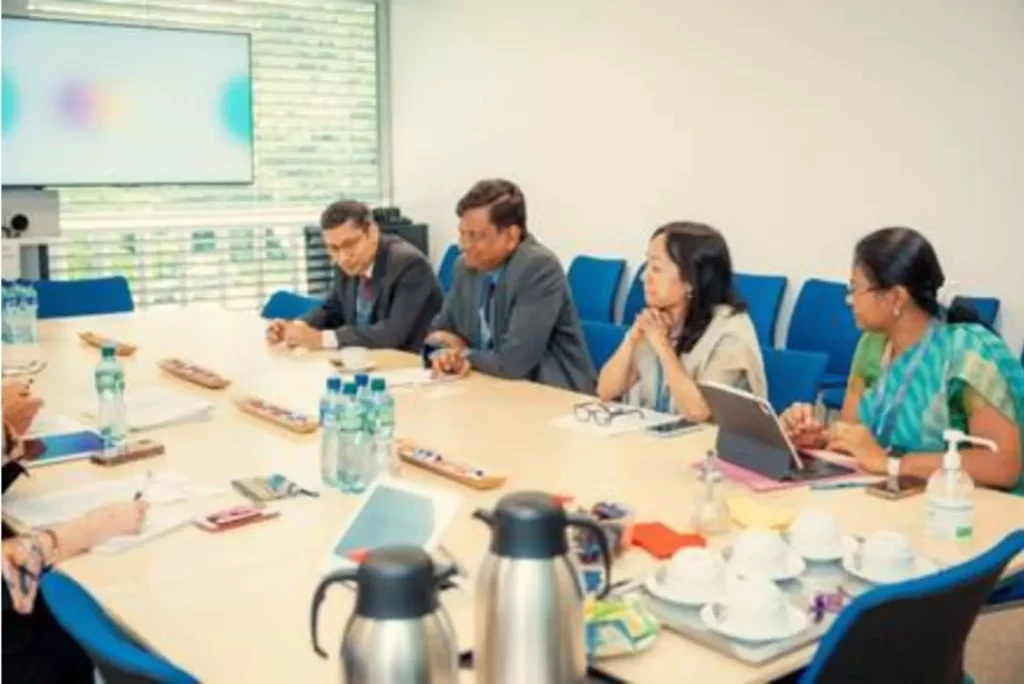
The Union Health Secretary acknowledged and appreciated the Global Fund’s continued support towards the elimination of three diseases in India, namely, TB, HIV/AIDS and Malaria. He highlighted that most of the investment is in capacity building, technical support and lab system strengthening of the program which lead to better sustainability. He also called upon the Global Fund to continue its support to the TB program to strength the capacities of the public health systems.
The Global Fund appreciated India’s commitment to eliminate TB by creating mass awareness, addressing stigma and intensive monitoring of programs using digital technologies. It also noted that Indian innovative practices in TB program like the Truenat machines, hand held X-ray devices which can work in robust environments, are ideal for the world to emulate.
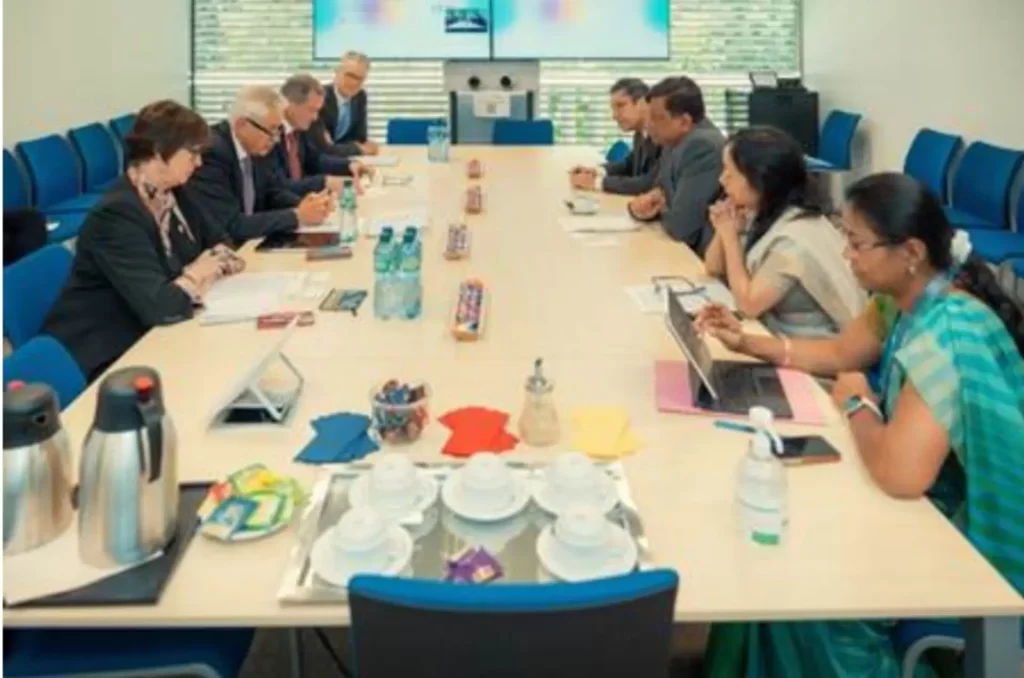
Ms. Hekali Zhimomi, Addl. Secretary, Union Health Ministry; Ambassador Arindam Bagchi, Permanent Representative of India at Geneva and senior officials of the Union Health Ministry were present on the occasion.
Shri Apurva Chandra, Union Health Secretary addressed the Committee A of the World Health Assembly (WHA), in Geneva today. WHA comprises of sessions in three main committees, which are Plenary, Committee A and Committee B. Committee A will be chaired by India and facilitate discussion on various programmatic topics covering Universal Health Coverage, Public Health Emergency preparedness and response, antimicrobial resistance, climate change, sustainable financing for WHO etc.
The Union Health Secretary started his address by highlighting the alignment of the World Health Assembly’s theme this year – “All for Health, Health for All”, with the core values and the ethos of India, that is “Vasudhaiva Kutumbakam” which means “the world is one family”. He said that during the COVID-19 pandemic, India not only managed the crises within the country but also supplied medicines and health related products across the world embodying the spirit of “One World, One family”. “This philosophy guides our efforts to promote well-being for all, facilitate Universal Healthcare Coverage and achieve health-related Sustainable Development Goals”, he stated.
Shri Apurva Chandra stated that the traditional public health approach of focusing on community interventions such as information and awareness as well as preventive measures hold the key to better health outcomes. He informed that India has established Health & Wellness Centres to not only address health issues at the community level but to also focus on educating communities towards better health seeking behaviour. “At this critical juncture, when all countries are working towards our collective Sustainable Development Goals and ensuring health services for all so that no one gets left behind, India has been taking the lead in advocating for digital health innovations as key to the critical transformative process required to help us achieve our goals”, he further stated.
Shri Apurva Chandra, Union Health Secretary chaired a high-level meeting on “Advancing Health and Well-Being of Billions in WHO South-East Asia Region”, a side-event to the 77th World Health Assembly co-hosted by WHO Regional Office for Southeast Asia (SEARO) and Government of India, in Geneva today. The purpose of the meeting was to strategize concerted actions of Member States, WHO and Partners in addressing key public health agenda in Southeast Asia Region.
The meeting started with a video on India’s Health Journey showcasing the four pillars of Pradhan Mantri Ayushman Bharat Mission catalysing the access to universal health coverage for citizens in India.
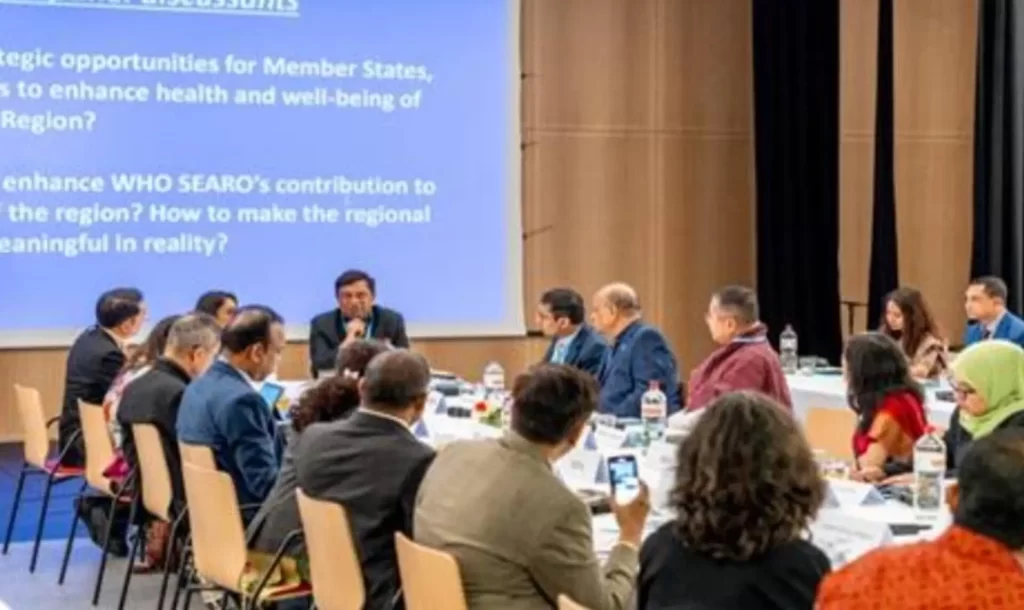
Addressing the gathering, the Union Health Secretary highlighted the digital technologies being leveraged by India during COVID which like CoWIN, are today being transformed to UWIN, a digital platform for tracking immunization and creation of digital certificate for every child. He emphasized how India, by being the pharma capital of the world is providing strength to the SEARO region on affordable medical counter measures.

During the occasion, Shri Apurva Chandra also highlighted the BHISM cube, an innovative product developed under India’s Aarogya Maitri Project which is compact, modular medical aid cube designed to treat up to 200 casualties and equipped with cutting edge technology that can be deployed during any disasters and emergencies.
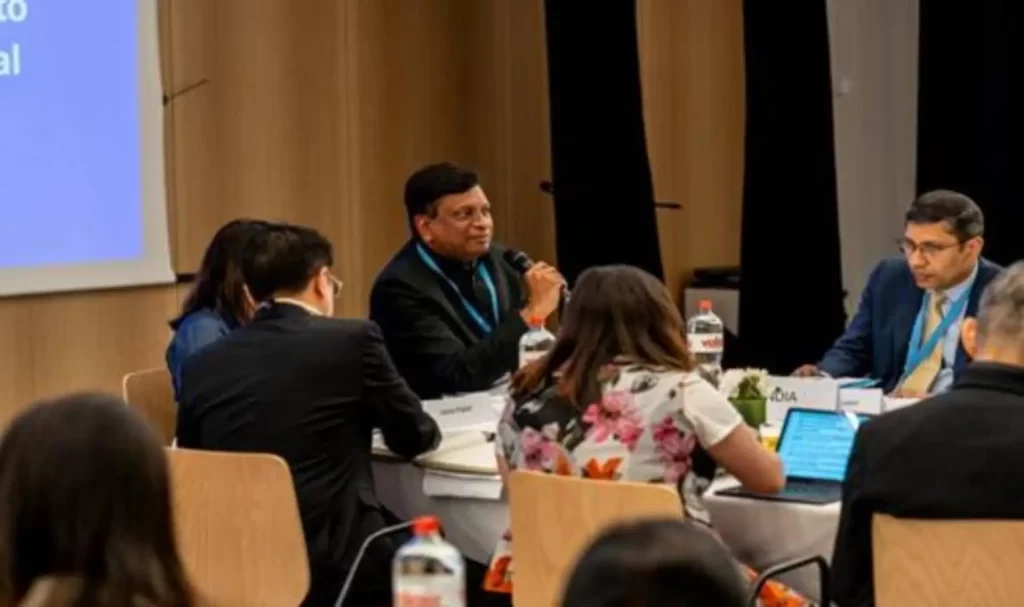
Various interventions were made by member states on the need for strengthening cooperation and collaboration with other countries, on issues like vaccination catch-up and vaccine delivery and non-communicable diseases etc. There were also issues raised by other partners such as on strengthening health system preparedness for health emergencies, post-pandemic recovery & dealing with climate crisis, ageing population and compounding mental health issues, decentralization of health issues to provincial and district level and on strengthening pandemic preparedness response and Health security.
Ms. Hekali Zhimomi, Addl. Secretary, Union Health Ministry; Ms. Aradhana Patnaik, Addl. Secretary and Managing Director (NHM), Union Health Ministry; Dr. Basant Garg, Addl. CEO, National Health Authority; Shri Arindam Bagchi, Ambassador and Permanent Representative of India to the United Nations and other International Organizations in Geneva; Ms Saima Wazed, Regional Director, WHO SEARO; representatives from member states of WHO SEARO; representatives from key development partners active in Southeast Asia region and WHO Senior management and Secretariat were also present on the occasion.
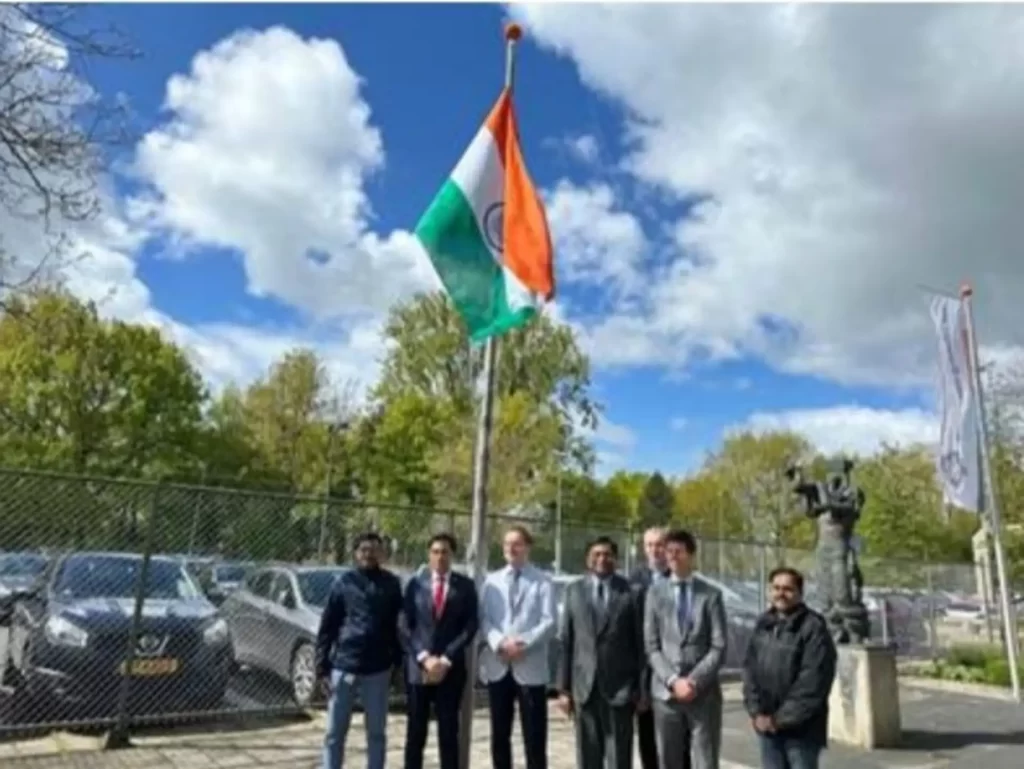
Union Health Secretary Shri Apurva Chandra today visited the manufacturing unit of global pharmaceutical company Bilthoven Biologicals at Utrecht, Netherlands. He had an engaging meeting with CEO Mr. Juergen Kwik & CEO of Poonawalla Science Park (PSP) at Bilthoven Mr. Jef De Clercq on EU pandemic preparedness partnership and collaboration on production of vaccines. He met the senior management and was briefed on the various manufacturing units of the facility. A detailed presentation was made on their future manufacturing plans. Bilthoven Biologicals B.V. Co., manufactures pharmaceutical products such as vaccines for polio, diphtheria-tetanus-polio, and tetanus along with bacillus calmette-guerin (BCG).



The bioengineering and vaccine production firm Bilthoven Biologicals was purchased by Serum India Ltd., in 2012. This has strengthened its capacity of producing vaccines and also provided it with a valuable manufacturing base in Europe. Recently Serum and Bharat Biotech have announced collaboration for enhanced production of OPV. Bharat Biotech will collaborate with Netherlands-based Bilthoven Biologicals B.V, a wholly-owned arm of Serum Institute of India. An agreement has been signed under which Bharat Biotech will procure drug substances for manufacturing oral polio vaccines to be supplied within India and globally. This will contribute to supply security of oral polio vaccines. With this partnership, the capacity of BBIL to manufacture Oral Polio Vaccine (OPV) has increased to 500 million doses every year.

Universal Immunisation Programme (UIP) of the Union Health Ministry is one of the key interventions for protection of children from life threatening conditions by providing vaccination, including vaccine against polio. India has been certified free of Polio in March 2014. However, to maintain the polio-free status, polio vaccine is given to children as part of the high quality national and sub-national polio rounds across the country. A sustained supply of OPV is essential for keeping India polio free. The partnership between BBIL and Serum will contribute to providing a sustained supply of OPV in the country.
Ayushman Bharat Health Account (ABHA) is an account/ number used to link all the health records of a person. ABHA intends to create a digital health ecosystem & aims to promote digitization of healthcare. Any individual can enroll in Ayushman Bharat Digital Mission (ABDM) to generate a Health ID or ABHA, free of cost.
Ayushman Bharat Health Accounts aim to provide a seamless and efficient financial framework for implementing the Ayushman Bharat scheme. It ensures transparency, accountability, and accessibility of funds allocated for healthcare services.
Cashless Transactions: ABHA enables cashless transactions for eligible beneficiaries seeking treatment at empanelled healthcare facilities. This reduces the financial burden on beneficiaries during medical emergencies.
Electronic Health Records (EHR): ABHA integrates electronic health records, facilitating the storage and retrieval of patient information. This helps in maintaining medical histories and streamlining healthcare delivery.
Portability: The accounts are designed to be portable across various healthcare providers empanelled under the Ayushman Bharat scheme, allowing beneficiaries to access services seamlessly, regardless of their location.
Real-time Monitoring: ABHA incorporates real-time monitoring mechanisms to track the utilization of funds and ensure that resources are allocated efficiently. This helps in preventing misuse and optimizing the distribution of healthcare resources.
Transparency and Accountability: By promoting digital transactions and maintaining electronic records, ABHA enhances transparency and accountability in the healthcare system. This reduces the scope for corruption and ensures that funds are utilized for their intended purpose.
Beneficiary Identification: ABHA involves the identification and registration of eligible beneficiaries under the Ayushman Bharat scheme. Each beneficiary is assigned a unique health identification number (UHID) to facilitate tracking and management.
Funds Management: ABHA manages the allocation and disbursement of funds for healthcare services availed by beneficiaries. It ensures that funds are transferred to healthcare providers promptly and securely.
Claim Settlement: ABHA processes and settles claims submitted by healthcare providers for services rendered to beneficiaries. This involves verifying the authenticity of claims and disbursing payments accordingly.
Audit and Oversight: ABHA incorporates audit and oversight mechanisms to monitor the utilization of funds and detect any irregularities or discrepancies. This helps in ensuring compliance with regulations and maintaining the integrity of the healthcare system.
Financial Protection: ABHA provides financial protection to vulnerable sections of society by covering the costs of healthcare services under the Ayushman Bharat scheme. This reduces out-of-pocket expenses for beneficiaries and enhances access to quality healthcare.
Efficient Healthcare Delivery: By facilitating cashless transactions and electronic health records, AB-HA promotes efficiency in healthcare delivery. It minimizes administrative hassles and delays, allowing healthcare providers to focus on patient care.
Data-driven Decision Making: ABHA generates valuable data insights that can be used for evidence-based decision-making and policy formulation. This helps in addressing healthcare challenges effectively and improving the overall quality of care.
An ABHA user has the following identifiers and user app to access the benefits under ABDM:
ABHA number: Unique Health Identifier as a random 14-digit number: A unique identity of a person, across different health care providers across the country.
ABHA address: ABHA Address is an easy-to-remember username that enables a user to access their health records digitally and share their records with various healthcare providers. An ABHA address may look like ‘name@abdm’. It may also be required to sign up on ABHA mobile Application.
ABHA mobile application: The ABHA mobile application offers a convenient solution for individuals to effortlessly access and share their health records digitally. It empowers patients to seamlessly receive digital lab reports, prescriptions, and diagnoses from various healthcare providers, including doctors, labs, hospitals, and wellness centers. This approach ensures secure and consent-driven sharing of health data.
ABHA shall integrate CGHS beneficiaries in the digital health ecosystem for the country.
A CGHS beneficiary shall be able to view the generated and linked health records in any of his/her preferred Personal Health Record (PHR) app downloaded on the mobile device.
A CGHS beneficiary shall be able to carry forward his/her health records from one hospital/Healthcare provider to another in a digitally secured way.
e.g: Take the case of health records generated in a particular hospital for a particular patient by a particular doctor. The said patient may end up going to some other healthcare provider for subsequent treatment. It is desirable that his/her health records which are stored in the previous hospital are also available to the subsequent healthcare provider for comprehensive healthcare provision. This is made possible by unique entity (Health ID) which identifies the patient’s health records across all the healthcare providers. With the patient’s consent, these records are made available to the current healthcare provider.
In future, a CGHS beneficiary shall directly be able take OPD appointment of a Doctor just by scanning a QR code through his/her mobile device present in front of the Doctor’s room/ Registration Desk in the Wellness Centre.
Pre-Requisites:
Ensure that the mobile number is linked with the CGHS card.
Ensure that the Aadhar card is linked with the aforementioned phone number.
Step 01: Open CGHS website www.cghs.nic.in and Log-in via Beneficiary Log-in
Step 02: Move to the ‘Update’ Tab and Click ‘Create/Link ABHA ID’
Step 03: In front of the “Beneficiary Name” An option shall be visible ‘Create/Link ABHA ID’. Click on that option.
Step 04: In case a beneficiary does not have an ABHA number, click on ‘I don’t have an ABHA number’
Enter Aadhar number
Accept the Consent Message
Click on Get Aadhar OTP
Enter Aadhar OTP
Click on ‘Verify OTP’
If the data is successfully matched, the ABHA number is created and successfully linked with the CGHS beneficiary ID.
*In case a beneficiary already has an ABHA number, In step 04, instead of clicking on ‘I don’t have an ABHA number’, enter the 14 digit ABHA number and proceed by verifying OTP.
For more information, visit: https://abha.abdm.gov.in/abha/v3/
A detailed video on the step-by-step procedure to Create/Link ABHA number is also available on the ‘@cghsindia’ YouTube channel at the following link:
https://www.youtube.com/watch?v=ZVytyQv2ngo&t=90s
Expansion and Enhancement: ABHA is expected to evolve and expand over time, incorporating new features and functionalities to meet the evolving needs of the healthcare sector.
Integration with other Schemes: There is potential to integrate ABHA with other healthcare schemes and initiatives to create a unified and comprehensive healthcare ecosystem.
Research and Innovation: Continued research and innovation in healthcare financing and delivery models can further strengthen the effectiveness and impact of ABHA.
In conclusion, Ayushman Bharat Health Accounts play a pivotal role in facilitating cashless transactions, managing funds, and enhancing transparency in the implementation of the Ayushman Bharat scheme. By leveraging technology and data-driven approaches, ABHA aims to improve access to quality healthcare and alleviate the financial burden on vulnerable sections of society.
Myth 1: Does getting ABHA Number mean enrolment in Ayushman Bharat – Pradhan Mantri Jan Arogya Yojana (AB-PMJAY)?
Reality: No, ABHA is just an account/ number used to link all the health records of a person.
Myth 2: What is not entailed under Ayushman Bharat Health Account?
Reality: Ayushman Bharat Health Account does not mean the eligibility of a person for the particular scheme including AB-PMJAY. Ayushman Bharat Health Account is not a replacement of current CGHS services or a replacement of current CGHS HMIS. Rather it is an addition/add-on to the current services offered by CGHS.
Myth 3: I am afraid that by linking all my health records to my ABHA other doctors may be in a position to see all my medical History which I don’t want to show. How can this be prevented?
Reality: The consent provided digitally need not be for all the health records linked to ABHA at a time. It can be provided for sharing only selected health records as per the choice of the patient. Therefore, by linking all your health records to your ABHA you will not end up sharing all your health records when providing consent. The consent is granular “which can be provided separately for each of the health records as per the wish of the patient”. However, it is recommended that you provide consent to share all health records with your doctor so that he can make correct clinical decisions.
Myth 4: Is it possible for the government or any other entity to do surveillance of the health status of an individual through ABDM?
Reality: No. The health records are created and stored at the place of their creation by respective healthcare providers (which is the case even now). ABDM is creating interoperable platforms for linking these data repositories/fiduciaries. This is known as federated architecture. This means that the health records will continue to be processed and stored at the same place where they are created, which has been happening prior to ABDM as well. The government will not have access to such data. No additional means of accessing such data is being created or envisaged in the current ecosystem.
Myth 5 : Will my Digital health Records be shared with other doctors or health facility without my permission?
Reality: No. Only you can share your own records with other doctors/hospitals using different digital health systems after giving your consent.
Myth 6: How will my data be used by the government?
Reality: Protocols for anonymization and aggregation of data and use of such data will be defined after extensive stakeholder consultations. After that, anonymous records can be used by the government to make policies and other relevant interventions in the interests of the public. Till this is done, health records will not be used by the government.
Myth 7: Are my health records safe and Secure on ABDM System?
Reality: ABDM does not store any medical records. These are always created and stored by healthcare providers as per their retention policies and this will continue. ABDM only facilitates secure data exchange between the intended stakeholders on ABDM network after the patient’s consent. Hence, through ABDM compliant applications, patients will also be able to choose which health records they want to link with their Health IDs, securely store their digital health records on their devices, securely access their records online, and securely share their health records with healthcare providers after the patient’s consent. Only the data collected for registries such as Health ID registry, Healthcare Professional Registry and Healthcare Facility Registry is stored centrally. It is necessary for these datasets to be stored centrally because they are essential to provide interoperability, trust, and identification and single source of truth across different digital health systems. This data is stored and processed in secure and safe manner.
Myth 8: Can ABHA be used outside the government hospital/CGHS?
Reality: Yes, ABHA can be used outside the government hospital/ program. However, it is up to the private players to decide whether they want to use it or not. For example, a private hospital may decide to use ABHA for creation and linking of health record. If the patient is not willing to use ABHA, the hospital/ program may provide an alternate number which they are using as part of their existing system.
Shri Apurva Chandra, Union Health Secretary chaired a high-level meeting on “Advancing Health and Well-Being of Billions in WHO South-East Asia Region”, a side-event to the 77th World Health Assembly co-hosted by WHO Regional Office for Southeast Asia (SEARO) and Government of India, in Geneva today. The purpose of the meeting was to strategize concerted actions of Member States, WHO and Partners in addressing key public health agenda in Southeast Asia Region.
The meeting started with a video on India’s Health Journey showcasing the four pillars of Pradhan Mantri Ayushman Bharat Mission catalysing the access to universal health coverage for citizens in India.
Addressing the gathering, the Union Health Secretary highlighted the digital technologies being leveraged by India during COVID which like CoWIN, are today being transformed to UWIN, a digital platform for tracking immunization and creation of digital certificate for every child. He emphasized how India, by being the pharma capital of the world is providing strength to the SEARO region on affordable medical counter measures.
During the occasion, Shri Apurva Chandra also highlighted the BHISM cube, an innovative product developed under India’s Aarogya Maitri Project which is compact, modular medical aid cube designed to treat up to 200 casualties and equipped with cutting edge technology that can be deployed during any disasters and emergencies.
Various interventions were made by member states on the need for strengthening cooperation and collaboration with other countries, on issues like vaccination catch-up and vaccine delivery and non-communicable diseases etc. There were also issues raised by other partners such as on strengthening health system preparedness for health emergencies, post-pandemic recovery & dealing with climate crisis, ageing population and compounding mental health issues, decentralization of health issues to provincial and district level and on strengthening pandemic preparedness response and Health security.
Ms. Hekali Zhimomi, Addl. Secretary, Union Health Ministry; Ms. Aradhana Patnaik, Addl. Secretary and Managing Director (NHM), Union Health Ministry; Dr. Basant Garg, Addl. CEO, National Health Authority; Shri Arindam Bagchi, Ambassador and Permanent Representative of India to the United Nations and other International Organizations in Geneva; Ms Saima Wazed, Regional Director, WHO SEARO; representatives from member states of WHO SEARO; representatives from key development partners active in Southeast Asia region and WHO Senior management and Secretariat were also present on the occasion.