
The government has increased number of medical colleges and subsequently increased MBBS seats. There is an increase of 82% in Medical Colleges from 387 before 2014 to 706 as of now. Further, there is an increase of 112% in MBBS seats from 51,348 before 2014 to 1,08,940 as of now and PG seats have been increased to 127% from 31,185 before 2014 to 70,674 as of now.
The Government has taken various steps to further increase the availability of doctors in the country which include:
Centrally Sponsored Scheme for establishment of new medical college by upgrading district/ referral hospital under which 108 new medical colleges are already functional out of 157 approved.
Centrally Sponsored Scheme for strengthening/ upgradation of existing State Government/Central Government Medical Colleges to increase MBBS and PG seats.
Under “Upgradation of Government Medical Colleges by construction of Super Specialty Blocks” of Pradhan Mantri Swasthya Suraksha Yojana (PMSSY) scheme, a total of 75 projects have been approved, of which 64 projects are complete.
Under the Central Sector Scheme for setting up of new AIIMS, 22 AIIMS have been approved. Undergraduate courses have started in 19 of these.
Relaxation in the norms for setting up of Medical College in terms of requirement for faculty, staff, bed strength and other infrastructure.
DNB qualification has been recognized for appointment as faculty to take care of shortage of faculty.
Enhancement of age limit for appointment/ extension/ re-employment against posts of teachers/Dean/Principal/ Director in medical colleges upto 70 years.
The Government has also taken the following steps to increase the Nurses in the country:
Under the Centrally Sponsored Scheme (CSS) for “Establishment of new Medical College attached with existing district/referral hospital” 157 medical colleges have been approved since 2014. Establishment of 157 nursing colleges have been announced in the budget speech 2023-24 in these medical colleges.
For Nursing Educational Programmes, Student patient ratio has been relaxed from 1:5 to 1:3.
The land requirement for Nursing Educational Institutes from 3 acres has been relaxed to construct building of 54,000 sq. ft. for School/College of Nursing including Hostel.
To open GNM and B.Sc. (Nursing) programme 100 bedded parent hospital is essential since 2013-2014. However, this is relaxed for hilly and tribal areas. Relaxed norms for teaching faculty to start B.Sc. (N) Programme.
Maximum of 100 seats will be granted to the institutions for B.Sc.(N)/GNM programmes which have a parent hospital with 300 beds without insisting on Medical College. Distance from school to hospital has been relaxed.
Eligibility Criteria for admission to nursing programmes relaxed.
As informed by the National Medical Commission (NMC), there are 13,08,009 allopathic doctors registered with the State Medical Councils and the National Medical Commission (NMC) as on June, 2022. Assuming 80% availability of registered allopathic doctors and 5.65 lakh AYUSH doctors, the doctor-population ratio in the country is 1:834. Also, there are 36.14 lakh nursing personnel in the country as on December, 2022. Assuming 80% availability of nursing personnel, the nurse- population ratio is 1:476.
The Union Minister of State for Health and Family Welfare, Dr. Bharati Pravin Pawar stated this in a written reply in the Rajya Sabha today.
STATE/ UT-WISE LIST OF DOCTORS POSSESSING RECOGNISED MEDICAL QUALIFICATIONS AND REGISTERED WITH STATE MEDICAL COUNCILS / THE ERSTWHILE MEDICAL COUNCIL OF INDIA/ NATIONAL MEDICAL COMMISSION AS ON JUNE, 2022
Source: The National Medical Commission
Note:- Erstwhile MCI had stopped the registration since 2015.
State/UT wise number of trained nurses as on 31.12.2022
Source: Respective State Nurses Registration Council
ANM: Auxiliary Nurse Midwives, RN & RM: Registered Nurses & Registered Midwives.
“India's 'Bio Economy' has grown eight times in the last eight years from $10 billion to $80 billion. In the coming times, biotechnology will become the biggest foundation for health treatment.” This was stated by Dr. Mansukh Mandaviya, Union Minister for Health & Family Welfare as he virtually addressed the pre-event summit “Biotechnology: The Path of Innovation & Wellness for Viksit Bharat” in the presence of Shri. Bhupendra Patel, Chief Minister, Gujarat at Vigyan Bhavan, Science City, Ahmedabad, Gujarat today. The summit is a preliminary event leading up to the 10th Vibrant Gujarat Global Summit that will take place on January 2024 at the Mahatma Gandhi Mandir, Gandhinagar under the theme of ‘Gateway to the Future’.
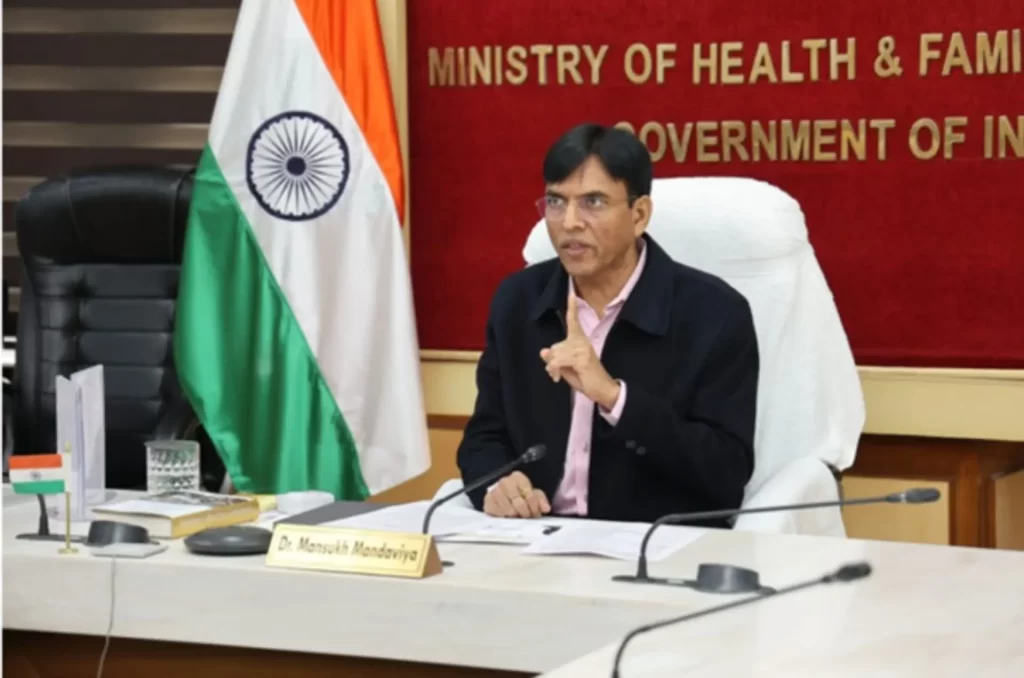
Dr. Mandaviya noted that Indian Biotech Industry aiming to grow to $150 Billion by 2025 and $300 Billion by 2030, and India is currently among the top 12 destinations for Biotechnology in the world with approximately 3% share in the Global Biotechnology Industry. He stated “This industry will become a medium for finding solutions for complex problems in various spheres such as agriculture, environment, industrial production and many more. In light of this, in the future, the economy will become biotechnology based.” Quoting the Prime Minister, Shri Narendra Modi, Dr. Mandaviya stated “in the global biotechnology ecosystem, India will soon feature as one of the top ten nations.” Reiterating the Prime Minister’s vision of India achieving the status of a developed nation by 2047, Dr. Mandaviya cited that “this sector’s contribution will be instrumental in making India a developed nation.”
Highlighting the growth and prowess of the industry, Dr. Mandaviya stated that the vaccination produced by India during the pandemic showcased India's power in the field of biotechnology to the world. Underscoring the importance of this sector, the Union Minister stated “the National Biotechnology Development Strategy 2020-25 provides the government a platform to strengthen skill development, resource and innovation converging into one strong ecosystem for knowledge sharing.” He stated it further facilitates commercialization and market linkages by encouraging private-public partnership models in these sectors.
Commending the progress of the nation and industry in this sphere, the Dr. Mandaviya praised the participation of startups, industries and industry associations, researchers and academicians across the nation for contributing to the development of this sector. The Union Health Minister lauded the efforts and contribution of Gujarat in their dedicated focus on biotechnology over two decades and its strong contribution in making India a healthcare and innovation ready country. The Union Health Minister reflected that Gujarat was the first state in the country to establish Biotech Mission 15-20 years ago. Dr. Mandaviya recalled that when Prime Minister Narendra Modi was the Chief Minister of Gujarat, he had established Biotech Mission and Biotech Park in the state.
Acknowledging the crucial contribution of the Biotechnology sector will provide to the nation and economy Shri. Bhupendra Patel stated “aligning with the theme of ‘Gateway to the Future’ we will provide additional focus to futuristic sectors of which Biotechnology features as most important.” He further cited that “Biotechnology sector is known as the sector of hope. With its rapid growth, it will provide significant contributions to the world.” The Gujarat Chief Minister also inaugurated the ‘Start-Up Product Launch’.
The event was attended by Shri Raj Kumar, Chief Secretary, Gujarat, Ms. Mona Khandhar, Principal Secretary, Department of Science & Technology, Government of Gujarat, Dr. Rajesh Gokhale, Secretary, Department of Science & Technology, Ministry of Science and Technology, senior government officials, mission directors, as well as eminent dignitaries.
Ayushman Bharat Pradhan Mantri -Jan Arogya Yojana (AB PM-JAY) provides treatment corresponding to a total of 1949 procedures under 27 different specialties including orthopedics, oncology, cardiology and general medicine, etc. Of these, a total of 141 procedures are related to orthopedic diseases. Further, as on 4th of December 2023, 20.25 lakh hospital admissions worth approximately Rs. 5,289.4 Crores have been authorized under the scheme for orthopedic-related treatment.
AIIMS is the apex tertiary care hospital in the country and therefore it attracts patients from across the country. AIIMS while admits the emergency cases immediately, it sometimes provides a subsequent date in case of elective surgery based on the bed availability. Patients seek support from implementing authority under AB PM-JAY for early date of surgery/ admission. Wherever possible, support is provided to the beneficiaries. Out of 4,198 such grievances received from across the country against different empaneled hospitals, 4,117 have been resolved. Further, 16 such grievances have been received with regards to AIIMS, Delhi, all of which have been resolved successfully.
The hospitals empaneled under AB PM-JAY are bound to offer cashless treatment to eligible beneficiaries for the specialties it has been empaneled. Failure to do so may result in penal action which may include, de-empanelment. In case beneficiaries are denied treatment, one can lodge grievance on the portal, through national call centre 14555 or through mail, letter, fax etc. which will be acknowledged, recorded, escalated and resolved as per well-defined process. All grievances of AB PM-JAY beneficiaries are resolved in an efficient, transparent and time bound manner through a three-tier grievance redressal structure.
A Central Grievance Redressal Management System (CGRMS) has been established for any complaint received either through the national call centre or on grievance redressal portal (https://cgrms.PM-JAY.gov.in/) or through any other medium. The same is immediately assigned to respective State Grievance Nodal Officer designated at each SHA for necessary action. Many times, grievances are raised by the beneficiaries due to lack of awareness e.g. grievance registered against a hospital for not providing treatment under specialty for which it has not been empaneled.
The Union Minister of State for Health and Family Welfare, Prof. S.P. Singh Bhagel stated this in the written reply in the Lok Sabha today.
The Government of India has taken several steps to improve the rate of organ donation in the country. These include dissemination of information by National Organ & Tissue Transplantation Organization (NOTTO), Regional Organ and Tissue Transplant Organizations (ROTTOs) and State Organ and Tissue Transplant Organizations (SOTTOs) set up under the National Organ Transplant Program (NOTP). The Ministry of Health and Family Welfare has written a letter to NOTTO, ROTTOs and SOTTOs for creating awareness among people towards the government recognized process of organ donation as permitted by the law and awareness about illegality & repercussions associated with indulgence in organ trafficking which is in gross violation of the Transplantation of Human Organs and Tissues Act, 1994.
As a part of Azadi ka Amrit Mahotsav, organ donation is getting promoted as a “Jan Andolan“ through social media. In this regard, the Ministry of Health and Family Welfare is running a pledge campaign and slogan competition on MyGov platform. As a part of “Angdaan Mahotsav” initiated in the month of July 2023, various awareness programmes on deceased donor organ donation are being organized across the country. 1st National Webinar on organ and tissue donation was organized in month of July 2023 with a focus on Prevention of Kidney and Liver failure, which was attended by thousands of Medical Professionals.
A website ‘www.notto.mohfw.gov.in’ is operational along with a 24x7 call center having a toll-free helpline number (1800114770) to provide information, tele-counseling and to help in coordination for organ donation. Activities are organized across the country for generating awareness, such as celebration of Indian Organ Donation Day (IODD) annually, seminars, workshops, debates, sports events, walkathons, marathons, nukkad natak, NOTTO Scientific Dialogue 2023 etc. Display boards on organ donation are exhibited outside ICUs and other strategic locations in the transplant/retrieval hospitals. Advertisements are published in print media, dissemination of audio and audio-visual messages is done through social media, electronic media etc. Regular programs are conducted with school children for giving them knowledge about organ donation and conducting competitions like poster making, running special pledge campaign and slogan competition on MyGov platform etc.
The kidney transplantation package has been included under PM-JAY scheme of Ayushman Bharat by the Ministry of Health and Family Welfare. Also, under Rashtriya Arogya Nidhi (RAN), financial support upto Rs. 15 lakh is provided by the Ministry to the patients who are below poverty line for transplantation of Heart, Lung, Liver, Kidney, etc.
Transplantation of Human Organs and Tissues Act, 1994 provides for an Appropriate Authority to be appointed by every State/UT, for investigating any complaint or breach of any of the provisions of this Act, or any of the Rules thereunder. Health and law & order being State subjects, it is primarily the responsibility of the States and UTs to take actions against unscrupulous operators who provide access and make organs available through money spinning networks in the country. The Appropriate Authority of State/UT shall, for the purposes of this Act, has all the powers of a civil court to try a suit under the Code of Civil Procedure, 1908 (5 of 1908).
The Union Minister of State for Health and Family Welfare, Prof. S.P Singh Bhagel stated this in a written reply in the Lok Sabha today.
For providing affordable and accessible mental healthcare facilities in the country, the Government is implementing the National Mental Health Programme (NMHP) in the country. The District Mental Health Programme (DMHP) component of the NMHP has been sanctioned for implementation in 738 districts for which support is provided to States/UTs through the National Health Mission. Facilities made available under DMHP at the Community Health Centre (CHC) and Primary Health Centre (PHC) levels, include outpatient services, assessment, counselling/ psycho-social interventions, continuing care and support to persons with severe mental disorders, drugs, outreach services, ambulance services etc. In addition to above services there is a provision of 10 bedded in-patient facility at the district level.
Besides the above, the Government has launched a “National Tele Mental Health Programme” on 10th October, 2022, to improve access to quality mental health counselling and care services in the country. As on 04.12.2023, 34 States/ UTs have set up 46 Tele MANAS Cells and have started tele mental health services and more than 4,81,000 calls have been handled on the helpline.
Under the tertiary care component of NMHP, 25 Centres of Excellence have been sanctioned to increase the intake of students in PG departments in mental health specialities as well as to provide tertiary level treatment facilities. Further, the Government has also supported 19 Government medical colleges/institutions to strengthen 47 PG Departments in mental health specialties. Mental Health Services are also provisioned for 22 AIIMS. These services are also available under PMJAY.
In order to ensure holistic development of adolescent population, the Ministry of Health and Family Welfare implements the Rashtriya Kishor Swasthya Karyakram (RKSK) since 2014. RKSK covers both school going and non-school going adolescents. It is a paradigm shift from the clinic-based services to promotion and prevention and reaching adolescents in their own environment, such as in schools, families and communities. Mental Health is one of the key thematic areas of RKSK apart from Sexual and Reproductive Health (SRH), nutrition, injuries and violence (including gender-based violence), non-communicable diseases and substance misuse.
RKSK through its interventions namely Adolescent Friendly Health Clinics (AFHC), Peer Education Programme and Adolescent Health and Wellness Days (AH&WD) focusing on creating awareness on mental health issues and providing counselling services, involving the parents, village elders, teachers, healthcare providers and the adolescents themselves as the critical stakeholders.
Ayushman Bharat School Health & Wellness Programme incorporates “Emotional Wellbeing and Mental Health” as a dedicated module. Health and Wellness Ambassadors (Teachers) are trained on mental health along with other thematic areas of the programme to support and provide awareness to school children on mental health and well-being. The training focuses on identifying self-emotions signs of distress in self and others and recognizing that ‘mental health and well-being’ exists along a continuum. Health and Wellness Ambassadors take interactive sessions with the students and percolate the messages through weekly sessions promoting joyful learning.
Under the aegis of the School Health Programme under Ayushman Bharat, NCERT has developed a comprehensive package titled “Training and Resource Material: Health and Wellness of School-going Children”. A specific module has been included on “Emotional Wellbeing and Mental Health”, which has activities related to the mental health and well-being of students and teachers.
Modular Handbook on Early Identification and Intervention for Mental Health Problems in School Going Children has been developed in collaboration with Public Health Foundation of India (PHFI) which contains guidelines for early identification, detection and intervention of mental health problems (stress/illness) in school- going children, for hands-on training of teachers, counsellors and other stakeholders. The Handbook was launched by Ministry of Education on 06th September, 2022.
The Ministry of Education has taken up a proactive initiative, named, ‘Manodarpan’, covering a wide range of activities to provide psychosocial support to students, teachers and families for Mental Health and Emotional Wellbeing during the COVID outbreak and beyond. Under the Manodarpan initiative, a Web page (URL: http://manodarpan.education.gov.in) has been created carrying advisory guidelines, Frequently Asked Questions (FAQs), Practical tips, posters, videos, do’s and don’ts for students, teachers/faculty and families for psychosocial support have been uploaded on the Web-page. A National Toll-free Helpline (8448440632) for a country-wide outreach to students from schools, colleges and universities to provide them tele-counselling to address their mental health and psychosocial issues during and after the COVID-19 situation has been set up.
NCERT has started ‘NCERT Counselling Services for School Children’ in April, 2020 to help school students across the country share their concerns. This service is provided free of charge by about 270 counsellors across different regions of the country. Live interactive sessions on ‘SAHYOG: Guidance for Mental Wellbeing of Children’ are telecast on 12 PM eVidya DTH-TV channels for classes 1 to 12. To handle stress and anxiety, recorded videos on Yoga are telecast through 12 DTH TV channels with effect from 1st September, 2020 from Classes 1 to 12 and also digital resources are made available in digital platforms, i.e., DIKSHA. The Central Board of Secondary Education (CBSE) provides pre and post examination tele-counselling facilities through centralized toll-free helpline.
To generate awareness among masses about mental illnesses Information, Education and Communication (IEC) activities are an integral part of the NMHP. At the District level, sufficient funds are provided to each District under the DMHP under the Non-communicable Diseases flexi-pool of National Health Mission for IEC and awareness generation activities in the community, schools, workplaces, with community involvement. Under the DMHP various IEC activities such as awareness messages in local newspapers and radio, street plays, wall paintings etc. are undertaken by the States/UTs.
Under Pradhan Mantri Jan Arogya Yojana (PMJAY), health insurance cover of Rs. 5 lakhs per family per year for secondary or tertiary care hospitalization to over 60 cr. beneficiaries is provided. The treatment packages under AB-PMJAY are very comprehensive covering various treatment related aspects such as drugs and diagnostic services. Mental health services are also covered under PMJAY.
The Government is also augmenting the availability of manpower to deliver mental healthcare services in the underserved areas of the country by providing online training courses to various categories of general healthcare medical and para medical professionals through the Digital Academies, since 2018, established at the three Central Mental Health Institutes namely National Institute of Mental Health and Neuro Sciences, Bengaluru, Lokopriya Gopinath Bordoloi Regional Institute of Mental Health, Tezpur, Assam, and Central Institute of Psychiatry, Ranchi.
The Government conducted the National Mental Health Survey (NMHS), 2016 of India through the National Institute of Mental Health and Neurosciences (NIMHANS), Bengaluru in 12 States of the country, as per which the prevalence of mental disorders in adults over the age of 18 years is about 10.6%. Further, as per the Survey, the prevalence of mental morbidity is higher in urban metro regions (13.5%) as compared to rural areas (6.9%) and urban non-metro areas (4.3%).
The Union Minister of State for Health and Family Welfare, Prof. S.P Singh Bhagel stated this in a written reply in the Lok Sabha today.
As per the extant provisions of DPCO 2013, every manufacturer of a scheduled or non-scheduled formulation intended for sale, shall display in indelible print mark, on the label of container of the formulation and the minimum pack thereof offered for retail sale, the maximum retail price of that formulation with the words "Maximum Retail Price" preceding it and the words 'inclusive of all taxes' succeeding it”. Further, DPCO, 2013 provides that every manufacturer, inter alia, shall issue a price list to dealers, who shall display the same on a conspicuous part of the premise where he carries on business. It also provides that no person shall sell any formulation to any consumer at a price exceeding the price specified in the current price list or the price indicated on the label of the container or pack thereof, whichever is less”. Instances of overcharging are dealt with by NPPA under the relevant provisions of DPCO, 2013. However, provision of concession to customers by medical stores, within the MRP, is guided by commercial consideration and a business practice not within the ambit of control order.
NPPA fixes the ceiling price of scheduled formulations as per the extant provisions of DPCO, 2013. The ceiling price of a scheduled formulation is determined by first working out the simple average of price to retailer (PTR) in respect of all branded-generic and generic versions of that particular formulation having a market share of one percent and above. The maximum retail price (MRP) for that particular drug formulation must not exceed the notified ceiling price plus applicable taxes. Further, DPCO, 2013 also provides for fixing the ceiling prices in cases where there is absence of competition; and the retail prices of new drug as defined in DPCO, 2013 for existing manufacturers of scheduled formulation. The details of prices fixed by NPPA is available on the website of NPPA i.e. www.nppaindia.nic.in.
This information was given by Minister of State for Chemicals and Fertilizers, Shri Bhagwanth Khuba in a written reply in Lok Sabha today.
The National Health Authority (NHA) and the Insurance Regulatory and Development Authority of India (IRDAI) have joined hands to operationalize the National Health Claim Exchange (NHCX), a digital health claims platform developed by National Health Authority. This initiative is being undertaken in the context of a circular issued by IRDAI in June 2023, whereby the insurance regulator had advised all insurers and providers to onboard the NHCX.
The NHCX will serve as a gateway for exchanging claims-related information among various stakeholders in the healthcare and health insurance ecosystem. The integration with NHCX would enable seamless interoperability of health claims processing, enhancing efficiency and transparency in the insurance industry and benefiting the policyholders and patients.
In this regard, a three-day workshop was organized from 7th to 9th November in New Delhi, aimed mainly at hospital providers to onboard on the NHCX and insurance companies to fully integrate with the NHCX. This workshop was the third in a series of workshops that have been organized by NHA and IRDAI. The first two workshops were organized in August and October of this year and had participation from insurance companies and TPAs.
Over 150 professionals representing 45 organisations - insurance companies, TPAs, and hospitals have participated in these workshops. Considering the encouraging progress made by the insurance companies in these workshops, the organisations were advised to select their most popular retail product along with one network hospital to pilot the operationalization of NHCX.
This workshop saw participation from 10 hospitals, each assigned to an insurance company. The technical and business teams of these hospitals were guided by teams from NHA, IRDAI and NRCeS (National Resource Centre for EHR Standards) to onboard on the NHCX. At the end of the workshop, 10 hospitals namely Jupiter Hospital,Thane ; Kauvery Hospitals, Chennai; A J Hospital Research and Research Centre, Bengaluru ; Sarvodaya Hospital, Faridabad; Fortis Hospital, Gurugram; Fortis Hospital, Noida; Shri Balaji Action Hospital, Delhi; Sanar International Hospital, Gurugram; Centre for Sight, Dwarka, Delhi; and Narayana Hrudayalaya, Delhi were onboarded on the NHCX provider Registry.
In addition, the hospital/claim management systems (HMIS) of these hospitals, namely M/s Jupiter Hospitals, Kauvery Hospitals, Akhil systems, Kare Expert, Fortis Hospitals, Narayana Hrudayalya and Vitraya Technologies Private Limited were able to complete the requisite M1 integration of Ayushman Bharat Digital Mission (ABDM), which is an essential step to complete NHCX integration. The M1 integration enables a software to create and verify Ayushman Bharat Health Account (ABHA).
The workshop also saw completion of full integration with NHCX by eight insurance companies/TPAs, taking the total count to 12 insurance companies having successfully completed the NHCX integration. Four insurance companies, namely Aditya Birla Health Insurance, Star Health and Allied Insurance, Bajaj Allianz Insurance Company and HDFC Ergo Insurance had already completed the full integration in the second workshop in October. During this workshop, seven insurance companies and one TPA, namely ICICI Lombard General Insurance, The New India Assurance Company, Care Health Insurance, Go Digit General Insurance, Acko General Insurance, Tata AIG General Insurance company, Paramount TPA, United India Insurance Company successfully completed NHCX integration.
To encourage adoption of digital health transactions and digitization of patient health records in the country, NHA has also announced financial incentives under the Digital Health Incentive Scheme (DHIS) from Jan 2023. Under the DHIS, to encourage efficiency in insurance claim processing, there is a provision that for every insurance claim transaction through NHCX, financial incentives of Rs 500 per claim or 10% of the claim amount, whichever is lower would be provided for the hospitals. More information on the DHIS is available here: https://abdm.gov.in/DHIS
Considering the enthusiastic participation by the insurance companies and providers, a full scale launch of this transformational initiative is expected soon. For more information on the National Health Claims Exchange (NHCX), see https://sbxhcx.abdm.gov.in/
The Department of Health and Family Welfare (DoHFW) conducted Special Campaign 3.0 on Swachhata and disposal of pending matters within the Department (HQ) and all its Attached & Subordinate Offices, Autonomous Bodies and CPSE located in various parts of the country. The objectives of the campaign were to minimize pendency, institutionalize swachhata, strengthen internal monitoring mechanism, train officers in records management, digitize physical records for improved records management. During the campaign, special focus was given to field offices of DoHFW and various activities under the campaign undertaken by these field offices.
Regular reviews were done by Shri Sudhansh Pant, Secretary (HFW) and Shri Elangbam Robert Singh, Joint Secretary and Nodal Officer of Special Campaign 3.0 to ensure efficient implementation of the campaign.
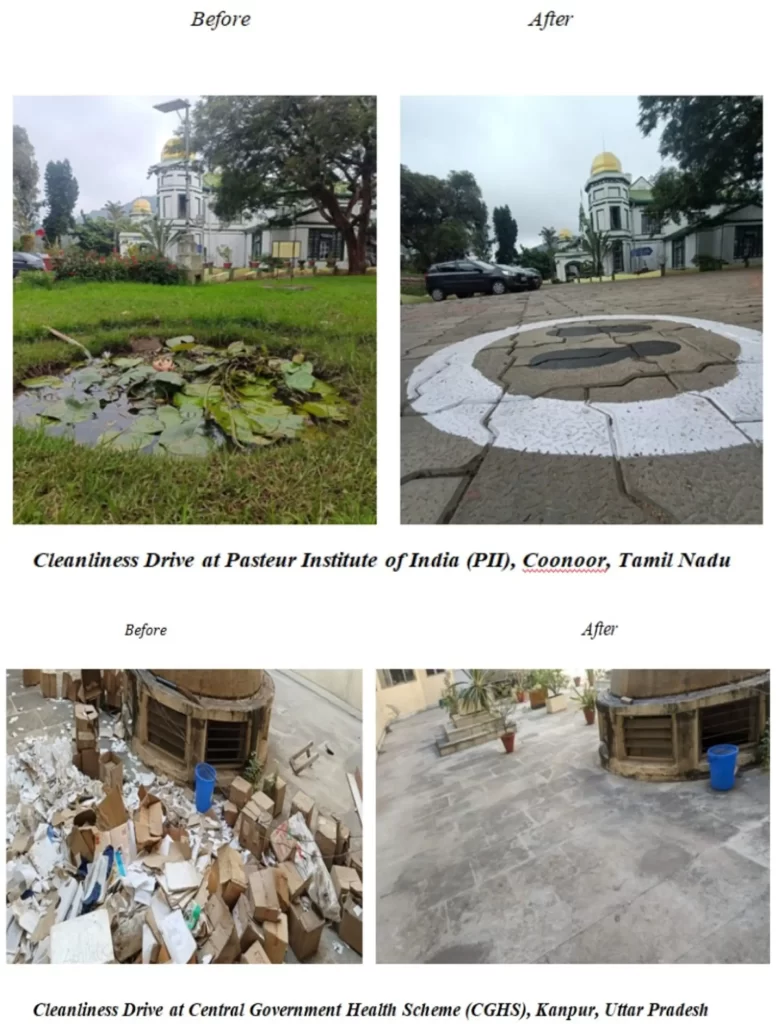
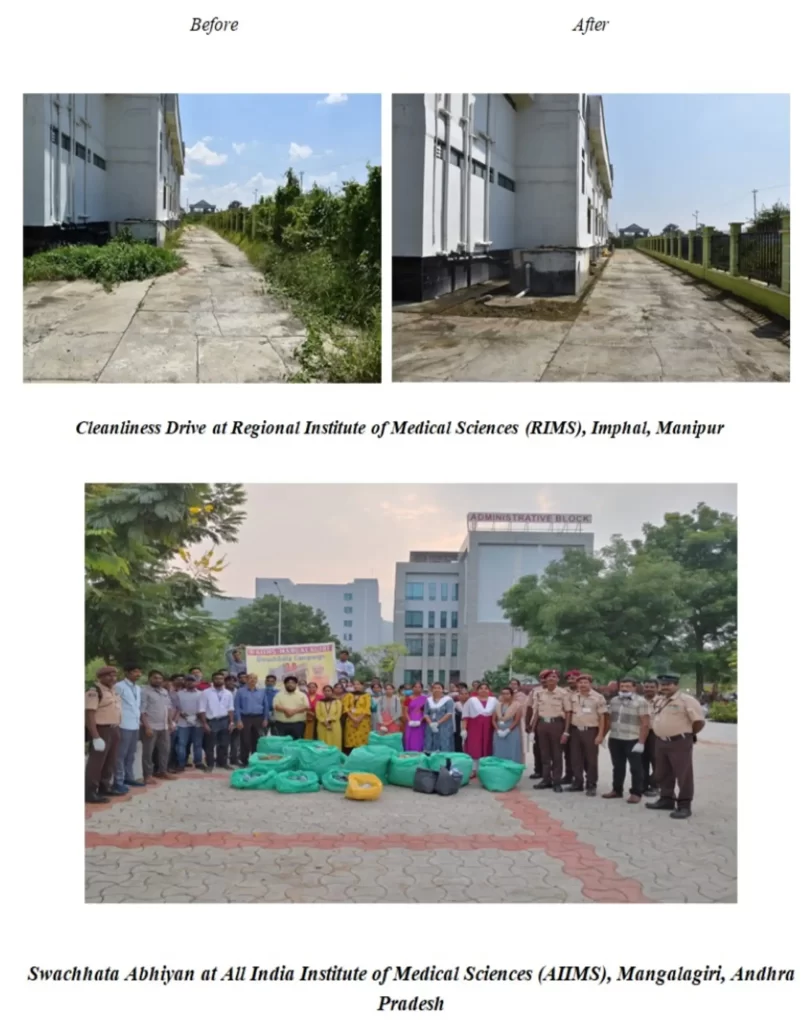
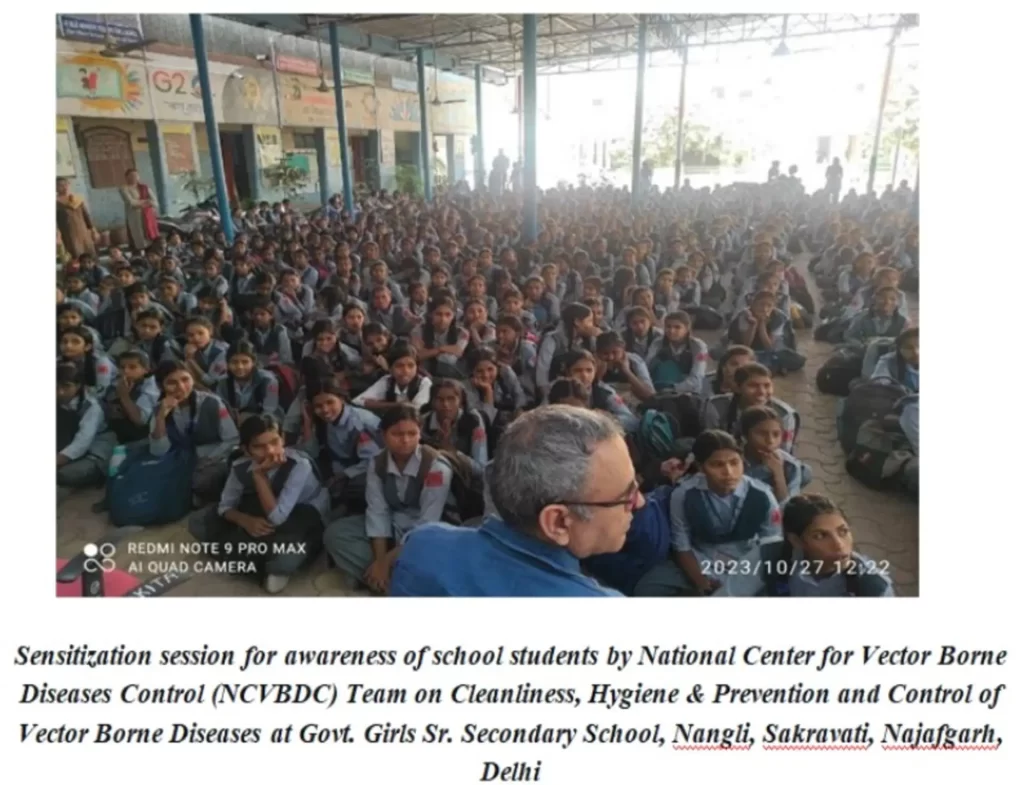
The progress of implementation phase of the Campaign was reported on the SCDPM portal (https://scdpm.nic.in) of the Department of Administrative Reforms & Public Grievances (DARPG) by DoHFW regularly.
During the period of Special Campaign 3.0 (01.10.2023-31.10.2023), DoHFW disposed of 224 References from MPs and 3,260 public grievances. 22,454 physical files had been reviewed and 8,621 files had been weeded out. Also, 1,787 Cleanliness Campaigns had been conducted by different offices of DoHFW and 35,268 sq. ft. of space had been freed for use of offices. Revenue of Rs. 13,70,211/- had also been earned by selling of scrap materials.
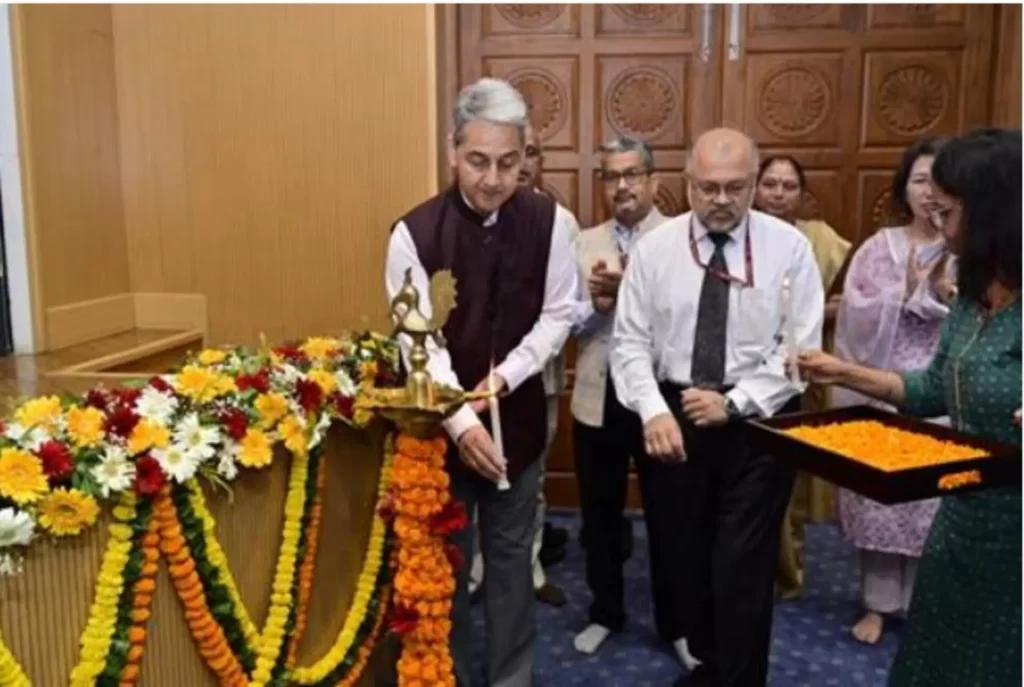
“Zoonotic disease is one of the areas of concern which is affecting the humans as well as the animal health. 75% of newly emerging infectious diseases that have affected people over last three decades are zoonotic in nature. The limited knowledge and skill to identify zoonotic diseases, coupled with limited diagnostic facilities at all levels has resulted in neglect of the infectious diseases due to zoonotic pathogens.” This was stated by Union Health Secretary, Shri Sudhansh Pant while delivering the keynote address at the National Conclave on “Augmented Zoonotic Diseases Surveillance at Human – Wildlife Interface” and National Conclave for Endorsement of “National Action Plan for Prevention and Control of Snakebite Envenoming” to Stakeholders, organized by Centre for One Health, National Centre for Disease Control (NCDC), here today. He was also joined by Dr. Atul Goel, Director General of Health Services; Smt. R Jaya, Addl. Secretary, Ministry of Tribal Affairs; Dr Ashok Kumar, Asst. DG (Animal Health), Indian Council of Agricultural Research (ICAR); Dr Abhijit Mitra, Commissioner Animal Husbandry, Ministry of Fisheries, Animal Husbandry and Dairying, Dr. Payden, Deputy WHO Representative to India; Dr Simmi Tiwari, Joint Director and Head-COH, NCDC and Dr Ajit Shewale, Deputy Director, COH NCDC.
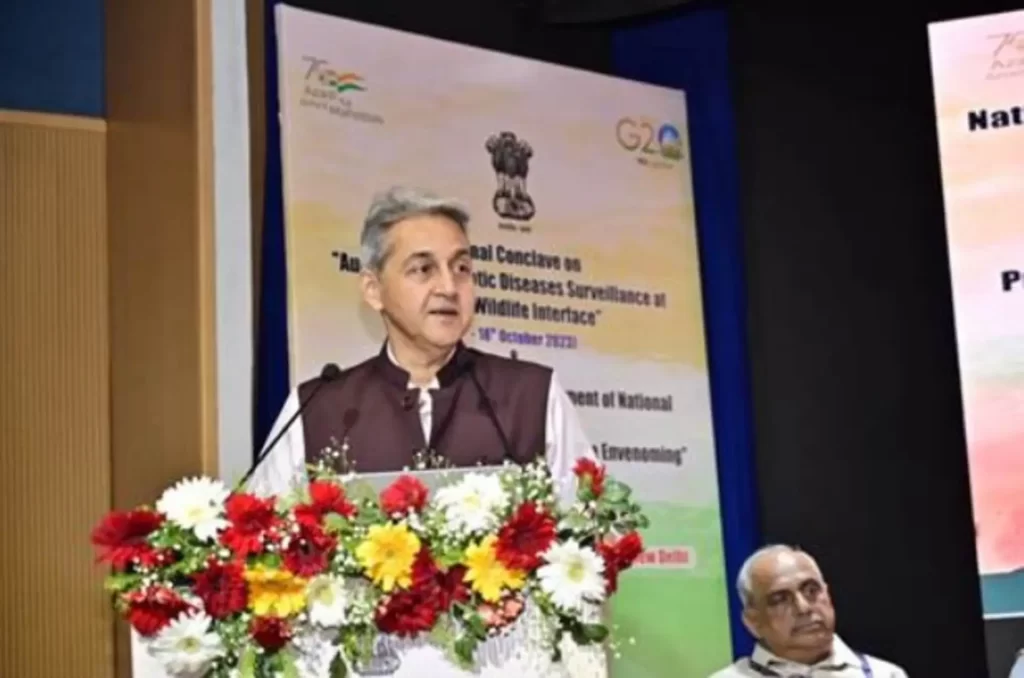
Addressing the gathering, Shri Sudhansh Pant stated that “a better understanding of the specific drivers and mechanisms of zoonotic disease is crucial to preparing for future disease outbreaks.” Underlining the impact of the recent COVID-19 pandemic, he said that “it is important to address diseases from both human and animal perspective as most emerging infectious diseases are a result of changing human-animal interface and their shared environment. This interconnectedness highlighted the need for a One Health approach, which helps in leveraging the complementarity and strengths that is inherent in each sector and devise integrated, robust and agile response systems.”
The Union Health Secretary noted that besides the emergence of zoonotic diseases, Anti-Microbial Resistance (AMR) has also emerged as a significant threat globally. He stated that “the rapid spread of multi‐drug resistant bacteria and lack of new antibiotics to treat infections caused by newer & more potent antimicrobial agents like Carbapenems pose a rapidly increasing threat to human health which urgently needs to be addressed.” “Similarly, food borne diseases which can be caused by poor hygiene, availability of antimicrobials, environmental contamination, and animal husbandry malpractices on farms, such as misuse of antibiotics also constitute a significant threat”, he further stated.
In light of these new and emerging health threats, the Union Health Secretary underscored the importance of ‘One Health’ approach which was reiterated under India’s G20 Presidency theme of ‘One Earth, One Family, One Future’ by hon’ble Prime Minister, Shri Narendra Modi.
Highlighting the various “One Health” efforts undertaken by the Govt of India, he said that the NCDC through its various technical divisions, IDSP, AMR, Climate change and Centre for One Health are entrusted to undertake activities pertaining to pandemic preparedness likely to emerge from zoonotic threats at human, animal and environment interface. “The Union Health Ministry is already implementing various national programs through NCDC which includes National One Health Programs for Prevention and Control of Zoonoses (NOHPPCZ), National Rabies Control Programs (NRCP), Program for Prevention and Control of Leptospirosis (PPCL), Snake Bite Prevention and Control (SBPC), National Programme on AMR Containment, National programme on Climate Change and Human Health (NPCHH). For zoonosis, ICMR and ICAR have developed collaboration for joint research priorities. Ministry of Science and Technology has proposed to have a One Health roadmap for India with the Ministries of Health, Agriculture and Environment, Forest and Climate Change and the FSSAI have taken several initiatives under Swasth Bharat initiative for generating community awareness on eating habits of people. NDMA and Ministry of Health are working on preparation and implementation of action plans on climate change related events. India is also establishing a One Health Centre of Excellence in Nagpur, to focus on One Health Research under ICMR”, he further stated.
Shri Sudhansh Pant also underlined that snakebite envenoming is life threating condition and is an issue of public health concern as India shares a major burden of this disease. “It is important to have a dedicated framework to address the issues and challenges of snakebite envenoming at National level”, he said.
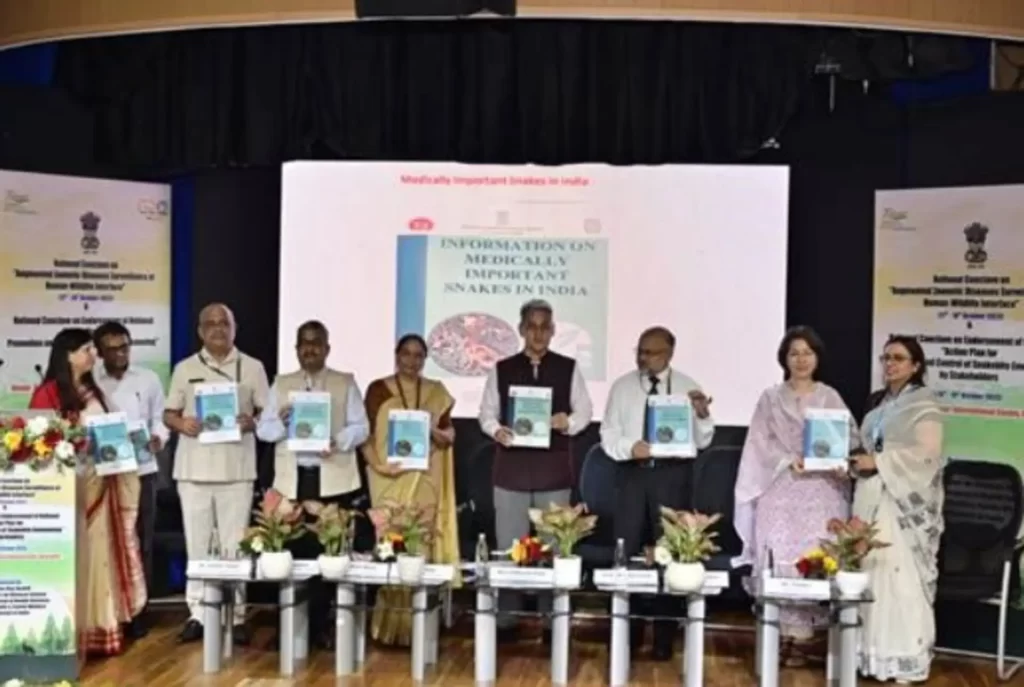
During the event, the dignitaries endorsed the Inter – Ministerial One Health Support Statement on “National Action Plan for Prevention and Control of Snakebite Envenoming”. Technical Documents on Rabies Helpline, Information on Medically Important Snakes in India and Zoonotic Diseases Prevention, Preparedness and Response were also launched on the occasion.
Underscoring the importance of ‘One Health’ approach, Dr. Atul Goel emphasized that the concept encompasses not only animals but plants as well. He highlighted that the spillover effects of zoonotic diseases are due to increasing human encroachment in nature.
Dr Ashok Kumar emphasized that it is essential to ensure early detection of diseases under the ‘One Health’ approach so that spillover effects from animals to humans or vice versa can be effectively managed. He highlighted that ICAR is collaborating with various institutions at the inter-ministerial level on research and
Smt. R Jaya stated that the ‘One Health’ approach naturally flow from the philosophy of Vasudhaiva Kutumbakam. She underlined that community mobilization and spreading awareness are important contributions that the Ministry of Tribal Affairs will work towards in supporting the ‘One Health’ framework.
“We are committed to providing quality healthcare services to all citizens of West Bengal. Government of India under the leadership of Prime Minister Shri Narendra Modi is committed to providing quality healthcare services to all citizens of the state. The State Government should implement Ayushman Bharat at the ground level for benefit to the people of West Bengal. We are taking all necessary steps to ensure that the health services in the state are of the highest quality.” This was stated by the Union Minister of Health & Family Welfare Dr. Mansukh Mandaviya, during his visit to West Bengal. The Union Health Minister reviewed various programmes delivering health services in the state today.
During his visit, he reviewed the Ayushman Bharat Health & Wellness Centres, National TB Elimination Program, status of funds released under National Health Mission (NHM), Pradhan Mantri Ayushman Bharat Health Infrastructure Mission (PM-ABHIM), Telemedicine services, Medical Education, and Sickle Cell Anemia Elimination Program.

Speaking on the occasion, Dr. Mandaviya referred to the Ayushman Bharat Health & Wellness Centre and stated “The Ayushman Bharat Health & Wellness Centre is a great initiative to provide comprehensive primary healthcare services to people near their homes.”
Dr. Mandaviya further added that the following resources have been provided to West Bengal under National Health Mission:
800 Sub-Centres have been approved at the cost of Rs. 288.72 crores.
2 Urban Community Health Centres approved at the cost of Rs. 10 crores and 37 new urban PHCs at the cost of Rs. 27.75 crores.
404 Ayushman Bharat Urban Health and Wellness Centers have been approved

The Union Health Minister also reviewed the National Tuberculosis Elimination Program and the status of funds released under the National Health Mission. He further added, “Government of India is committed to eliminating Tuberculosis by 2025 and emphasized that we are taking all necessary steps to ensure that the funds released under the National Health Mission are utilized effectively.”
Dr Mandaviya further added that under the 15th Finance Commission, 223 Block Public Health Units have been approved at the cost of Rs. 180.12 crores and 719 sub-centres have been approved at the cost of Rs. 290 crores in the state. He added that West Bengal has witnessed 10,358 Ayushman Bharat Health and Wellness Centres being operationalized with a footfall of 16,82,87,430 and 2,08,42,397 teleconsultations have been carried out.
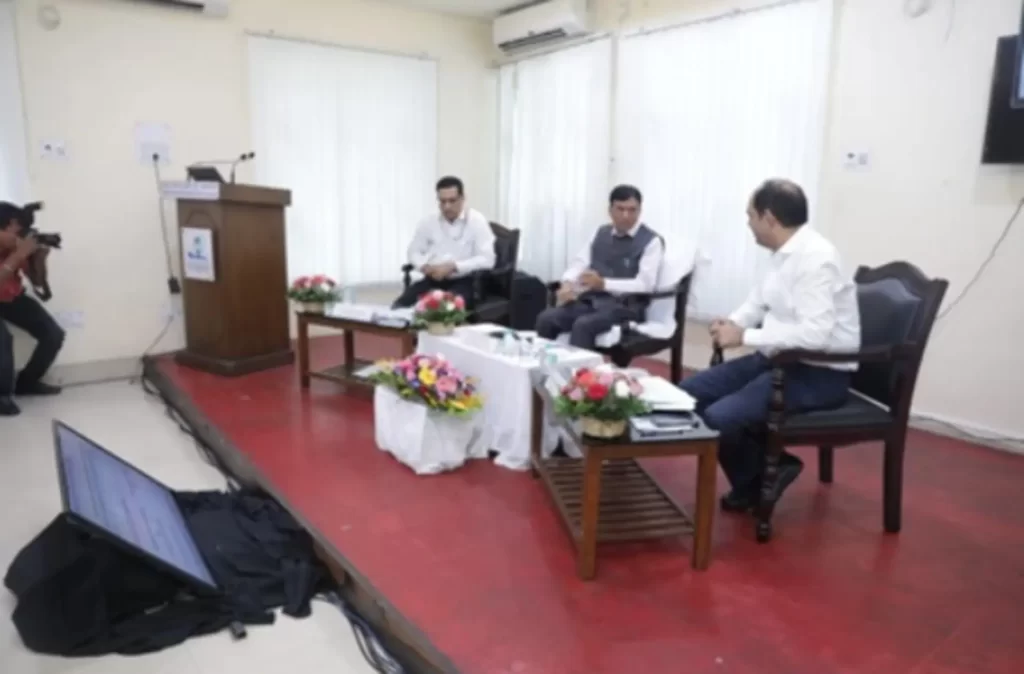
With reference to the Pradhan Mantri Ayushman Bharat Health Infrastructure Mission (PM-ABHIM) and the Telemedicine services, Dr. Mandaviya stated “The PM-ABHIM is a great initiative to provide quality healthcare services to the people of West Bengal. We are also working to ensure that the Telemedicine services are available to all citizens of the state.” Highlighting the growth and development in this sphere in the state, Dr. Mandaviya mentioned that
22 Critical Care Blocks have been sanctioned for a cost of Rs. 727 crores.
23 Integrated Public Health Labs that have been sanctioned for a cost of Rs. 47.38 crores.
510 Urban Health and Wellness Centres have been approved at a cost of Rs. 535.50 crores
In his review of the Medical Education and the Sickle Cell Anemia Elimination Program, he stated, “We are committed to providing quality medical education to the people of West Bengal. We are also taking all necessary steps to ensure that the Sickle Cell Anemia Elimination Program is successful.”