
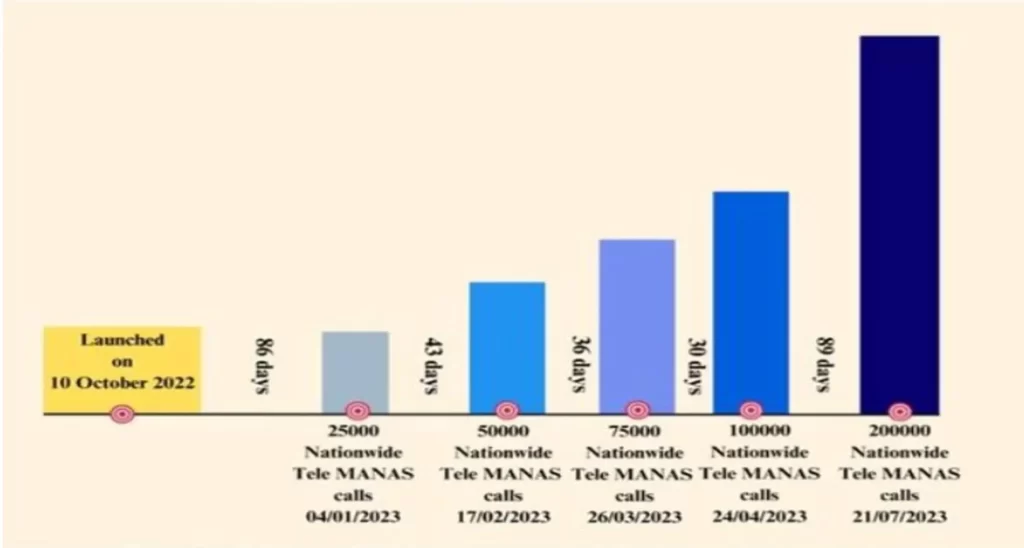
The National Tele Mental Health Programme (Tele Mental Health Assistance and Networking Across States: Tele MANAS, the digital arm of the ‘District Mental Health Programme’) – launched by the Government of India in October 2022, to strengthen mental health service delivery in the country – has reached a significant milestone. The toll-free service has received over 2,00,000 calls from various parts of the nation since the launch, portraying a consistently progressive trend. There has been an exponential increase in the number of calls received with a mere gap of 3 months from reaching1 lakh calls (in April 2023) to 2 lakh calls.
In a tweet by Union Health Minister, Dr. Mansukh Mandaviya congratulated the countrymen for this feat.
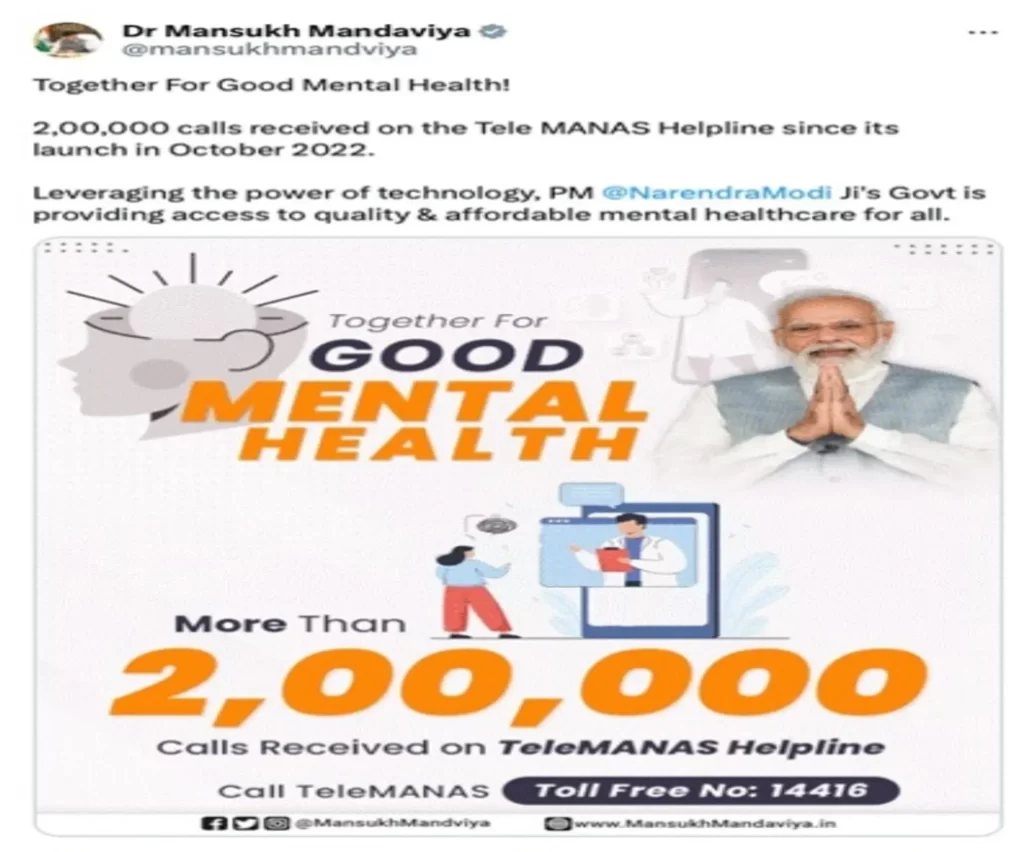
With 42 functioning Tele MANAS cells in 31 States and UT’s, the service is currently catering to 1,300+ calls per day in 20 languages. Over 1900 counsellors have been trained who are running the first line services. Most common concerns encountered are sadness of mood, sleep disturbance, stress and anxiety. Around 7000 calls have been followed up by callbacks by the counsellors where they have succeeded in completing the loop of care. Callers who required specialist care are being successfully linked to appropriate services such as DMHP and other nearby health care facilities.
A spurt of increase in calls related to exam stress was seen during the exam season. These callers were helped by the counsellors with supportive counselling and self-help strategies which helped them in coming out with flying colours. Efforts are also made to reach more students/ adolescents in various educational institutes.
Promotion of the Tele MANAS services via different media platforms such as print media, radio and social media are being carried out. Tele MANAS will continue to provide callers with basic counselling and mental health services, with linkages to existing vital services and resources including integration with e Sanjeevani in the coming days. With Tele MANAS reaching the 2-lakh calls mark in 9 months, it is on the journey to achieve its ultimate aim of building a comprehensive digital mental health network across India and reach the unreached.
Tele MANAS initiative which was announced by Union Ministry of Health & Family Welfare in the Union budget 2022-23 as an acknowledgement to the mental health crisis in the country, is a novel initiative to enable people to seek support for their mental health issues while maintaining anonymity of the callers, thereby reducing the stigma generally surrounding mental health issues.
The National Tele Mental Health Programme of India focusses on building the mental health workforce of the nation through capacity building initiatives whilst simultaneously ensuring that mental health services can reach free of cost to every household and every individual, targeting the most vulnerable and unreached sections of society that may otherwise have gone unnoticed. With Tele MANAS reaching the 1 lakh mark in 6 months, it turns a new leaf in achieving its ultimate aim of building a robust digital mental health network throughout India.
Toll-free helpline numbers: 14416 or 1-800-891-4416 with multi-language provision allows callers to select the language of their choice for availing the services.
The government has increased number of medical colleges and subsequently increased MBBS seats. There is an increase of 82% in medical colleges from 387 before 2014 to 704 as of now. Further, there is an increase of 110% in MBBS seats from 51,348 before 2014 to 1,07,948 as of now, there is also an increase of 117% in PG seats from 31,185 before 2014 to 67,802 as of now. The State/UT wise details of government and private medical colleges functioning in the country along with seats are at Annexure-I.
The Ministry of Health & Family Welfare administers a Centrally Sponsored Scheme (CSS) for ‘Establishment of new medical colleges attached with existing district/referral hospitals’ with preference to underserved areas and aspirational districts, where there is no existing government or private medical college with fund sharing between the centre and state governments in the ratio of 90:10 for north-eastern and special category states and 60:40 for others. Under this scheme, 157 medical colleges have been approved in three phases including 02 medical colleges in Maharashtra, 03 medical colleges in Himachal Pradesh & 27 medical colleges in Uttar Pradesh. As per the scheme guidelines, the planning, execution and commissioning of the projects is to be done by the state government. The details of medical colleges approved in the states of Maharashtra, Himachal Pradesh & Uttar Pradesh are at Annexure-II.
Additionally, financial support has been provided to Himachal Pradesh for an increase of 120 MBBS seats in 6 medical colleges for Rs. 144 crore and 17 post-graduate seats in 1 medical college for Rs. 14.50 crore under CSS for upgradation of existing state government/ central government medical colleges for increasing MBBS under-graduate seats and post-graduate seats. Further, under the Pradhan Mantri Swasthya Suraksha Yojana (PMSSY) support has been provided to Himachal Pradesh for upgradation of 02 Government medical colleges at Tanda & Shimla by setting up of Super Specialty blocks. Further, AIIMS at Bilaspur in Himachal Pradesh has also been established.
Under CSS financial support has been provided to Maharashtra for increase of 700 MBBS seats in 14 medical colleges for Rs. 839.86 Crore and 692 post-graduate seats in 11 medical college for Rs. 345.79 Crore has been provided for upgradation of existing state government/ central government medical colleges for increasing MBBS under-graduate seats and post-graduate seats. Further, under PMSSY support has been provided to the state for upgradation of 6 Government medical colleges at Mumbai, Nagpur, Chhatrapati Sambhajinagar, Latur, Akola & Yavatmal by setting up of Super Specialty blocks. Further, AIIMS at Nagpur in Maharashtra has also been established.
Regarding upgradation of existing state government/ central government medical colleges for increasing MBBS under-graduate seats and post-graduate seats, financial support has been provided to Uttar Pradesh for increase of 432 MBBS seats in 7 medical colleges for Rs. 518.39 Crore and 556 post-graduate seats in 12 Medical College for Rs. 375.92 crore under CSS. Further, under PMSSY support has been provided to the state for upgradation of 11 government medical colleges at Lucknow, Varanasi, Aligarh, Jhansi, Gorakhpur, Prayagraj, Meerut, Agra & Kanpur by setting up of Super Specialty blocks. Further, AIIMS at Rae Bareli & Gorakhpur in Uttar Pradesh have also been established.
The Union Minister of State for Health and Family Welfare, Dr. Bharati Pravin Pawar stated this in a written reply in the Lok Sabha today.
Ministry of Health and Family Welfare (MoHFW) has developed a telemedicine application eSanjeevani which provides doctor to doctor and patient to doctor consultations. This application works on a hub and spoke model wherein doctors including specialists provide services to Health and Wellness Centres (HWCs) in rural areas. Further people in remote and rural areas can also avail services through OPD module of eSanjeevani.
As on 19th July, 2023, a total of 13,91,61,458 teleconsultations have been completed, out of which 1,10,12,570 teleconsultations have been rendered to senior citizens and 5,22,15,224 to women. State-wise status is as available at Annexure A. With an aim to support effective implementation of the digital health initiatives including telemedicine services across the country, Union Health Ministry provides financial assistance to all States/UTs under National Health Mission for strengthening of health IT infrastructure and internet connectivity. To aid the process of safe and secure implementation of telemedicine services, Union Health Ministry has also issued Telemedicine Practice guidelines on 25th March 2020.
As on 14th July, 2023, a total of 2,08,569 spokes (including Health and Wellness Centres and Primary Health Centres) have been connected to telemedicine services in the country. The State/UT-wise list is as available at Annexure B.
The Union Minister of State for Health and Family Welfare, Dr. Bharati Pravin Pawar stated this in a written reply in the Lok Sabha today.
To increase the access of generic medicines to the common man being sold through Pradhan Mantri Bhartiya Janaushadhi Kendras (PMBJKs) under Pradhan Mantri Bhartiya Janaushadhi Pariyojana (PMBJP), the department has set a target to open 10,000 PMBJKs by March, 2024. Till 30.06.2023, 9,512 PMBJKs have been opened across the country.
Further, Clause 1.5 of Indian Medical Council (Professional Conduct, Etiquette and Ethics) Regulations, 2002 prescribes that every physician should prescribe drugs with generic names legibly and preferably in capital letters. Further, the erstwhile Medical Council of India (MCI) had issued Circulars vide which all the Registered Medical Practitioners have been directed to comply with the aforesaid provisions.
The Directorate General of Health Services has directed all Central Government hospitals to prescribe generic medicines only. Similar instructions also have been issued to “prescribe drugs with generic name legibly” to all CGHS Doctors and Wellness Centres. Under free drug initiative of National Health Mission (NHM), support is provided for provision of essential generic drugs free of cost in public health facilities.
In order to promote the PMBJP scheme, the Department of Pharmaceuticals and Pharmaceuticals & Medical Devices Bureau of India (PMBI), the implementing agency of scheme periodically requests state/UT governments/ district administrations to create awareness about the scheme and provide rent free space for opening Janaushadhi Kendras in Community Health Centre (CHC)/ Primary Health Centre (PHC)/Government Hospitals. PMBI also spreads awareness about the scheme through advertisements in Print Media, Radio, TV & Cinema as well as Outdoor publicity like hoardings, bus queue shelter branding, bus branding, auto wrapping, etc. In addition, public is educated about the benefits of Jan Aushadhi generic medicines and the scheme through various social media platforms regularly. Further, Jan Aushadhi Diwas is celebrated every year on 7th March for further dissemination and spreading awareness about the scheme. Workshops and seminars are being organized during various event celebrations such as Azadi Ka Amrit Mahotsav, National Unity Day week, etc. to educate the citizens about the Jan Aushadhi generic medicines.
The manufacture, sale and distribution of drugs are regulated under the provisions of the Drugs and Cosmetics Act, 1940 and Rules there under. Licenses for manufacture, sale and distribution of drugs are granted by the State Licensing Authorities (SLAs) appointed by the respective state governments and SLAs are empowered to take the action in case of violation of any condition of licenses. CDSCO and Ministry of Health and Family Welfare have taken following regulatory measures to ensure the quality of medicines in the country:-
(i). The Drugs and Cosmetics Act, 1940 was amended under Drugs & Cosmetics (Amendment) Act 2008 to provide stringent penalties for manufacture of spurious and adulterated drugs. Certain offences have also been made cognizable and non-bailable.
(ii). States / UTs have set up special Courts for trial of offences under the Drugs and Cosmetics Act for speedy disposal.
(iii). The number of sanctioned posts in Central Drugs Standard Control Organization (CDSCO) has been significantly increased in last 10 years.
(iv). To ensure efficacy of drugs, the Drugs and Cosmetics Rules, 1945 have been amended providing that applicant shall submit the result of bioequivalence study along with the application for grant of manufacturing license of oral dosage form of some drugs.
(v). The Drugs and Cosmetics Rules, 1945 have been amended making it mandatory that before the grant of manufacturing license, the manufacturing establishment is to be inspected jointly by the Drugs Inspectors of Central Government and State Government.
(vi). The Drugs and Cosmetics Rules, 1945 have been amended, making it mandatory that the applicants shall submit evidence of stability, safety of excipients etc. to the State Licensing Authority before grant of manufacturing license by the Authority.
CDSCO coordinates activities of State Drug Control Organizations and provides expert advice through the Drugs Consultative Committee (DCC) meetings held with State Drugs Controllers for uniformity in administration of the Drugs and Cosmetics Act.
The Union Minister of State for Health and Family Welfare, Dr. Bharati Pravin Pawar stated this in a written reply in the Lok Sabha today.
“It is important for every policy to evolve, and learnings need to be taken into consideration to improve them, to achieve the goal of creating better health outcomes for the citizens of the country.” This was stated by Dr. Mansukh Mandaviya, Union Health Minister, as he chaired the Swasthya Chintan Shivir, in the presence of Prem Singh Tamang, Chief Minister of Sikkim, and Union Ministers of State for Health & Family Welfare, Dr Bharati Pravin Pawar, and Prof. SP Singh Baghel. Health Ministers including Shri Dhan Singh Rawat (Uttarakhand), Smt.Rajini Vidadala (Andhra Pradesh), Shri Alo Libang (Arunachal Pradesh), Shri Keshab Mahanta (Assam), Shri Rushikesh Patel (Gujarat), Shri Banna Gupta (Jharkhand), Shri Dinesh Gundu Rao (Karnataka), Shri Sapam Ranjan Singh (Manipur), Dr. R. Lalthyangliana (Mizoram), Shri Thiru Ma. Subramanian (Tamil Nadu) are participating in the brainstorming conclave. Shri TS Singh Deo (Deputy Chief Minister, and Health Minister, Chhatisgarh), Shri Brajesh Pathak (Deputy Chief Minister, and Health Minister, Uttar Pradesh), Shri BS Pant (Minister of Tourism and Civil Aviation, Sikkim), Shri Vishwas Sarang (State Medical Education Minister, Madhya Pradesh), Shri K Lakshmi Narayanan (Minister of Public Works, Puducherry) are also participating in the event.
Dr. Mandaviya further stressed the need for states to increase spending on healthcare, and said that the government of India will support states in this endeavor. He highlighted the progress made in the last one year since the previous Swasthya Chintan Shivir was held, and said that it should be made a regular practice to ensure health outcomes are consistently improved.
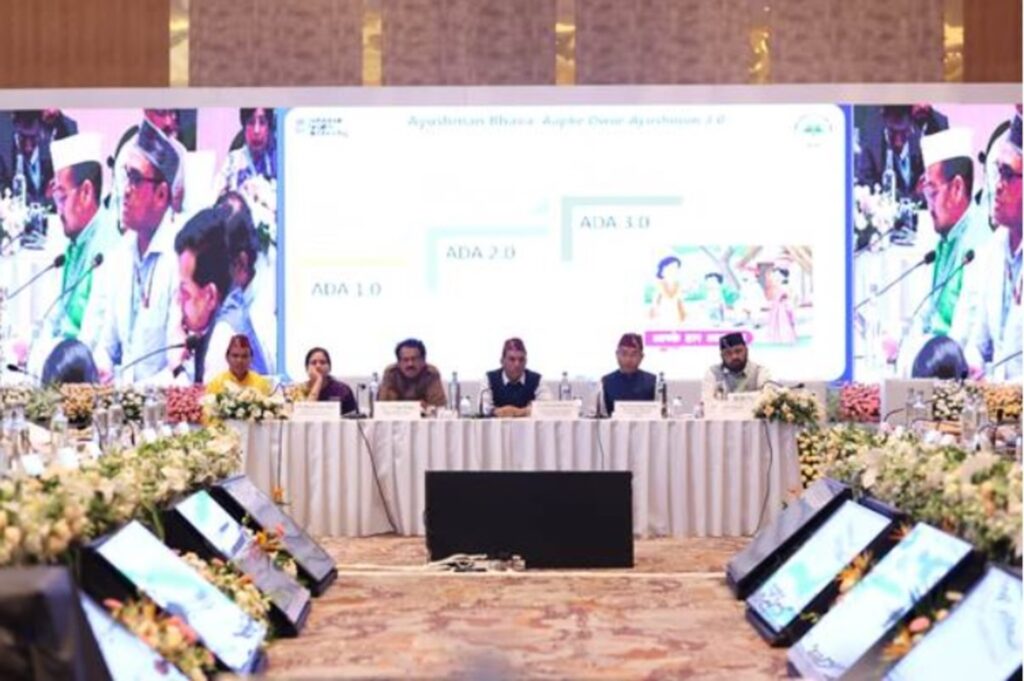
On day one of this two-day event, sessions were held on various verticals under Ayushman Bharat, including Ayushman Bharat-Pradhan Mantri Jan Arogya Yojana (PMJAY), Ayushman Bharat Digital Mission (ABDM), Health and Wellness Centres, and Pradhan Mantri Ayushman Bharat Health Infrastructure Mission(PM-ABHIM). The last session of the day focused on the role of Public Health Management Cadre.
The national conclave proved to be a platform for sharing of best practices, as well as learning across states in healthcare in India today. The deliberations focused on the implementation of PM-JAY, and the ABDM, and the gaps that need to be filled, with respect to diverse local conditions across states, and provisions for digital health literacy in the country. The national conclave presented an outlook of the health infrastructure to be created in India in the coming years under PM-ABHIM, and the role of the public and private sector in this regard was discussed.
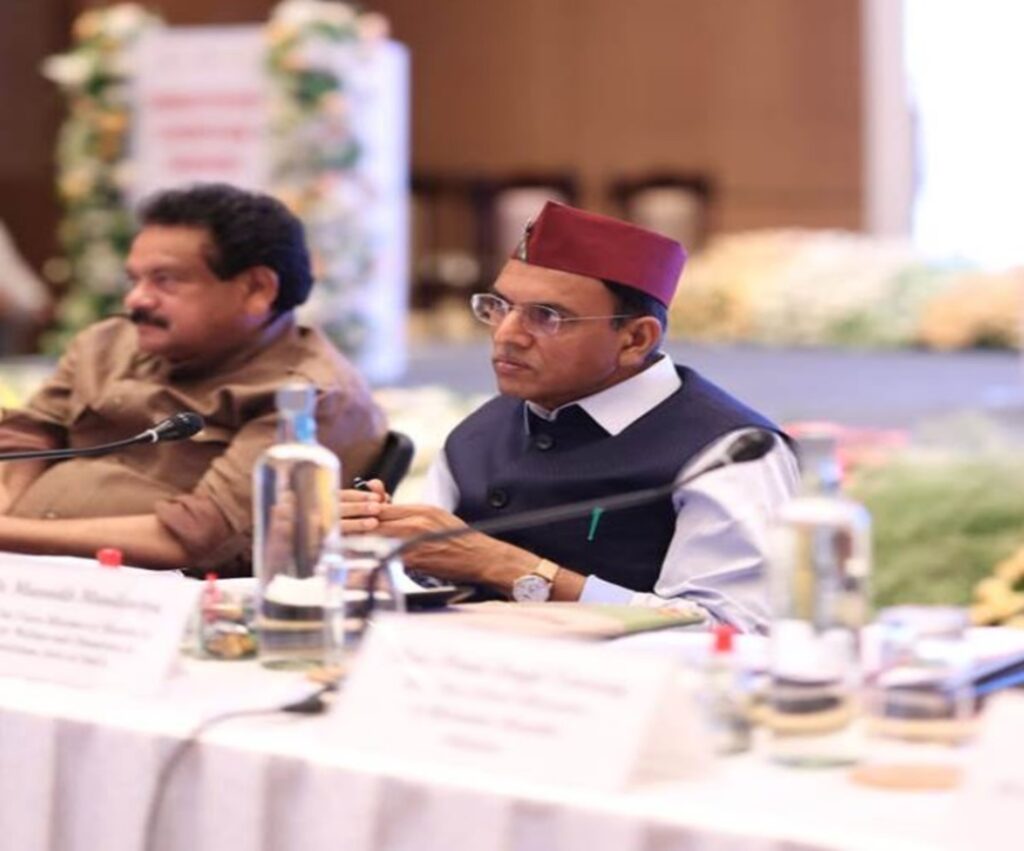
Shri Rajesh Bhushan, Secretary, Minister of Health and Family Welfare, Shri Sudhansh Pant, Officer on Special Duty, Ministry of Health and Family Welfare, Dr. Rajiv Bahl, Secretary, Department of Health Research, senior officials from the Ministry of Health and Family Welfare and States, as well as leaders from industry bodies were present during the event.
Union Minister for Health and Family Welfare, Dr Mansukh Mandaviya will inaugurate the Swasthya Chintan Shivir on 14th July, 2023 at Dehradun, Uttarakhand. The two day Swasthya Chintan Shivir will be organized by the Ministry of Health and Family Welfare along with the Central Council of Health and Family Welfare. The event will be attended by the Ministers of State for Health and Family Welfare, Dr Bharati Pravin Pawar and Prof. SP Singh Baghel. Health Ministers of various States and Union Territories as well as senior officials from the Health Ministry and States are expected to join this important event.
The two-day event will begin with tabling of the Action Taken Report of the 14th Convention of the Central Council of Health and Family Welfare. It will be followed by sessions focusing on various facets of healthcare in India today. The sessions will highlight four aspects of Ayushman Bharat, including Ayushman Bharat-Pradhan Mantri Jan Arogya Yojana (PMJAY), Ayushman Bharat Digital Mission (ABDM), Health and Wellness Centres, as well as Pradhan Mantri Ayushman Bharat Health Infrastructure Mission(PM-ABHIM).
The thematic sessions will also focus on the National Tuberculosis Elimination Programme, the elimination of measles, rubella, and the implementation of the PCPNDT Act in India. The sessions will highlight the role of Public Health Management Cadre, as well as the status of Medical, Nursing, and Allied Health Education in the country.
Discussions will also be held on National Organ Transplant Programme, as well as the District Residency Programme. Additionally, the sessions will focus on the burden of Non-communicable diseases, and Sickle Cell Disease.
The Swasthya Chintan Shivir will have interactive sessions with the stakeholders with the aim to arrive at solutions for healthcare challenges in the country, as well as harness the opportunities to create a healthier nation.
“Today’s young children are our future, and our future depends on them.” This was stated by Dr V K Paul, Member (Health), NITI Aayog while delivering the keynote address in Townhall session at the ‘Health of Youth – Wealth of Nation’, a G20 co-branded event organized by the Union Ministry of Health and Family Welfare, in collaboration with Partnership for Maternal, Newborn and Child Health (PMNCH) here today.

Accentuating the influence of internet in daily life, Dr. Paul cautioned that “Internet is a necessity. It has changed lives, some in a positive way, however like most other things, it comes with a baggage.” Emphasizing on the dangers of AI influence on personal lives, he stated “Time has come that again that parents, school, media we talk about the rightful and excessive use of internet. The education, moderation, the rules should be a way forward for the families and the society at large. However, artificial intelligence can also become dangerous in its influence and students must have access to counselling, treatment and help as required.” Dr. Paul stressed that “we have to think about a collective response on how to handle the technology which is posing challenges that we have never seen before.” Elaborating further, Dr. Paul stated “At societal level we need to make healthy eating, talking about issues like sexual, reproductive health, mental health the norm.” He also emphasized on a neglected area in health care, the importance of sleep and its impact on health.
He further added “Ministry of Health and Niti Aayog are working together to review, refine and upgrade care of adolescents. This age group is very critical for all nations, much more so for India because for the next twenty-five years, we have set the goals for developed nation.” Dr. Paul noted that “Converging services, counselling and wellness in schools is of utmost importance.” He invited the youth representatives for their inputs in designing a school health program that fits in the needs of the students today and incorporates elements in enhancing their well-being.
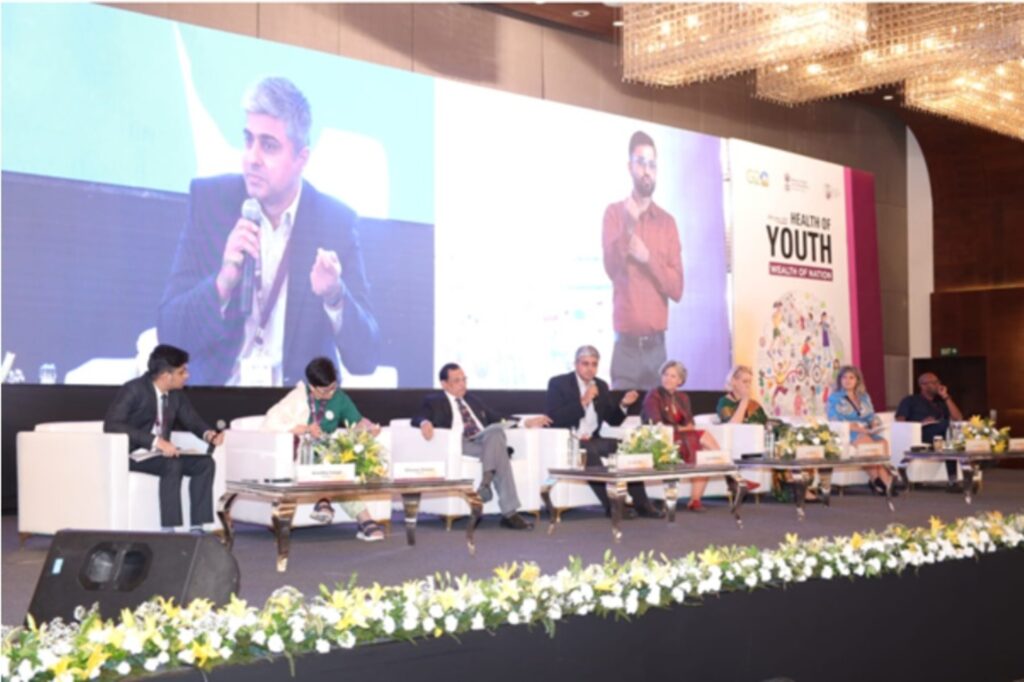
The townhall session underscored the challenges facing the youth that directly impact their health such as mental health, menstrual hygiene, cyber bulling. Youth representatives from India and abroad brought to fore stories and experiences detailing these challenges and deliberated on possible solutions to ease these difficulties across regions. The speakers concurred that stigma surrounding these issues highly restricts progress and awareness and resources must be dispersed to achieve a breakthrough. “Worldwide victims speak the language of silence, but conversations in forums such as these is how stigma can be broken.” Youth representatives also shared some success stories wherein new products were made from waste; counselling services that led to greater awareness on hygiene for girls regarding mensuration. However, these stories also underscored a need for concerted efforts from all stakeholders for achieving far greater impact. Yatan Balhara, Professor, AIIMS, Githinji Gitahi, CEO, AMREF Africa, Amy Ucello, Senior Adolescent and Youth Technical Expert, USAID, Andrea Wojnar, Country Representative, UNFPA India, Ann Starrs, Director of Family Planning, BMGF facilitated discussions for this session.
Two panel discussions were also held. Centre staging health & well-being of adolescents and young people being the first session saw eminent health experts delving into facets of health. Dr Kapil Yadav, AIIMS highlighted the importance of eating healthy food, referring to Eat Right campaign run by the central government. He reiterated that “adolescence is the prime age for inculcating good eating habits which lay the foundation for lasting good health.”
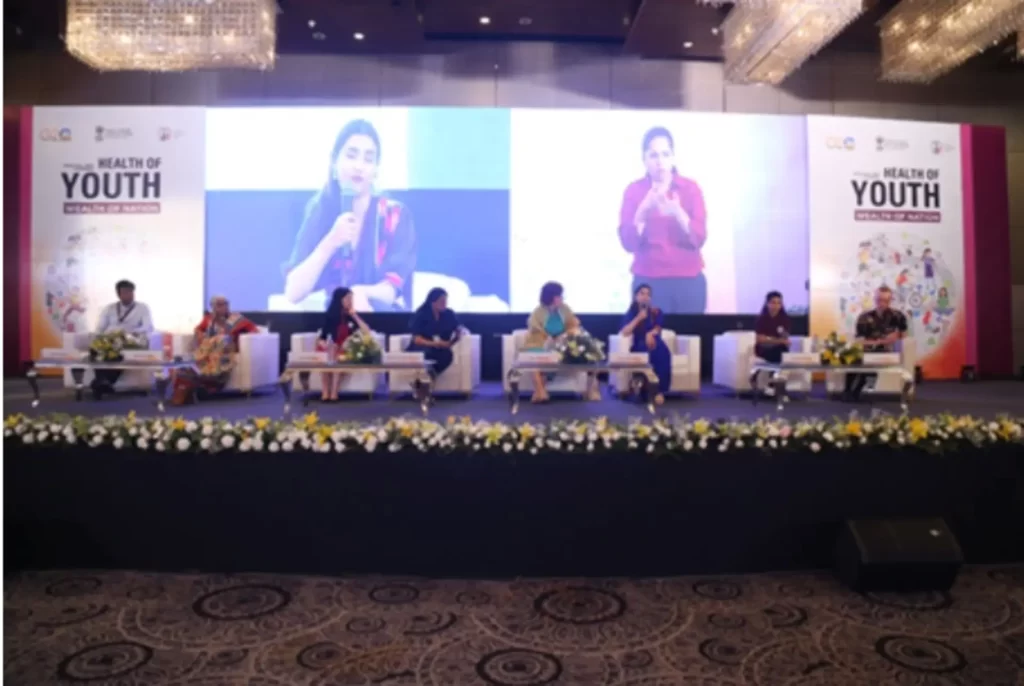
Dr. Flavia Bustreo, Partnership for Maternal, Newborn and Child Health (PMNCH) Board Member appreciated the political commitment India demonstrates in bringing this issue to light in conjunction with its G20 Presidency and stressed that the “demographic dividend cannot be fully realized without ensuring good health of the youth who are the future of the nation”. Elucidating that health encompasses a wide array of issues and challenges for youth, she called for intersectoral collaboration as well as leveraging the India’s G20 Presidency as a forum to bring forth sustainable solutions for strengthening resources and capacities for the youth.
Dr. Pratima Murthy Director, NIMHANS alluded to stigma attached with mental health challenges which act as a barrier for patient in seeking timely medical care. Discussions centered on best practices that can adapted for creating wider acceptance in the society and fostering an enabling environment to access the requisite resources. Dr. Hemlata, Sylvia Wong, Program Head UNFPA, Gareth Jones, Youth Representative Meshwa Parmar, Peer Educator (India) and Shitanshu Dhakal Youth Advocate, Nepal, were present on the dais for this session.
Multi-sectoral partnerships for engagement of adolescents and young people for health and well-being was the second session that explored various thought-provoking aspects such as the intersection and confluence of different sectors on adolescent underscoring that well -being of adolescents extends beyond the health sector hence a multilateral approach is imperative. Stakeholders from range of sectors such as academia, private sector, community and many more came forth to deliberate and engage with the audience on the importance of imbibing inputs from different sectors and build programs to ensure a comprehensive outlook. It was noted that inclusion of institutions contributes extensively in delivering resources and communication to the last-mile as well as conveying grassroot perceptions to the central stakeholders. Anurita Bains, Associate Dir. Health/Director HIV UNICEF, Dr. Aparajita Gogoi, Executive Director, C3, Dr. Jaydeep Tank, President Elect, FOGSI, Merette Khalil, White Ribbon Alliance, Dr. Shalini Bharat, Director, TISS, Stephen Omollo, engaged in active discussions on the dais for this session.
Shri Ashok Babu, Joint Secretary brought the event to a close, thanking the eminent speakers participants and audience. Lauding the discussions and valuable insights garnered, he emphasized that these deliberations underscored significant perceptions for policy developments and growth of the nation.
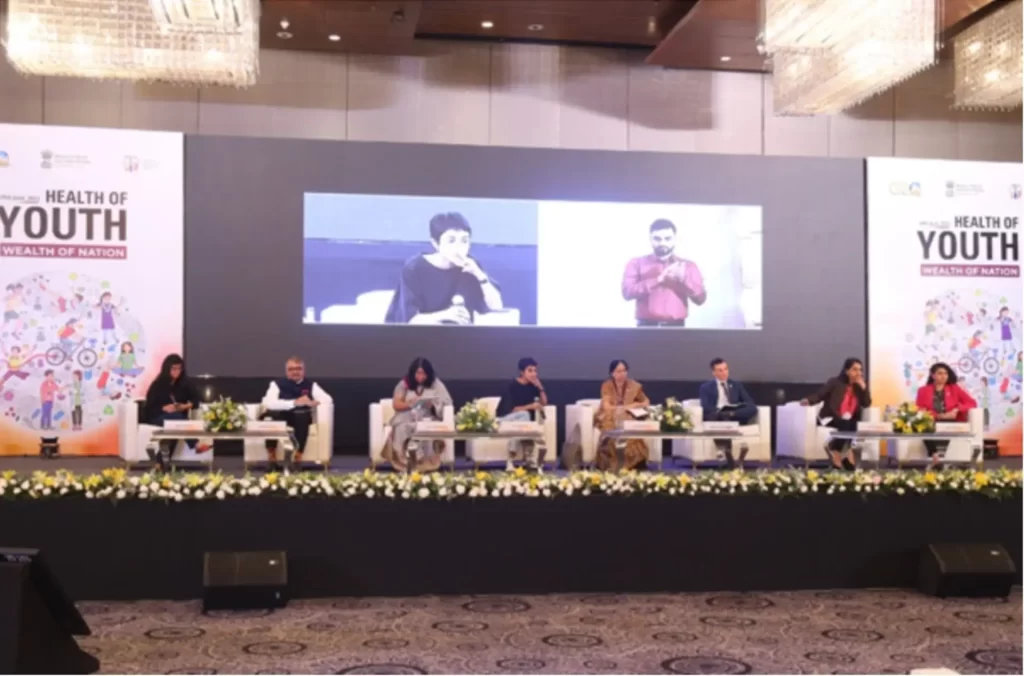
Senior officials from the Health Ministry, international organizations, non-governmental organizations, forums and officials from partner agencies like Gates Foundation, UNFPA, USAID, WHO, UNICEF and youth icons from G-20 nations were also present on the occasion.
Union Minister of Health and Family Welfare, Dr. Mansukh Mandaviya chaired a meeting with Central and State health agencies to discuss health related issues arising due to flood ahead of the monsoon in Assam, today via video conference. The meeting assessed the arrangements put in place by the Central institutions and agencies of the State Government to ensure effective management of floods in Assam.

Dr Mandaviya highlighted the need for strong coordination between the Central and State health institutions for effective management of flood and any other emergencies. He underscored the need for preparedness of critical care equipment, oxygen, hospital beds as well as availability of clean drinking water in flood affected regions. He also emphasised preventive healthcare and greater awareness among the communities regarding vector borne and water borne diseases. The Union Health Minister urged the officials to work on a flood-management model to deal with the flood situation in Assam which is a recurring phenomenon. He directed them to prepare an online database listing all the important information like availability of beds, oxygen and other health facilities to ensure efficient management of any health emergency.

Dr Mandaviya also exhorted the officials to ensure that the Health and Wellness Centres are well equipped with required medicines, functioning medical equipment and other amenities. He directed for training of all health workers at AB-HWCs so that they well equipped to provide requisite healthcare services critically required during such emergencies. "The ASHAs, ANMs, CHOs etc., should know their roles and responsibilities for any emergency. Advance training will ensure that they are effective in providing healthcare services during emergency flood management", he stated.
Shri Avinash Joshi, Principle Secretary (Health), Assam informed that all necessary medicines are in adequate stock. Dy. Commissioners from the six districts of Barpeta, Kamrup, Cachar, Lakhimpur, Dima Hasao and Dibrugarh who joined the review meeting assured that they were regularly reviewing the preparedness to ensure effective management of any floods.
Dr Atul Goel, DGHS, MOHFW stated that their regional offices are in preparedness for supporting the state Govt. He added that team of specialists from AIIMS Guwahati and NCDC will be deployed for assisting the State whenever required.
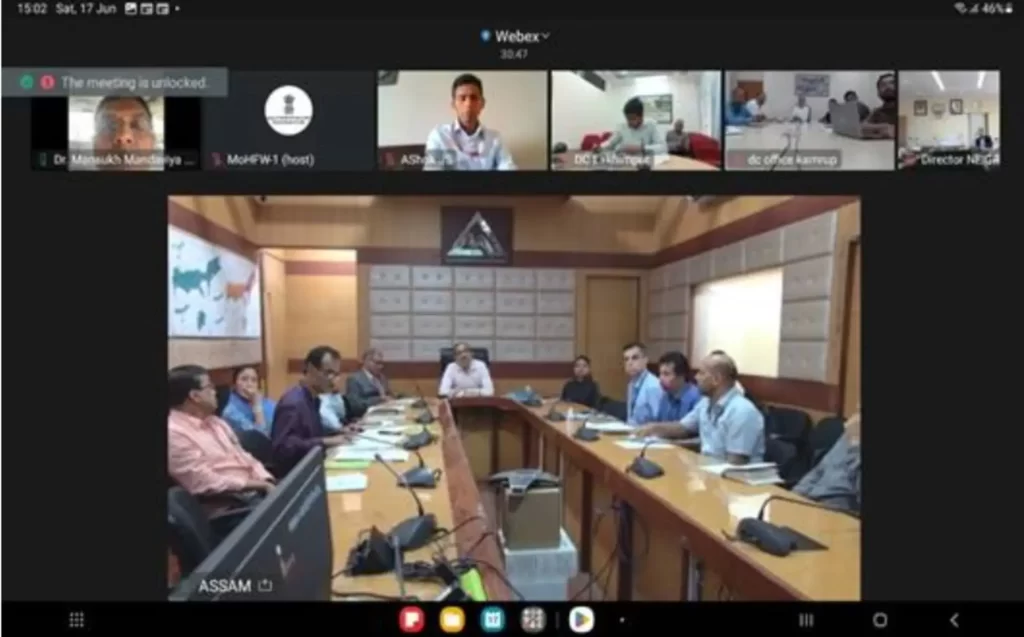
The Union Health Minister assured all support of the Centre for flood management in the state.
Shri Ashok Babu, Joint Secretary, Health Ministry, and senior officials from the Ministry and affiliated organisations like All India Institute of Medical Sciences (AIIMS), Guwahati, North Eastern Indira Gandhi Regional Institute of Health & Medical Sciences (NEIGRIHMS), Shillong; Indian Council of Medical Research – Regional Medical Research Centre (ICMR-RMRCNE), Dibrugarh and Regional Institute of Paramedical and Nursing Sciences (RIPANS), Aizawl were present in the meeting.
“Providing accessible and quality healthcare to every citizen of India is a priority of the government. To ensure this, expansion of CGHS facilities has become a focus area for the government so people can access quality healthcare wherever they live in the country.” This was said by Dr Mansukh Mandaviya, Union Minister for Health and Family Welfare as he inaugurated the CGHS Wellness Centres in Chandigarh and Panchkula in the presence of Smt Kirron Kher, Member of Parliament, Chandigarh, and Shri Gian Chand Gupta, Member of Legislative Assembly from Panchkula, and Speaker in the Haryana Legislative Assembly. This makes Panchkula the 80th city with CGHS facilities fulfilling a long cherished demand of the employees and pensioners in the city.
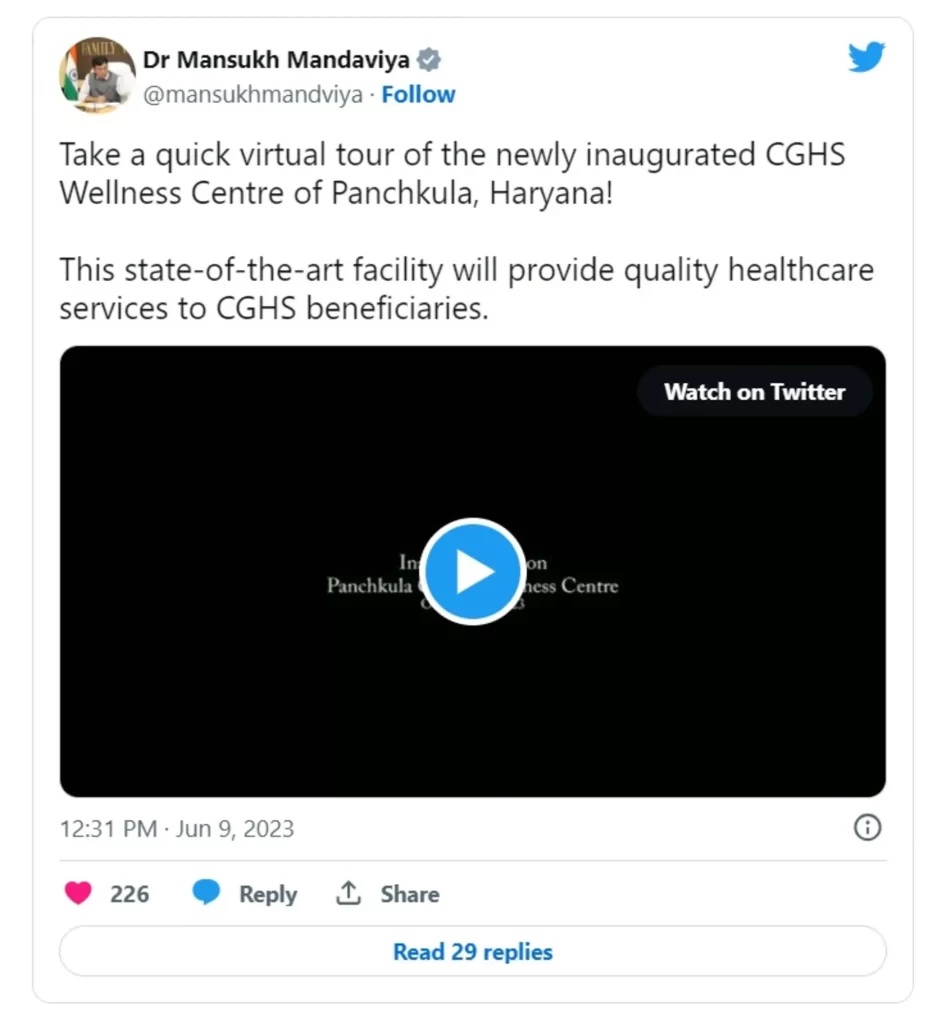
Chandigarh already had a CGHS Wellness centre with 47000 registered beneficiaries. The opening of the 2nd Wellness Centre gives a big relief to the beneficiaries as the workload will be divided between the two wellness centres and the waiting time will reduce ensuring ease of living for the citizens.
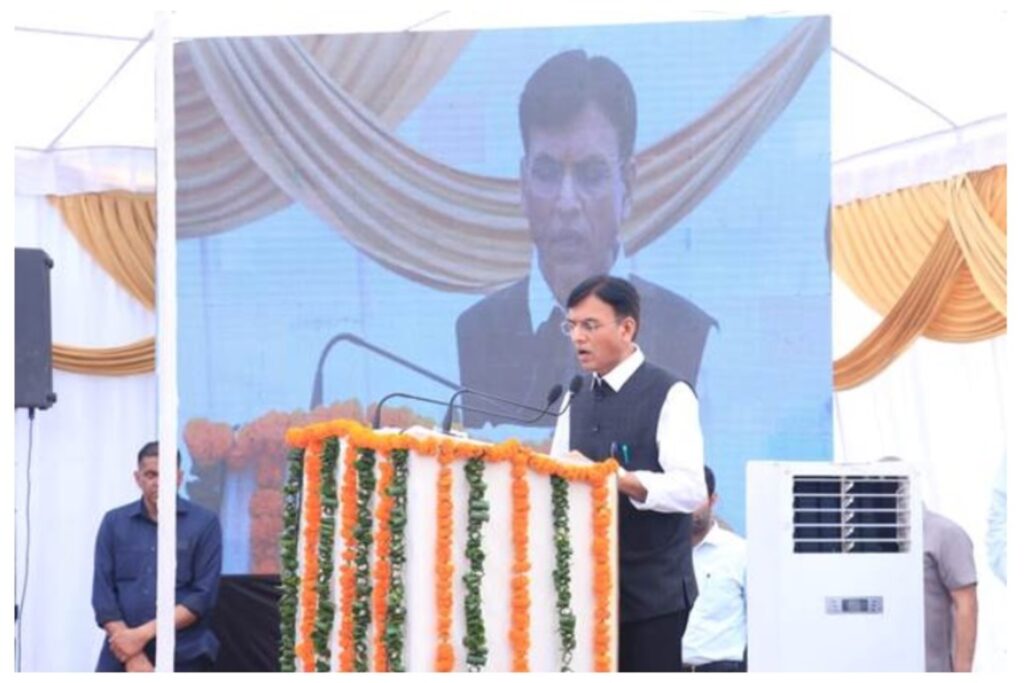
Dr Mandaviya highlighted the Government’s focus on ensuring ease of living for the citizens of India. In this regard he said, “Pensioners shouldn’t have to struggle to access quality healthcare, the billing and reimbursement cycle has already been made much easier than the past, it will only become quicker and simpler going further.” He further said, “CGHS technology has been integrated with that of the National Health Authority, and with our aim to expand CGHS soon to 100 cities in India, people’s access to good quality healthcare in India will only increase.” Focusing on Modi government’s pro poor approach, he further said, “Ensuring that the poor have the same access to affordable and quality healthcare has always been a priority for the Modi government as evidenced by the success of Ayushman Bharat.”
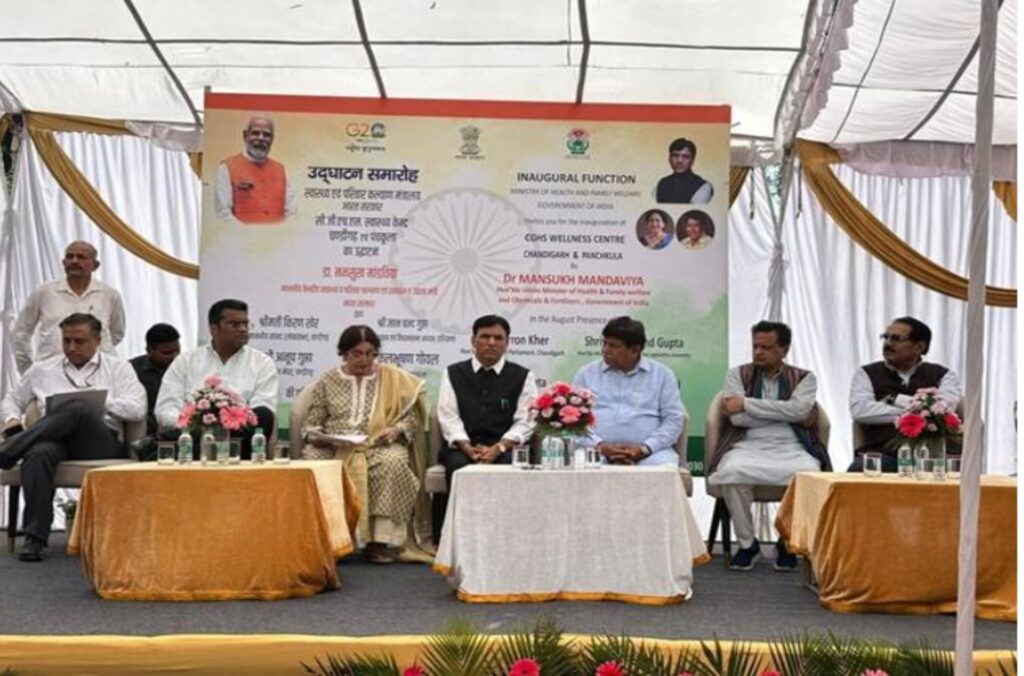
The opening of these two wellness centres will go a long way in mitigating the hardships faced by pensioners residing not only in the Chandigarh-Panchkula-Mohali tricity area, but also in nearby areas of Punjab, Haryana, and Himachal Pradesh.
With this launch, the coverage of CGHS cities has expanded from 25 cities in 2014 to 80 in 2023.
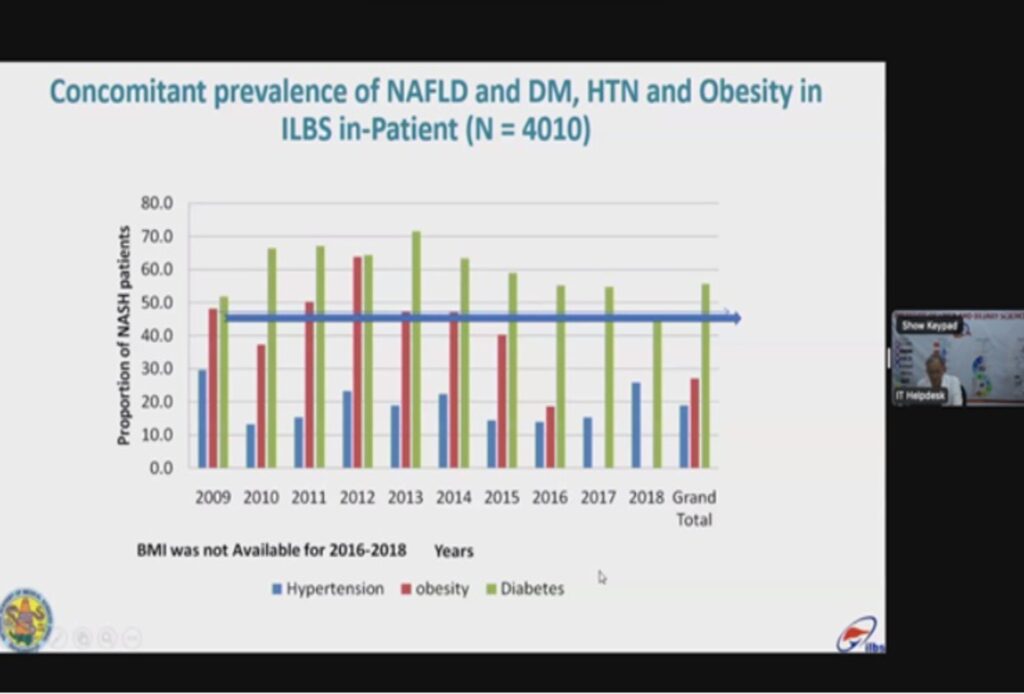
“Capacity building is necessary for medical officers as it provides them with the unique opportunity to access valuable knowledge and expertise, contributing to their professional development and enhancing their ability to address the challenges posed by Non-Alcoholic Fatty Liver Diseases (NAFLD) effectively. It equips them with the skills to understand the risk factors, the appropriate diagnosis, as well as standard treatment flows to tackle the rising challenge of NAFLDs in the country.” This was stated by Shri Rajesh Bhushan, Secretary, Ministry of Health and Family Welfare as he chaired a webinar for Medical Officers of District Hospitals, Community Health Centres, and Primary Health Centres, focusing on NAFLD, here today. The national webinar was attended by over 7,000 medical officers from across the country.
The Health Secretary highlighted that as the economic and demographic profile of the country has changed, so has its epidemiological profile leading to a rise in non-communicable diseases. He stressed on the increased role of Primary Health Centres, Community Health Centres, and District Hospitals and said, “As they work with the community directly, it is important they have the right information to disseminate to the community at large, as well as focus on inducing lifestyle based changes. Capacity building programmes such as these become more important in providing our medical officers with the right knowledge and tools so they can do their task effectively.”
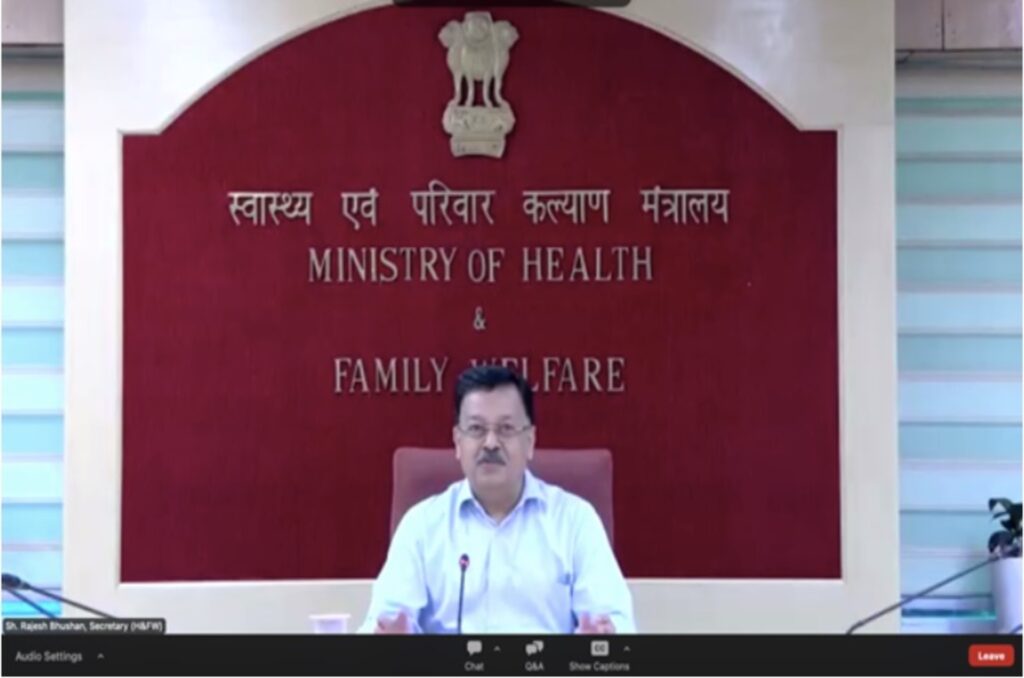
n view of NAFLD emerging as a growing health concern, the primary objective of this capacity building webinar organized under the National Programme for Prevention and Control of Non-Communicable Diseases was to foster knowledge exchange, promote collaboration, and raise awareness about NASH (Non-Alcoholic Steatohepatitis) and its impact on global health among medical officers in the country. This Capacity Building Programme will have two tracks- the first will include regular webinars, and the second will include 3 day residential training programmes. The first state to undertake this residential training programme will be Madhya Pradesh.
The panelists for the webinar included Dr Ajay Duseja, PGIMER, Chandigarh, Dr Ashish Goel, CMC, Vellore, Dr S.K. Sarin, Institute of Liver and Biliary Sciences, and Dr Vineet Ahuja, AIIMS, New Delhi. The webinar provided a platform for medical officers to enhance their understanding of NAFLD, including its causes, risk factors, clinical implications, and available treatment options. Renowned experts in the field of hepatology and public health delivered informative presentations, sharing their expertise and insights. Participants had the opportunity to engage in interactive discussions, enabling them to exchange ideas, ask questions, and seek clarification on NAFLD-related topics.
About the National Programme for Prevention and Control of Non-Communicable Diseases
The National Programme for Prevention and Control of Non-Communicable Diseases of the Union health Ministry is a pioneering initiative aimed at addressing the growing burden of non-communicable diseases in India. Through strategic interventions and collaborations, the program aims to promote preventive measures, ensure early detection, and provide effective management of non-communicable diseases, improving the overall health and well-being of the population.