
Ministry of Health, under the direction of Union Health Minister Dr Mansukh Mandaviya has deployed several teams of doctors to Manipur with immediate effect.
Six teams of doctors, with four doctors each specialising in surgery, psychiatry, medicine, obs & gynecology, pediatric, urology and emergency care will support the state to provide health facilities, that have been adversely impacted due to the ongoing strife in the State.
The teams consist of doctors from AIIMS Kalyani, AIIMS Guwahati and NEIGRIMS Shillong.
On World No-Tobacco Day, Union Health Minister, Dr Mansukh Mandaviya released OTT guidelines for regulation of online depiction of Tobacco Products in online curated content, in the presence of Shri S. Singh Baghel, Minister of State for Health & Family Welfare. Publishers of online curated content that display tobacco products or their use will be required to comply with specific guidelines. The Ministry of Health and Family Welfare, Government of India organized a hybrid event to observe World No Tobacco Day 2023, here today. The theme of World No Tobacco Day this year is “We Need Food, Not Tobacco.”
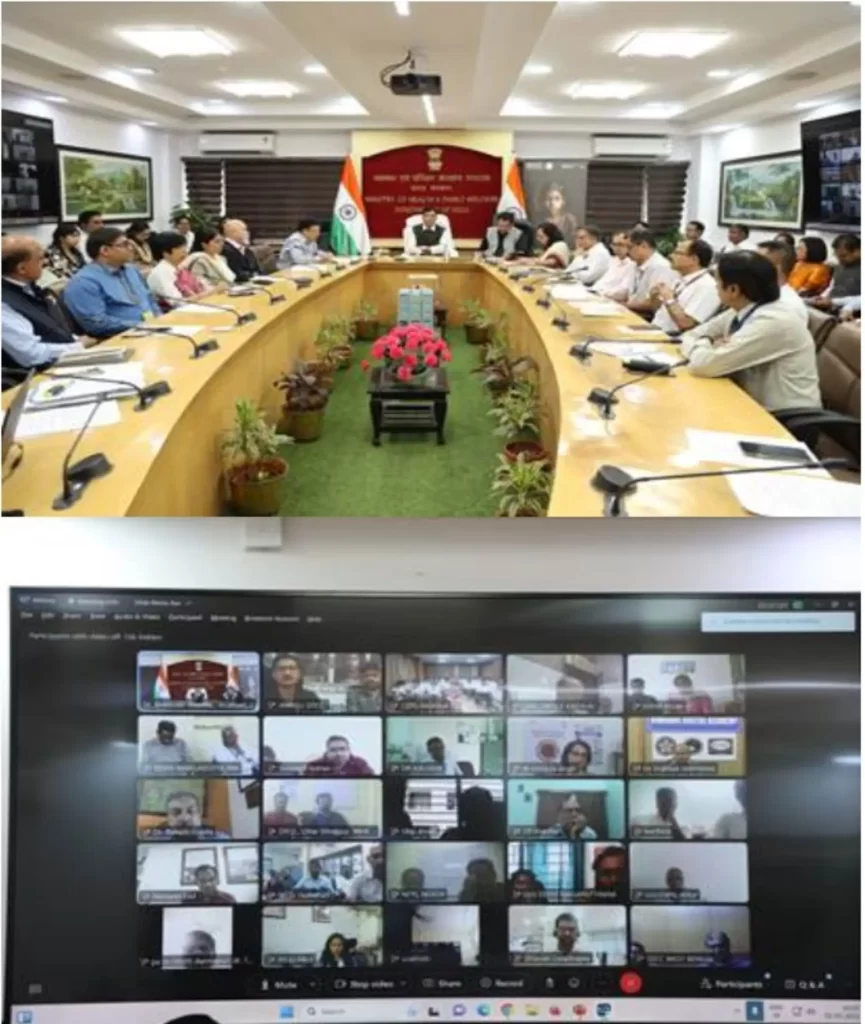
Addressing the occasion, Dr Mansukh Mandaviya showed concern over rising tobacco consumption among the young generation, which is the future of our nation. The Union Health Minister appealed to people to break free from the shackles of tobacco and embrace a healthier lifestyle.
“It is time to create wide awareness among youth and the nation regarding the seriously debilitating and harmful effects of tobacco consumption", Dr Mandaviya stated. He mooted the idea to start a Lok Bhagidari campaign in mission mode through Jan Abhiyaan. Enlisting the measures taken by India to free the people from Tobacco addiction and prevent tobacco use, he highlighted that today's OTT guidelines will go a long way to dissuade tobacco consumption.

Health spots, messages, and disclaimers: Publishers of online curated content that display tobacco products or their use will be required to comply with specific guidelines. These include the display of anti-tobacco health spots, lasting a minimum of thirty seconds each at the beginning and middle of the program. Furthermore, publishers must exhibit anti-tobacco health warnings as a prominent static message at the bottom of the screen during the display of tobacco products or their use. Additionally, an audio-visual disclaimer on the ill-effects of tobacco use, lasting a minimum of twenty seconds each, must be shown at the beginning and middle of the program.
Access to content: The health spots, messages, and disclaimers will be made available to the publisher of the online curated content on the website "mohfw.gov.in" or "ntcp.mohfw.gov.in."
Legibility and language: The anti-tobacco health warning message displayed as a static message must be legible and readable, with black font on a white background, and must include the warnings "Tobacco causes cancer" or "Tobacco kills." Furthermore, the health warning message, health spot, and audio-visual disclaimer should be in the same language as used in the online curated content.
Limitations on display: The display of tobacco products or their use in online curated content is prohibited from including the brands of cigarettes or other tobacco products or any form of tobacco product placement. Additionally, the display of tobacco products or their use in promotional materials is strictly prohibited.
The failure to comply with the provisions outlined may result in action taken by an inter-ministerial committee comprising representatives from the Ministry of Health and Family Welfare, Ministry of Information and Broadcasting, and Ministry of Electronics and Information Technology either suo moto, or on receiving a complaint. The committee will identify the publisher of the online curated content, issue a notice providing a reasonable opportunity to explain the failure, and require appropriate modifications to the content.
At the event, Dr Manuskh Mandaviya, Union Health Minister launched the Dashboard of online reporting of the National Tobacco Control Programme (NTCP) activities, Portal to report Online violations under COTPA, 2003 and prohibition of e-cigarette Act, 2019, Tobacco Free Youth Campaign, a song “Aaj Zindagi Jeete Hai’,provision for taking Online “No Tobacco Pledge”, through MyGov platform. He also felicitated the Awardees with WHO World No Tobacco Day 2023 Award to State Tobacco Control Cell Meghalaya and Centre for Multi-Disciplinary Development Research (CMDR), Dharwad.
Link for the Event: https://youtube.com/live/2mmRXtJ6ar8?feature=share
Link for No Tobacco Pledge: https://pledge.mygov.in/no-tobacco-2023/
A screening camp was organized by Maulana Azad Institute of Dental Sciences, New Delhi for creating awareness on harmful effects of tobacco use through Oral Health Screening; Oral Cancer Screening using toluidine blue staining; Brief Tobacco Cessation Counseling and Nukkad Natak.
The event was graced by the presence of Shri Rajesh Bhushan, Secretary, Ministry of Health & Family Welfare, Smt. V. Hekali Zhimomi, Additional Secretary, Ministry of Health & Family Welfare, Smt. Suman Nalwa, IPS, Additional Deputy Commissioner, Delhi Police, Dr. Roderico Ofrin, WHO Representative to India and other senior officers of the Ministry of Health & Family Welfare.
Ayushman Bharat Pradhan Mantri Jan Arogya Yojana (AB PM-JAY) achieved a milestone of 5 crore hospital admissions amounting to Rs 61,501 crore under the scheme. The flagship scheme being implemented by the National Health Authority (NHA) provides health cover of Rs. 5 lakhs per family per year for secondary and tertiary care hospitalization to 12 Crore beneficiary families.
Elaborating on the achievement, CEO, NHA said – “AB PM-JAY was launched with the vision to achieve Universal Health Coverage. Currently in its fifth year of implementation, the scheme is helping crores of beneficiaries from poor and vulnerable families by reducing the out-of-pocket expenditure for medical treatments. Consistent efforts have helped achieve several milestones for PM-JAY in the current year. From issuing 9.28 crore Ayushman Cards to scheme beneficiaries to achieving 100% allocated fund utilization and authorization of 1.65 crore hospital admissions, the year 2022-23 has been full of accomplishments for the scheme.”
AB PM-JAY is being implemented in 33 States and Union Territories (UTs) except for Delhi, Odisha, and West Bengal. Till date, 23.39 crore beneficiaries have been verified and issued Ayushman Cards for availing free treatment under the scheme. Under AB PM-JAY, the beneficiaries are issued co-branded PVC Ayushman Card.
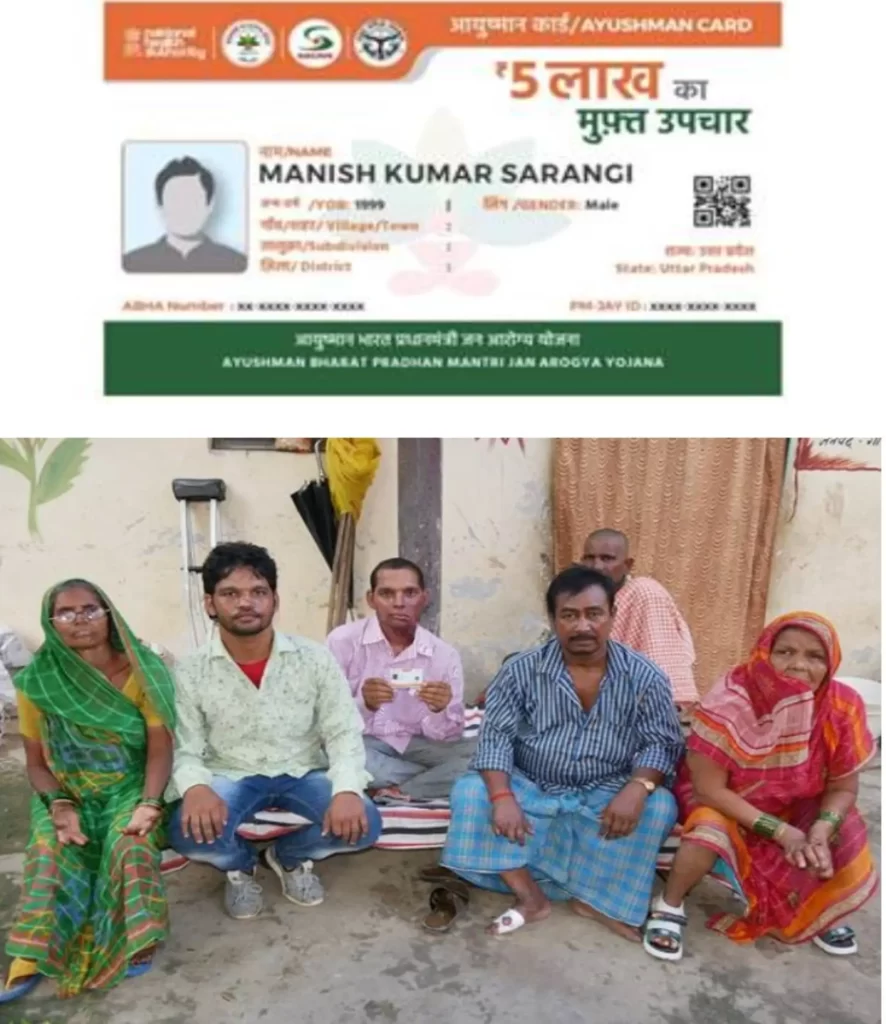
The PM-JAY empanelled hospital network consists of 28,351 hospitals (including 12,824 private hospitals) across the country. During the year 2022-23, approximately 56% of the total admissions (by amount) have been authorised in private hospitals while 44% of the admissions have been authorised in the public hospitals.
The AB PM-JAY beneficiaries can avail treatment corresponding to a total of 1,949 procedures under 27 different specialties. The top tertiary care specialities under which treatments has been availed by beneficiaries till date are medical oncology (cancer treatment), emergency care, orthopaedic and urology (kidney-related ailments).
Further, under the scheme, a conscious effort has been made to ensure gender equity in access to quality healthcare. As a result of the conducive policies, approximately 49% of Ayushman Card recipients are women and over 48% of total authorized hospital admissions under AB PM-JAY scheme have been availed by women. Also, over 141 medical procedures under PM-JAY are exclusively earmarked for women.
Union Minister of Chemicals and Fertilizers, and Health and Family Welfare Dr Mansukh Mandaviya chaired a roundtable meeting with the leading CEOs of pharmaceutical industry in the country on the second day of 8th International Conference on Pharma and Medical Device Sector, here today. Ms. S Aparna, Secretary, Department of Pharmaceuticals was also present.
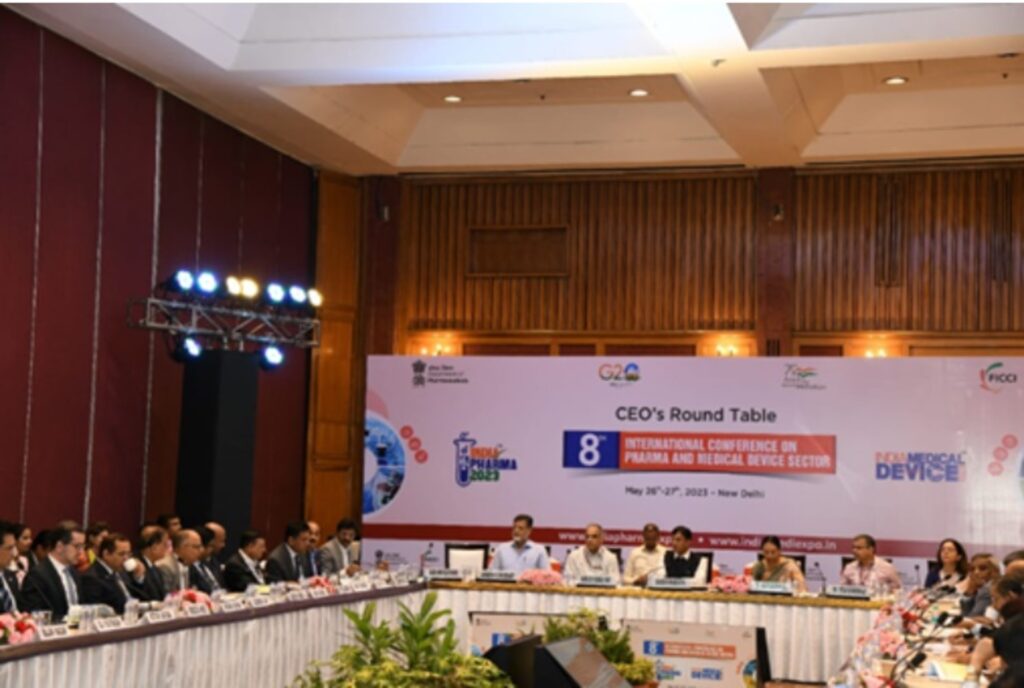
Lauding the growth momentum of the industry, the Minister said “the industry is progressing at a rapid rate, and to maintain our stature as the ‘Pharmacy of the World’, we need to focus on quality and affordable manufacturing with an increased focus on research and innovation.” Adding further Dr. Mandaviya urged the stakeholders to capitalize on the current opportunities, stating “substantial investment in terms of Production Linked Incentive schemes as well as upcoming drug parks are bearing fruitful results. To catalyze growth, we must maintain a degree of competitiveness to consolidate our presence in the world.”
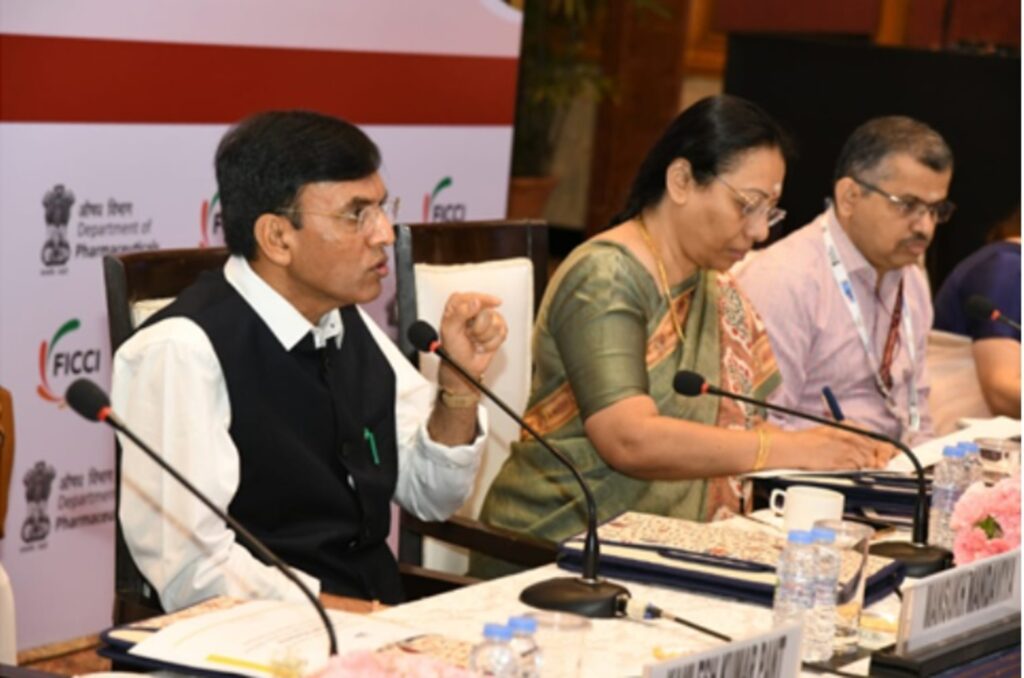
Reiterating the government’s commitment and resolve, the Union Health Minister stated “the government is industry friendly and welcomes opportunities for collaboration. The government and industry, both integral to the nation’s progress, must work cohesively to achieve holistic growth.”
Affirming government support, Dr. Mandaviya invited the stakeholders to put forth their suggestions addressing the aspects of pricing, regulatory, policy and strategy, with the respective action points in a detailed presentation and due consideration will be given to facilitate further policy support and growth.

Underscoring the potential future growth of the industry, Ms. S Aparna, Secretary, Department of Pharmaceuticals urged the attending representatives to collate and collectively represent their perspectives adhering to the aforementioned four categories to facilitate policy makers, government in fostering a stronger ecosystem for all.
The roundtable brought together participants from over 60 companies represented by senior leadership, with several key players having a presence in the national as well as international markets. Shri N Yuvaraj, Joint Secretary, Department of Pharmaceuticals, Shri Awadhesh Kumar Choudhary, Senior Economic Advisor, Smt. Vinod Kotwal Member Secretary, National Pharmaceutical Pricing Authority, DCGI Dr. Rajeev Raghuvanshi, Chairman NPPA Shri Kamlesh Pant, various industry stakeholders and representatives of academia and associations were also present in the conference.
The annual flagship conference will be conducted over two days – 26th May 2023 dedicated for India Medical Device sector on the theme "Sustainable MedTech 5.0: Scaling and Innovating Indian MedTech," and 27th May 2023 dedicated for the Pharmaceutical sector on the theme "Indian pharma industry: Delivering Value through Innovation.
Union Minister of Health and Family Welfare Dr. Mansukh Mandaviya, delivered the Keynote Address at a Quad Plus Side Event on Tuberculosis(Tb) during the 76th World Health Assembly being held in Geneva. The event witnessed the participation of distinguished delegates from Quad Plus countries, reinforcing the commitment to tackle the global health challenge posed by TB.
Highlighting India's proactive response to the TB epidemic, Dr. Mandaviya said, “This year, we observed World TB Day at the One World TB Summit in India essentially highlighting the ethos of One World, One Health that our Hon’ble Prime Minister strongly believes in.” He shared that India is the only country in the world to have developed its own mechanism for estimating its TB burden. By employing a mathematical model based on local evidence, India can now determine the true burden of the disease well ahead of the annual World Health Organization report.
In his address, Dr.Mandaviya emphasized the significance of the upcoming UN High-Level Meeting (UNHLM) on Tuberculosis, scheduled for September, as an opportunity to evaluate the collective progress made towards ending TB. He commended India's dedication, led by Prime Minister Shri Narendra Modi, in striving to eliminate TB from the country by 2025, five years ahead of the global Sustainable Development Goal.
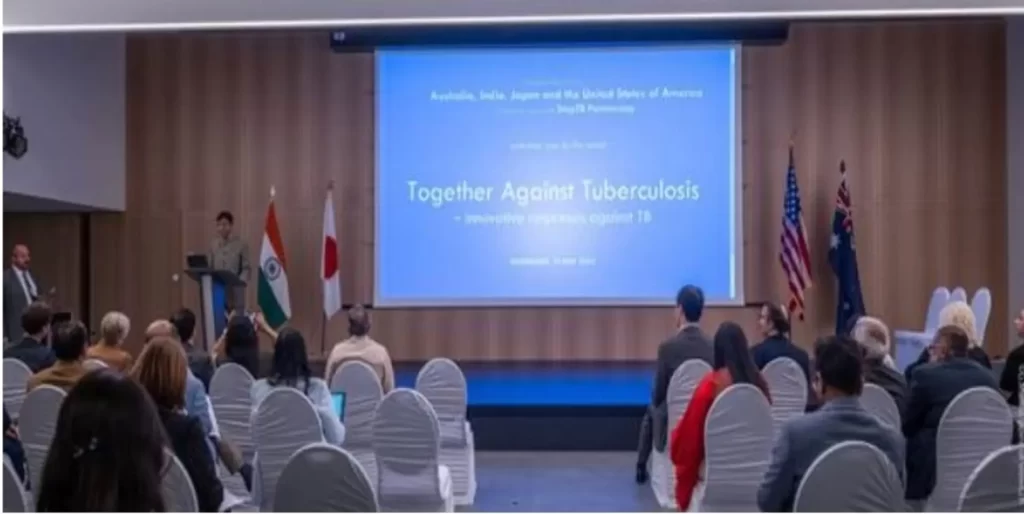
India's relentless efforts in TB control have yielded remarkable outcomes. Dr. Mandaviya announced that the country has witnessed a 13% reduction in TB incidence from 2015 to 2022, surpassing the global reduction rate of 10%. Additionally, TB mortality in India has decreased by 15% during the same period, compared to the global reduction rate of 5.9%.
Recognizing the importance of early diagnosis, treatment, and preventive measures, Dr. Mandaviya said, “To identify all missing cases and reach the ‘unreached’, India has taken diagnostics and treatment to the patients at the last mile under the visionary leadership of our Prime Minister. To ensure Universal Health Coverage to each and every patient, we have established over 1.5 lakh Health & Wellness Centres which provide TB diagnostics and care to all patients, along with a host of other primary healthcare services. This has been especially beneficial to people residing in hard-to-reach areas of our country, ensuring universal health coverage even in remote areas.”
Dr. Mandaviya also highlighted India's successful collaboration with the private sector, enabling quality care for TB patients through their preferred centers, clinics, and doctors. As a result, notifications from the private sector have increased more than sevenfold over the past nine years.
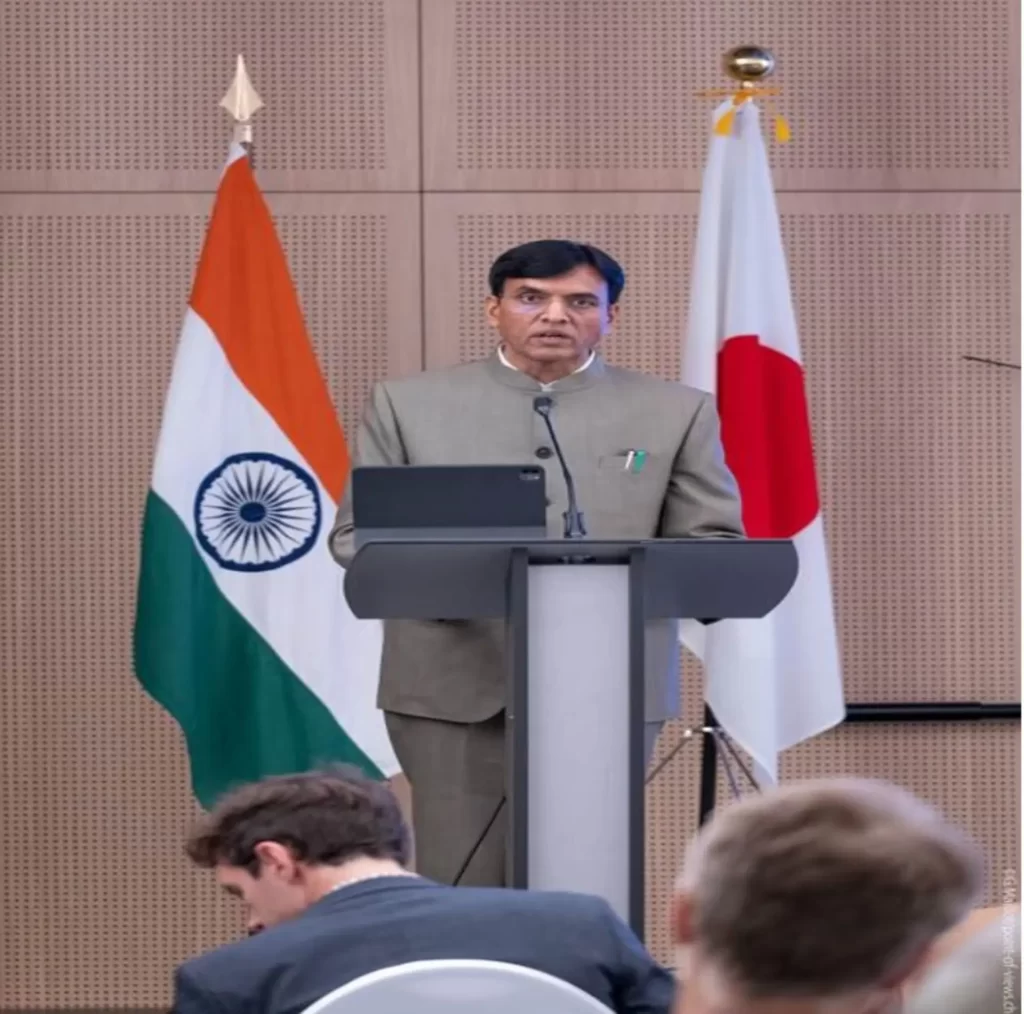
Addressing the issue of stigma associated with TB, Dr. Mandaviya highlighted India's pioneering community engagement mechanism, the Pradhan Mantri TB Mukt Bharat Abhiyaan (PMTBMBA). Launched by the Honorable President, Smt. Droupadi Murmu, this initiative aims to support TB patients throughout their treatment journey. The program, which includes Ni-kshay Mitras or donors, has garnered substantial support, with nearly 78 thousand Ni-kshay Mitras committing to assist around a million patients, raising an estimated $146 million per year.
Furthermore, Dr. Mandaviya emphasized India's commitment to addressing the socioeconomic consequences of TB by establishing the Ni-kshay Poshan Yojana. This unique initiative provides monthly nutritional support to over 75 lakh people undergoing TB treatment through Direct Benefit Transfer, amounting to more than $244 million since its introduction in 2018.
Dr. Mandaviya further spoke of India's family-centric care model for TB, launched by Prime Minister Shri Narendra Modi, at the One World Tb Summit, which recognizes the essential role of families in an individual's recovery. At the One World Tb Summit, a shorter TB Preventive Treatment (TPT) and the TB-Free Panchayat initiative which encourages local governments to combat TB and receive rewards for their efforts was also launched.
Dr Mandaviya spoke of the crucial need of developing an effective vaccine in the fight against TB. In this regard he said, “As we have learnt from the COVID-19 pandemic, to eliminate this disease the world needs to work together as one with greater cooperation to ensure equitable access to latest diagnostic and treatment options. To achieve the UN High Level Meeting (UNHLM) targets for ending TB by 2030, we must find patient-centric innovative approaches to prevent, diagnose, and treat TB. India is committed to share its learnings with the world and learn from other contexts as well.”
Concluding his address, Dr. Mandaviya expressed his firm belief that with sustained efforts and determination, TB can be eliminated from the world before 2030.
“The medical devices sector is an essential and integral constituent of India’s healthcare sector. The sector’s contribution became even more prominent as India supported the domestic and global battle against COVID-19 pandemic through large scale production of medical devices & diagnostic kits.” This was stated by Dr Mansukh Mandaviya, Union Minister of Health and Family Welfare, during his interaction with representatives of Japanese Medical Devices Companies, in Tokyo.
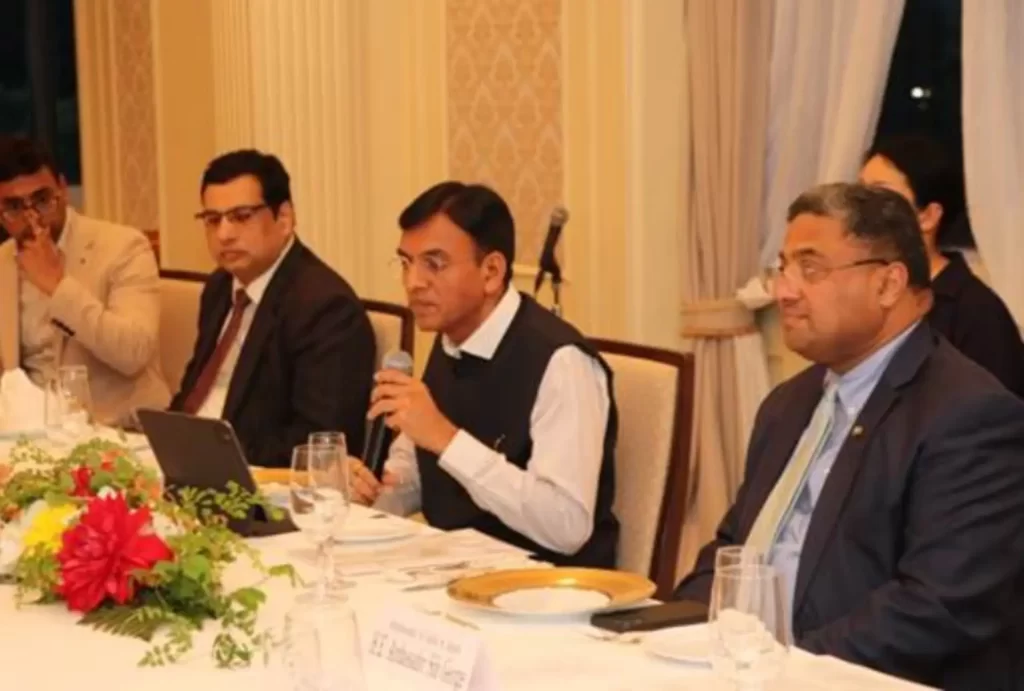
Dr Mandaviya noted that “the medical devices sector has the potential to grow from its current size of US$ 11 bn to 4 times by 2030”. He further stated that “backed by growing healthcare needs and govt’s commitment to facilitate growth, Indian medical devices industry has the power to emerge as the global leader in manufacturing and innovation in the next 25 years and we are committed to its growth and progress to become self-reliant and contribute towards the goal of universal health care in line with India’s G20 Presidency mantra of ‘One Earth, One Family, One Future’”.

The Union Minister highlighted that “to invite investors from across the world, India is allowing 100% FDI under the automatic route for both Greenfield & Brownfield setups. To boost domestic manufacturing, govt launched the Production Linked Incentive Schemes for medical devices with financial incentives worth $400 million. To support our investor community, govt has also approved the establishment of 4 Medical Devices Parks in the states. These Parks will significantly reduce manufacturing cost, optimize resources, build on economies of scale, and provide easy access to standard testing and infrastructure facilities”.
Dr Mandaviya informed that in order to facilitate orderly growth of the medical devices sector and to meet the public health objectives of access, affordability, quality and innovation, India recently approved its first National Medical Devices Policy. “We have identified six strategies to tap the potential of the sector and to strengthen the industry into a competitive, self-reliant, resilient and innovative industry that caters to the healthcare needs of India and the World. In addition to the Medical Devices Policy, we are also proposing a National Policy on R&D and Innovation in the Pharma- MedTech Sector in India to enable strong collaborations and translational research”, he stated.

The Union Health Minister concluded his address by emphasizing that “with rapid strides in innovation, India is now on a momentous journey to take on the global arena in the sphere of medical devices and technologies” and invited Japanese Medical Devices companies to take advantage of these opportunities to “Make in India”, “Innovate in India”, and “Discover in India”.
Shri Vishal Chauhan, Joint Secretary, Health Ministry; and other officials of the Union government were present in the meeting.
There has been tremendous focus of this government to ensure quality healthcare workforce with substantial increase in their numbers. The Government has increased number of medical colleges and subsequently increased MBBS seats in last few years. There is substantial increase of around 71% in Medical Colleges from 387 before 2014 to 660 as of now.
Further, the number of MBBS seats have almost doubled and Post Graduate seats have more than doubled since 2013-14.
The services of Indian Nurses are considerably recognized in foreign countries, so it is important to bring Indian nursing education at par with the global standards in order to facilitate their mobility and better employment opportunities. They are recognized as highly skilled professionals and drive the healthcare delivery system, but their numerical strength is below global norms and needs to be adequately enhanced.
The Union Cabinet, chaired by the Hon'ble Prime Minister Shri Narendra Modi, today approved the National Medical Devices Policy, 2023.
The medical devices sector in India is an essential and integral constituent of the Indian healthcare sector. The Indian medical devices sector’s contribution has become even more prominent as India supported the domestic and global battle against COVID-19 pandemic through the large scale production of medical devices & diagnostic kits, such as Ventilators, Rapid Antigen Test kits, Real-Rime Reverse Transcription Polymerase Chain Reaction (RT-PCR) kits, Infrared (IR) Thermometers, Personal Protective Equipment(PPE) Kits & N-95 masks.
The medical devices sector in India is a sunrise sector which is growing at a fast pace. The market size of the medical devices sector in India is estimated to be $11 billion (approximately, ₹ 90,000 Cr) in 2020 and its share in the global medical device market is estimated to be 1.5%. The Indian medical devices sector is on a growth track and has an enormous potential to become self-reliant and to contribute towards the goal of universal health care. The Government of India has already initiated implementation of PLI Scheme for medical devices and support for setting up of 4 Medical devices Parks in the States of Himachal Pradesh, Madhya Pradesh, Tamil Nadu and Uttar Pradesh. Under the PLI scheme for Medical Devices, till now, a total of 26 projects have been approved, with a committed investment of Rs.1206 Cr and out of this, so far, an investment of Rs.714 Cr has been achieved. Under the PLI scheme, total of 14 projects producing 37 products have been commissioned and domestic manufacturing of high-end medical devices has started which include Linear Accelerator, MRI Scan, CT-Scan, Mammogram, C-Arm, MRI Coils, high end X-ray tubes, etc. Remaining 12 products will be commissioned in near future. Five projects out of total 26 projects have been approved recently, under Category B, for domestic manufacturing of 87 products / product components.
Building upon these measures, a holistic policy framework to accelerate this growth and fulfil the potential of the sector is the need of the hour. While various Departments of the Government have undertaken programmatic interventions to encourage the sector, the current policy aims to put in place a comprehensive set of focus areas for growth of the sector in a coordinated manner. Secondly, in view of the diversity and multi-disciplinary nature of the sector, the regulations, skilling trade promotion of medical device industry are spread over several departments in the Government both at the Centre and State levels. There is a need to bring together the range of interventions in a coherent manner that would facilitate focused and efficient support and facilitation for the sector by the respective agencies.
The National Medical Devices Policy, 2023 is expected to facilitate an orderly growth of the medical device sector to meet the public health objectives of access, affordability, quality and innovation. This sector is expected to realize its full potential, with the strategies viz, building an enabling ecosystem for manufacturing along with a focus on innovation, creating a robust and streamlined regulatory framework, providing support in training and capacity building programs and promoting higher education to foster talent and skilled resources in line with the industry requirements. Encouraging domestic investments and production of medical devices complements the Government’s ‘Atmanirbhar Bharat’ and ‘Make in India’ programs.
Vision: Accelerated growth path with a patient-centric approach and to emerge as the global leader in the manufacturing and innovation of medical devices by achieving 10-12% share in the expanding global market over the next 25 years. Policy is expected to help the Medical Devices Sector grow from present $11 Bn to $50 Bn by 2030.
Mission: Policy lays down a roadmap for accelerated growth of the medical devices sector to achieve the following missions viz, Access & Universality, Affordability, Quality, Patient Centred & Quality Care, Preventive & Promotive Health, Security, Research and Innovation and Skilled manpower.
Medical devices sector will be facilitated and guided through a set of strategies that will be cover six broad areas of policy interventions:
Regulatory Streamlining: In order to enhance ease of doing research and business and further to balance patient safety with product innovation measures such as creation of a Single Window Clearance System' for Licensing of Medical Devices coopting all the stakeholder departments / organizations such as AERB, MeitY, DAHD, etc, enhancing the Role of Indian Standards like BIS and designing a coherent pricing regulation, will be followed.
Enabling Infrastructure: The establishment and strengthening of large medical device parks, clusters equipped with world class common infrastructure facilities in proximity to economic zones with requisite logistics connectivity as envisioned under the National Industrial Corridor Program and the proposed National Logistics Policy 2021 under the ambit of PM Gati Shakti, would be pursued with the State Governments and Industry for better convergence and backward integration with medical device Industry
Facilitating R&D and Innovation: The policy envisages to promote Research & Development in India and complement the Department’s proposed National Policy on R&D and Innovation in the Pharma- MedTech Sector in India. It also aims at establishing Centres of Excellence in academic and research institutions, innovation hubs, ‘plug and play’ infrastructures and support to start-ups.
Attracting Investments in the Sector: Along with resent schemes and interventions like Make in India, Ayushman Bharat program, Heal-in-India, Start-up mission, the policy encourages private investments, series of funding from Venture Capitalists, and also Public-Private Partnership(PPP). Human Resources Development: In order to have a steady supply of skilled work force across the value chain such as scientists, regulators, health experts, managers, technicians, etc., the policy envisages:
For skilling, reskilling and upskilling of professionals in the medical device sector, we can leverage the available resources in Ministry of Skill Development and Entrepreneurship
The policy will support dedicated multidisciplinary courses for medical devices in existing institutions to ensure availability of skilled manpower for futuristic medical technologies, high-end manufacturing and research, to produce future-ready MedTech human resources and to meet the evolving needs of the Sector To develop partnerships with foreign academic/industry organizations to develop medical technologies in order to be in equal pace with the world market.
Brand Positioning and Awareness Creation: The policy envisages the creation of a dedicated Export Promotion Council for the sector under the Department which will be an enabler to deal with various market access issues:
Initiate studies and projects for learning from best global practices of manufacturing and skilling system so as to explore the feasibility of adapting such successful models in India.
Promote more forums to bring together various stakeholders for sharing knowledge and build strong networks across the sector.
The policy is expected to provide the required support and directions to strengthen the medical devices industry into a competitive, self-reliant, resilient and innovative industry that caters to the healthcare needs of not only India but also of the world. The National Medical Devices Policy, 2023 aims to place the medical devices sector on an accelerated path of growth with a patient-centric approach to meet the evolving healthcare needs of patients.
The Union Cabinet, chaired by the Hon'ble Prime Minister Shri Narendra Modi, today approved the National Medical Devices Policy, 2023.
The medical devices sector in India is an essential and integral constituent of the Indian healthcare sector. The Indian medical devices sector’s contribution has become even more prominent as India supported the domestic and global battle against COVID-19 pandemic through the large scale production of medical devices & diagnostic kits, such as Ventilators, Rapid Antigen Test kits, Real-Rime Reverse Transcription Polymerase Chain Reaction (RT-PCR) kits, Infrared (IR) Thermometers, Personal Protective Equipment(PPE) Kits & N-95 masks.
The medical devices sector in India is a sunrise sector which is growing at a fast pace. The market size of the medical devices sector in India is estimated to be $11 billion (approximately, ₹ 90,000 Cr) in 2020 and its share in the global medical device market is estimated to be 1.5%. The Indian medical devices sector is on a growth track and has an enormous potential to become self-reliant and to contribute towards the goal of universal health care. The Government of India has already initiated implementation of PLI Scheme for medical devices and support for setting up of 4 Medical devices Parks in the States of Himachal Pradesh, Madhya Pradesh, Tamil Nadu and Uttar Pradesh. Under the PLI scheme for Medical Devices, till now, a total of 26 projects have been approved, with a committed investment of Rs.1206 Cr and out of this, so far, an investment of Rs.714 Cr has been achieved. Under the PLI scheme, total of 14 projects producing 37 products have been commissioned and domestic manufacturing of high-end medical devices has started which include Linear Accelerator, MRI Scan, CT-Scan, Mammogram, C-Arm, MRI Coils, high end X-ray tubes, etc. Remaining 12 products will be commissioned in near future. Five projects out of total 26 projects have been approved recently, under Category B, for domestic manufacturing of 87 products / product components.
Building upon these measures, a holistic policy framework to accelerate this growth and fulfil the potential of the sector is the need of the hour. While various Departments of the Government have undertaken programmatic interventions to encourage the sector, the current policy aims to put in place a comprehensive set of focus areas for growth of the sector in a coordinated manner. Secondly, in view of the diversity and multi-disciplinary nature of the sector, the regulations, skilling trade promotion of medical device industry are spread over several departments in the Government both at the Centre and State levels. There is a need to bring together the range of interventions in a coherent manner that would facilitate focused and efficient support and facilitation for the sector by the respective agencies.
The National Medical Devices Policy, 2023 is expected to facilitate an orderly growth of the medical device sector to meet the public health objectives of access, affordability, quality and innovation. This sector is expected to realize its full potential, with the strategies viz, building an enabling ecosystem for manufacturing along with a focus on innovation, creating a robust and streamlined regulatory framework, providing support in training and capacity building programs and promoting higher education to foster talent and skilled resources in line with the industry requirements. Encouraging domestic investments and production of medical devices complements the Government’s ‘Atmanirbhar Bharat’ and ‘Make in India’ programs.
Vision: Accelerated growth path with a patient-centric approach and to emerge as the global leader in the manufacturing and innovation of medical devices by achieving 10-12% share in the expanding global market over the next 25 years. Policy is expected to help the Medical Devices Sector grow from present $11 Bn to $50 Bn by 2030.
Mission: Policy lays down a roadmap for accelerated growth of the medical devices sector to achieve the following missions viz, Access & Universality, Affordability, Quality, Patient Centred & Quality Care, Preventive & Promotive Health, Security, Research and Innovation and Skilled manpower.
Medical devices sector will be facilitated and guided through a set of strategies that will be cover six broad areas of policy interventions:
Regulatory Streamlining: In order to enhance ease of doing research and business and further to balance patient safety with product innovation measures such as creation of a Single Window Clearance System' for Licensing of Medical Devices coopting all the stakeholder departments / organizations such as AERB, MeitY, DAHD, etc, enhancing the Role of Indian Standards like BIS and designing a coherent pricing regulation, will be followed.
Enabling Infrastructure: The establishment and strengthening of large medical device parks, clusters equipped with world class common infrastructure facilities in proximity to economic zones with requisite logistics connectivity as envisioned under the National Industrial Corridor Program and the proposed National Logistics Policy 2021 under the ambit of PM Gati Shakti, would be pursued with the State Governments and Industry for better convergence and backward integration with medical device Industry
Facilitating R&D and Innovation: The policy envisages to promote Research & Development in India and complement the Department’s proposed National Policy on R&D and Innovation in the Pharma- MedTech Sector in India. It also aims at establishing Centres of Excellence in academic and research institutions, innovation hubs, ‘plug and play’ infrastructures and support to start-ups.
Attracting Investments in the Sector: Along with resent schemes and interventions like Make in India, Ayushman Bharat program, Heal-in-India, Start-up mission, the policy encourages private investments, series of funding from Venture Capitalists, and also Public-Private Partnership(PPP). Human Resources Development: In order to have a steady supply of skilled work force across the value chain such as scientists, regulators, health experts, managers, technicians, etc., the policy envisages:
For skilling, reskilling and upskilling of professionals in the medical device sector, we can leverage the available resources in Ministry of Skill Development and Entrepreneurship
The policy will support dedicated multidisciplinary courses for medical devices in existing institutions to ensure availability of skilled manpower for futuristic medical technologies, high-end manufacturing and research, to produce future-ready MedTech human resources and to meet the evolving needs of the Sector To develop partnerships with foreign academic/industry organizations to develop medical technologies in order to be in equal pace with the world market.
Brand Positioning and Awareness Creation: The policy envisages the creation of a dedicated Export Promotion Council for the sector under the Department which will be an enabler to deal with various market access issues:
Initiate studies and projects for learning from best global practices of manufacturing and skilling system so as to explore the feasibility of adapting such successful models in India.
Promote more forums to bring together various stakeholders for sharing knowledge and build strong networks across the sector.
The policy is expected to provide the required support and directions to strengthen the medical devices industry into a competitive, self-reliant, resilient and innovative industry that caters to the healthcare needs of not only India but also of the world. The National Medical Devices Policy, 2023 aims to place the medical devices sector on an accelerated path of growth with a patient-centric approach to meet the evolving healthcare needs of patients.
In a significant move towards strengthening nursing workforce in the country, the Cabinet Committee on Economic Affairs, chaired by the Prime Minister Shri Narendra Modi, has approved establishment of 157 new nursing colleges in co-location with the existing medical colleges established since 2014. The step will add approximately 15,700 nursing graduates every year. This will further ensure quality, affordable, and equitable nursing education in India, particularly in underserved districts and States/Union Territories. The total financial implication will be Rs.1,570 crore.
The initiative aims to address the geographical and rural-urban imbalances in the healthcare sector, which have led to the skewed availability of nursing professionals and impacted healthcare services in underserved areas. The establishment of these nursing colleges will provide a significant boost to the availability of qualified human resources in healthcare. This is also being done as a part of the national mandate for Universal Health Care (UHC) and will help in attainment of Sustainable Development Goals (SDG). Reforms in regulatory structure for Nursing education to meet with the emerging requirements in the sector are also under consideration.
National Skill Development Corporation (NSDC) also collaborates with leading International & National agencies for skill development and placement of qualified nurses for overseas positions.
Co-location of these nursing colleges with existing medical colleges will allow optimal utilization of the existing infrastructure, skill labs, clinical facilities, and faculty. This initiative is expected to provide better clinical exposure to nursing students and will also result in better care and service provision for patients in medical colleges. Use of green technologies will also be explored in these Nursing colleges and will be adopted as per relevancy to ensure energy efficiency and reduction in carbon footprint.
The Government plans to complete the project within next two years and has laid out detailed timelines for every stage of planning as well as execution of the project. The Empowered Committee headed by the Union Health Secretary in the Centre and Principal Secretary, Health/Medical Education in the States will monitor the progress of the work. The State Government/UTs will intimate to MoHFW on regular basis, the physical progress of the works being done for the establishment of new nursing colleges under the scheme.
There has been tremendous focus of this government to ensure quality healthcare workforce with substantial increase in their numbers. The Government has increased number of medical colleges and subsequently increased MBBS seats in last few years. There is substantial increase of around 71% in Medical Colleges from 387 before 2014 to 660 as of now.
Further, the number of MBBS seats have almost doubled and Post Graduate seats have more than doubled since 2013-14.
The services of Indian Nurses are considerably recognized in foreign countries, so it is important to bring Indian nursing education at par with the global standards in order to facilitate their mobility and better employment opportunities. They are recognized as highly skilled professionals and drive the healthcare delivery system, but their numerical strength is below global norms and needs to be adequately enhanced.
The National Health Authority (NHA) invites contributors and developers from the open community, especially those working in the Health Insurance and Healthcare Provider space to test, contribute and become a participant in the Health Claims Exchange Ecosystem by onboarding on the HCX – Sandbox Environment. NHA announced HCX as a new initiative under the Ayushman Bharat Digital Mission (ABDM) on 23rd September 2022 and subsequently worked with various groups to come up with Health Insurance Exchange specifications.
The current health insurance claims settlement process in the country is mostly manual, non-digital and laborious in nature posing challenges at every stage. The current process of exchanging claims lacks standardization across the ecosystem with most data exchange occurring through PDF/manual methods and processes vary significantly among Insurers, TPAs, and Providers leading to high cost of processing each claim.
To tackle these key challenges and streamline the process of claim settlement, NHA has developed a national Health Claims Exchange (HCX) to enable interoperability of health claims. The HCX serves as a protocol for exchanging claims-related information among various actors, including payers, providers, beneficiaries, regulators, and observers. It is designed to be interoperable, machine-readable, auditable, and verifiable which helps ensure that the information being exchanged is accurate and trustworthy. HCX will act as a gateway (with validation and routing capabilities) for the ecosystem wherein the Insurers/ TPAs shall send responses for each FHIR based e-claim submitted by providers via the HCX through standard protocols (APIs).
With a vision to standardize the claims process, HCX will lead to reduction in operational overheads and increase the trust among payers and providers through a transparent and rule-based mechanism, it will reduce claims processing cost, expedite pre-authorization or patient discharge approvals, improve patient experience, better visibility for tracking the claims and have better quality data for industry and regulators.
To ensure the success and adoption of the claims network, it is essential to onboard participants on the HCX ecosystem, therefore it is requested that all interested solution providers, payers, and provider to actively participate and utilize the services of the HCX – Sandbox, the key goal of the sandbox is to help the ecosystem test its specific components against the communication standards and get certified to become a part of the system. Once a participant successfully completes the sandbox process, they can use the certification to get onboarded to the HCX production environment with the necessary access.
The interested participants can submit an online application to express their interest to access the HCX sandbox on https://sbxhcx.abdm.gov.in/. On successful verification, the approved participants are added to the HCX sandbox and provisioned with the necessary credentials to access the sandbox environment. The link also provides all necessary documentation for participation along with the HCX specifications and FHIR profiles.
The FHIR Implementation Guide (IG) for ABDM has been updated to support HCX specifications. The preview of the IG is hosted at - https://www.nrces.in/preview/ndhm/fhir/r4/hcx-profile.html.