
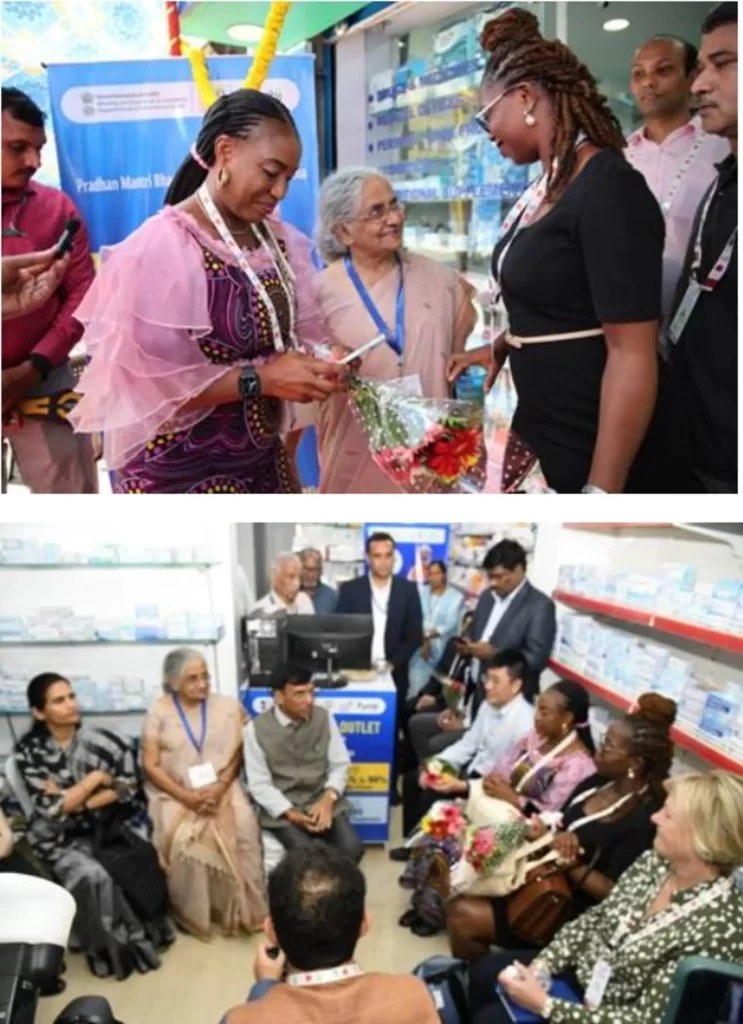
Second meeting of G-20 Health Working Group held in Goa from 17th-19th April, 2023, is being attended by participants from the G-20 member countries, invited countries and International Organisations. During course of HWG meeting, Dr Mansukh Mandaviya, Minister for Health & Family Welfare and Chemicals and Fertilizers visited one Jan Aushadhi Kendra at Governor Pestana Road, Panjim, Goa along with G-20 delegates from Oman, Japan, Russia, Nigeria Singapore, Malaysia and delegates from UNICEF and Bill and Melinda Gates Foundation.
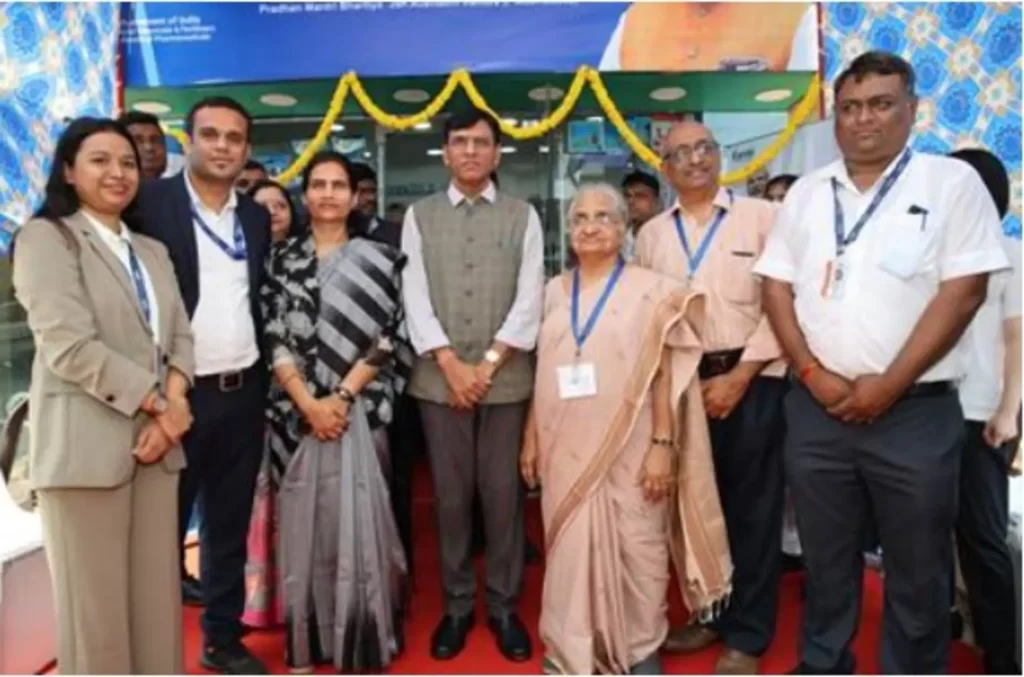
The Minister interacted with the Janaushadhi Kendra owner, Ms Prabha Menon a woman entrepreneur, who shared her experience of operating the Kendra. Minister gave an overview of the program and addressed various queries of the delegates on functioning of the scheme. Number of delegates expressed interest to have the program implemented in their respective countries. The Government is working towards a model of assisting the countries from middle income and low middle income countries who have shown interest in the scheme. Recently the program’s success was showcased before a gathering of Resident Heads of Mission of more than 90 countries stationed in Delhi in cooperation with the Ministry of External Affairs. During the visit, Minister also mentioned that the Government does not view the pharmaceutical sector as a sector for generating commerce but as a sector to create global public good.
“Pradhan Mantri Bhartiya Janaushadhi Pariyojana” is a popular public welfare scheme implemented by the Department of Pharmaceuticals, Ministry of Chemicals and Fertilizers, Government of India, which has made significant impact to the lives of common people by providing quality medicines at an affordable price, which are generally 50%-90% less costly than branded medicines.
During last 9 years, there has been 100 times growth in number of Kendras from only 80 in 2014 to more than 9,300 Kendras. The product basket has also been expanded to 1,800 medicines and 285 surgical devices. During past 9 years, total savings have been estimated at approximately more than Rs. 20,000 crores for the citizens.
Department of Pharmaceuticals (DoP), Ministry of Chemicals and Fertilizers, Govt. of India in partnership with the Indian National Science Academy (INSA), organized a S20 Webinar on “An Integrated Approach to Combat Neo-Infections: A Way Forward, through Vaccines, Diagnostics and Therapeutics” today with deliberation from eminent speakers across the G-20 counties like Australia, US, UK, Canada, South Africa, European Union, Brazil and Indonesia. This S20 webinar focused on discussing a need for collaborative models that would help to strengthen and support research and development (R&D) in Vaccines, Therapeutics, and Diagnostics (VTDs).
During the G20 Presidency of India, the Science 20 or the S20 engagement group has planned a number of webinars and workshops on topics of current interest. The Indian National Science Academy (INSA) is coordinating the S20 activities under the overarching theme, “Disruptive Science for Sustainable Development” with three subthemes focussing on “Clean Energy for Greener Future”, “Universal Holistic Health”, and “Science for Society & Culture”. The emphasis is on the disruptive innovation aspect of science that identifies with the nature and essence of the overarching theme.
An important objective of the sustainable development is to increase the healthy life expectancy of all humans, while promoting well-being across the whole life course. Indeed, creating better global health would not only mean creating better medical infrastructure or ease of access in medical care, it would also require sustainable practices which would help enhance cumulative global health standards. The idea is to create awareness among various stakeholders about disease agonistic platforms for new drug development and develop cost-effective therapeutics for priority pathogens. This could be done through a network of R&D institutions across G20 countries which would function in tandem in sustainable manner and contribute to collective preparedness for thwarting future pandemics.

Sh. Rajneesh Tingal, Joint Secretary, Department of Pharmaceuticals, in his opening remarks highlighted various initiatives taken by DoP to foster innovation in India and the need of strengthening research collaboration in vaccines, therapeutics & diagnostics. This was followed by welcome address by Ms. S. Aparna, Secretary, DoP & Prof. Ashutosh Sharma, President INSA & S20 Chair. During her welcome address, Ms. S. Aparna, highlighted the need of creation of Global R&D Network which will help to fight future pandemics. She also emphasized in designing a roadmap by identifying and setting up priority areas for collaboration, strengthening cooperation and partnership among G-20 countries in the arena of Early stage research on vaccines therapeutics and diagnostics for coordinated approaches in fighting emerging disease threats and capacity building in medical countermeasures with the vision of strengthening the global health architecture “One Earth, One Health, One Future”. Prof. Ashutosh Sharma depicted the role of S20 in furthering the agenda of G20 where science will have to play a key role to achieve the economic growth to pull millions of people out of poverty while ensuring that development is inclusive and sustainable.
S20 Webinar featured notable eminent speakers across the G-20 counties. The therapeutics session was moderated by Dr. Girish Sahni, Ex-Director General, Council of Scientific & Industrial Research (CSIR), Govt. of India, involving speakers like Prof. Nicola Mulder, University of Cape Town, South Africa, Dr. Vishal Singh, Penn State University, Pennsylvania, United States, and Dr. Ahmed Aman, Leslie Dan Faculty of Pharmacy, University of Toronto, Canada.
The vaccines session was moderated by Dr. Pramod Kumar Garg, Executive Director, THSTI, Faridabad, India involving Mr. Sourabh Sobti, Coalition for Epidemic Preparedness Innovation, United Kingdom, Prof. Nikolai Petrovsky, Vaxine Pty Ltd., Flinders Medical Centre, Australia, and Dr. Marco Aurélio Krieger, FIOCRUZ University, Brazil as eminent speakers.
Finally, the diagnostics session was moderated by Dr. Anup Anvikar, Director, National Institute of Biologicals (NIB), Noida, India with the engagement of Dr. Nivedita Gupta, Scientist F, ICMR, New Delhi, India, Dr. Vinay K. Nandicoori, Director, CSIR-CCMB, Hyderabad, India, and Dr. Sara Frojdo, Senior Technology Officer, Business Intelligence, FIND, Diagnostics, Geneva, European Union.
Following this, a panel discussion for fireside chat was held, which was moderated by Prof. Narinder K. Mehra, Vice President (Int. Affairs), INSA, New Delhi, India with the engagement of peer-panelist across G20 countries representation from Prof. Nicola Mulder, University of Cape Town, South Africa, Prof. Satryo S. Brodjonegoro, Chairman, Indonesian Academy of Science, Indonesia, Prof. Anil Gulati, Chairman and CEO, Pharmazz Inc., United States.
Some of the key points deliberated by the esteemed speakers included:
Creating a collaborative ecosystem for turning discovery into beneficial therapeutics.
Collaborative efforts to generate important insights while keeping collaborators engaged and committed to their partnerships.
Creating a self-sustaining network of industry-academia and cross-functional industrial collaborations.
Workforce development as a key component of a robust discipline of innovative therapeutic development.
Collaborative environment for innovation & learning to transform processes, technologies, and policy elements of innovation.
Various specific suggestions for building a collaborative ecosystem of the panel members to translate discoveries into effective therapeutics along with suggestions of the participants received during the feedback session were noted and the same would be utilized for developing a robust networked research ecosystem.
The webinar has got good response with more than 1500 registrations across the G-20 countries. This S20 webinar witnessed more than 500 viewers across the virtual platforms. Webinar concluded with a note of appreciation by Prof. USN Murty, Director, NIPER-Guwahati, India to all the S20 speakers, panellists, moderators, and wide participants for their valuable contributions & active participation.
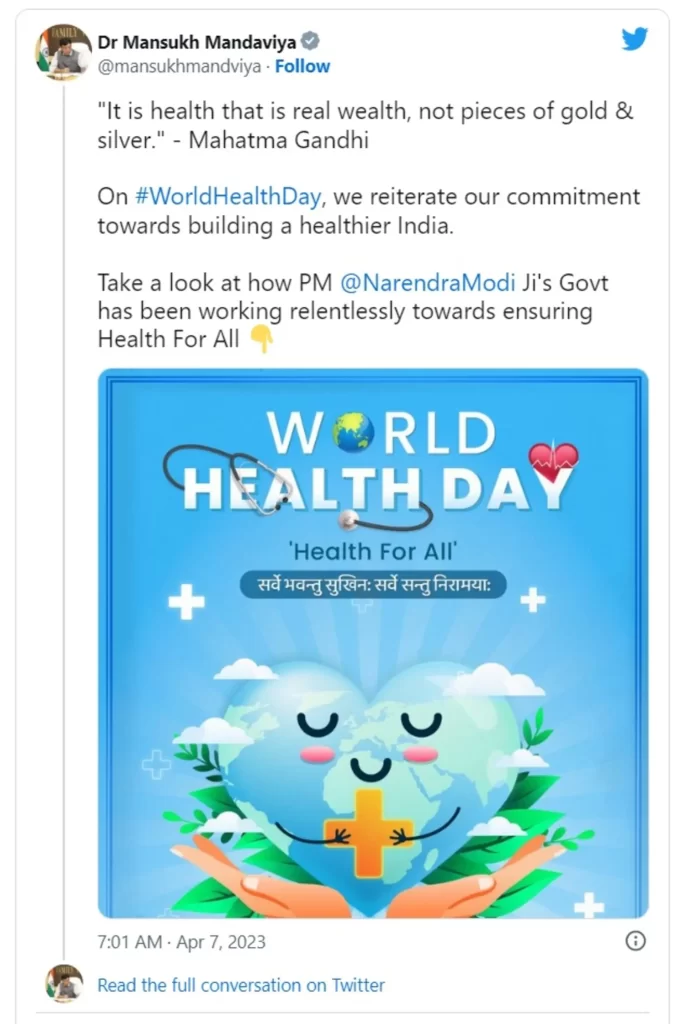
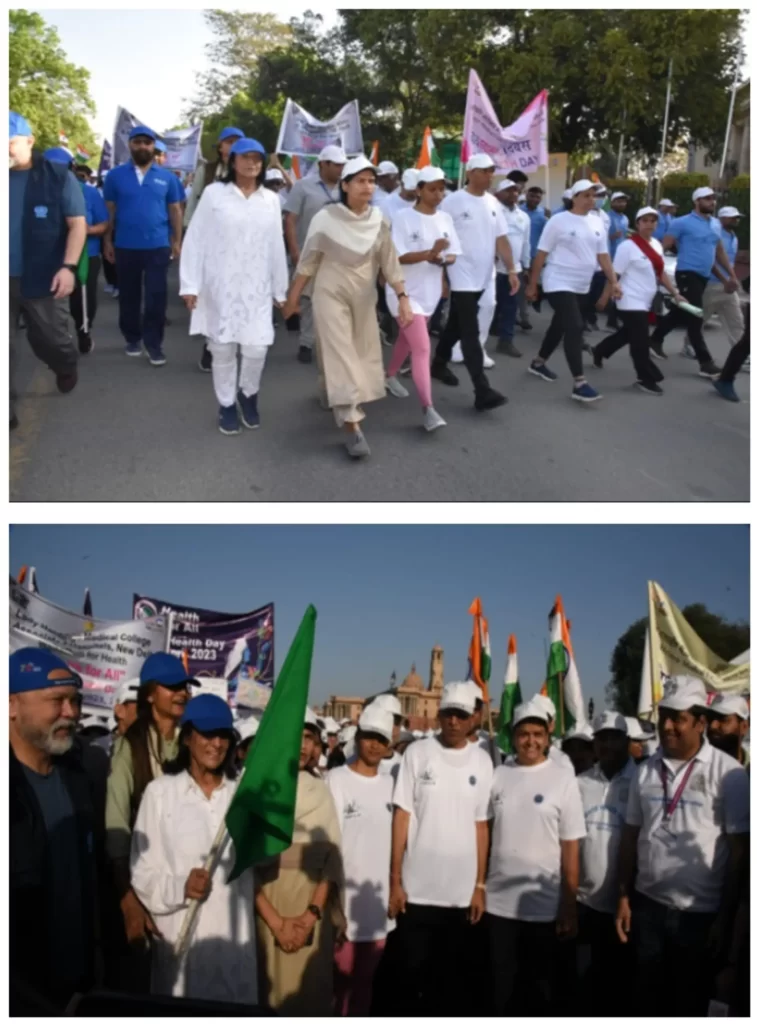
On the occasion of World Health Day, the Union Ministry of Health & Family Welfare organised a walkathon event in New Delhi. Union Health Minister Dr Mansukh Mandaviya along with Dr. Bharti Pravin Pawar, Minister of State for Health & Family Welfare, led the walkathon. The event was organised under the theme of ‘Health for All’. The aim of the walkathon was to create awareness about healthy habits not only to keep away Non-Communicable Diseases (NCDs) but also for positive effects on mental wellbeing. The event started from Vijay Chowk via Kartavya Path and passed through India Gate to reach Nirman Bhawan. Over 350 enthusiastic participants, walking for better health, participated with great fervour. They took a pledge to adopt healthy and active living to prevent and control lifestyle-related health problems/ diseases such as hypertension, diabetes, mental illness and cancer.
In a tweet, Union Health Minister, Dr. Mansukh Mandaviya reiterated the Hon’ble Prime Minister’s vision of a Healthier India.

Speaking on the occasion, Dr. Mansukh Mandaviya thanked everyone for their participation in the event. He said that “It has remained India’s philosophy of Vasudhaiva Kutumbakam where we think about the progress for all and not just self. This philosophy was observed during the COVID crisis, when India provided vaccines and medical supplies to the countries in need without considering any commercial profits. India has been at the forefront of helping every stakeholder, and with this spirit, India is working for the health of its citizens and the world.”
Highlighting the significance of health in country’s development, Dr. Mandaviya stated that “under the leadership of the Prime Minister, India has connected health to development. Only healthy citizens can create a healthy society and, in turn, a developed nation. In this Azadi ka Amrit Mahotsav, I urge you all to work together to create a developed and healthy India.”
The Union Minister of State for Health & Family Welfare, Dr. Bharati Pravin Pawar noted that “be it a walkathon, yoga or other exercises, our youth is enthusiastically inculcating these physical activities in their lives.” She said that the “Health for all” concept originates from the fact that a healthy person not only contributes positively to their family but also to society. She also noted that the country took a strong resolve under the leadership of the Hon’ble Prime Minister for a fit India, where behavioural changes and a more physically active lifestyle are being encouraged.
The World Health Day aims to promote awareness among people towards importance of good health. Reiterating this message from time to time, Union Health Minister Dr. Mansukh Mandaviya, who is also known as a “Green MP” for his enthusiasm for cycling, has been encouraging citizens to adopt a healthier lifestyle.
It is known that NCDs account currently for more than 63% of all deaths in the country and are strongly associated and causally linked with major behavioural risk factors such as tobacco use (smoking and smokeless), alcohol use, poor dietary habits, insufficient physical activity, and air pollution.
One of the major risk factors for development of NCDs is physical inactivity. According to the National NCD Monitoring Survey (NNMS) (2017-18) as well, 41.3% of Indians are physically inactive. Physical activity not only lowers the risk of NCDs including cardiovascular disease, hypertension, diabetes, cancer etc. but also has positive effects on mental health, delays the onset of dementia.
Shri Vishal Chauhan, Joint Secretary (MoHFW), Dr. Poonam Khetrapal Singh, Regional Director WHO South-East Asia Region, Dr. Roderico H. Ofrin, WHO Representative, senior officials of the Ministry, Doctors, Nurses, Staffs and students of Central Government hospitals namely, Safdarjung Hospital, Ram Manohar Lohia (RML) Hospital and Lady Hardinge Medical College, also participated in the Walkathon.
“Centre and States need to continue working in collaborative spirit as was done during the previous surges for COVID-19 prevention and management”. This was stated by Dr. Mansukh Mandaviya, Union Minister of Health and Family Welfare as he virtually interacted with State Health Ministers and Principal Secretaries/ Additional Chief Secretaries, here today. The virtual meeting was held in the presence of Dr. Bharati Pravin Pawar, Union Minister of State for Health to review the public health preparedness for containment and management of COVID-19 and progress of national COVID-19 vaccination campaign in view of the recent upsurge in cases in some states.

Union Health Minister advised States to be on the alert and keep all preparedness for COVID19 management. He urged the State Health Ministers to conduct mock drills of all hospital infrastructure on 10th and 11th April, 2023 and review the health preparedness with district administrations and health officials on 8th and 9th April, 2023. He also urged States to identify emerging hotspots by monitoring trends of ILI/SARI cases and sending sufficient samples for testing of COVID-19 and Influenza; and ramping up whole genome sequencing of positive samples.
It was observed that 23 states/UTs had average tests per million below the national average. Dr. Mandaviya said that irrespective of the new COVID variants, the five-fold strategy of ‘Test-Track-Treat-Vaccinate & Adherence to COVID Appropriate Behaviour’ continue to remain the tested strategy for COVID management. This would facilitate undertaking of appropriate public health measures, he said. States/UTs were also requested to expeditiously increase the rate of testing from the current rate of 100 tests per million, as on week ending 7th April, 2023. They were further advised to increase the share of RT-PCR in tests.
States/UTs were briefed that India has been witnessing a steady increase in COVID-19 cases with average daily cases rising to 4,188 in the week ending 07th April 2023 from 571 in the week ending 17th March 2023; and weekly positivity up to 3.02% in the week ending 07th April, 2023. However, 88,503 daily average cases have been reported globally in the same time, with the top five countries contributing 62.6% of global cases in the last one week.
States/UTs were further informed that currently WHO is closely tracking one variant of interest (VOI), XBB.1.5 and six other variants are under monitoring (BQ.1, BA.2.75, CH.1.1, XBB, XBF and XBB.1.16). It was highlighted that while Omicron and its sub-lineages continue to be the predominant variant, most of the assigned variants have little or no significant transmissibility, disease severity or immune escape. The prevalence of XBB.1.16 increased from 21.6% in Feb to 35.8% in March, 2023. However, no evidence of an increase in hospitalization or mortality has been reported.
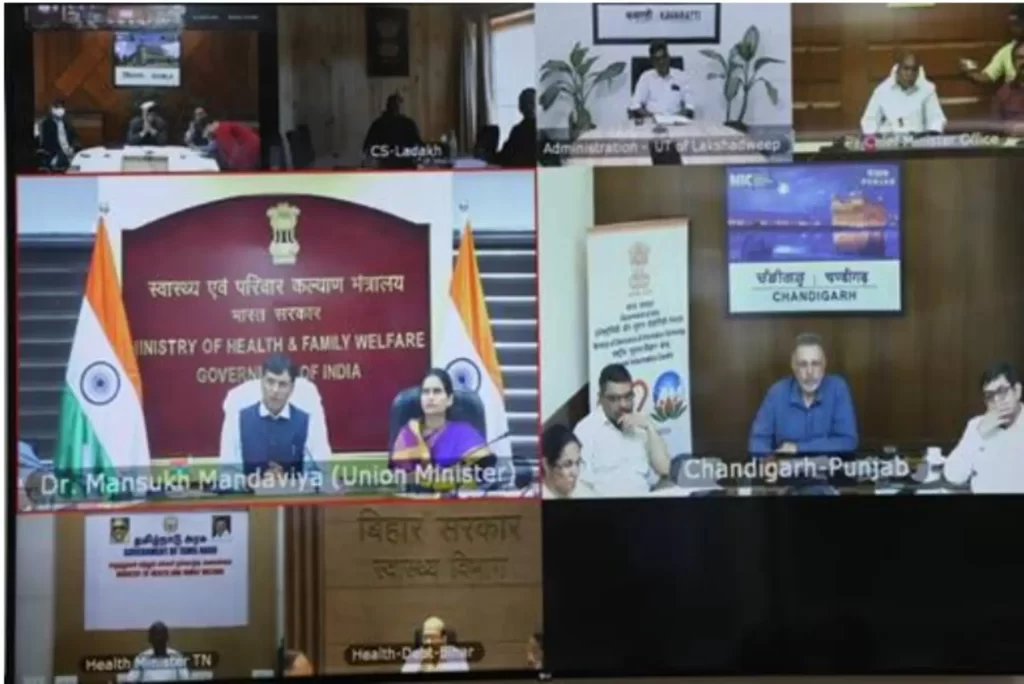
It was also informed that while India has achieved over 90% coverage of primary vaccination, the coverage of precaution dose is very low. Union Health Minister advised States/UTs to ramp up vaccination of all eligible population, especially of the elderly and vulnerable population group.
It was also observed that eight states are reporting high number of Covid cases in India with 10 or more districts reporting more than 10% positivity in Kerala, Maharashtra and Delhi and over 5 districts reporting more than 5% positivity in the states of Karnataka, Kerala, Maharashtra, Delhi, Himachal Pradesh, Tamil Nadu and Haryana. Dr Mandaviya stressed on the importance of enhancing public awareness campaigns regarding adherence to Covid Appropriate Behaviour. He requested all the State Health Ministers to personally monitor and review the preparedness of all logistics and infrastructure including availability of sufficient designated hospital beds and ensure that there is adequate stock of essential medicines. States were also asked to regularly update their COVID data on the COVID India Portal.
States/UTs were briefed on the global COVID-19 situation and the domestic scenario. They were reminded of the joint advisory issued by the Union Health Ministry and ICMR to all states on 25th March 2023 which calls for a reinvigorated public health response to contain the surge of seasonal Influenza and Covid-19 cases through early detection, isolation, testing and timely management of suspected and confirmed cases to detect and contain outbreaks of new SARS-CoV-2 variants. Union Health Minister requested States/UTs to ensure effective implementation of the same. There was comprehensive and detailed discussion on various aspects of COVID management including ramping up of hospital infrastructure; increased testing.
Dr Bharati Pravin Pawar stressed on the importance of timely preparedness and management of COVID-19. She urged states to implement their share of ECRP-II for revamping health infrastructure on priority. She also asked states to strengthen their monitoring mechanism and be on alert in view of the rise in tourism.
States appreciated the timely review meetings chaired by the Union Health Minister and advisories from the Union Health Ministry. They assured that they will work with the Centre for effective prevention and management of COVID-19. They informed that they are maintaining vigil and are reviewing the present situation. States also assured they will hold mock drill for readiness of hospital infrastructure across both public and private health facilities on 10th and 11th April, 2023.
Shri N Rangaswamy, Chief Minister, Puducherry, Shri Dhan Singh Rawat, Health Minister (Uttarakhand), Shri Keshab Mahanta, Health Minister (Assam), Shri Vishwajit Rane, Health Minister (Goa), Shri Banna Gupta, Health Minister (Jharkhand), Shri Prabhuram Choudhury, Health Minister (Madhya Pradesh), Balbir Singh, Health Minister (Punjab), Dr Sapan Ranjan Singh, Health Minister (Manipur), Shri Anil Vij, Health Minister (Haryana), Shri Thiru Ma Subramanian, Health Minister (Tamil Nadu), Dr. (Col.) Dhani Ram Shandil, Health Minister (Himachal Pradesh), Smt. Vidadala Rajini, Health Minister (Andhra Pradesh), Shri Thanneeru Harish Rao, Health Minister (Telangana), Shri Rushikesh Patel, Health Minister (Gujarat), Shri Niranjan Pujari, Health Minister (Orissa), Shri Alo Libang, Health Minister (Arunachal Pradesh), Shri Tanaji Sawant, Health Minister (Maharashtra), Smt. Mazel Ampareen Lyngdoh, Health Minister (Meghalaya), Shri Saurabh Bharadwaj, Health Minister (Delhi) and senior officials of the ministry were present in the meeting.
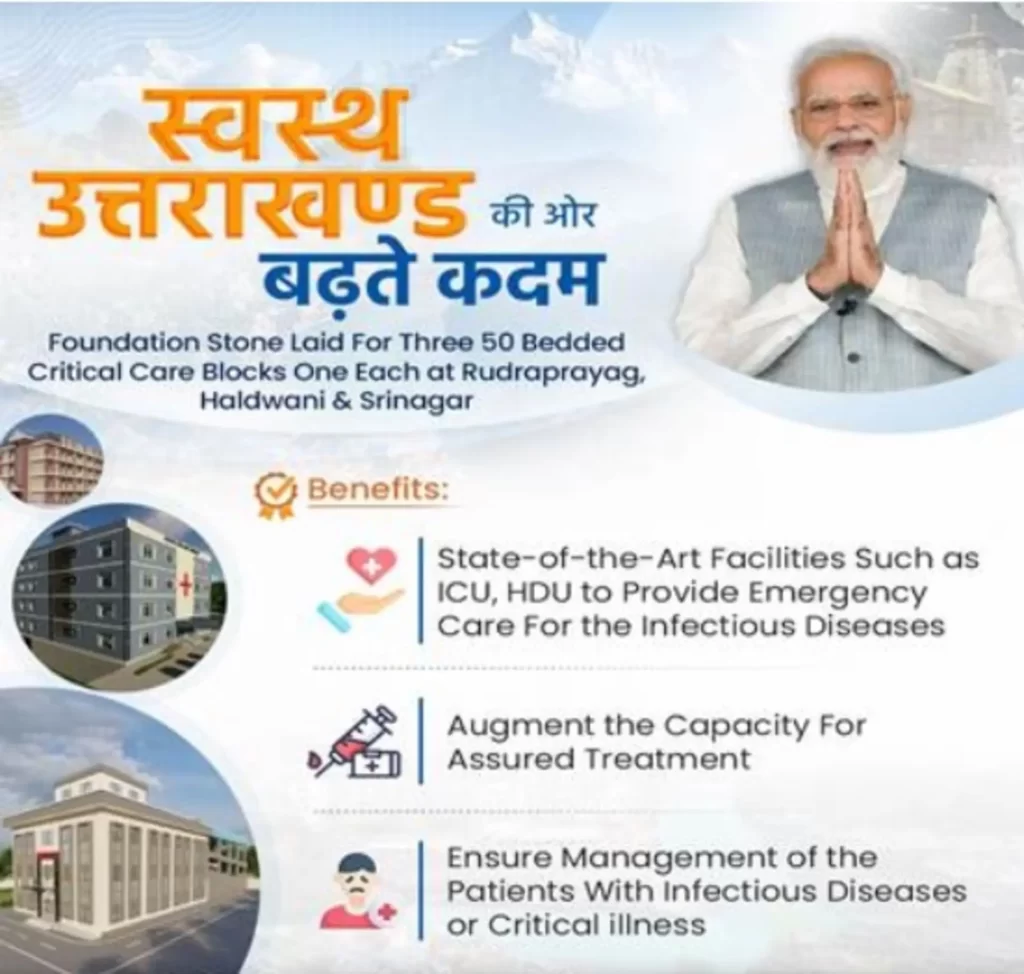
“Under the guidance of the Hon'ble Prime Minister, the work of upgradation and strengthening of medical infrastructure under Prime Minister Ayushman Bharat Health Infrastructure Mission (PM-ABHIM) is in a steady progress. Keeping in mind the experiences of the global epidemic of COVID, important work is being done under ECRP-II (Emergency COVID Response Package – II) to strengthen the medical units of the future”. This was stated by Dr. Mansukh Mandaviya, Union Minister of Health and Family Welfare while virtually laying the foundation stone of a 500 bedded hospital in Dehradun and three 50 bedded Critical Care Blocks at Rudraprayag, Nainital and Srinagar, from Joshimath today. Shri Pushkar Singh Dhami, Hon’ble Chief Minister, Uttarakhand, Shri Dhan Singh Rawat, Health Minister, Uttarakhand and Shri Ganesh Joshi, Minister of Agriculture and Rural Development, Uttarakhand, Smt. Rajya Laxmi Shah, Member of Parliament from Uttarakhand and Shri Naresh Bansal, Member of Parliament from Uttarakhand were also present in the ceremony held in Dehradun.
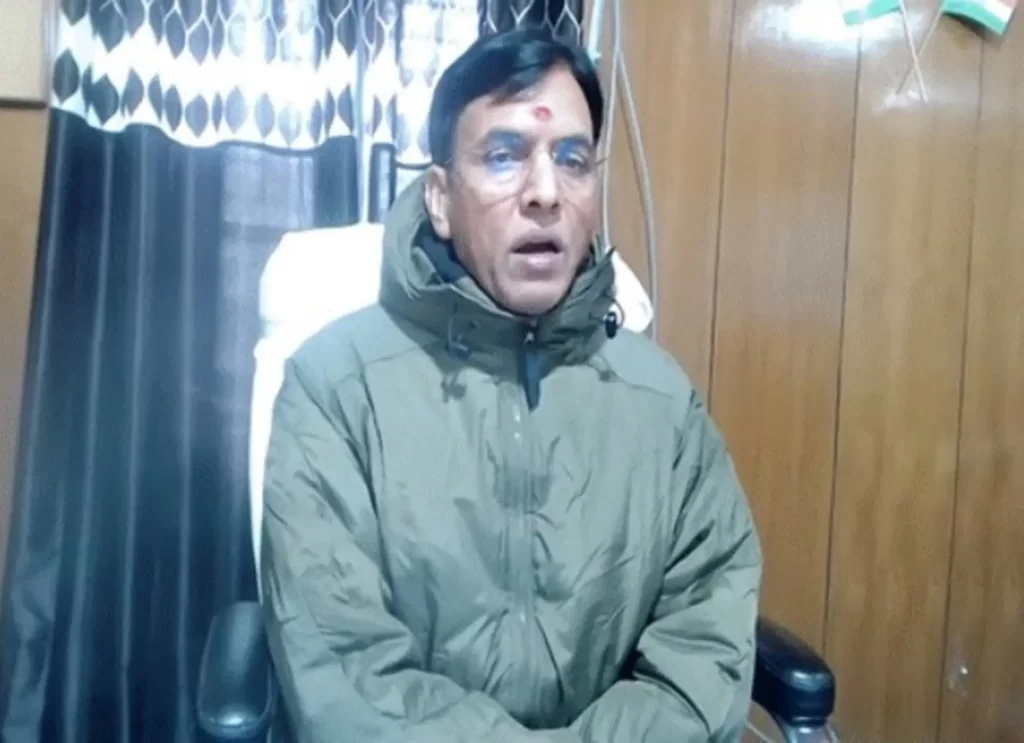
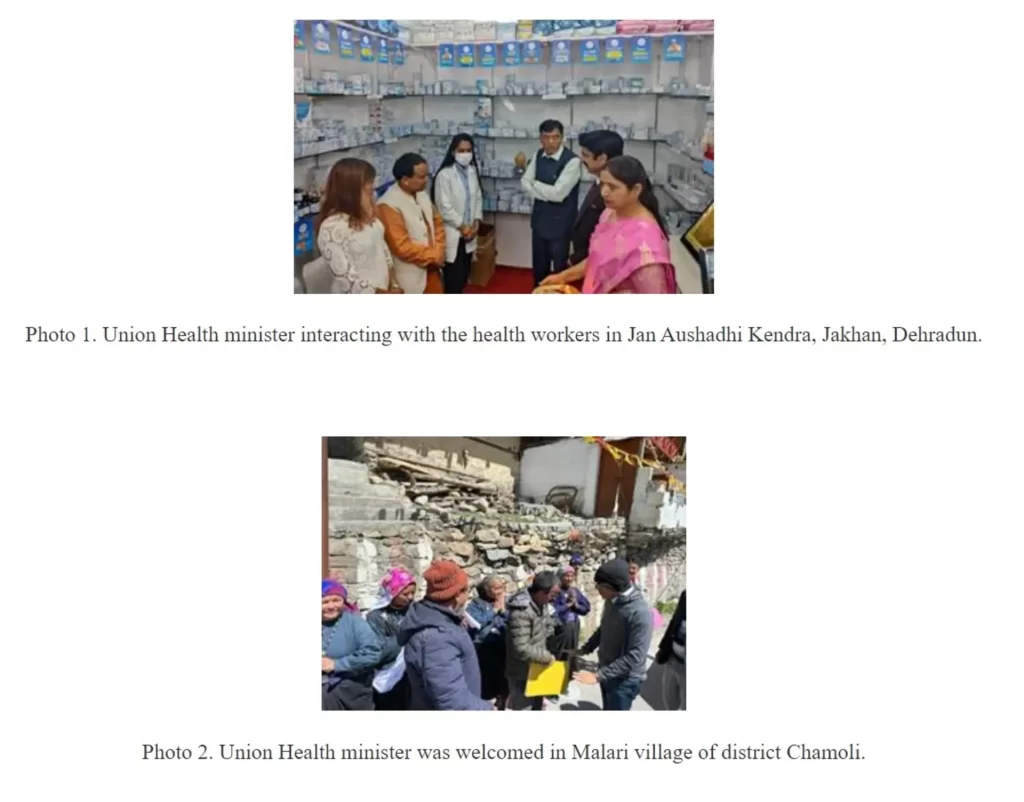
Earlier on Thursday, Dr Mandaviya visited the Malari village in Chamoli district to review the Vibrant Village Programme and other development projects in Malari and nearby areas. Before departing for Malari, he also inspected the Jan Aushadi Kendra in Dehradun and interacted with health workers and beneficiaries there.
Appreciating the commitment of the Uttarakhand govt towards the health sector, the Union Health Minister stated that “the Government of Uttarakhand is speeding up the work in the health sector, where a total of 14 critical care blocks are being constructed, 7 under the PM-ABHIM scheme and 7 under ECRP-II”. “Through these initiatives, better health facilities for emergency care will be easily available to the general public living in remote areas of the mountainous region”, he further stated.
The Critical Care Blocks at Rudraprayag and Nainital will be constructed under the ECRP-II package while the one at Srinagar will be built under the PM-ABHIM scheme. A total of Rs 71,25,00,000 has been sanctioned for 3 critical care blocks in Srinagar Pauri, Rudraprayag, and Haldwani, Nainital in order to make healthcare facilities accessible to the general public, with mutual coordination between the Government of India and the Government of Uttarakhand. An amount of Rs 23,75,00,000 has been approved for the construction of each critical care block. Facilities like ICU beds, HDU beds, isolation ward beds, isolation rooms, emergency beds, operation theatres, labor delivery rooms, joint care labs, and dialysis rooms will be provided in the Critical Care Blocks.
The 500 bedded facility in Doon Medical College will be expanded with an amount of Rs 120 crores to upgrade and strengthen the medical infrastructure in the state. With this initiative, patients coming from remote areas will also be able to get better treatment facilities in the state capital.
Shri Pushkar Singh Dhami thanked the Centre for bringing in much needed health infrastructure in the state. He stated that under the leadership of Hon’ble Prime Minister, India is surging ahead in the health sector with high impact schemes like Ayushman Bharat. He said that the Govt of Uttarakhand is working with the Union Govt to further improve the quality of healthcare in the state by spreading awareness about diseases, bringing quality and affordable healthcare services, increasing the quality and quantity of healthcare professionals in the state and by working on a mission-mode to bring in transformation in healthcare infrastructure and other schemes.
Shri Dhan Singh Rawat highlighted the progress achieved by Uttarakhand in the health sector. He stated that “Uttarakhand has achieved the highest number of blood donation in the country with more than 80,000 people already registered in the e-Raktkosh blood donation portal”. He also stated that over 50 lakh ABHA cards have been issued to people of Uttarakhand and more than 7 lakh people have availed free treatment out of them. “In the fight against TB, Uttarakhand has become the first state in India to cover 100% of TB patients under the Ni-kshay Mitra initiative”, he further stated.
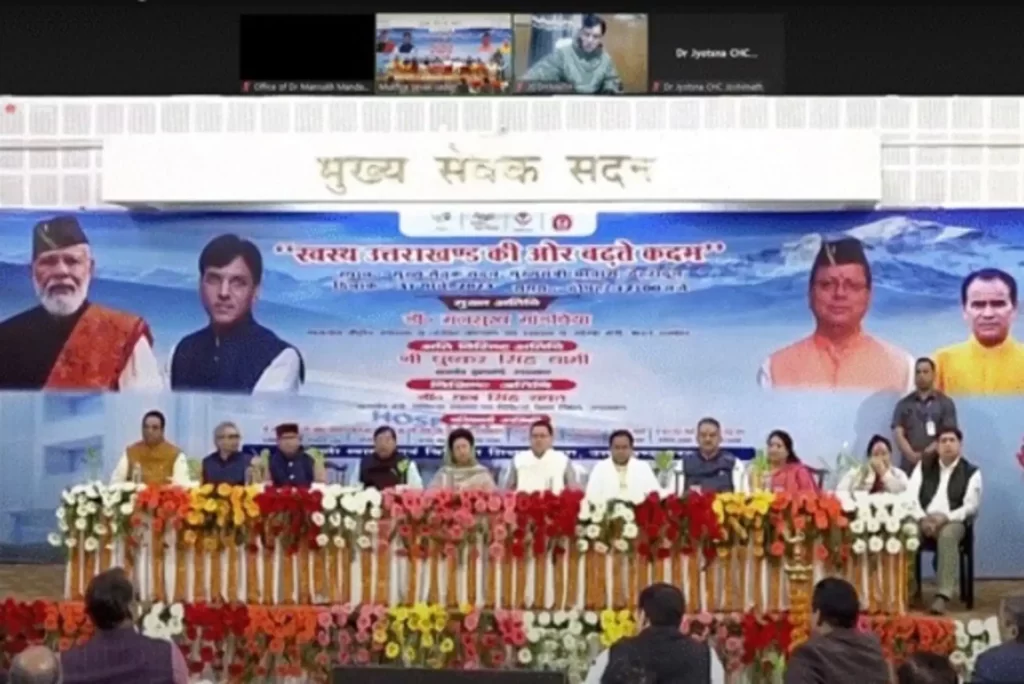
Dr R Rajesh Kumar, Health Secretary, Uttarakhand, Shri Vishal Chauhan, Joint Secretary, Union Health Ministry and other senior officials of the Union Health Ministry and Uttarakhand Govt were present on the occasion.
Dr Mansukh Mandaviya, Union Minister for Health and Family Welfare and Chemicals and Fertilizers is on a two-day visit to Uttarakhand from Thursday. On first day of his visit, the Union Health Minister inspected the Jan Aushadhi Kendra located in Dehradun. During inspection, he interacted with the health workers at the Jan Aushadhi Kendra and the beneficiaries of the Jan Aushadhi Kendra.
During this, the Union Health Minister said that the Prime Minister is determined to provide cheap and accessible medicines to the common people. He said that no one should die due to lack of medicine, for this purpose the plan to open Jan Aushadhi Kendra has been brought. He said that common people are getting relief and convenience by getting cheap medicines in Jan Aushadhi Kendra and people's trust on Jan Aushadhi Kendra has also increased. The Union Minister said that along with the need of the people, the medicines available at the Jan Aushadhi Kendra are also helping them save money.
He told that more than nine and a half thousand Jan Aushadhi Kendras are being operated across the country from the capital to the district headquarters at various places. About 20 lakh people visit Jan Aushadhi Kendra daily. Dr Mansukh Mandaviya said that a cancer medicine Bicalutamide which is available in the market for Rs.800 is sold at Jan Aushadhi Kendra for only Rs.137. Another drug, Sitagliptin, is available in the market for Rs 400 while it's price at any Jan Aushadhi Kendra is only Rs 60.
Union Health Minister Dr. Mansukh Mandaviya said that pharmaceutical is an issue related to public health. He added that both Central and State Governments are vigilant with regard to the quality of medicines manufactured and any company compromising with the drug manufacturing standards will not be spared. The minister said that regular inspection is carried out both by DCGI and State Drug Controllers all over the country and suitable action is taken against defaulters.
Speaking about the upcoming Char Dham Yatra, the Union Health Minister said that the Union Health Ministry will provide all possible help to the state government in the Char Dham Yatra. He said that the Union Health Ministry will try its best to ensure that no devotee who comes for the Char Dham Yatra faces any kind of medical problem. During this, he said, there is also a plan to give incentive allowance to the doctors, paramedical staff and other personnel posted for the Char Dham Yatra.
Before departure to Malari, Chief Minister of Uttarakhand Shri Pushkar Singh Dhami met Union Health Minister at GTC helipad. On reaching Malari, the Union Health Minister was welcomed by the women of Malari, dressed in traditional attire. During this, Niti Valley village head organization welcomed him by garlanding him with Bhojpatra, along with fan coats made by self-help groups and District Magistrate Himanshu Khurana presented organic hill products. The local women gave a wonderful presentation of paun dance.
Expressing his elation on being present on the land of Badri Kedar and thanking everyone for welcoming him with traditional costumes and lifestyle. He inquired about the schemes being run by the government including Pradhan Mantri Awas, Ujjwala Yojana, Ayushman Bharat along with Covid vaccination and free ration, electricity, water and mobile connectivity.
Talking to the media, he said that at present good roads, network connectivity, electricity, water and health facilities have improved in the border areas. Health facilities are provided through Health and Wellness Centers, treatment is done directly by top doctors through tele-consultancy, everyone is getting the benefits of Ayushman Bharat, Pradhan Mantri housing is being provided, people's life is becoming easier, electricity is available in all houses and water is available. Due to all this, migration is gradually decreasing. Employment opportunities are increasing in the villages, all these efforts are being made under the Vibrant Village Program. Under the leadership of Prime Minister, Shri Narendra Modi, the border areas of the country are really becoming more vibrant. People are getting interested in adventure games in the Himalayan range.
He said that as an experiment, it was suggested to set up a wormwood market and agreed to name the Joshimath Health Center after Gaura Devi. He said that mobile connectivity will be improved here.
After that he held a review meeting of the Vibrant Village program with the district level officials. Giving detailed information about the Malari area, the Chief Development Officer informed about the crops grown here including herbs, apples, kidney beans as well as the possibilities of development here. The CDO also informed that woolen garments are being manufactured in Malari under One Village One Product scheme. He added that a fruit bar is being developed whereas a marketing center will soon be built along with the guesthouse.
The objective of the Vibrant Village program is to develop border villages, improve the quality of life of the residents of the villages, to harness the tourism potential by promoting local culture, traditional knowledge and heritage and to develop sustainable eco-agribusinesses on the concept of one village one product through community based organizations, cooperatives and NGOs. Vibrant Village Action Plans have been prepared by the District Administration with the help of Gram Panchayats.
During this, Dr Mandaviya met the villagers and discussed their problems. Dr Mandaviya also met ASHA workers in Malari. The workers informed the Union Health Minister about their work. After this, Dr Mandaviya interacted with officials of various departments in Malari under the Vibrant Village program and inquired about and reviewed the development works.
On Friday, the Union Minister for Health and Family Welfare and Chemicals and Fertilizers, Mr. Mansukh Mandaviya will lay the foundation stone of health-related schemes along with Chief Minister Mr. Dhami at the Chief Minister's residence, Main Sewa Sadan. During this, he will lay the foundation stone of a 500-bed capacity hospital in the new building of Doon Medical College along with 50 bedded critical care blocks each at Rudraprayag, Nainital and Srinagar in Uttarakhand .

Shri Rajesh Bhushan, Union Health Secretary chaired a high-level meeting today to review preparedness status of the entire spectrum of management of the COVID19 pandemic in view of the upsurge in cases, with States and UTs through a Video Conference today. Dr V K Paul, Member (Health), NITI Aayog and Dr Rajiv Bahl, Secretary, Dept. of Health Research were also present in the review meeting.

Union Health Secretary referred to the message of Hon. Prime Minister from the high-level review meeting held on 22nd March, 2023 and advised States to be on the alert and ensure preparedness for COVID19 management. He cautioned States/UTs against any complacency and advised them to follow up on the priorities listed in the joint advisory issued today by Dept. of Health Research and Dept of Health and Family Welfare on 25th March, 2023. He stressed on ramping of testing with higher proportion of RT-PCR, and whole genome sequencing of positive samples. Urging everyone to follow COVID Appropriate Behaviour at all times. He also stressed on the need to increase administration of precaution dose among people, especially for the vulnerable population group.
A comprehensive presentation was made covering the global Covid-19 situation including the rising cases in India. States/UTs were briefed that India has been witnessing increase in COVID-19 cases with average daily cases rising to 966 in the week ending 23rd March, 2023 from 313 average daily cases in the week ending 3rd March, 2023; and weekly positivity going up to 1.08% during the same time.
It was informed that weekly positivity in Maharashtra has gone up to 4.58% as on 24th March, 2023 from 0.54% in the week ending 3rd March, 2023. In Gujarat, it has increased to 2.17% from 0.07%. In Kerala, weekly positivity shot up to 4.51% from 1.47%. Karnataka witnessed average weekly positivity rise up to 3.05% from 1.65% while Delhi has seen weekly positivity rise to 4.25% from 0.53%. Similarly, Himachal Pradesh witnessed weekly positivity increase to 7.48% from 1.92%. In Rajasthan, it has increased from 0.12% to 1.62% and Tamil Nadu reported an increase in weekly positivity from 0.46% to 2.40% in the same time period.
22 States/UTs are reporting average daily TPM less than the national average. It was also pointed that 24 districts in India are reporting more than 10% weekly positivity in the week ending 24th March, 2023, while 43 districts are reporting weekly positivity between 5-10% in the same time period.
Shri Rajesh Bhushan also advised States to undertake mock drills across all health facilities on 10th & 11th April, 2023 to ensure operational readiness of Hospital Infrastructure, including Oxygen Cylinders, PSA plants, ventilators, logistics and human resources. He informed about the status of the last mock drill which was conducted on 27th Dec, 2023. The drills were conducted in a total of 21,939 facilities, including 16,601 govt. facilities and 5,338 private facilities. Over 94% of PSA plants and oxygen concentrators were found functional across the country while over 87% of ICU beds, ventilators, O2 beds and isolation beds were found in working condition.
Union Health Secretary said that irrespective of the new COVID variants, ‘Test-Track-Treat-Vaccinate & Adherence to COVID Appropriate Behaviour’ continue to remain the tested strategy for COVID management. This would facilitate undertaking of appropriate public health measures, he said. States were also urged to ensure availability of sufficient designated beds & health workers across the states, enhance community awareness regarding disease & vaccination and regularly update COVID-19 data in Covid India Portal.
Dr V K Paul highlighted the need for increased vigil due to the prevalence of new variants and vaccine immunity across the country currently at a modest level. He urged states to increase preparedness, including higher level of RT-PCR tests and called for increasing the coverage of precaution dose among population.
Dr Rajiv Bahl encouraged states to ramp up testing, especially RT-PCR tests and maintain precaution. He also asked them to follow the advisory sent from the Union Health Ministry and increase community awareness. He also urged states showing higher number of cases to monitor cluster of new cases and severe cases.
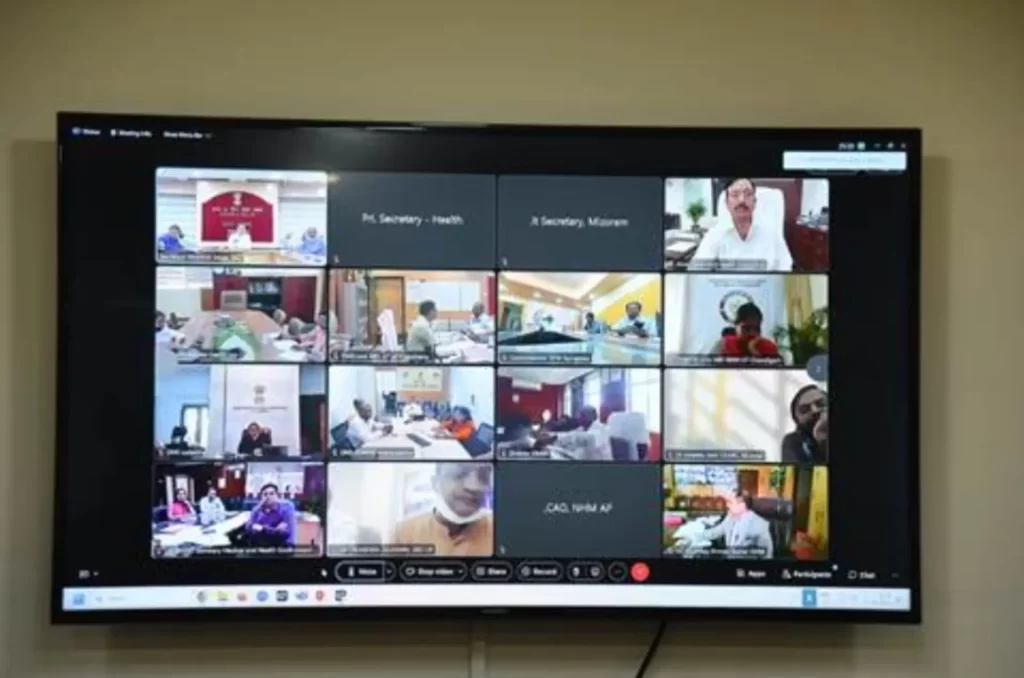
There was comprehensive and detailed discussion on various aspects of COVID management. States appreciated the timely review meetings chaired by the Hon. Prime Minister and the Union Health Minister and advisories from the Union Health Ministry. They assured that they will work with the Centre for effective prevention and management of COVID-19. They informed that they are maintaining vigil and are reviewing the present situation. States also assured they will hold mock drill for readiness of hospital infrastructure on 10th – 11th April, 2023.
Shri Lav Agarwal, AS, Health Ministry, and other officials from the Ministry was present in the meeting. Principal Secretary (Health), Mission Director (NHM) from the States/UTs participated in the review meeting.
Ministry of Health & Family Welfare is running a National ‘Drug De-Addiction Programme (DDAP)’ with the objectives to provide affordable, easily accessible and evidence-based treatment for all substance use disorders through the government health care facilities and to build the capacities of health care staff in recognition and management of substance use disorders. The programme is implemented through the health institutions under the MoH&FW viz. AIIMS, New Delhi; PGIMER, Chandigarh; NIMHANS, Bengaluru; RML Hospital, New Delhi; AIIMS, Bhubaneswar; and CIP, Ranchi. Out of these six, the centre at AIIMS, New Delhi (NDDTC) is functioning as the National / Nodal centre. MoHFW has released the “Standard Treatment Guidelines for the Management of Substance Use Disorders and Behavioural Addictions”. The average budget of Rs. 45 to 51 crores have been allotted in for DDAP Programme for these above cited DDAP Institutes in last 3 years. The average number of patients who got treatment in the above institutes in last year (2020-21), the data registered for New Patients (OPD): 38786; Follow-Up cases: 167841; and In-Patient: 1569.
Ministry of Social Justice and Empowerment (MoSJE) implements National Action Plan for Drug Demand Reduction (NAPDDR), which is an umbrella scheme under which financial assistance is provided to (i) ‘State Governments/Union Territory (UT) Administrations for Preventive Education and Awareness Generation, Capacity Building, Skill development, vocational training and livelihood support of ex-drug addicts, Programmes for Drug Demand Reduction by States/UT etc. and (ii) ‘Non-Government-Organizations/Voluntary Organizations for running and maintenance of Integrated Rehabilitation Centres for Addicts (IRCAs), Community based peer Led Intervention (CPLI) for early Drug Use Prevention among Adolescents and Outreach and Drop In Centres (ODIC) and Addiction treatment facilities (ATFs) in Government Hospitals’.
The MoSJE provides financial support for setting up of District De-addiction Centre (DDAC) in various districts all across India. For setting up of DDACs, preference is given to those Districts, which do not have any facility of IRCA, CPLI, or ODIC.
MoSJE has:
Implemented ‘Nasha Mukt Bharat Abhiyaan ‘(NMBA) in 272 identified vulnerable districts
Provided support to 355 drug rehabilitation centres named as “Integrated Rehabilitation Centre for Addicts (IRCAs)”.
53 Community based Peer led Intervention (CPLI) Centres.
78 Outreach and Drop in Centres (ODICs).
Supported 36 Addiction Treatment Facilities (ATFs) in some Government hospitals, which is implemented through AIIMS, New Delhi.
Provided financial support for setting up of District De-addiction Centre (DDAC) in various districts.
MoSJE, through NDDTC, AIIMS is implementing a project titled Establishing and Implementing Capacity Building Mechanism for Addiction Treatment Facilities in India. Under the project, since 2021, 5-day training workshops are organized for staff of various Government run/supported/funded facilities established for treatment of drug addiction in the Country. Under the project, induction, refresher and specialized training programmes on management of substance use disorders are conducted for doctors, nurses, counselors, and other staff engaged by such facilities in batches of 30-40 participants each. Medical Staff have been trained under project from various states across the India.
The Union Minister of State for Health and Family Welfare, Dr. Bharti Pravin Pawar stated this in a written reply in the Rajya Sabha today.
“India is a global example where we have used technology for making available efficient services to the people. Technology enables accessibility and reduces out of pocket expenditure for citizens” This was stated by Shri Jagdeep Dhankhar, Hon’ble Vice President of India at the second International Symposium on Health Technology Assessment (ISHTA) 2023 in the presence of Dr. Mansukh Mandaviya, Union Minister of Health and Family Welfare, here today. Dr. V K Paul, Member (Health), NITI Aayog was also present at the ceremony.
The international symposium was organised by Department of Health Research, Ministry of Health and Family Welfare in collaboration with World Health Organisation (WHO) and Centre for Global Development. The symposium with the theme “Affordability, Availability and Accessibility of Healthcare Technologies through Evidence generated by Health Technologies Assessments (HTA) for Universal Health Coverage” has provided a platform for stakeholders such as academia, researchers, policy makers, industry, etc., to share their views on importance of HTA, international perspective on health technology use and host first ever HTA marketplace in the country, providing knowledge/product sharing platform. The symposium was attended by about 250 participants.

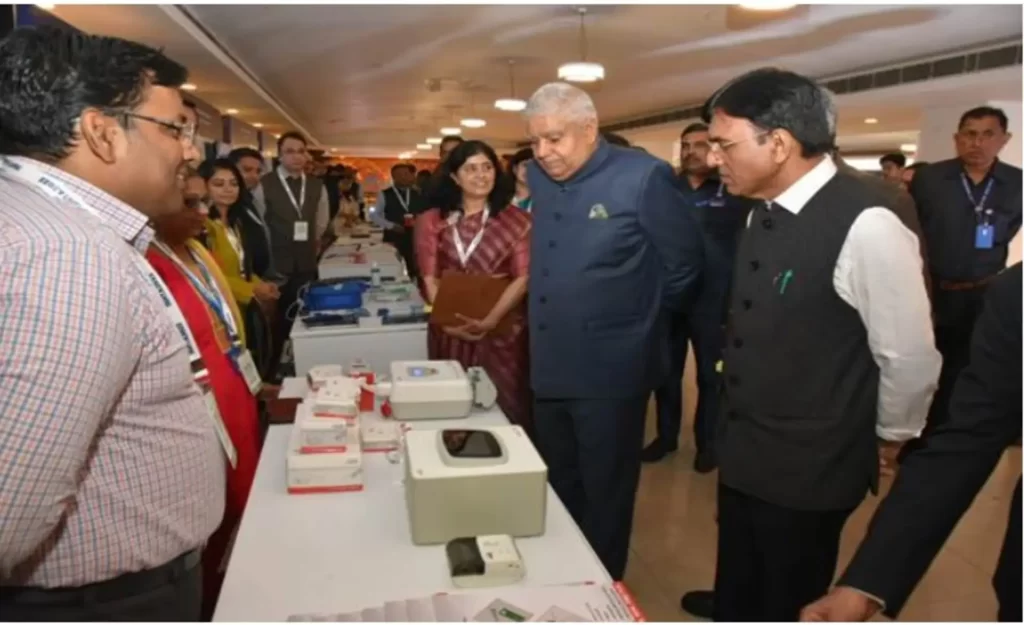
Reiterating the clarion call made by Hon’ble Prime Minister about services reaching the last mile and remotest part of the country following the philosophy of Antyodaya, Shri Jagdeep Dhankhar said that “India is moving towards ensuring affordability, accessibility and equity through revolutionary steps like Aatmanirbharta initiative, behavioral changes through Swacchh Bharat Abhiyan, affordable medicines through more than 9,100 Jan Aushadhi Kendras, strengthening medical workforce, institutions etc. The government has also taken several initiatives to ease the burden on the poor and downtrodden section. With the world largest, transparent and accountable program of Ayushman Bharat being launched by this government, it is catering to the citizens welfare and simultaneously generating jobs and enterprise”. Speaking about significance of health technologies and its assessment processes, Shri Dhankhar threw light on the crucial nature of technology in ensuring equity. He said that “technology is a turning point in ensuring quality governance. The availability of healthcare services especially in the recently opened Ayushman Bharat Health and Wellness Centres (AB-HWCs) is a gamechanger for a common citizens.”
He said that India has shown its mettle by successfully handling the COVID pandemic and supported countries through medicines and expertise. The strategy of Health Technology assessment is yet another step towards an innovative approach to strengthen the ecosystem that is working towards universal health coverage. Thus, he urged stakeholders to see India as the land of opportunity and owing to India’s philosophy of Vasudaiva Kutumbakam, they can be rest assured of being part of a global family where we consider health and wellness for all.
Thanking stakeholders present in today’s brainstorming sessions, Dr. Mansukh Mandaviya said that “assessments of public interventions taken for public welfare is the need of the hour.” This will allow establishing efficient processes and work as a feedback mechanism for better cost-effectiveness of programs and initiatives. He further said that “ISHTA 2023 will go a long way in helping to facilitate multi-country cooperation through new collaborative projects in the health sector. The Health Technology Assessment will help in further strengthening the healthcare ecosystem and achieving Sustainable Development Goals”. He said that Government of India is committed to extending healthcare services to all its citizens as part of India’s Universal Health Coverage (UHC) agenda. The resources can be optimally utilised with the help of Health Technology Assessment (HTA), which is a widely used methodology globally, for optimization of resource allocation and utilization in health.
Reflecting upon India’s age-old ethos and civilizational essence of considering Health as a service, Dr. Mansukh Mandaviya said that “Health is considered a service in our country and engaging in health sector, gives one the opportunity to serve the humanity as against considering it for commercial exploitation.” Giving the example of Co-WIN which was turned into a universal public good, Dr. Mandaviya said that “India has always been responsible to global community and any research and innovation happening in the country is readily available for the world to use so that it benefits all. This is an apt example of our dedication towards one world one family approach in this amrit kal”. “It is our responsibility and duty to not only provide affordable and quality healthcare to the country, but to use our strengths to serve and support global healthcare goals under the philosophy of Vasudhaiva kutumbakam. Under the visionary leadership of Prime Minister, our aim remains to become developed country not through competition but through coordination, collaboration or Sahyog. Similar collaboration among stakeholders is required in health sector”, he further added.
Heralding the session on Health Technology Assessment, Dr. Vinod Kumar Paul said that country has taken huge leap in terms of steps for the betterment of countrymen. Responding to the needs of local stakeholders and creating strong health systems at local level will be a boon in coming future. He said that “our responsibility remains to work with the available resources and come up with efficient and highest possible outcomes. For this Health Technology assessment will be crucial.” Quoting Mahatma Gandhi, Dr. Paul said that equity remains at the heart of India’s endeavor for development and the government prioritizes the vulnerable section along with economic progress. He emphasized on using the best practices from telemedicine arena, focusing on supply side constraints too, along with identifying affordable interventions across one health interventions. He thus, urged stakeholders from wide ranging areas to strengthen this collaboration with world health community and respond to the changing needs of the country.
HTA provides systematic evaluation of properties, effects and/or impacts of health technologies or interventions. HTA facilitates realization of greatest amount of health gain for every rupee spent. Therefore, HTA is a multidisciplinary process that assesses health technologies i.e., drugs, devices, healthcare programmes etc. for their safety, efficacy, cost-effectiveness and equity issues. HTA stakeholders are Academia, Researchers, Policy Makers, Industry, etc. to share their views on importance of HTA for accessibility, availability and affordability of health technologies as a step towards Universal Health Coverage.
The symposium also hosted a Market Place that showcased the prominent HTA recommendations that has been implemented by the State and the Central Government. Some of the Health technologies that were displayed –ABR Hearing Screening device for neonates, Sickle cell diagnostic kits, Safety Engineered Syringes, Portable ECG, Cy Tb for TB diagnosis, Low cost ventilators and Neonatal Resuscitators etc. The market place with enhance public private partnership. The marketplace showcased the Health Technologies for which HTA has been done by Health Technology Assessment in India (HTAIn). The concept of such a marketplace is first of its kind in the world to showcase the technologies evaluated through HTA. It is a step towards strengthening of the Government of India initiative for “Atmanirbhar Bharat” and “Make in India”. About 20 technologies assessed and evaluated by HTAIn were displaced in the Market Place.
Shri Sunil Kumar Gupta, Secretary to Vice-President of India, Dr Rajiv Bahl, Secretary, Department of Health Research and Director General, Indian Council of Medical Research, MoHFW Dr Roderico Ofrin, World Health Organization Representative to India, Representatives from 23 Countries, Ambassadors from Gambia, Morocco, Lesotho, Burundi and Eritrea. International senior officials from Bhutan, Nepal, Sri Lanka, Indonesia, Thailand, Gambia, Rwanda, Djibouti, Madagascar, Malawi also participated.
“India is a global example where we have used technology for making available efficient services to the people. Technology enables accessibility and reduces out of pocket expenditure for citizens” This was stated by Shri Jagdeep Dhankhar, Hon’ble Vice President of India at the second International Symposium on Health Technology Assessment (ISHTA) 2023 in the presence of Dr. Mansukh Mandaviya, Union Minister of Health and Family Welfare, here today. Dr. V K Paul, Member (Health), NITI Aayog was also present at the ceremony.
The international symposium was organised by Department of Health Research, Ministry of Health and Family Welfare in collaboration with World Health Organisation (WHO) and Centre for Global Development. The symposium with the theme “Affordability, Availability and Accessibility of Healthcare Technologies through Evidence generated by Health Technologies Assessments (HTA) for Universal Health Coverage” has provided a platform for stakeholders such as academia, researchers, policy makers, industry, etc., to share their views on importance of HTA, international perspective on health technology use and host first ever HTA marketplace in the country, providing knowledge/product sharing platform. The symposium was attended by about 250 participants.

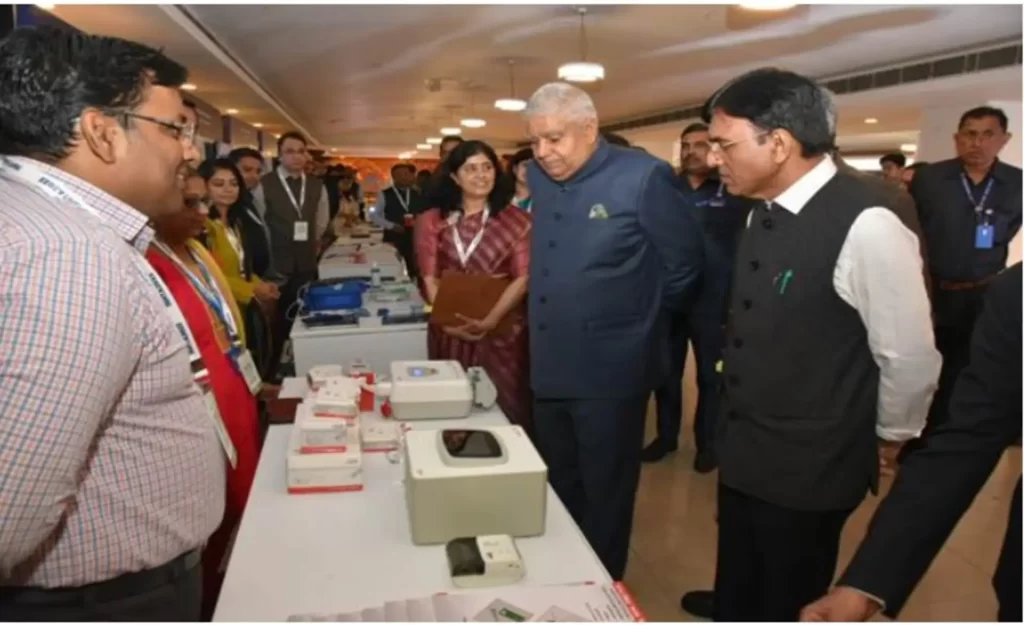
Reiterating the clarion call made by Hon’ble Prime Minister about services reaching the last mile and remotest part of the country following the philosophy of Antyodaya, Shri Jagdeep Dhankhar said that “India is moving towards ensuring affordability, accessibility and equity through revolutionary steps like Aatmanirbharta initiative, behavioral changes through Swacchh Bharat Abhiyan, affordable medicines through more than 9,100 Jan Aushadhi Kendras, strengthening medical workforce, institutions etc. The government has also taken several initiatives to ease the burden on the poor and downtrodden section. With the world largest, transparent and accountable program of Ayushman Bharat being launched by this government, it is catering to the citizens welfare and simultaneously generating jobs and enterprise”. Speaking about significance of health technologies and its assessment processes, Shri Dhankhar threw light on the crucial nature of technology in ensuring equity. He said that “technology is a turning point in ensuring quality governance. The availability of healthcare services especially in the recently opened Ayushman Bharat Health and Wellness Centres (AB-HWCs) is a gamechanger for a common citizens.”
He said that India has shown its mettle by successfully handling the COVID pandemic and supported countries through medicines and expertise. The strategy of Health Technology assessment is yet another step towards an innovative approach to strengthen the ecosystem that is working towards universal health coverage. Thus, he urged stakeholders to see India as the land of opportunity and owing to India’s philosophy of Vasudaiva Kutumbakam, they can be rest assured of being part of a global family where we consider health and wellness for all.
Thanking stakeholders present in today’s brainstorming sessions, Dr. Mansukh Mandaviya said that “assessments of public interventions taken for public welfare is the need of the hour.” This will allow establishing efficient processes and work as a feedback mechanism for better cost-effectiveness of programs and initiatives. He further said that “ISHTA 2023 will go a long way in helping to facilitate multi-country cooperation through new collaborative projects in the health sector. The Health Technology Assessment will help in further strengthening the healthcare ecosystem and achieving Sustainable Development Goals”. He said that Government of India is committed to extending healthcare services to all its citizens as part of India’s Universal Health Coverage (UHC) agenda. The resources can be optimally utilised with the help of Health Technology Assessment (HTA), which is a widely used methodology globally, for optimization of resource allocation and utilization in health.
Reflecting upon India’s age-old ethos and civilizational essence of considering Health as a service, Dr. Mansukh Mandaviya said that “Health is considered a service in our country and engaging in health sector, gives one the opportunity to serve the humanity as against considering it for commercial exploitation.” Giving the example of Co-WIN which was turned into a universal public good, Dr. Mandaviya said that “India has always been responsible to global community and any research and innovation happening in the country is readily available for the world to use so that it benefits all. This is an apt example of our dedication towards one world one family approach in this amrit kal”. “It is our responsibility and duty to not only provide affordable and quality healthcare to the country, but to use our strengths to serve and support global healthcare goals under the philosophy of Vasudhaiva kutumbakam. Under the visionary leadership of Prime Minister, our aim remains to become developed country not through competition but through coordination, collaboration or Sahyog. Similar collaboration among stakeholders is required in health sector”, he further added.
Heralding the session on Health Technology Assessment, Dr. Vinod Kumar Paul said that country has taken huge leap in terms of steps for the betterment of countrymen. Responding to the needs of local stakeholders and creating strong health systems at local level will be a boon in coming future. He said that “our responsibility remains to work with the available resources and come up with efficient and highest possible outcomes. For this Health Technology assessment will be crucial.” Quoting Mahatma Gandhi, Dr. Paul said that equity remains at the heart of India’s endeavor for development and the government prioritizes the vulnerable section along with economic progress. He emphasized on using the best practices from telemedicine arena, focusing on supply side constraints too, along with identifying affordable interventions across one health interventions. He thus, urged stakeholders from wide ranging areas to strengthen this collaboration with world health community and respond to the changing needs of the country.
HTA provides systematic evaluation of properties, effects and/or impacts of health technologies or interventions. HTA facilitates realization of greatest amount of health gain for every rupee spent. Therefore, HTA is a multidisciplinary process that assesses health technologies i.e., drugs, devices, healthcare programmes etc. for their safety, efficacy, cost-effectiveness and equity issues. HTA stakeholders are Academia, Researchers, Policy Makers, Industry, etc. to share their views on importance of HTA for accessibility, availability and affordability of health technologies as a step towards Universal Health Coverage.
The symposium also hosted a Market Place that showcased the prominent HTA recommendations that has been implemented by the State and the Central Government. Some of the Health technologies that were displayed –ABR Hearing Screening device for neonates, Sickle cell diagnostic kits, Safety Engineered Syringes, Portable ECG, Cy Tb for TB diagnosis, Low cost ventilators and Neonatal Resuscitators etc. The market place with enhance public private partnership. The marketplace showcased the Health Technologies for which HTA has been done by Health Technology Assessment in India (HTAIn). The concept of such a marketplace is first of its kind in the world to showcase the technologies evaluated through HTA. It is a step towards strengthening of the Government of India initiative for “Atmanirbhar Bharat” and “Make in India”. About 20 technologies assessed and evaluated by HTAIn were displaced in the Market Place.
Shri Sunil Kumar Gupta, Secretary to Vice-President of India, Dr Rajiv Bahl, Secretary, Department of Health Research and Director General, Indian Council of Medical Research, MoHFW Dr Roderico Ofrin, World Health Organization Representative to India, Representatives from 23 Countries, Ambassadors from Gambia, Morocco, Lesotho, Burundi and Eritrea. International senior officials from Bhutan, Nepal, Sri Lanka, Indonesia, Thailand, Gambia, Rwanda, Djibouti, Madagascar, Malawi also participated.