
Union Secretary for Health & Family Welfare, Shri Rajesh Bhushan launched a nationwide Mass Drug Administration (MDA) campaign aimed at ending disease transmission through the door-to-door administration of anti-filarial drugs, especially in 10 filaria affected states. This launch comes a month after the program received resounding support from the Hon’ble Health Minister Dr. Mansukh Mandaviya to eliminate Filariasis by 2027, three years ahead of the global target.
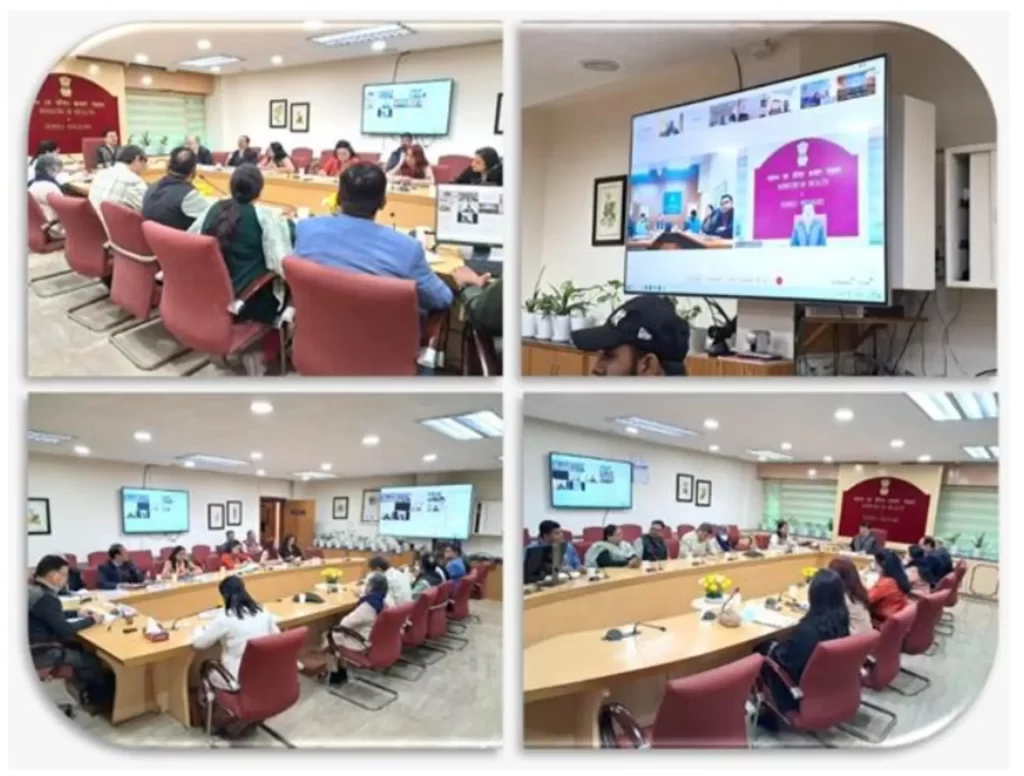
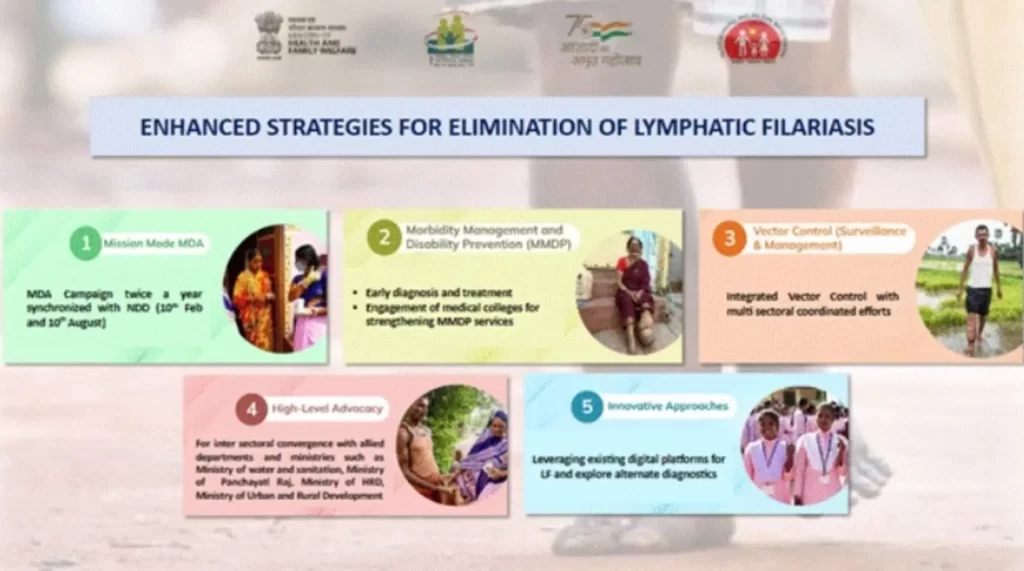
High-burden districts in Bihar, Chhattisgarh, Jharkhand, Maharashtra, Uttar Pradesh, West Bengal, Karnataka, Odisha, Madhya Pradesh, and Andhra Pradesh jointly launched the campaign today. India has ramped up efforts in eliminating Lymphatic Filariasis a Vector Borne Disease caused by Culex mosquitoes which causes disability well ahead of global targets to safeguard communities from disability, social and economic insecurity. Government of India has already unveiled a renewed five-pronged strategy for elimination of LF as shown in the figure below.
While launching the campaign, Shri Rajesh Bhushan said that “collective action is required to tackle LF.” He guided all the states to focus on Directly Observed Therapy rather than distribution of the drugs. He emphasized focusing on intensive monitoring at block level. He also pointed out the need for daily analyses of coverage and monitoring reports at all the levels besides monitoring of the monitors to ensure quality data. He suggested that good practices from states can be taken up by other states too, this will help in tackling LF efficiently. As India gears up to eliminate Filaria by 2027, the timing is perfect to resonate this aim with the Sustainable Development Goals which aims to end all forms of hunger and disability / morbidity.
Shri Bhushan also interacted with the Principal Secretaries and Mission Directors of National Health Mission (NHM) from participating states who shared updates of their preparedness and commitment to ensuring the success of the campaign.
Innovative best practices and work plans were shown at the event by the states.
Uttar Pradesh informed that through the D2C (Direct to Consumer) campaign it is reaching out to 80 lakh families with LF messages and importance of MDA drugs through social media.
Jharkhand will be conducting these rounds in 81 sites which cover close to 12,032 villages.
Odisha aims to cover 1.36 crore beneficiaries through efforts in camps, schools, and colleges as well as preparation of village level micro plans like polio campaigns.
West Bengal will be conducting these rounds in 7 districts covering a population of almost 60 lakh and will also be deploying mobile health teams to avert any untoward incidents.
Chhattisgarh will be undertaking rounds in two endemic districts and have also deployed rapid response teams.
Andhra Pradesh has engaged health volunteers that will go house to house to ensure consumption of these drugs in one district.
Maharashtra will be covering 4 districts and 16 blocks and have ramped up efforts to ensure consumption of drugs in the presence of health workers by leveraging the Jagruk Balak Programme.
Madhya Pradesh will be conducting rounds in 8 districts with targeted focus on IEC and mobilisation through intersectoral collaboration and will converge the Vikas Yatra 2023 activities with the MDA to optimize drug consumption at booths. Mobile teams have been constituted to reach out migratory population in the state.
Karnataka will be targeting the endemic district and 2 blocks and will ensure collectors are inspecting and ensuring maximum coverage.
Bihar has ramped up efforts towards a successful MDA by appealing to the community and beneficiaries to come forward and enthusiastically participate in the rounds.
Engagement of celebrity Manoj Bajpai and Khan sir who have a huge fan base on social media has been roped in for the MDA campaign.
Smt. Roli Singh, Additional Secretary and Mission Director (NHM), Ministry of Health and Family Welfare said that “We have adopted a multi-pronged approach with MDA round in two phases, where 1113 blocks in 90 districts across ten states will be launching a campaign against Filariasis. It was informed that in spite of 10-15 MDA rounds in the past, the LF elimination could not be achieved due to sub optimal coverage. She highlighted that over the last month, states have adopted some innovative mechanisms to reach out to communities such as Bihar has roped in 120 colleges for MDA, the Panchayati Raj Institutions (PRI), Self-Help Groups (SHGs) and other allied departments have collaborated in the MDA states to sensitize communities on MDA.” She expressed that with the collaborative efforts during this MDA campaign, the MDA outcomes are expected to be much better.
Shri Rajiv Manjhi, Joint Secretary, Dr. Atul Goel, Directorate General Of Health Services (DGHS) along with senior officials from Ministry were present in the meeting.
In the absence of any Central Regulatory body for Allied and Healthcare Professions the Central Government enacted the National Commission for Allied and Healthcare Professions (NCAHP) Act, 2021 on 28th March, 2021 for regulating the education and services of the allied and healthcare professionals; assessment and rating of all allied and healthcare institutions to ensure uniform standards and quality assurance; maintenance of live National and State Registers for registration of all allied and healthcare professionals. The Act provides for constitution of National Commission for Allied and Healthcare Professions (NCAHP) and the functions of the Commission includes creation and maintaining an online and live Central Register with details of academic qualifications institutions, training, skill and competencies of Allied and Healthcare professionals related to their professions as specified in the Schedule.
Provision for capacity building of doctors, nurses and paramedics has been made under Central Sector Scheme, Human Resource Development for Emergency Medical Services including hands-on skill-based training of paramedical personnel and emergency medical technicians for patient stabilization during pre-hospital phase of transfer of patients to hospital/health facility. Under this initiative, standardized ‘National Emergency Life Support (NELS)’ modules for doctors, nurses and paramedics has been developed and training to doctors, nurses and paramedics is provided under the same as per norms approved under National Health Mission.
The Union Minister of State for Health and Family Welfare, Dr. Bharati Pravin Pawar stated this in a written reply in the Rajya Sabha today.
The healthcare system of the country involves a three-tier system with Sub Health Centre (Urban and Rural), Primary Health Centre (Urban and Rural) and Community Health Centre (Urban and Rural) as the three pillars of Primary Health Care System in India. As per established norms, a PHC in rural areas is to be established for a population of 20,000 (in hilly and tribal areas) and 30,000 (in plains) and Sub Centre for a population of 5,000 (in plain) and 3000 (in hilly and tribal area) subsequently, Community Health Centre for a population of 1,20,000 (in plain) and 80,000 (in hilly and tribal area). Similarly, District Hospital (DH), Sub-District Hospital (SDH) and First Referral Unit-community Health Centres provide secondary care services.
Rural Health Statistics (RHS) is an annual publication, based on Health care administrative data reported by States/UTs. Details of State/UT-wise number of Sub-Centres, PHCs, CHCs, Sub-Divisional Hospital, District Hospital & Medical Colleges functioning in rural & tribal areas along with details of shortfall in human resources may be seen at the following link of RHS 2021-22: https://main.mohfw.gov.in/sites/default/files/RHS%202021%2022.pdf
Government of India has approved to establish 22 AIIMS in various part of country. These AIIMS after establishment, shall serve to all sections of society including tribal and rural population.
Government of India has launched Indian Public Health Standards, 2022 which is the set of uniform standards to provide norms and benchmarks for quality of infrastructure, human resource, drugs, diagnostics, equipment, quality and governance requirements for delivering health services at health facilities.
National Health Mission (NHM) envisages achievement of universal access to equitable, affordable & quality health care services that are accountable and responsive to people’s needs. The Ministry of Health and Family Welfare provides technical and financial support to the States/UTs to strengthen the public healthcare system, based on the proposals received in the form of Programme Implementation Plans (PIPs) under National Health Mission. Government of India provides approval for the proposals in the form of Record of Proceedings (RoPs) as per norms & available resources.
XV-Finance Commission has recommended grants aggregating to Rs. 70,051 Crores over the period of five years (2021-2026) through local government to strengthen the healthcare system in states. Pradhan Mantri Ayushman Bharat Health Infrastructure Mission (PM-ABHIM) with an outlay of Rs. 64,180 Crores aims to support for infrastructure development for Sub-Health Centres, Urban Health and Wellness Centres, Support for Block Public Health Units, Integrated District Public Health Laboratories and Critical Care Hospital Blocks.
The Union Minister of State for Health and Family Welfare, Dr. Bharati Pravin Pawar stated this in a written reply in the Rajya Sabha today.
The healthcare system of the country involves a three-tier system with Sub Health Centre (Urban and Rural), Primary Health Centre (Urban and Rural) and Community Health Centre (Urban and Rural) as the three pillars of Primary Health Care System in India. As per established norms, a PHC in rural areas is to be established for a population of 30,000 (in plains) and 20,000 (in hilly and tribal areas) and Sub Centre for a population of 5,000 (in plain) and 3000 (in hilly and tribal area), Community Health Centre for a population of 1,20,000 (in plain) and 80,000 (in hilly and tribal area). Similarly, District Hospital (DH), Sub-District Hospital (SDH) and First Referral Unit-community Health Centres provide secondary care services.
Rural Health Statistics (RHS) is an annual publication, based on Health care administrative data reported by States/UTs. Details of State/UT-wise number of Sub-Centres, PHCs, CHCs, Sub-Divisional Hospital, District Hospital & Medical Colleges functioning in rural & tribal areas as well as number of villages covered under this scheme may be seen at the following link of RHS 2021-22: https://main.mohfw.gov.in/sites/default/files/RHS%202021%2022.pdf
Under NHM, the Ministry of Health and Family Welfare provides technical and financial support to the States/UTs to strengthen the public healthcare system including support for human resource, based on the proposals received in the form of Programme Implementation Plans (PIPs) under National Health Mission. Government of India provides approval for the proposals in the form of Record of Proceedings (RoPs) as per norms & available resources.
Major initiatives of NHM includes Janani Shishu Suraksha Karyakram (JSSK), Rashtriya Bal Swasthya Karyakram (RBSK), implementation of Free Drugs and Free Diagnostics Service Initiatives, PM National Dialysis Programme and implementation of National Quality Assurance Framework. Support under NHM includes provision of a host of free services related to maternal health, child health, adolescent health, family planning, universal immunisation programme, and for major diseases such as Tuberculosis, HIV/ AIDS, vector borne diseases like Malaria, Dengue and Kala Azar, Leprosy etc.
Mobile Medical Units (MMUs) & Telemedicine are also implemented with NHM support to improve healthcare access particularly in rural areas.
XV-Finance Commission has recommended grants aggregating to Rs. 70,051 Crores over the period of five years (2021-2026) through local government to strengthen the healthcare system in states. Pradhan Mantri Ayushman Bharat Health Infrastructure Mission (PM-ABHIM) with an outlay of Rs. 64,180 Crores aims to support for infrastructure development for Sub-Health Centres, Urban Health and Wellness Centres, Support for Block Public Health Units, Integrated District Public Health Laboratories and Critical Care Hospital Blocks.
As part of Ayushman Bharat, the Government is supporting the States for transformation of Sub Health Centres and Primary Health Centres into Health and Wellness Centres across the country for provision of Comprehensive Primary Health Care (CPHC). As on 31.01.2023 a total of 1,56,412 number of HWCs have been operationalized all over the country.
Ayushman Bharat, Pradhan Mantri Jan Arogya Yojana (AB-PMJAY) provides health coverage up to Rs. 5.00 lakh per family per year to around 10.74 crore poor and vulnerable families as per Socio Economic Caste Census (SECC).
The Union Minister of State for Health and Family Welfare, Dr. Bharati Pravin Pawar stated this in a written reply in the Rajya Sabha today.
As informed by the National Medical Commission (NMC) there are 358 Government and 296 Private Medical Colleges in the country as of now. The Ministry of Health & Family Welfare administers a Centrally Sponsored Scheme (CSS) for ‘Establishment of new Medical Colleges attached with existing district/referral hospitals’ with preference to underserved areas and aspirational districts, where there is no existing Government or private medical college. Under the scheme, a total of 157 medical colleges have been sanctioned in three phases with fund sharing between the Centre and State Governments in the ratio of 90:10 for North eastern and Special Category States and 60:40 for others.
The Ministry also provides financial support to existing government medical colleges for Civil Works and procurement of equipment & furniture under Centrally Sponsored Schemes for upgradation of existing State Government/ Central Government Medical Colleges for increasing MBBS (UG) seats and PG seats. Under these Schemes support has been provided for increase of 4677 MBBS seats in 77 colleges,4058 PG seats in phase-I in 72 colleges and 3858 PG seats in phase-II in 60 colleges in the country.
In addition, under the Pradhan Mantri Swasthya Suraksha Yojana (PMSSY), a total of 75 projects have been approved for upgradation in the country to improve tertiary health infrastructure through construction of Super Specialty Blocks / Trauma Care Centres etc. and procurement of medical equipment. Further, 22 AIIMS have been approved for establishment.
The details of funds released under the above schemes during last three years are as under:

Further, release of funds under these schemes are based on the pace of expenditure, submission of Utilization Certificates, release of corresponding state share and demand from the States/UTs.
The Union Minister of State for Health and Family Welfare, Dr. Bharati Pravin Pawar stated this in a written reply in the Rajya Sabha today.
“Integrative medicine is aimed at harnessing the potential of India’s rich heritage and medical knowledge, along with using modern advancements in allopathy. Both traditional and modern medical practices would help in providing better avenues of health and wellness. It is thus, the need of the hour that different medical systems must not compete but complement each other. Only then we can ensure wellbeing of our citizens and further help in achieving health for all.” This was stated by Union Minister of Health & Family Welfare and Chemicals & Fertilizers, Dr. Mansukh Mandaviya as he jointly inaugurated the Integrative Medicine Centre at Department of Integrative medicine of All India Institute of Ayurveda (AIIA) at Safdarjung hospital, with Shri Sarbananda Sonowal, Union Minister of Ayush, here today. Union Minister of State for Health and Family Welfare, Dr Bharati Pravin Pawar and Union Minister of State for Ayush, Dr. Munjpara Mahendrabhai Kalubhai were also present on the occasion.
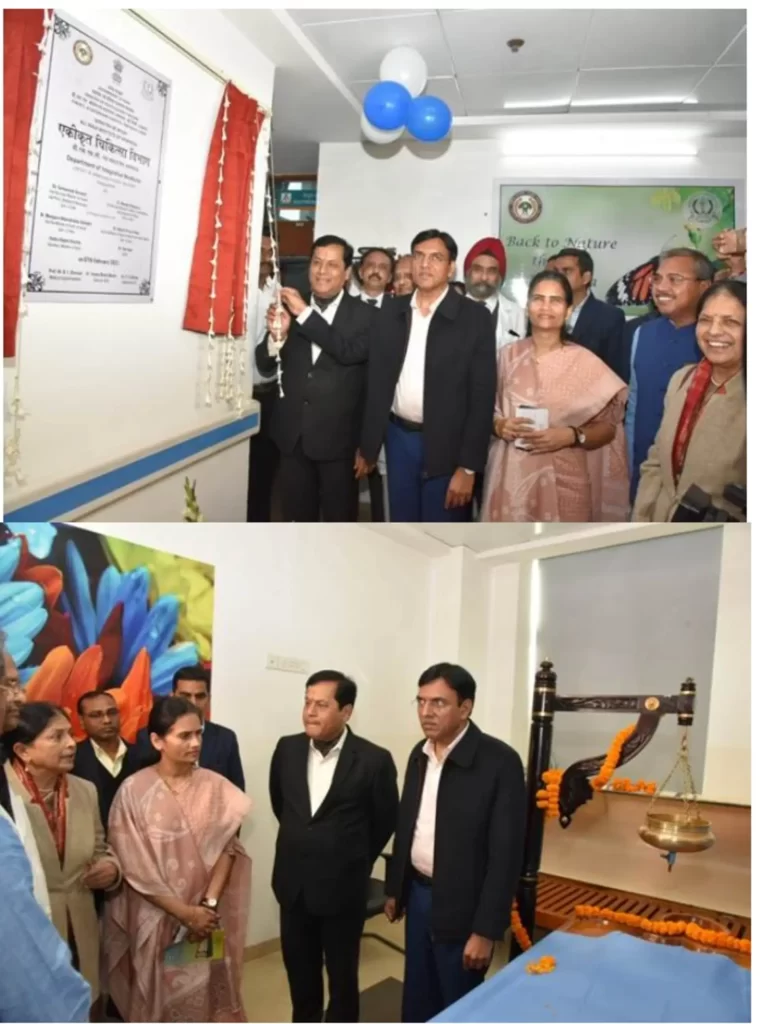
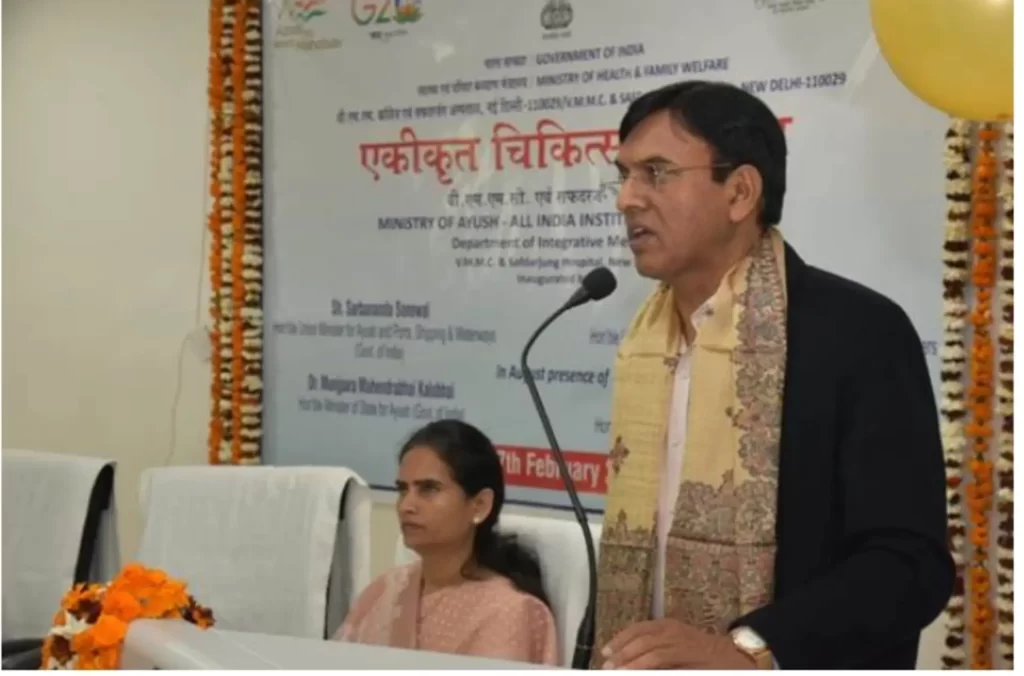
On the inauguration of new centre, Dr. Mandaviya highlighted the importance of holistic healthcare in the growth story of India. He said that “under the visionary leadership of Hon’ble Prime Minister, country has finally connected health with its development story and citizens must remain aware about their health which in turn is crucial for wealth creation.” He further added that “a country can only develop when its citizens are healthy”. Reiterating the government dedication to reach grassroots level and creating last mile delivery of healthcare services, Dr. Mandaviya stated that the health and wellness programs are being run in more than 1,56,000 Ayushman Bharat Health and Wellness Centres (AB-HWCs) across the country. He said that “India has achieved opening more than 1.56 lakh HWCs before 31st December 2022 which are turning out to be crucial in providing various types of services to our citizens.” “Specifically for wellness, yoga and other practices are also being conducted at these HWCs regularly” he further added.
He emphasized that “the Government has decided to open such Integrative Medicine Centres at all government medical establishments, especially all AIIMS in the country.” Opening such Centres will help in initiating co-location of practitioners of Indian system and modern medicine, thus harmonizing both medical systems and providing joint multidisciplinary care to the patients.
Emphasizing the significance of this Integrative approach, Dr. Mandaviya said that “Stakeholders like health sector experts, private medical sector are also pushing forward for this integrative medicine approach.” Highlighting India’s stature in popularizing traditional practices, he brought attention to global acceptance of India’s integrative approach. He said that “today World Health Organisation (WHO) and other global counterparts are appreciating India’s efforts in mainstreaming and streamlining different medicinal systems.” “India has shown the world how we can collaborate with the intention to provide quality healthcare services to our citizens and is being recognized globally for its health and wellness initiatives”, he further added. He was hopeful that the tireless efforts of all the stakeholders will ensure healthy future for our citizens and country.
Shri Sarbananda Sonowal congratulated the hospital for this new Centre and was hopeful that staff would perform their duties diligently. Appreciating the rapid strides made by the institute, Shri Sonowal said, “It is a matter of pride that the country is moving towards holistic healthcare and integrative medicine is a key step in this goal.”
Dr Bharati Pravin Pawar informed everyone about the significance of Yoga, Ayurveda, Homeopathy, Siddha and Unani medical systems that have grown especially due to the challenges of Non-Communicable Diseases (NCDs), multidrug-resistant diseases, lifestyle disorders, long term diseases. She said that Ministry of Ayush and Ministry of Health & Family Welfare are working in close coordination with stakeholders. Consequently, today this Centre is being inaugurated which will cater to patients and provide holistic care. She said that such Centres will be crucial in providing services like Panchakarma therapies & concomitant medicines which will provide a promotive, preventive, curative and rehabilitative therapy. The Centre will be key in developing integrated standard protocols of patient care and spreading awareness among patients about a healthy lifestyle. Services like Specialty OPD, Panchakarma Therapy, Free Ayurvedic Medicine Dispensary, and Dietary consultation will be offered at the centre. She also lauded the efforts of Safdarjung Hospital and hoped that with this Integrative Medicine Centre, it will act as an example for other such Centres to follow.
Shri Vaidya Rajesh Kotecha, Secretary (AYUSH), Dr Atul Goel, Director General of Health Services, Prof. Tanuja Nesari, Director AIIA, Dr B L Sherwal, Medical Superintendent, Safdarjung Hospital, along with senior officials from Ministry, faculty and staff of Safdarjung Hospital were present at the event.
As per the India, ‘Health of the Nation’s States’ study [done by Indian Council of Medical Research (ICMR)], the heart diseases were the number one cause of death, contributing to 28.1% of total deaths in India in 2016. The majority of heart patients are people with Coronary Heart Diseases (CHDs). The increase in the prevalence of CHDs is due to increase in risk factors for CHDs such as high blood pressure.
The Department of Health & Family Welfare provides technical and financial support to the States/UTs under the National Programme for Prevention and Control of Cancer, Diabetes, Cardiovascular Diseases and Stroke (NPCDCS), as part of National Health Mission (NHM), based on the proposals received from the States/UTs and subject to the resource envelope. Cardiovascular Diseases is an integral part of NPCDCS. The programme focusses on strengthening infrastructure, human resource development, health promotion & awareness generation, early diagnosis, management and referral to an appropriate level of healthcare facility for treatment of the Non-Communicable Diseases (NCDs), including Cardiovascular Diseases & Hypertension. Under NPCDCS, 707 District NCD Clinics, 193 District Cardiac Care Units, and 5541 Community Health Centre NCD Clinics have been set up.
A population-based initiative for prevention, control and screening for common Non-Communicable Diseases (NCDs) i.e., diabetes, hypertension and common cancers has been rolled out in the country under NHM and also as a part of Comprehensive Primary Health Care. Under the initiative, persons more than 30 years of age are targeted for their screening for common NCDs. Screening of these common NCDs is an integral part of service delivery under Ayushman Bharat – Health and Wellness Centres.
Ayushman Bharat- Health and Wellness Centres (AB-HWCs), included primary healthcare services expanded from selective to Comprehensive Primary Health Care (CPHC) inclusive of NCD services, closer to community. Preventive aspect of Cardiovascular Diseases is being strengthened under Comprehensive Primary Health Care through Ayushman Bharat Health Wellness Centre scheme, by promotion of wellness activities and targeted communication at the community level. Till date 1,56,338 Health & Wellness Centres have been operationalized which includes 1,25,608 Sub-Health Centre level AB-HWCs, 23512 Primary Health Centre level AB-HWCs and 7,218 Urban Primary Health Centre level AB–HWCs (Source - AB-HWC Portal, as on 30th January 2023). The States/UTs wise details of Health and Wellness Centres is available at https://ab-hwc.nhp.gov.in/home/satewisereport/.
Further, initiatives for increasing public awareness about Cardiovascular Diseases & Hypertension and for promotion of healthy lifestyle includes observation of National and International Day and use of print, electronic and social media for continued community awareness. Furthermore, healthy eating is also promoted through Food Safety and Standards Authority of India (FSSAI). Fit India movement is being implemented by Ministry of Youth Affairs and Sports, and various Yoga related activities are being carried out by Ministry of AYUSH. In addition, NPCDCS gives financial support under NHM for awareness generation (IEC) activities for Cardiovascular Diseases to be undertaken by the States/UTs as per their Programme Implementation Plans (PIPs).
The Union Minister of State for Health and Family Welfare, Dr. Bharati Pravin Pawar stated this in a written reply in the Lok Sabha today.
The Department of Health and Family Welfare has launched a Digital Portal for Crowd Funding and Voluntary Donations for Patients of Rare Diseases in accordance with the mandate of the National Policy for Rare Diseases (NPRD), 2021. The Digital Portal may be accessed through https://rarediseases.nhp.gov.in/ . Ministry of Health and Family Welfare has written to Department of Revenue for registration of Crowd Funding Portal for rare disease under Section 80G of the Income Tax Act.
Financial assistance in respect of 120 patients has been released for treatment of patients suffering from rare diseases in accordance with the provisions of the NPRD, 2021. Centres of Excellence (CoEs) have option to get financial assistance from other agencies/drugs manufacturers/Corporate sector under Corporate Social Responsibility scheme by signing of Memorandum of Understanding (MoU) with them. 11 (Eleven) CoEs have been identified till date.
The Union Minister of State for Health and Family Welfare, Dr. Bharati Pravin Pawar stated this in a written reply in the Lok Sabha today.
As per the India, ‘Health of the Nation’s States’ study [done by Indian Council of Medical Research (ICMR)], the heart diseases were the number one cause of death, contributing to 28.1% of total deaths in India in 2016. The majority of heart patients are people with Coronary Heart Diseases (CHDs). The increase in the prevalence of CHDs is due to increase in risk factors for CHDs such as high blood pressure.
The Department of Health & Family Welfare provides technical and financial support to the States/UTs under the National Programme for Prevention and Control of Cancer, Diabetes, Cardiovascular Diseases and Stroke (NPCDCS), as part of National Health Mission (NHM), based on the proposals received from the States/UTs and subject to the resource envelope. Cardiovascular Diseases is an integral part of NPCDCS. The programme focusses on strengthening infrastructure, human resource development, health promotion & awareness generation, early diagnosis, management and referral to an appropriate level of healthcare facility for treatment of the Non-Communicable Diseases (NCDs), including Cardiovascular Diseases & Hypertension. Under NPCDCS, 707 District NCD Clinics, 193 District Cardiac Care Units, and 5541 Community Health Centre NCD Clinics have been set up.
A population-based initiative for prevention, control and screening for common Non-Communicable Diseases (NCDs) i.e., diabetes, hypertension and common cancers has been rolled out in the country under NHM and also as a part of Comprehensive Primary Health Care. Under the initiative, persons more than 30 years of age are targeted for their screening for common NCDs. Screening of these common NCDs is an integral part of service delivery under Ayushman Bharat – Health and Wellness Centres.
Ayushman Bharat- Health and Wellness Centres (AB-HWCs), included primary healthcare services expanded from selective to Comprehensive Primary Health Care (CPHC) inclusive of NCD services, closer to community. Preventive aspect of Cardiovascular Diseases is being strengthened under Comprehensive Primary Health Care through Ayushman Bharat Health Wellness Centre scheme, by promotion of wellness activities and targeted communication at the community level. Till date 1,56,338 Health & Wellness Centres have been operationalized which includes 1,25,608 Sub-Health Centre level AB-HWCs, 23512 Primary Health Centre level AB-HWCs and 7,218 Urban Primary Health Centre level AB–HWCs (Source - AB-HWC Portal, as on 30th January 2023). The States/UTs wise details of Health and Wellness Centres is available at https://ab-hwc.nhp.gov.in/home/satewisereport/.
Further, initiatives for increasing public awareness about Cardiovascular Diseases & Hypertension and for promotion of healthy lifestyle includes observation of National and International Day and use of print, electronic and social media for continued community awareness. Furthermore, healthy eating is also promoted through Food Safety and Standards Authority of India (FSSAI). Fit India movement is being implemented by Ministry of Youth Affairs and Sports, and various Yoga related activities are being carried out by Ministry of AYUSH. In addition, NPCDCS gives financial support under NHM for awareness generation (IEC) activities for Cardiovascular Diseases to be undertaken by the States/UTs as per their Programme Implementation Plans (PIPs).
The Union Minister of State for Health and Family Welfare, Dr. Bharati Pravin Pawar stated this in a written reply in the Lok Sabha today.
Pradhan Mantri National Dialysis Programme (PMNDP) launched in 2016-17 ensures availability of dialysis services free of cost to Below Poverty Line (BPL) beneficiaries at the district hospitals in the country. National Health Mission (NHM) supports States/UTs in implementation of Haemodialysis and Peritoneal Dialysis services under PMNDP based on the gap assessment done by the State/UTs through the annual Programme Implementation Plans (PIP). A total of 17.27 lakh beneficiaries have availed dialysis services till 31st December 2022.
The Program has been implemented in all the 36 States/UTs in 641 districts at 1350 dialysis centres by deploying 8871 haemodialysis machines as on 31st December 2022. Government of India has issued suitable directions to the states/UTs to expand coverage of PMNDP in all the districts of the country. Under PMNDP, 1350 dialysis centers have been established in the country. The district wise details of hemodialysis centers setup in the country are available in the link: https://nhsrcindia.org/pradhan-mantri-national-dialysis-program .
With the objective to ensure accessibility and portability under One Nation-One Dialysis concept, National PMNDP portal was launched on 5th May 2022 and is operational across the states for registration of dialysis patients using Ayushman Bharat Health Account (ABHA) ID.
The Union Minister of State for Health and Family Welfare, Dr. Bharati Pravin Pawar stated this in a written reply in the Lok Sabha today.