
There are various Government/Non-Government institutional mechanisms and survey agencies which generate data on tribal healthcare on a periodic basis. Rural Health Statistics (RHS) provides details of infrastructure and human resource in tribal areas. National Family Health Survey (NFHS) provides details on major health indicators about maternal and child health among Scheduled Tribes. Census of India provides population and household details including Tribal areas. National Sample Survey provides household surveys on various socio-economic subjects.
The Expert Committee on Tribal Health titled, “Tribal Health in India: Bridging the Gap and a Roadmap for the Future” came in 2018 which gives details on the status of tribal health. The Report of the Committee pieces together the health status of the tribal populations, did a detailed analysis of the health situation in tribal areas, maps out the disease burden, discusses the challenges in areas of infrastructure, facilities, Human resource, financing, participation in planning etc., and makes recommendations for improving health outcomes for tribal populations. The main recommendations of the Committee include – strengthen access to comprehensive primary healthcare by establishing health and wellness centres, provide insurance for access to secondary and tertiary care; enhance human resource via community health officers/mid-level healthcare providers, enhancing capacities/roles of ASHA, task sharing and shifting etc.; community mobilization and IEC; use of technology to increase access to health services; strengthening school health program; integration of tribal health practitioner in primary care; increased financing for tribal health, for instance through Tribal Sub Plan (TSP).
The NHM focuses on universal approach and hence all the Health and Family Welfare Schemes run under the umbrella of NHM is applicable and available in all the States/UTs including Odisha. Under the National Health Mission (NHM), financial and technical support is provided to States/UTs to strengthen their health care systems including setting-up/upgrading public health facilities and augmenting health human resource on contractual basis for provision of equitable, affordable healthcare to all its citizens particularly the poor and vulnerable population in the tribal areas based on requirements posed by the States in their Programme Implementation Plans (PIPs) within their resource envelope.
Various supports under NHM for better healthcare for beneficiaries in tribal areas are as follows:
Ayushman Bharat- Health and Wellness Centres (HWCs) are established by transforming the Sub-Health Centres (SHCs) and Primary Health Centres (PHCs), as part of the Ayushman Bharat - the flagship programme of Government of India, to deliver twelve packages of Comprehensive Primary Health Care (CPHC) that includes preventive, promotive, curative, palliative and rehabilitative services which is universal, free and close to the community.
The population norms for setting up Health Facilities in vulnerable areas are relaxed. Against the population norms of 5,000, 30,000 and 1,20,000 for setting up of SHC, PHC and CHC, the norm is 3,000, 20,000 and 80,000 respectively in vulnerable areas such as remote, tribal, desert and hard to reach areas.
Under NHM, States/UTs have been given flexibility to deploy Mobile Medical Units (MMUs) to provide a range of health care services for the population particularly living in remote, in-accessible, un-served and under-served areas, as per the needs identified by the respective States/UTs.
To minimize the Out-of-Pocket Expenditure incurred on health services, National Free Drugs Service Initiative and National Free Diagnostic Service Initiative have been rolled out.
The ASHA programme guidelines provide for recruitment of ASHA at habitation level in hilly, tribal and difficult areas. (Well below the national norm of one ASHA at a population of about 1000).
Government of India is supporting states in implementation of National Ambulances Services under NHM for free transportation of sick patients to the health facilities. States are free to place these ambulances at a lower population norm or as per time to care approach so that these ambulances are easily accessible by all.
Further, all tribal majority districts whose composite health index is below the State average have been identified as High Priority Districts (HPDs) and these districts receive more resources per capita under the NHM as compared to the rest of the districts in the State.
The Union Minister of State for Health and Family Welfare, Dr. Bharati Pravin Pawar stated this in a written reply in the Lok Sabha today.
The National Health Authority (NHA) announced expansion of the digital health ecosystem being built under its flagship scheme Ayushman Bharat Digital Mission (ABDM) with successful integrations of 52 digital health applications. In the last two months, additional 12 health service applications completed their integration across various milestones in the ABDM sandbox environment. After a successful demonstration, these applications were added to the ABDM Partners ecosystem. The tally now includes 20 government applications and 32 private sector applications.
On the significance of this milestone, Dr. R. S. Sharma, CEO, NHA said – “The ABDM integrators are our crucial partners in this journey of taking the benefits of digital healthcare delivery to the masses. As more and more existing health applications join the ecosystem, the scope for innovation increases and the system evolves much faster. This integration signifies how the public and private sectors can come together and collaborate to strengthen a digital health ecosystem for the country. We’re looking forward to partnering with more start-ups and health tech innovators.”
Following are the 12 new applications added to ABDM Partners ecosystem after 11th May 2022 (listed category-wise, alphabetically):
HMIS (Hospital Management Information System) for Central Government Hospital Scheme (CGHS) and Hospital Management System by NICE-HMS
Health Tech solutions like Equal app by Infinity Identity Technologies Pvt Ltd, IHX Claim Management Platform by IHX, Karkinos Application Suite by Karkinos Healthcare Private Limited, Meraadhikar app by Fingoole Technologies Pvt Ltd, nPe Bills & Services app by NICT, Paperplane WhatsApp Clinic by Paperplane Communications Pvt Ltd and HISP-EMR by Society for Health Information System Program (HISP India)
Other prominent government solutions like Anmol Application of the National Health Mission by NIC, eSanjeevani AB-HWC by C-DAC Mohali and UKTelemedicine Service for Uttarakhand Government by Dhanush Infotech Pvt Ltd
NOTE: Some products may have features of more than one category of digital health solutions.
As many as 919 health tech innovators are participants in the ABDM Sandbox. Since the nationwide launch of ABDM on 27th September 2021, popular health applications from both public as well as private section have shown enthusiastic participation in the ecosystem. By completing their ABDM integration across three levels, 52 out of these 919 innovators are connecting more users to India’s digital health ecosystem. This collaborative approach towards digitization of healthcare delivery will help India achieve its goal of healthcare for all in the most effective, efficient and affordable manner.
The remaining 40 health tech applications that had completed their ABDM integration before 11th May 2022 are as below (listed category-wise, alphabetically):
HMIS systems like Amrit by Piramal Swasthya Management and Research Institute, Athma by Narayana Health Limited, Bahmni by Thoughtworks Technologies, Bajaj Finserv Health for Doctors, Bajaj Finserv Health App by Bajaj Finserve Health Limited, DocOn by DocOn Technologies, DrucareOne by Drucare Pvt Ltd, e-Hospital by NIC, e-Sushrut by Centre for Development of Advanced Computing (C-DAC) Noida, EkaCare by Orbi Health, MediXcel by Plus91 Technologies Private Limited and Medmantra by Apollo Hospitals,
LMIS systems like Centralised Laboratory Information Management Systems (CLIMS) by SRL Limited, CrelioHealth by Crelio Health Software and Patient Registration Application by Dr Lal Pathlabs Ltd,
Personal Health Records (PHR) apps like Aarogya Setu by National Informatics Centre (NIC), DigiLocker by National e-Governance Division, DocPrime by DocPrime Technologies and DRiefcase by Driefcase Healthtech Pvt Ltd,
Health Tech solutions like ALA CARE by Alafied Solutions Private Limited, Curelink by Curelink Private Limited, Doxper by InformDS Technologies Private Limited, Indian Joint Registry (IJR) by NEC Software Solutions India, JioHealthHub by Reliance Digital Health Limited, MarSha Health Clinical Decision Support System (CDSS) by MarSha Healthcare, MEDPlat by ArguSoft India Ltd, Paytm by One97 Communications Limited, Practo by Practo Technologies, Pristyn Care by GHV Advanced Care Private Limited, Raxa by Raxa Health Information Services Private Limited and Verraton Health by Verraton Health Pvt. Ltd,
and Other health tech solutions developed by Central and State Governments like ANM AP HEALTH app for Andhra Pradesh Medical Staff and EHR by Andhra Pradesh Health and Family Welfare Department, CoWIN by Ministry of Health & Family Welfare (MoHFW), CPHC-NCD Software by National Institute of Health & Family Welfare (NIHFW), e-Aarogya by Health Department DNH & DD, e-SanjeevaniOPD by C-DAC Mohali, Integrated Health Management System by West Bengal Health and Family Welfare (MoHFW), National Viral Hepatitis Control Program (NVHCP), Nikshay by Central TB Division, Reproductive & Child Health (RCH) Portal and Anmol application of National Health Mission (NHM) by NIC and Transaction Management System (TMS) and Beneficiary Identification System (BIS) of Pradhan Mantri Jan Arogya Yojana (PM-JAY) by National Health Authority (NHA)
The ABDM integrations are achieved through ABDM Sandbox (a digital space for experimentation created for testing of integration processes before the digital health product is made live for the actual use). Any digital health service provider/ developer can register on the ABDM Sandbox by following a pre-defined process of integrating and validating their software systems with the ABDM APIs. Currently, 919 public and private sector integrators have enrolled under ABDM Sandbox for integrating and validating their software solutions under the scheme. More information on the ABDM Sandbox is available here: https://sandbox.abdm.gov.in/ . The complete list of ABDM partners is available here: https://sandbox.abdm.gov.in/applications/Integrators.
PLI Scheme for Domestic Manufacturing of critical Key Starting Materials (KSMs)/Drug Intermediates and Active Pharmaceuticals Ingredients (APIs) was notified on 20th July, 2020. The Financial incentive under the sub-scheme is provided on the sales of 41 identified products categorized into four Target Segments. Total 248 applications were received in Round I, II and III. 51 applicants have been approved with committed investment of Rs 4,138.41 cr, and expected employment generation of around 10,000 persons. Total 92,130 MT is committed against the envisioned capacity of 44,610MT for the 34 products approved under the scheme. The production year and incentive year for chemical synthesis route Bulk Drugs is from 2022-23 and the production year and incentive year for the fermentation based APIs is from 2023-24. 14 projects have been commissioned till the end of June.
Under the Scheme Guidelines, the Eligible Product ‘Vitamin B1’ was categorised under the head ‘Fermentation based niche KSMs/ Drug Intermediaries/ APIs’ and applications were invited accordingly.
However, representations were received subsequently that the Vitamin B1 can be manufactured through chemical synthesis route also. Therefore, the classification of the Eligible Product: ‘Vitamin B1’ has been changed to ‘Other Chemical Synthesis based KSMs/ Drug Intermediaries/ APIs’.
Applications are being invited for Vitamin B1 under the category ‘Other Chemical Synthesis based KSMs/ Drug Intermediaries/ APIs’. The rate of incentive has accordingly been revised to FY 2023 -24 to FY 2027-28-10 %, instead of earlier rate of FY 2023-24 to FY 2026-27: 20%, FY 2027-28: 15 %, FY 2028-29: 5 %. Eligible applicants may apply through online mode only at https://plibulkdrugs.ifciltd.com.
The notice dated 26th July, 2022 inviting applications and corrigendum to Scheme Guidelines may be accessed at https://pharmaceuticals.gov.in and https://plibulkdrugs.ifciltd.com. The last date of filing the application is 24th August, 2022.
Vice President of India and Chairman of Rajya Sabha Shri Venkaiah Naidu along with Speaker of Lok Sabha Shri Om Birla chaired an event today to sensitise the parliamentarians on Hepatitis on the occasion of World Hepatitis Day 2022. Shri Mansukh Mandaviya, Union Minister for Health and Family Welfare apprised the audience on the situation of Hepatitis in the country and explained the need to rapidly eliminate the disease.
This year's theme is: "Bringing hepatitis care closer to you", aimed to simplify hepatitis care and to take hepatitis care to primary health care centers and community locations, and to take hepatitis care beyond the confines of major hospitals.
The event was jointly organized by Parliament of India and Institute of Liver & Biliary Sciences at the Parliamentary Research and Training Institute for Democracies (PRIDE).
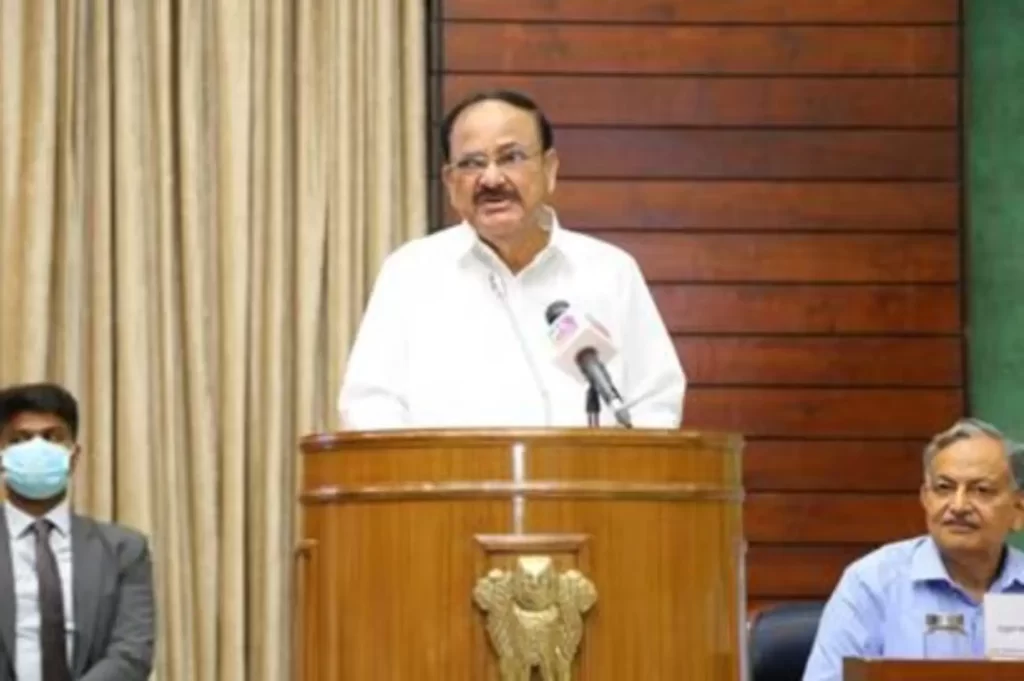
Thanking the parliamentarians for their enthusiastic participation, Vice President expressed his deep concern over the issue of hepatitis and called upon all parliamentarians to take the cause of a hepatitis-free India to their constituencies and spread the message in vernacular languages for more impact and to change the social fabric.
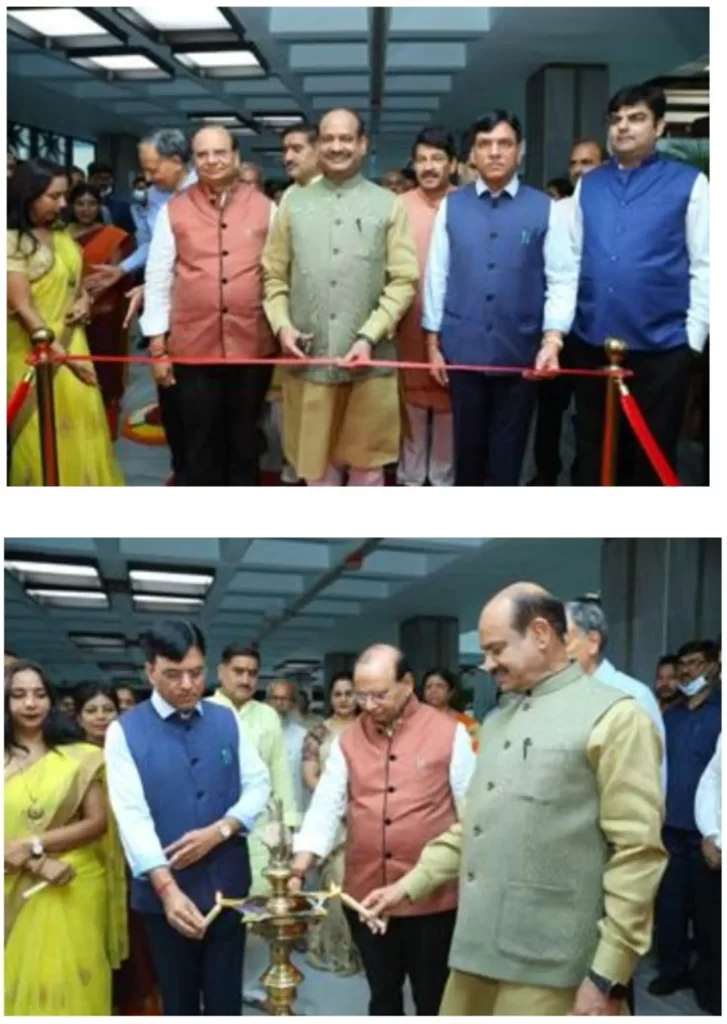
Lok Sabha Speaker Shri Om Birla, calling for a collective action against Hepatitis, emphasized the crucial role played by the Parliament in disseminating the message in a country full of diversity. He said that it is responsibility of the people's representatives to ensure that their constituencies have constant identification and monitoring of the Hepatitis patients, look after the needs of patients during and post treatment.
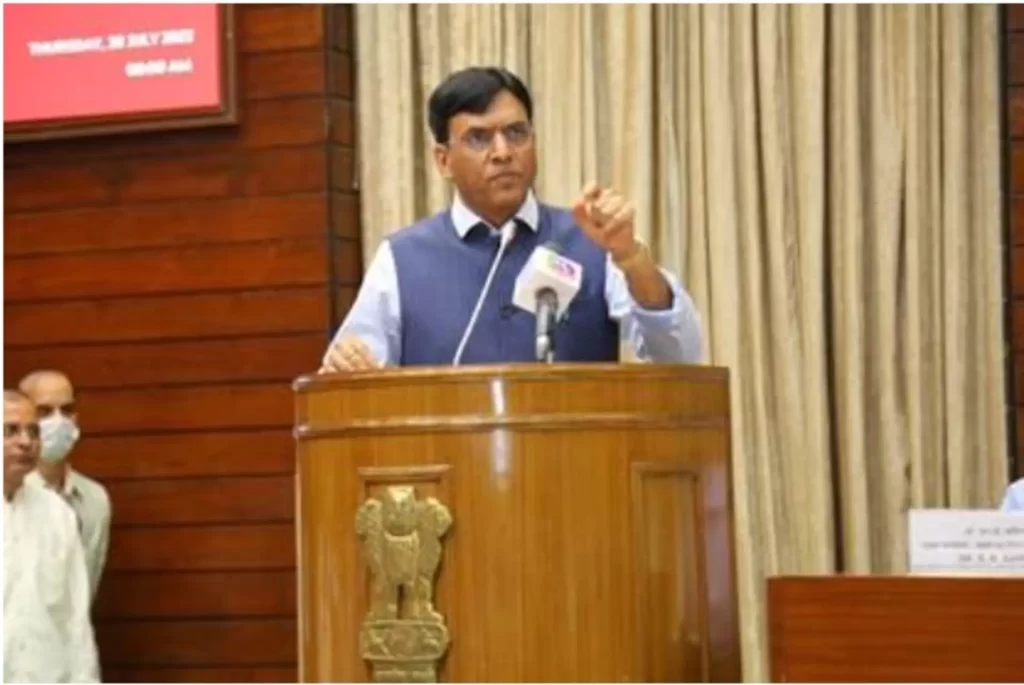
Union Health Minister Dr Mansukh Mandaviya noted, “Prime Minister Shri Narendra Modi ji played a huge role in moulding thinking of the country towards making health a ‘comprehensive’ subject by linking it with development.” Giving examples of programmes like TB elimination, he said that all these programmes ultimately improve the social determinants of health thereby improving the living standards of India’s population.
Underlining the challenges in the diagnosis of hepatitis in early stages, Union Health Minister highlighted the importance of early detection for timely treatment. “Our COVID management learning has demonstrated that Test, Trace and Treat strategy worked well. Most people remain unaware of hepatitis at the early stages, as either they have no symptoms or there are such symptoms on the basis of which it is difficult to diagnose the disease. To allay this, and to reduce the burden of disease among the community, we need to screen high-risk groups including family members of hepatitis B patients and those who have received or are receiving repeated blood transfusions, are on dialysis, are infected with HIV or who are immune are compromised, he noted.
Accentuating the New Global Health Sector Strategies for the period 2022-2030 that aim to eliminate HIV, viral hepatitis and sexually transmitted infections by 2030, Dr Mandaviya highlighted that the number of deaths from Hepatitis B in a day is more than the number of deaths from HIV in a year. “Therefore, over the years, Viral Hepatitis B and C have become a global health problem and significant cause of death. Around 4000 people die of viral hepatitis in a day in the world. About 40 million people in India are suffering from Hepatitis B and C infection”, he added.
Dr Mansukh Mandaviya exhorted states to launch Jan Abhiyaan with log bhaagidari (people’s participation) to enthuse and engage citizens and communities to ensure a Hepatitis Free India. He also suggested everyone to work in a mission mode to eradicate hepatitis and make it a Jan Andolan by adopting three-pronged approach of Prevention, Testing and Treatment.
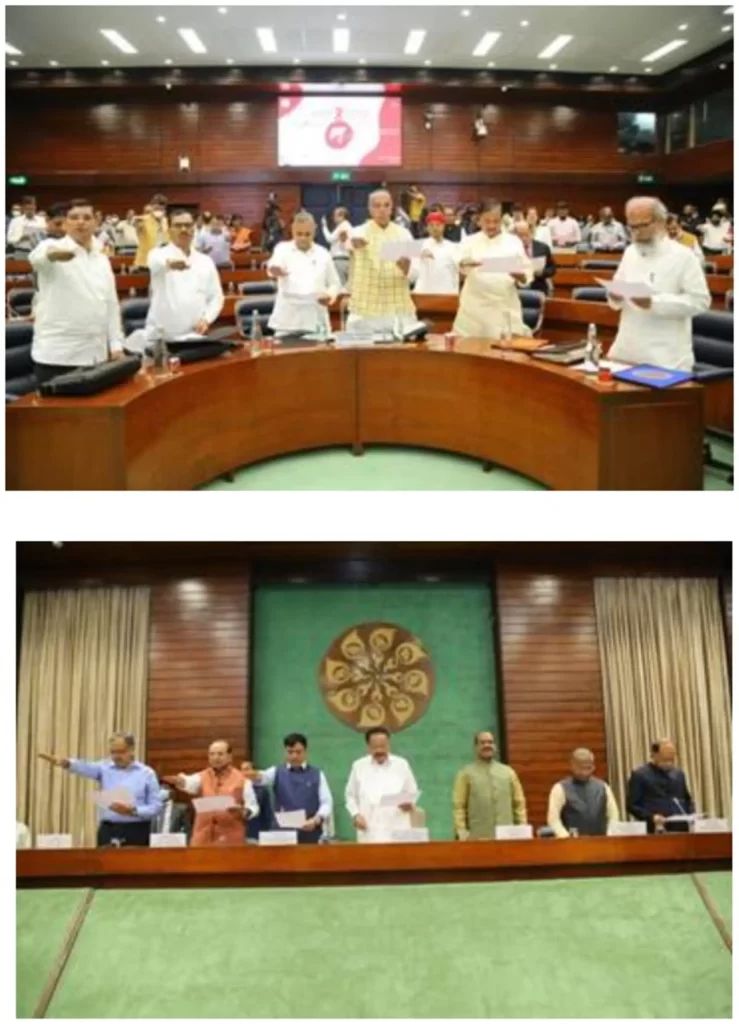
All parliamentarians also took pledge to not discriminate people living with Hepatitis and contribute in empowering people against Hepatitis during the awareness session.
Shri Utpal Kumar Singh, Secretary General, Lok Sabha, Shri Harivansh Narayan Singh, Deputy Chairman, Rajya Sabha, Shri Vinay Kumar Saxena, Lt. Governor, Delhi, Dr. S. K. Sarin, Vice Chancellor, Institute of Liver and Biliary Sciences, Shri Prasenjit Singh, Additional Secretary, Lok Sabha Secretariat were also present.
“India understood the importance of Family Planning early and went on to be the first country to launch a National Family Planning programme in 1952.” This was stated by Dr. Bharati Pravin Pawar, Union Minister of State for Health and Family Welfare as she chaired the National Family Planning Summit, 2022, here today. Aligning with Hon’ble Prime Minister’s vision of Atma Nirbhar Bharat, the theme of the summit was “Sustaining efforts, Steering Partnerships, Shaping Vision in Family Planning – Sabka Saath, Sabka Vishwas, Sabka Prayas & Sabka Vikas”.
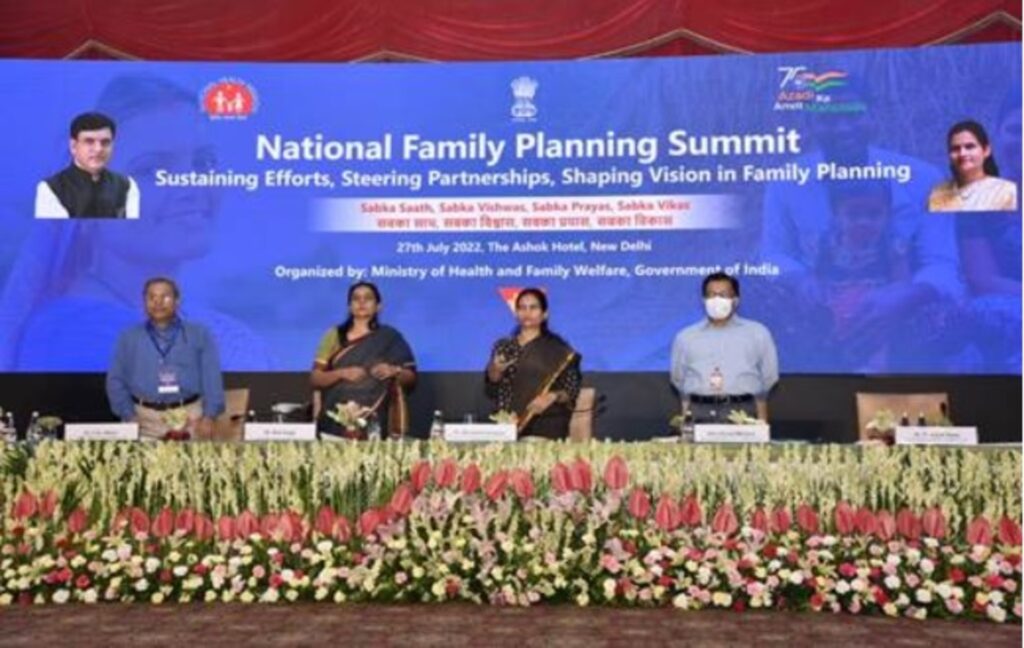
Speaking on the occasion, Dr Pawar informed that “India has achieved replacement level fertility with as many as 31 states/ UTs having achieved a Total Fertility Rate of 2.1 or less and modern contraceptive usagehas increased substantially to 56.5% (NFHS 5). She also stated that “NFHS-5 data shows an overall positive shift towards spacing methods which would be instrumental in impacting positively the maternal and infant mortality and morbidity.”
The Union Minister emphasized that Mission Parivar Vikas (MPV) 2016 has given further impetus to the National Family Planning Program. Under the scheme, innovative strategies like distribution of Nayi Pehel kits, Saas Bahu Sammelan and Saarthi vans are helping to reach out to community and initiate dialogues on Family Planning, healthy birth spacing and importance of small families. “More than 17 lakh Nayi Pehel kits have been distributed to newly-weds, over 7 lakh Saas bahu sammelans conducted, and over 32 lakh clients have been counselled through Saarthi vans since inception. It is due to these efforts that NFHS-5 data shows a substantial increase in modern contraceptive use and decrease in unmet need in all the MPV states”, she added.
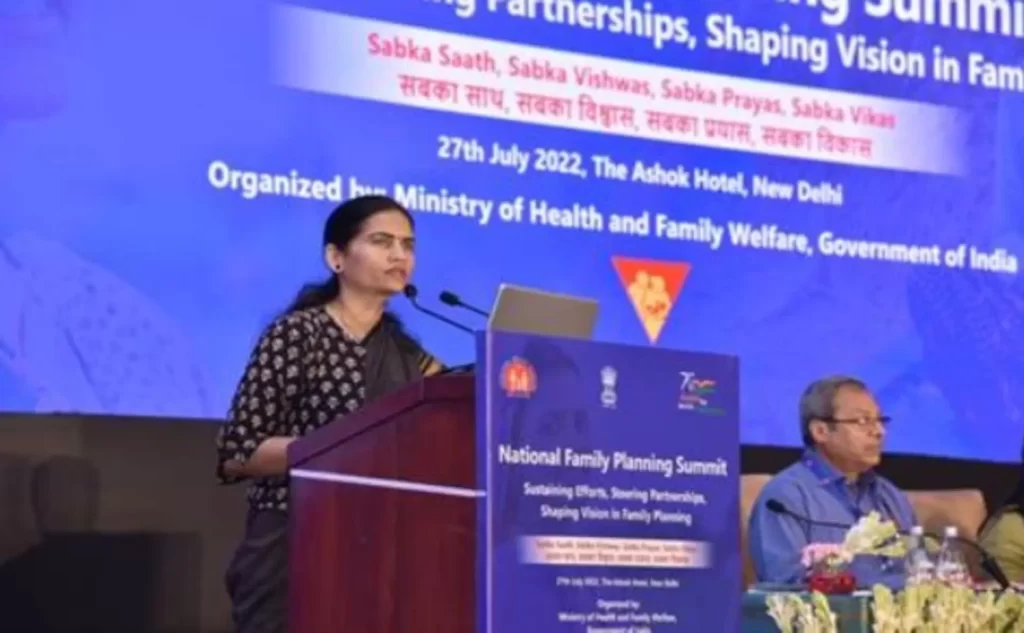
The Minister highlighted that India is an important member of the FP2020, now transitioned to FP2030 partnership. She informed that as part of India’s commitment to this partnership, 3 billion USD has been invested in family planning. She further stated that “between 2012 and 2020, India added more than 1.5 crore additional users for modern contraceptives thereby increasing the modern contraceptive use substantially”.
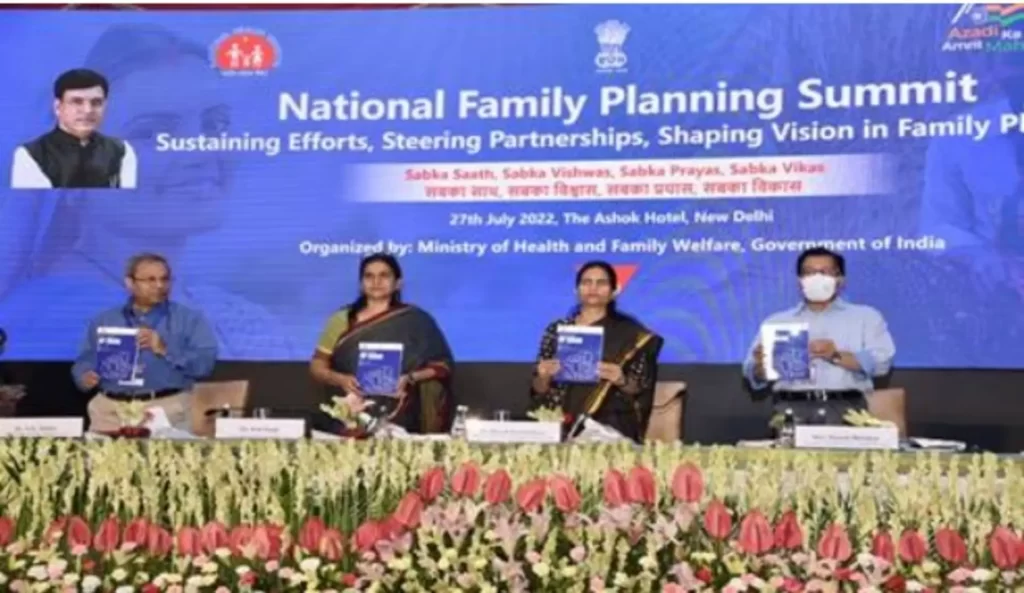
During the event, the Minister also unveiled the India Family Planning 2030 vision document and launchedthe Medical Eligibility Criteria (MEC) Wheel Application, E-Module of Family Planning Logistics Management System (FPLMIS) and Digital Archive on Family Planning under the category of Digital Intervention. To empower the community and show the Government's unwavering commitment to providing inclusive services, Dr Pawar also introduced the National Family Planning helpline manual, Community Health Officer (CHO) booklet, and ASHA brochure and leaflet (Family Planning).
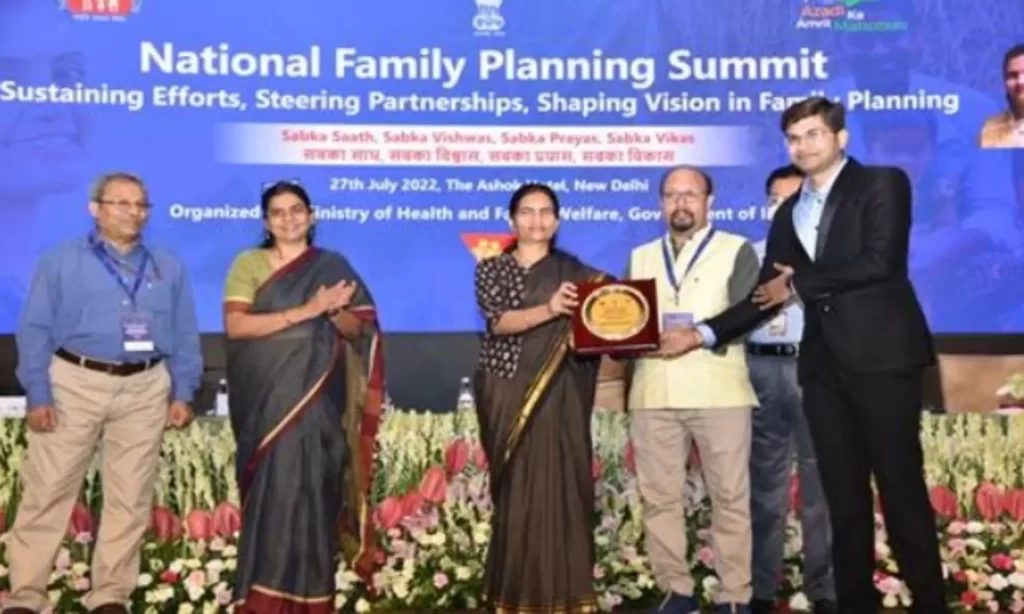
Dr Pawar commended the grassroots health service providers calling them “Champions whose unwavering efforts are vital to the program's success”. She felicitated the states under the categories of Male Participation, Spacing Methods, Self-care Methods, PPIUCD and Injectable MPA. Service Provider Awards were also presented to Doctors (under the categories of Male and Female Sterilization), Nurses (under the categories of PPIUCD and Injectable MPA), Health and Wellness Centres for best performance in Family Planning and to ASHA workers for motivating vasectomy clients.
Union Health Secretary, Shri Rajesh Bhushan stated that Family Planning Programme in India is now over seven decades old and in this period, India has witnessed a paradigm shift from the concept of population control to population stabilisation to interventions being embedded towards ensuring harmony of continuum care. In this context, he underlined three thematic areas. Firstly, although India has achieved replacement level fertility, there is still a significant population in the reproductive age group who must remain at the centre of our intervention efforts. Secondly, India’s focus has traditionally been on the supply side, i.e. the providers and delivery systems. He highlighted that now the time is to focus on the demand side which includes family, community and society. “Significant change is possible with this focus, instead of an incremental change”, he noted. States should make special efforts to leverage from the provisions of the community-based scheme under Mission Parivar Vikas and refine it further. And lastly, the pool of family planning service providers should assume a significant role in enhancing our capacity to deliver our commitment under FP2030, through knowledge, skills and innovative services. “A competent and properly trained workforce must be the foundation of our family planning effort. This will enhance the quality of our services”, he stated.
Ms. Roli Singh, Additional Secretary and Mission Director (NHM), Ministry of Health and Family Welfare, Dr S K Sikdar, Advisor FP and MH, and representatives from various development partners were also present.
Union Minister for Health and Family Welfare Dr. Mansukh Mandaviya, Lt. Governor of Puducherry Dr. Tamilisai Soundararajan, Chief Minister Shri N. Rangasamy and Director-General of the Indian Council of Medical Research Shri Balram Bhargav took part in the ceremony for laying the foundation stone for the establishment of the International Centre of Excellence for training in Medical Entomology at the ICMR- Vector Control Research Centre today in Puducherry.
Speaking on the occasion, Union Minister for Health and Family Welfare Dr. Mansukh Mandaviya said any country that is keen in the path of growth and improvisation, should concentrate on research and development.
Stating that no other nation had the pride of vaccinating nearly two billion doses, the Minister lauded and extended his gratitude to the scientists who developed the vaccine during pandemic.
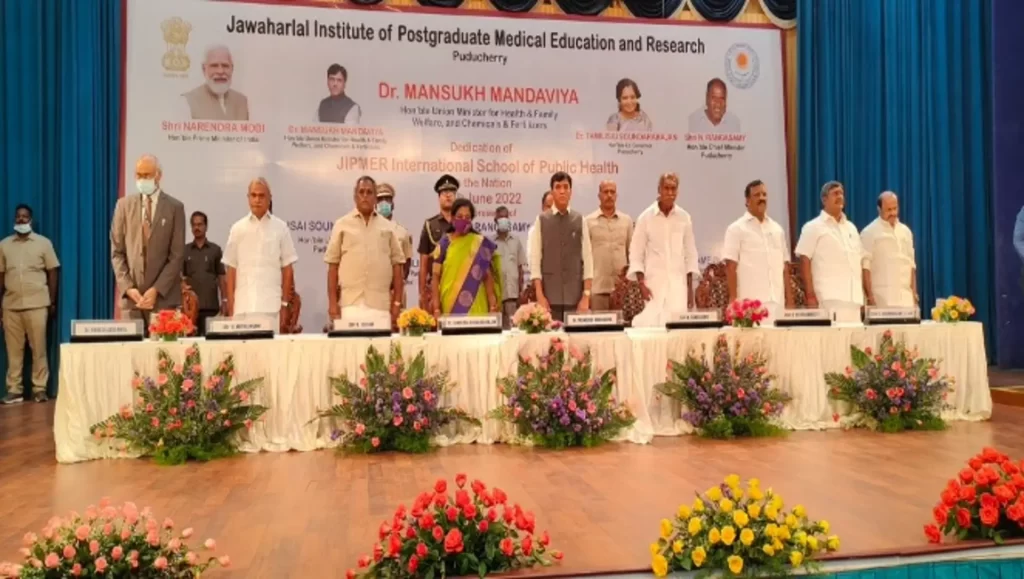
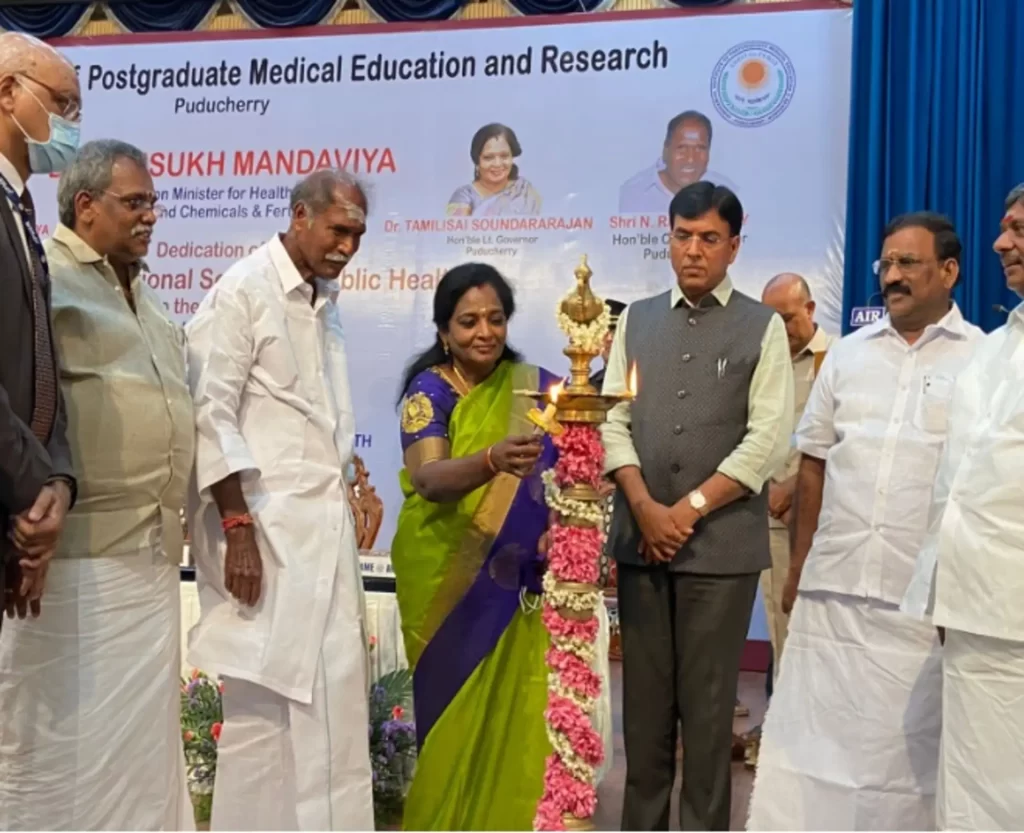
Later, Dr. Mansukh Mandaviya inaugurated the International School of Public Health at JIPMER.
The Minister said, “I am happy to be among young students and doctors. Today is an important day not only for JIPMER, but for the entire world. The Central Government has allotted Rs. 65 crores for the establishment of this unique centre.” The Central Government under the leadership of Prime Minister Shri Narendra Modi saved the lives of common people through the mighty public health infrastructures, he added.
As per the latest report titled Sample Registration System (SRS) based Abridged Life Table 2015-19 published by the Office of the Registrar General & Census Commissioner, Government of India, the average life expectancy at birth has increased from 49.7 during 1970-75 to 69.7 during the year 2015-19 registering an increase of 20 years during this period.
As per the SRS Report 2019 published by the Office of the Registrar General & Census Commissioner, Government of India, the country has experienced notable improvement in child mortality by reducing the Under Five Mortality Rate (Per 1,000 live births) from 45 in the year 2014 to 35 in the year 2019. The Ministry of Health and Family Welfare (MoHFW), Govt. of India provides support to States/UTs in the implementation of Reproductive, Maternal, Newborn, Child, Adolescent Health and Nutrition (RMNCAH+N) Strategy under National Health Mission (NHM) based on the Annual Programme Implementation Plan (APIP) submitted by the States/UTs for improving the overall health of the children in the country.
Some of the key interventions of Government of India are Facility Based New-born Care, Community Based care of New-born and Young Children, Mothers’ Absolute Affection (MAA) Programme, Social Awareness and Actions to Neutralize Pneumonia Successfully (SAANS) Initiative, Universal Immunization Programme (UIP), Rashtriya Bal Swasthya Karyakaram (RBSK), Nutrition Rehabilitation Centres (NRCs), Intensified Diarrhea Control Fortnight / Defeat Diarrhea (D2) Initiative, Anaemia Mukt Bharat (AMB) Strategy, etc.
The Union Minister of State for Health and Family Welfare, Dr. Bharati Pravin Pawar stated this in a written reply in the Rajya Sabha today.
For enabling environment for ensuring the ‘Health for all’ the National Health Policy 2017 envisages to provide universal access to good quality healthcare services through increasing access, increasing affordability by lowering the cost of healthcare delivery and equity. The policy envisages as its goal the attainment of the highest possible level of health and well-being for all at all ages, through a preventive and promotive healthcare orientation in all developmental policies, and universal access to good quality healthcare services without anyone having to face financial hardship as a consequence. The Policy is centered on the key principles of Equity; Affordability; Universality; Patient Centeredness & Quality of care; accountability; Inclusive partnerships; Pluralism and decentralization.
The Central Govt. has taken several initiatives for supplementing the efforts of the State for providing quality and affordable healthcare services to the people.
Under National Health Mission, the Government has taken many steps towards universal health coverage by supporting the State Government in providing accessible & affordable healthcare to people. It encompasses the National Rural Health Mission (NRHM) and the National Urban Health Mission (NUHM) as its two Sub-Missions. Under the National Health Mission, financial and technical support is provided to States/UTs to provide accessible, affordable and quality healthcare, especially to the poor and vulnerable sections of the population, in both urban and rural areas. The National Health Mission provides support for improvement in health infrastructure, availability of adequate human resources to man health facilities, to improve availability and accessibility to quality health care especially for the underserved and marginalized groups in rural areas.
The Government has launched four mission mode projects, namely PM-Ayushman Bharat Health Infrastructure Mission (PM-ABHIM), Ayushman Bharat Health & Wellness Centres (ABHWCs), Pradhan Mantri Jan Arogya Yojana (PMJAY) and Ayushman Bharat Digital Mission (ABDM)
PM-ABHIM was launched to develop the capacities of primary, secondary, and tertiary healthcare systems, strengthen existing national institutions and create new institutions to cater to detection and cure of new and emerging diseases. PM-ABHIM is a Centrally Sponsored Scheme with some Central Sector Components. The scheme has an outlay of Rs. 64,180 crore.
Under Ayushman Bharat Health & Wellness Centres(HWCs), Comprehensive Primary healthcare by strengthening Sub Health Centres (SHCs) and Primary Health Centres (PHCs) are facilitated. The HWCs provide preventive, promotive, rehabilitative and curative care for an expanded range of services encompassing Reproductive and child healthcare services, Communicable diseases, Non-communicable diseases and other health issues.
PMJAY provides health coverage of Rs.5.00 lakh per family per year to around 10.74 crore poor and vulnerable families for secondary and tertiary care as per Socio Economic Caste Census data 2011. Ayushman Bharat Digital Mission (ABDM) is aimed at developing the backbone necessary to support the integrated digital health infrastructure of the country.
The Government has taken various steps to further increase the availability of doctors in the country, particularly in underserved regions. The number of UG seats have increased from 51,348 before 2014 to 91927 seats as on date which is an increase of 79%. The numbers of PG seats have increased by 93% from 31,185 seats before 2014 to 60202 seats.
Further, in order to provide medical facilities in the country, the Government has approved, setting up of 22 AIIMS and 75 projects of upgradation of Government Medical Colleges under PMSSY in various phases.
Under the scheme for ‘Establishment of new Medical Colleges attached with existing district/referral hospitals’, 157 new medical colleges have been approved in the country in three phases and 72 are already functional.
Recognizing the need to nurture AYUSH system, the National AYUSH Mission (NAM) is implemented in States/UTs for development and promotion of AYUSH systems. 12,500 Ayush Health and Wellness Centers are targeted for operationalization as a component of NAM through State/UT Governments in a phased manner by the year 2023-24.
The Union Minister of State for Health and Family Welfare, Dr. Bharati Pravin Pawar stated this in a written reply in the Rajya Sabha today.
Government of India is aware that despite the orders of the Courts and the relevant regulations of the Medical Council of India, generic medicines are not being prescribed by most medical practitioners. In this regard, clause 1.5 of Indian Medical Council (Professional Conduct, Etiquette and Ethics) Regulations, 2002 prescribes that every physician should prescribe drugs with generic names legibly and preferably in capital letters and he/she shall ensure that there is a rational prescription and use of drug. Further, the erstwhile Medical Council of India (MCI) had issued circulars where all the Registered Medical Practitioners have been directed to comply with the aforesaid provisions.
The National Medical Commission Act, 2019 empowers the appropriate State Medical Councils or Ethics and Medical Registration Board (EMRB) of the Commission, to take disciplinary action against a doctor for violation of the provision of the aforesaid Regulations. When complaints are received against the violation of code of ethics for doctors, such complaints are referred by EMRB (previously by erstwhile MCI) to the concerned State Medical Councils where the doctors/medical practitioners are registered. States have been advised to ensure prescription of generic drugs and conduct regular prescription audits in public health facilities.
Practice of prescription audit is one of the prerequisites for getting certified under the National Quality Assurance Standards (NQAS).
Under National Health Mission (NHM), support is provided for provision of essential generic drugs free of cost in public health facilities. The support is not only for drugs but also for various components necessary for effective implementation of Free Drug Service Initiative viz. strengthening/setting up robust systems of procurement, quality assurance, IT backed supply chain management systems like Drugs and Vaccines Distribution Management Systems (DVDMS) developed by CDAC, warehousing, prescription audit, grievance redressal, Information, Education and Communication (IEC) training.
The Union Minister of State for Health and Family Welfare, Dr. Bharati Pravin Pawar stated this in a written reply in the Rajya Sabha today.
R&D and innovation in pharma sector is done by number of institutions and organizations under various scientific Ministries/ Departments, which have their own budgetary provisions. Department of Pharmaceuticals has set up seven National Institutes of Pharmaceutical Education & Research (NIPERs) as institutes of national importance, to nurture and promote quality and excellence in pharmaceutical education and research in India. An outlay of Rs. 1,500 cr. has been approved for strengthening/ up-gradation of these NIPERs for the period 2021-22 to 2025-26.
Department of Pharmaceuticals has also set up an Inter- Departmental Committee (IDC) to periodically review and coordinate research work undertaken by various organizations under different Ministries/ Departments so as to ensure optimum utilization of funds and avoid overlapping and duplication of efforts and resources.
NIPERs, after detailed inter departmental consultations have formulated a programme on ‘Drug Discovery for Affordable Healthcare’ in mission mode and has sought funds from National Research Foundation (NRF). Council of Scientific and Industrial Research (CSIR) through its constituent laboratories has been pursuing R&D activities for drug discovery and development with the total funds committed for ongoing research in the area to the tune of about Rs 53.56 Crore. Department of Biotechnology (DBT), along with its Public Sector Undertaking (PSU) Biotechnology Industry Research Assistance Council (BIRAC) has facilitated implementation of R&D projects for drug discovery in the areas of Tuberculosis (TB), Anti-Microbial Resistance (AMR), Diabetes, Cancer, Rare Diseases, etc., through the regular schemes of DBT and BIRAC. Department of Scientific & Technology (DST) has recently invited proposals for research in rare diseases with focus to bring generic drugs which are off- patent and to develop process chemistry for drugs under patent to make it affordable once patent expires.
Central Drugs Standard Control Organization (CDSCO) under the Ministry of Health & Family Welfare approve new drugs in the country as per provisions of Drugs & Cosmetic Act, 1940 & Rules, made there under. The comprehensive list of all approved drugs is available at https://cdsco.gov.in/opencms/en/Approval_new/Approved-New-Drugs/
In USA, the list of all drugs approved by USFDA is available at https://www.accessdata.fda.gov/scripts/cder/daf/ and in EU, the European Medicines Agency (EMU) publishes medicine-related data on its website and European public assessment reports (EPARs) of all medicines authorized in European Union is available a at https://www.ema.europa.eu/en/medicines/download-medicine-data#european-public-assessment-reports-(epar)-section
This information was given by Minister of State for Chemicals and Fertilizers, Shri Bhagwanth Khuba in a written reply in Rajya Sabha today.