
Union Minister of Health and Family Welfare, Dr Mansukh Mandaviya today chaired the Doctors Day Celebration at Lady Hardinge Medical College (LHMC) in the presence of Dr Bharti Pravin Pawar, Union Minister of State for Health and Family Welfare and Union Health Secretary, Shri Rajesh Bhushan.

Saluting the medical fraternity for their selfless service, Dr. Mansukh Mandaviya said that “Our physicians and medical professionals have played a crucial role in our lives. Celebrating the National Doctors Day on 1st July every year is one such effort to recognise their immense role. The day marks the birth as well as death anniversary of the legendary Dr. Bidhan Chandra Roy, one of the pioneers of the medical profession in independent India and a physician par excellence.”
He further added that “This year being the 75th year of our Independence and with the ongoing celebration of Azadi ka Amrit Mahotsav, we are also celebrating National Doctors' Day by felicitating the stalwarts from the medical fraternity who are more than 75 years of age for their outstanding dedication and valuable contribution as a doctor to society, humanity and nation.

Dr Mansukh Mandaviya said that “we must take inspiration from Dr. Bidhan Chandra Roy who was an able doctor and administrator. He said that it is our pious duty to keep the health of our nation as the first priority.” Saluting the efforts of the medical workforce, Dr. Mandaviya said that “Health is seen as a seva in our country and our medical professionals have followed our country’s tradition of “Seva bhav” and “Seva Parmo Dharma” by working tirelessly and selflessly. This was the sole reason that our COVID warriors rose to the occasion and performed their duty in a selfless manner. He further emphasized that our efforts need to be in the direction of advancement of the Nation; the Nation should always come first. We must continue our seva bhav as only then will we be able to build a Healthy India, which in turn leads to a Samruddha Rashtra.
Focussing on the recent challenges like TB, Cataract, Leprosy etc, he urged all the medical professionals and other stakeholders to work with commitment and dedication to fulfil the targets like achieving a TB Mukt Bharat and leprosy eradication from the country.
Showcasing the dedication in government’s promise towards ensuring health for all, Dr. Mandaviya said that health sector dynamics are changing rapidly in the country and under the visionary leadership of our Hon’ble Prime Minister, Government has been working with all stakeholders towards creating a holistic health ecosystem with the overall aim of affordability, availability, accessibility and quality of health services by creating a long-term synergies.
Dr Bharati Pravin Pawar, Union Minister of State for Health and Family Welfare thanked the medical professionals for their relentless efforts and making India a global success story in COVID management. She said that “along with seva of all patients, we all are working towards a Swasthya Bharat and a Sudradh Bharat. She also informed that the government is incorporating new age technology in the health sector, taking various initiatives like telemedicine services in mission mode to even the remotest part of the country. Only this way, we would be able to create an Aatmanirbhar Bharat.”
While lauding their efforts, she also appealed to take inspiration from vibrant contributions from our ancient past. “Medical practitioners like Charak, Sushruta, Patanjali, Jeevak, Dhanvantari, Agnivesh, Chyavan have contributed immensely and we must similarly make our contribution to the Medical field.”
Union Health Secretary Shri Rajesh Bhushan thanked the participants for their cultural performances and said that it is an occasion to reflect and celebrate our achievements, especially from the last two years of pandemic. Reiterating the selfless services of Seva, Samarpan aur Vishwas, he said that Doctors Day is a festival of these values and our traditions have taught us to remain dedicated to this Seva. The Union Health Secretary was hopeful that our youth would undertake this responsibility dedicatedly.
Dr Atul Goel, Director General Health Services, Dr Ram Chander, Director, Lady Hardinge Medical College, Dr. Arya, MS, Safdarjung hospital, Dr. Sherwal, MS, RML, Senior officials of the Ministry, distinguished faculty members, staff and students of the institution were also present at the event.
Union Minister of State, Dr Bharati Pravin Pawar chaired Azadi ka Amrit Mahotsav - 30-year celebration of National Institute of Biologicals (NIB) today at NIB, Noida. Shri Rajesh Bhushan, Secretary, Ministry of Health and Family Welfare, Dr Balram Bhargava, DG, ICMR and Dr. Anup Anvikar, Director, National Institute of Biologicals were also present at the event.
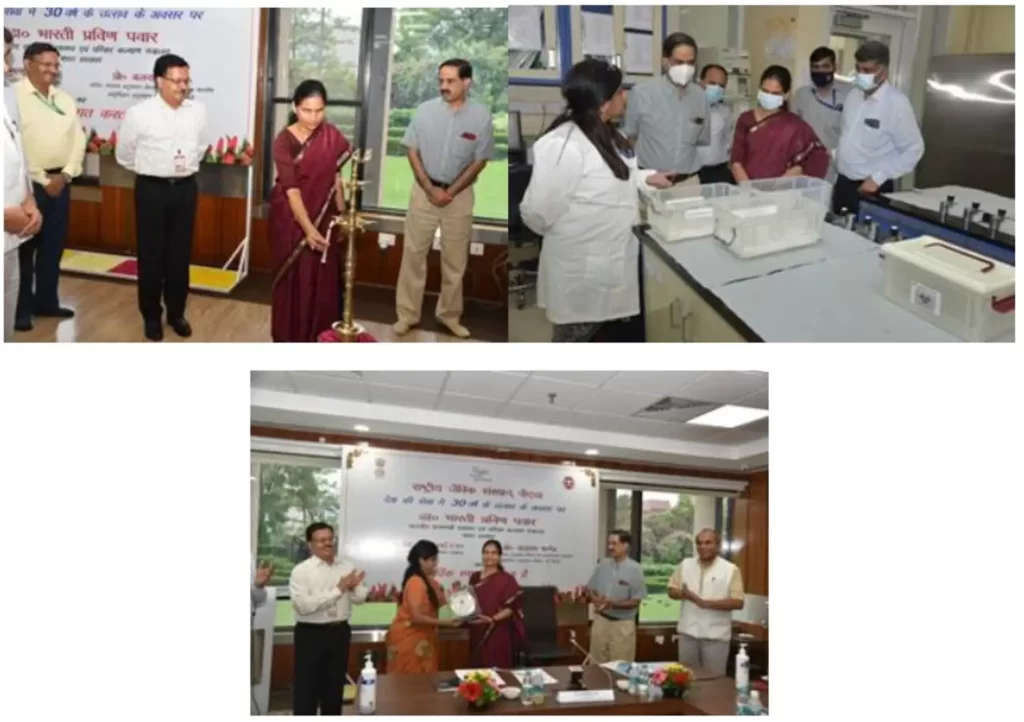
Accentuating the contribution of NIB not only in terms of repository of wisdom, knowledge, experience and expertise but in growth of our nation also, Dr Bharati Pravin Pawar, Union Minister of States said, “The consistent efforts in promoting public health, by weeding out “Sub Standard Quality” products from entering the market and developing standards for assuring quality, the institute deserves a great applause. But yet the challenges are far from over. We all are aware that substandard or spurious drugs is a global problem with respect to Health and Economic burden. Biologicals have emerged as a therapy of choice where traditional chemical drugs fail to serve the purpose. Hence, Quality testing plays a pivotal role to stop substandard biologicals from reaching the patient and adversely affecting the health.”
She further added that with its cutting-edge infrastructure, which has facilitated the pathway to unmatched excellence, NIB has been successful in maintaining the impeccable standards for its lab and animal housing facilities. The recommendations for those biological products that were found to be NSQ (Not of Standard Quality) for release in the market are very crucial, as it is directly linked with patient safety and safeguarding public health.
“NIB gives priority to Government medical supplies and procurement agencies so that there is no shortage of life-saving drugs in the Indian market. I believe this vigilance and this expertise in the field is much needed in the sensitive sector as it is where there is direct involvement of human lives. NIB has also provided a very strong support to the National Regulatory Authorities for keeping a close check on the quality of the biologicals being manufactured indigenously or imported into the country,” she noted.
Highlighting the efforts of government, Union Minister of State said, “Under the dynamic leadership of Hon’ble Prime Minister Shri Narendra Modi, we are on the path of becoming “Pharmacy of the World”. It is all because of the goodwill that the pharmaceutical sector has earned all across the globe. It becomes more of our duty to maintain the best quality of the drugs and also to keep it affordable for the masses, so that it is accessible to the poorest of poor. It is the path towards realising the vision of our Hon’ble Prime Minister to achieve “Health for all”. Our Hon’ble Prime Minister has always believed in helping other nations even during the Corona pandemic too. India has been leading the world in the pharma industry but still I would suggest that NIB should undertake the testing of more biologicals and also extend its testing expertise in helping other countries following “Vasudhaiva Kutumbakam” philosophy of Indian ethos.”
Union Minister of State also visited state-of-art laboratory facilities at the NIB and felicitated 28 NIB employees for their contribution to the institute over 25 years.
At the end, she requested senior officials of NIB to explore more opportunities of collaboration with other National and International Scientific Institutions and organizations in upgrading technologies and keeping abreast of scientific advances made in the field of quality assessment of Biological and Biotherapeutic products.
The Centre has advised caution and continuous alertness to States reporting a surge in COVID cases during the past few weeks, and to step up vigil against COVID. Shri Rajesh Bhushan, Union Health Secretary reviewed the status of COVID situation through a video conference (VC) with 14 such States that are reporting high number of cases on a week-to-week basis along with increased case positivity combined with low numbers of COVID tests and below average COVID vaccination. Dr Vinod Paul, Member (Health), NITI Aayog was also present at the review meeting.
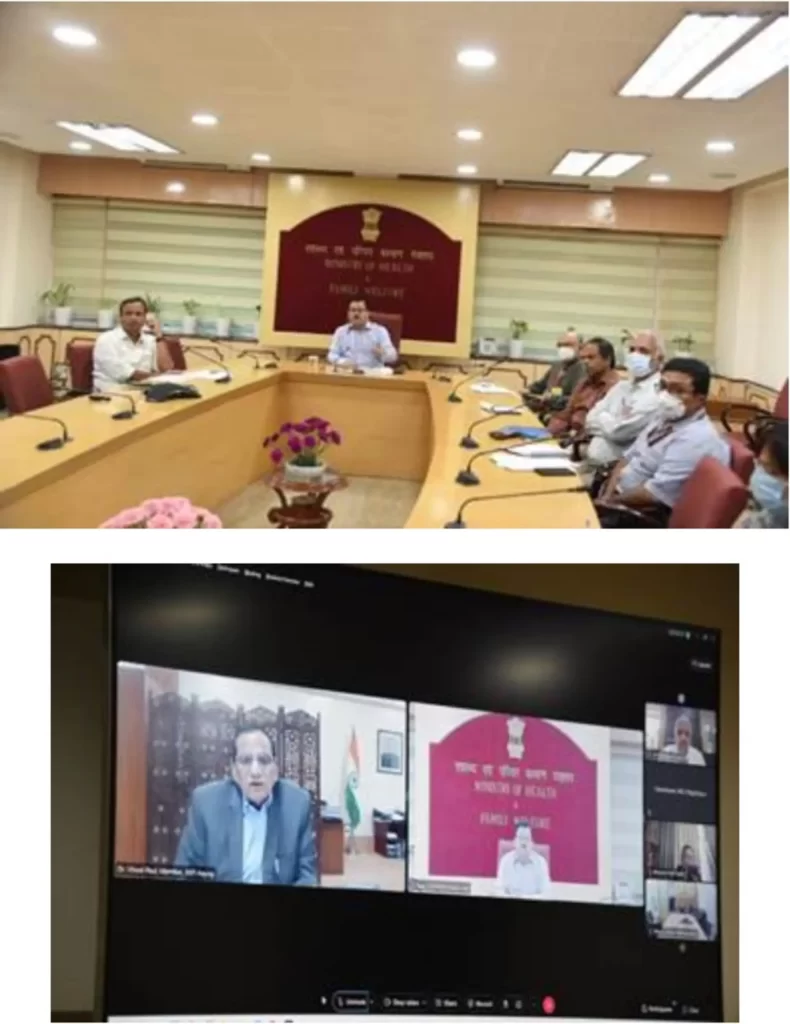
Dr V K Paul advised states that have been reporting spike in COVID cases to be watchful of the emerging pandemic situation. “The major action point is to focus on strengthening proactive surveillance as per the Revised Surveillance Strategy issued by Union Health Ministry on 9th June 2022”, he stressed. “Routine surveillance constitutes the steel frame of our COVID response and management strategy and needs continuous and unstinted attention”, he said. The four-fold strategy highlights surveillance of incoming inter-national travelers; community-based surveillance; sentinel site surveillance (health facility-based surveillance and lab-based surveillance); and Whole Genome Sequencing. States were advised to scan for and report all SARI and ILI cases from all district hospitals, major private hospitals and medical colleges across the districts, and keep a close watch on those geographies where these clusters are emerging.
The surveillance strategy can be accessed at:
States were also strongly advised to strictly monitor epidemiological profile of admitted COVID patients and report the clinical manifestation to Health Ministry, rather than a random or anecdotal reporting. This will help to identify at an early stage any out-of-the-ordinary or different clinical presentation of the patients.
Noting that the uptake in second and precaution doses in many states reporting the present surge was low, they were advised to rapidly accelerate the vaccination coverage especially of the 60+ elderly population, and second dose among 12-17 population group. It was pointed out that the ongoing Har Ghar Dastak2.0 drive needed a strong push to ramp up COVID vaccine uptake. Underscoring that there was no shortage of COVID vaccines, States were advised to ensure that vaccines that expire first are administered first preventing any wastage of the precious national resource.
Dr Paul and Union Health Secretary both highlighted the low level of COVID testing across the states, and drop in RTPCR share. Instead of a thin and wide testing spectrum, States were advised to focus on strategic testing of patients coming to fever clinics, SARI and ILI patients,along with new clusters and geographies in all districts reporting higher positivity. In addition, States were reminded to undertake of Whole Genome Sequencing through the mapped labs of INSACOG network as per the Revised Surveillance Strategy of Union Health Ministry, which has already been shared with the States.
Health Secretary urged States to ensure that claims under ‘Pradhan Mantri Garib Kalyan Package: Insurance Scheme for Health Workers Fighting COVID-19' were expeditiously processed to ensure that insurance dues are paid to those public healthcare providers, including community health workers, who have died due to Covid.
States were advised to focus on implementation of Covid Appropriate Behavior to control the spread of infection, especially in view of the forthcoming festivals in many states.
Dr Balram Bhargava, DG, ICMR; Dr. Randip Guleria, Director AIIMS, New Delhi;Dr Manohar Agnani, AS (MoHFW); Shri Gopalakrishnan, Addl Secy (MoHFW); Dr Atul Goel, DGHS; Shri Lav Agrawal, Joint Secretary;Dr Sujeet Singh, Director, NCDC along with Principal Secretary (Health), and NHM Directors of Assam, Delhi, Goa, Gujarat, Haryana, Karnataka, Kerala, Maharashtra, Meghalaya, Mizoram, Rajasthan, Telangana, Uttar Pradesh and West Bengal and senior officials of the Health Ministry were present in the meeting.
Dr Mansukh Mandaviya, Union Minister of Health and Family Welfare today chaired a meeting with the key experts and officials in view of an upsurge of COVID-19 cases in some states. Dr Bharati Praveen Pawar, MOS (HFW) and Dr. V K Paul, Member, NITI Aayog were also present during the meeting.
Shri Lav Agarwal, JS (MoHFW) made a detailed presentation on global scenario of surge in COVID cases and status of COVID in the country. This included presentation and analysis of trend of covid-19 cases; daily & active cases, positivity and deaths; testing status along with state-wise weekly tests per million, RT-PCR share in weekly tests; genome sequencing; and vaccination status.
Union Health Minister stressed on the need to focus on districts reporting high case positivity & undertake adequate testing (with higher proportion of RTPCR) & effective Covid-19 surveillance to assess and control the spread of infection in a timely manner. Dr. Mandaviya directed the officials to continue to focus on surveillance and on Whole Genome Sequencing (WGS) to scan for any possible mutation. He also directed for monitoring hospitalizations due to COVID19, and SARI/ILI cases.
He exhorted to increase pace of vaccination including booster doses in districts reporting high cases. “As there is adequate vaccine doses available, let there be no vaccine wastage while focusing on accelerating vaccination among the eligible and vulnerable groups”, he directed.
The meeting was attended by Dr. Ajay K Sood, Principal Scientific Advisor to the Govt, Dr Rajesh Gokhale, Secretary, DBT; Dr Balram Bhargava, DG, ICMR; Vaidya Rajesh Kotecha, Secretary, AYUSH; Dr Manohar Agnani, AS & MD, Dr Randeep Guleria, Director, AIIMS; Dr. N K Arora, Head of COVID Task Group, NTAGI, Dr Sujeet Singh, Director, NCDC, and other senior officials of the Health Ministry were present in the meeting.
Union Health & Family Welfare and Chemicals and Fertilizer Minister, Dr Mansukh Mandaviya virtually addressed the inaugural session at the G20 Health Ministers meeting at Yogyakarta, Indonesia today. Indonesia has hosted two Health Working Group Meetings in Yogyakarta and Lombok wherein priority issues of ‘Harmonizing Global Health Protocol Standards’ and ‘Building Global Health System Resilience’ were discussed and deliberated upon. Dr Mansukh Mandaviya also thanked the Indonesian Presidency for prioritizing the issue of TB and One Health in the meeting and conducting events for the same. India has pledged to End TB by 2025, five years ahead of the global SDG target of 2030.
Highlighting the status of the pandemic and the need for systemic changes in health governance, Dr.Mandaviya said that “The ongoing pandemic has posed multiple challenges on the health systems across the globe, developed and developing countries alike. The present pandemic has highlighted the fault lines in the global health governance and has brought to the fore the importance of strengthening Global Health Architecture. It has reinforced the need to assess health ecosystems, health financing and their linkages in light of the experience in managing the current pandemic.”
He was hopeful that the ongoing reduced trajectory of COVID-19 is an encouraging sign that the pandemic’s end is near. He said that India agrees to mutual recognition of vaccine credentials including its wider application for interoperability of health data. “A boost to digital health data systems to enable seamless interoperability of data and creation of longitudinal electronic health records within a country and at the global level is crucial.” He further added. He also suggested G20 members for an institutional framework to enable rapid sharing of genome sequencing data along with a neutral & aggregate data-sharing model amongst countries. This could be done across multiple pathogens with equitable benefit sharing under the framework of the Nagoya protocol.
Union Health Minister advocated for an inclusive, agile and responsive framework for health emergency management, supported by a global mechanism of surveillance, sustainable financing and equitable distribution of medical countermeasures. He said that “G20 countries account for 80% of the world’s GDP and share 80% of global cross-border trade and hence G20’s engagement and leadership will be vital to strengthen the global health architecture and management of any future health emergencies.”
Reiterating the centrality and significance of WHO as a member state-driven process in global health reforms, Dr. Mandaviya proposed for factoring in proposals discussed during the 75th World Health Assembly regarding strengthening global health architecture too in discussions at the G20 level. This would help in avoiding any duplicity and create a robust architecture. He also reemphasized the urgent need for bringing transparency and accountability in WHO functioning so as to make WHO ‘fit for purpose’ beside the need to work towards the financial sustainability of WHO.
Dr. Mandaviya finally stressed upon the need for global cooperation and urged members that “global health resilience must be created by working towards mutual recognition of vaccine credentials to aid seamless cross-border travel, and the need for expanding research network, m-RNA manufacturing hubs and distributed manufacturing of medical countermeasures with particular focus on the global south.”
Emphasising further for supporting the global south and removing inequities, Dr. Mandaviya said that mechanisms must be created to support low-and lower-middle-income countries. This can be done through strengthening research and manufacturing capacities, and equitable deployment of medical countermeasures. “G20 countries must prioritize establishing an ecosystem for VTD research, technology transfers and regional manufacturing hubs, especially in Global South. India will also support this endeavour and will collaborate proactively to develop an mRNA vaccine hub in the global south by extending its manufacturing and research capacity.” This will help the global south to face future health threats effectively.
Union Health Minister Dr Mansukh Mandaviya virtually presided over the 21st Convocation of the National Board of Examinations in Medical Sciences (NBEMS) held today at Dr Ambedkar International Centre, New Delhi. Dr Bharati Pravin Pawar was the Guest of Honour at the event which was attended by other eminent dignitaries. As many as 17467 specialists and super-specialist doctors conferred degrees namely Diplomate of National Board, Doctorate of National Board and Fellow of National Board. 210 doctors who have excelled in their performance were honoured with meritorious awards at the convocation ceremony. Delivering the presidential address at the 21st convocation, the Union Health Minister said that the Doctors of today have a very significant role in the making of New India and their true Commitment and dedication can make this possible.
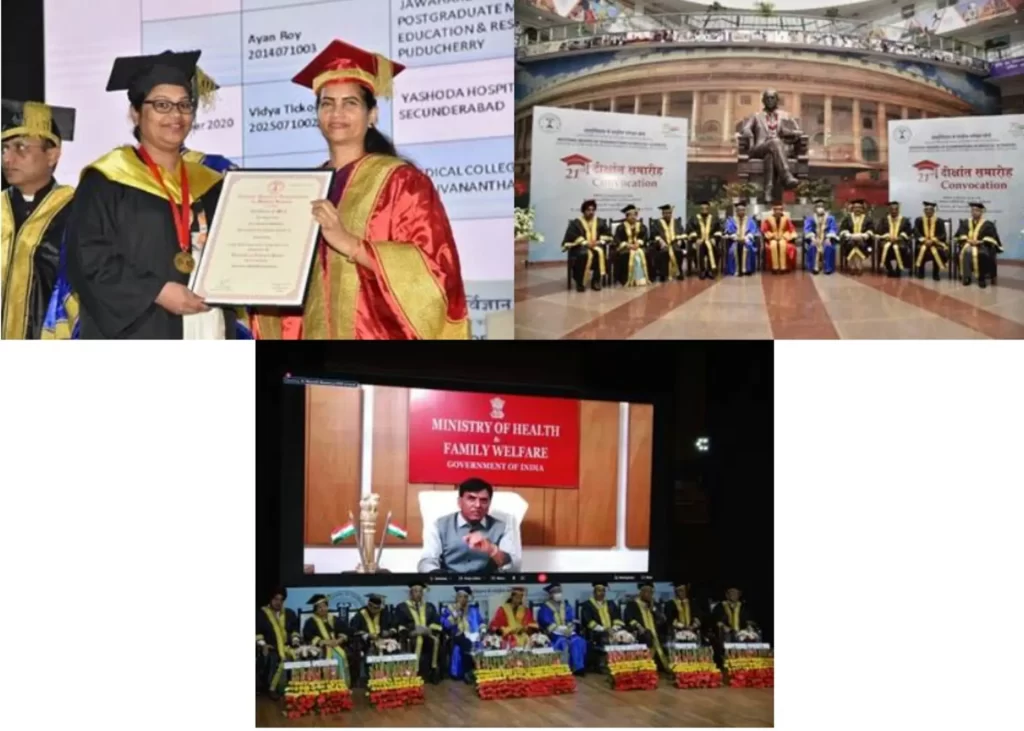
Dr Mansukh Mandaviya expressed his elation at being present on the auspicious occasion and congratulated all doctors and their parents who are being awarded Diplomate of National Board (DNB), Doctorate of National Board (DrNB) and Fellow of National Board (FNB), one of the most prestigious medical qualifications, in the 21st Convocation of National Board of Examinations in Medical Sciences.
Speaking on the occasion, Dr Mansukh Mandaviya said that the country has moved towards an accessible, affordable and patient-friendly healthcare system. He said, “Today, under the leadership of our Hon’ble Prime Minister, the goal of the Central Government is to work holistically in the health sector with synergy between preventive healthcare and modern medical facilities. Our Government is making relentless efforts to achieve its motto of ‘Sabka Sath, Sabka Vikas’ which envisages the welfare of ‘Antyodaya’. Health and development are intertwined and Our Government realises the value of healthy citizens and has thereby launched various initiatives like Pradhan Mantri Surakshit Matritva Abhiyan (PMSMA), PM-Ayushman Bharat Yojana, Pradhan Mantri Swasthya Suraksha Yojana (PMSSY), LaQshya' programme, and PM Ayushman Bharat Digital Mission (ADHM). All these have proven to be milestones in fulfilling the vision of an accessible, affordable and patient-friendly healthcare system. Working towards the same vision, we have also increased the number of AIIMS and are planning to build a medical college in each district.”
He further added, “We at our end are infused with renewed and enthusiastic vigour towards addressing inequities, through a special focus on inaccessible and difficult areas and poor performing districts. We are trying to serve everyone to achieve our goal of a healthier, more prosperous India. Today, though we have made noteworthy progress across several dimensions, and India is healthier today than ever, we need to walk a long path to realise the vision of our Hon’ble Prime Minister of “Health for All”. Our focus must be on enhancing access to affordable quality healthcare for our citizens from the remotest corner of the country by strengthening primary, secondary and tertiary healthcare systems. For a Samruddh Bharat, we need a Swasthya Bharat and for a Swasthya Bharat, we need Swasthya Nagrik”
Highlighting the emergence of disruptive technologies in the health care sector, the Union Health Minister said that COVID 19 pandemic has shown us that we need to improve and adapt the best technology in the health sector to face the stiff challenges faced due to the rise in such global pandemics. Hence, Clinical research which allows doctors to decide how to best treat patients assumes key importance. It is what makes the development of new medicines, new procedures and new tools possible. “Without clinical research, we would not be able to decide if new treatments are better than our current treatments. Hence, a revamped focus on Clinical research is necessary”, he added.
Congratulating the doctors and wishing them the very best for their future endeavours, Dr Bharati Pravin Pawar, Minister of State for Health and Family Welfare said that this is a momentous occasion as we celebrate an individual’s academic achievements. “This is a moment of joy for the faculty, staff and the students and their parents as their hard work, sincerity and commitment made it possible. Your liberties of being students are over, and now it is time for you to tighten the belts again, as you would be entering into this noble profession of medicine. From now onwards, you will be dealing with the most precious creation of God and will have to be at your best, both professionally and as human beings. This is a huge responsibility. With all your potential and strengths, you can contribute to making India the leader in healthcare. All of your collective efforts can make India -the Vishwaguru and epitome of global healthcare in this century.”
The Union Health Secretary, Shri Rajesh Bhushan said that it is an important day in the lives of our young doctors, their faculties and parents. He urged all doctors to remain dedicated to the selfless career path. He emphasized that clinical knowledge is equally important as cutting-edge technology, but the right attitude and heart for service is the most important thing. This helps us to serve our citizens to the best of our abilities in a socio-economically diverse country like ours. Thus, empathy for each patient is crucial.
National Board of Examinations in Medical Sciences (NBEMS) is an Autonomous Body of the Ministry of Health & Family Welfare, Government of India and is entrusted with the task of conducting examinations in the field of modern medicine on an all-India basis. NBEMS has been working in the field of medical education for the last 04 decades and has utilized the infrastructure of various hospitals to provide quality Post Graduate and Postdoctoral training. NBEMS has been successfully administering NEET-PG, NEET- SS and NEET-MDS examinations year after year. NBEMS has also accredited more than 1100 hospitals with more than 12,000 PG seats in various specialities.
Dr M R Girinath, Cardiothoracic Surgeon, Apollo Hospitals Group, Dr Abhijat Sheth, President, NBEMS and Dr Minu Bajpai, Honorary Executive Director, NBEMS along with the senior officials of the Ministry were also present at the event.
Union Health Secretary, Shri Rajesh Bhushan chaired a meeting through video conference (VC) today with all States and UTs to review the physical and financial progress under National Health Mission (NHM), Emergency COVID Response Package (ECRP)-II, Pradhan Mantri Ayushman Bharat Health Infrastructure Mission (PM-ABHIM), 15th Finance Commission grants & Pradhan Mantri National Dialysis Programme (PM-NDP).
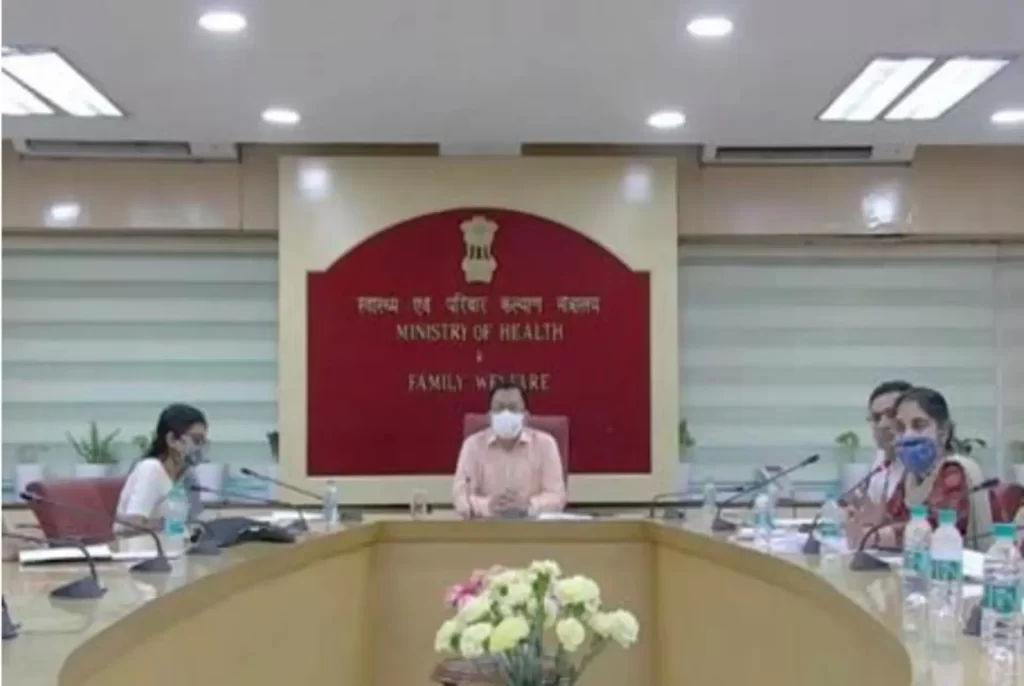
Highlighting various initiatives and steps taken by Government of India to ensure affordable, accessible and equitable public healthcare services across the country, States/UTs were informed through a detailed presentation on the status of implementation of programs and disbursal of funds under NHM, various projects under ECRP-II package and PM-ABHIM. Meeting also focussed on expanding 100% coverage of National Dialysis Programme.
Union Health Secretary highlighted that for ensuring implementation of programs and initiatives, allocated government resources under National Health Mission (NHM) must be expedited and utilized efficiently. He urged States/UTs to provide necessary documentation/utilisation certificates corresponding to fund utilisation and ensure refund of unused amount. States were also urged to map these transfers on Public Financial Management System (PFMS) portal.
To develop capacities of health systems and institutions across the continuum of care at all levels, primary, secondary, tertiary level and to prepare health systems in responding effectively to the current and future pandemics/disasters, Rs. 64,180 crores for the period from 2021-22 to 2025-26 has been allocated under PM-ABHIM. Given the emphasis on utilisation of these funds for capital expenditure, States/UTs were requested to expedite proposals and MOUs to be sent to Union Health Ministry under PM-ABHIM so as to enable the Ministry to release funds timely for the states. To ensure mapping of physical and financial progress, States were requested to identify physical facilities and complete the mapping exercise on NHM-Progress Monitoring System (PMS) portal at the earliest.
Highlighting the need to expedite utilisation of funds released under ECRP-II package, States were informed that 100% Central Share amount has been released to States. While informing States about their expenditure status under ECRP-II, they were again urged to complete mapping of approvals on NHM-PMS Portal and review this status periodically. Additionally, States/UTs were also advised that instead of seeking approval of Union Health Ministry, State Health Societies (SHS) have been authorized to accord remaining approvals of activities under ECRP-II. Finally, states were requested that all activities under ECRP-II scheme must be completed by 31st December 2022.
To expand the coverage of Pradhan Mantri National Dialysis Programme (PMNDP) across the country, States were asked to cover all districts by Haemodialysis programme and also promote Peritoneal dialysis programme alongside as it is less restrictive for the patients and requires less technical demand from institutions. The States were also advised extensive use of PMNDP portal, an API based IT platform for capturing details of all beneficiaries availing free dialysis services under PMNDP. To prevent duplication and ensure transparency, efficiency and inter-operability, States were asked to ensure registration using 14-digit unique ABHA ID. They were also requested to share APIs and integrate it with PMNDP portal if using separate portals, for holistic coverage.
Ms. Roli Singh, AS & MD, Shri Vishal Chauhan, Jt. Secy, Ms. Indrani Kaushal, Economic Advisor and other senior officers of Union Health Ministry were present in the virtual review meeting along with NHM Mission Directors and other senior officials from States/UTs.
The National Health Authority (NHA) and NASSCOM (National Association of Software and Service Companies) jointly organized the NHA-NASSCOM Conclave 2022 on Ayushman Bharat Digital Mission – Revolutionizing Digital Health. The Conclave was held in Bengaluru today as a hybrid event with participation of over 400 stakeholders and industry veterans from the healthcare & technology sector as well as investor community in India in physical/ virtual mode.
The chief guest for the event, Hon’ble Minister of Health & Family Welfare, and Medical Education, Govt. of Karnataka - Dr. K. Sudhakar said - “Ayushman Bharat or long life for all Indians can be ensured when quality healthcare can be provided to one and all. This is possible by providing not just the infrastructure but also the technology platform that ABDM envisages to build. This platform will help gradually move the health system from one focused on promotive and preventive health, to one that will also focus on predictive health.”
Sharing his thoughts on Karnataka’s Vision on Digital Health, Dr. Sudhakar added – “During our fight against COVID-19 pandemic, we saw the importance of digital services for healthcare delivery. The impact that teleconsultation, online appointment bookings, readily available health information and access to specialists had on people was unprecedented. We’re positive that the ABDM platform will help us scale the efforts and create a conductive environment with enthusiastic public and private sector participation. We look forward to take up implementation of ABDM in mission mode and give it speed, scalability and support that we can provide at state-level to achieve the ultimate aim of healthcare for all.”
Speaking on the vision behind the Ayushman Bharat Digital Mission (ABDM), Dr. R.S. Sharma, CEO, NHA said – “India is standing at the forefront of digital revolution. The world has seen the success story of our country with the largest digital identity program, record adoption of digital payments and more recently, national vaccination program via CoWIN platform. The Ayushman Bharat Digital Mission aims to replicate this success in healthcare delivery by building an equitable, accessible and inclusive ecosystem that rides on collaborative efforts of the government and private sector”.
The conclave also saw a special address by Shri Jawaid Akhtar, Additional Chief Secretary to Govt. of Karnataka, Health & Family Welfare Services on the importance of improving healthcare through digital innovations. Dr. Praveen Gedam, Additional CEO, NHA and Mission Director for ABDM elaborated on the opportunities this program presents for the entire ecosystem.
NASSCOM played a key role in gathering thought leaders from the health & technology sector for panel discussions on how to drive usage of digital health and the role of innovators in digital health stack. The panelists included heads of health tech organizations in India (in no particular order) like Arthur D. Little India, Manipal Hospitals, Bill & Melinda Gates Foundation, Royal Philips, Indegene, Quadria Capital, Medi Assist, Tata Elxsi, Narayana Health, DRiefcase, CrelioHealth, Plus91 and EkaCare.
Dedicated sessions were also held on the opportunities under ABDM for the healthcare ecosystem and Unified Health Interface (UHI) & Health Claims Exchange (HCX) as accelerators for digital health. Besides the sessions and panel discussions, health tech innovators Artivatic, Ala Care and Raxa Health also set-up innovation booths at the event venue. The thought leaders concluded the NHA-NASSCOM Conclave 2022 with an exciting brainstorming session on ways to increase the adoption of teleconsultation in India.
Union Minister of State for Health and Family Welfare, Dr Bharati Pravin Pawar today launched the Intensified Diarrhoea Control Fortnight (IDCF)-2022 in the presence of Dr. Sapam Ranjan Singh, Health Minister of Manipur. IDCF programme is being implemented from 13th June to 27th June, 2022 in the States/UTs. The goal of IDCF is to attain zero child deaths due to childhood diarrhoea.
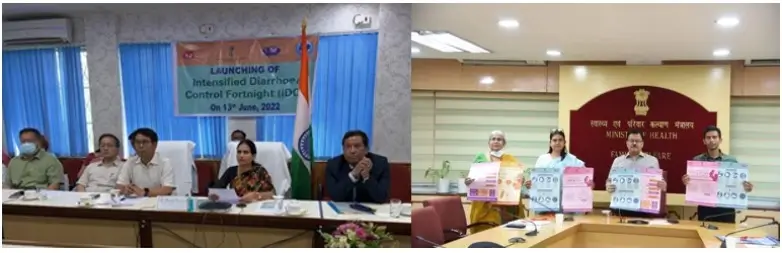
Speaking on the occasion, Minister of State said that “as a result of the commendable efforts of Government of India led by Hon'ble Prime Minister, according to the latest report of SRS-2019, child mortality rate in the country has come down considerably since 2014. This rate has come down from 45 per 1000 live births in 2014 to 35 per 1000 live births in 2019. But even today, diseases related to diarrhoea continue to be a major cause of death in children under the age of five”, she added. Dr. Pawar highlighted that “dehydration is the biggest cause of diarrhoea in children and other reasons include a change in the baby's diet to make up for a change in the mother's diet when breastfeeding; Use of antibiotics by the baby, or use by the mother while breastfeeding, or any type of bacterial or parasitic infection.”
Signifying the importance of prevention and mitigation methods, Dr. Pawar said that “According to the latest survey (NFHS-5) conducted by the Ministry, only 60.6% children under the age of five with diarrhoea were given ORS and only 30.5% were given zinc. This means that there is lack of awareness among mothers.” She stressed on more awareness campaigns so that the rate of child mortality due to diarrhoea can be brought down to the minimum level.
Noting the resolve and commitment of the Union Government towards this end, she stated that the Intensive Diarrhoea Control Fortnight (IDCF) is being organized since 2014 with an objective to 'bringing the number of deaths due to diarrhoea in childhood to zero'. In view of the high prevalence of diarrhoea, this fortnight is organized especially during summer/monsoon so that preventive measures can be taken. She further said that “a Multi-sectoral participation approach at various governance levels for better impacts like mass awareness generation, rallies, competitions in schools, State and District level launch by leaders etc. will be beneficial in achieving our target.” Dr. Pawar said that diarrhoea can be prevented through safe drinking water, breastfeeding/appropriate nutrition, hygiene and hygiene measures like hand-washing etc. This has also been emphasized through initiatives like Swachh Bharat Mission. These small behavioural changes have significantly helped India in reducing infant mortality rate, he noted.
IDCF consists of a set of activities to be implemented in an intensified manner for prevention and control of deaths due to dehydration from diarrhoea across all States & UTs. These activities mainly include intensification of advocacy & awareness generation activities for diarrhoea management, strengthening service provision for diarrhoea case management, establishment of ORS-Zinc corners, prepositioning of ORS by ASHA in households with under-five children and awareness generation activities for hygiene and sanitation.
One of the main activities under IDCF program has been the activities by field workers including ASHA, ANM and anganwadi workers. Field workers visit the homes of families with children below five years of age and provide counselling in case of diarrhoea for distribution of zinc and ORS sachets. They also promote sanitation practices, breastfeeding practices and advise on preparation method of ORS through group meetings among mothers.
Shri Rajesh Bhushan, Secretary (Health), Ms. Roli Singh, Additional Secretary, Shri P. Ashok Babu, Joint Secretary, Union health Ministry, Shri V. Vumlunmang Principal Secretary Health and Family Welfare, Govt. of Manipur, and senior officials from States/UTs were present in the meeting.
The National Health Authority (NHA) announces the successful integration of eSanjeevani with its flagship scheme – Ayushman Bharat Digital Mission (ABDM). This integration allows the existing users of eSanjeevani, the telemedicine service of Ministry of Health and Family Welfare (MoHFW) to easily create their Ayushman Bharat Health Account (ABHA) and use it to link and manage their existing health records like prescriptions, lab reports, etc. The users would also be able to share their health records with doctors on eSanjeevani which will help in better clinical decision making and ensuring the continuum of care.
Speaking about the significance of this integration, Dr. R. S. Sharma, CEO, NHA said – “ABDM aims to build digital highways to bridge the gaps in existing digital health solutions and stakeholders in India. The integration of eSanjeevani with ABDM is one such example where the 22 crore ABHA holders can link and store their health records created via eSanjeevani directly in the health lockers of their choice. The users can also share their previously linked health records with the doctors on eSanjeevani making the entire consultation process paper-less.”
eSanjeevani service is available in two variants. The first one is eSanjeevani Ayushman Bharat-Health and Wellness Centre (AB-HWC) – the Doctor-to-Doctor telemedicine service through which the beneficiaries visiting a HWC can virtually connect to doctors/ specialists in the Hub that could be at tertiary healthcare facility/hospital/medical college. This enables the government to provide general and specialised health services in rural areas and isolated communities. The second variant, eSanjeevani OPD is serving patients across the country, connecting them directly to doctors from the comforts of their homes. Both versions – eSanjeevani AB-HWC and eSanjeevani OPD have been integrated with ABDM platform.
The eSanjeevani telemedicine platform now joins other 40 digital health applications that have completed their ABDM integration. Together, these health tech services are building a robust, inter-operable and inclusive digital health ecosystem for the country. More info on ABDM integrated apps here: https://abdm.gov.in/our-partners.