
“For a Samruddh Bharat, we need a Swasthya Bharat and for a Swasthya Bharat, we need Swasthya Nagrik. Health has been positioned at the centre-stage by PM Shri Narendra Modi ji, and several health initiatives are being taken up by the Union Government. India is also ready to for a leading global to provide healthcare services through the “Health in India” and ‘Heal by India’ initiatives”. This was stated by Dr. Mansukh Mandaviya, Union Minister of Health & Family Welfare today as he interacted with officials of regional Press Information Bureau (PIB), Doordarshan (DD), All India Radio (AIR) and various regional health journalists. The online session was attended by more than 150 officers and regional health journalists from all states.
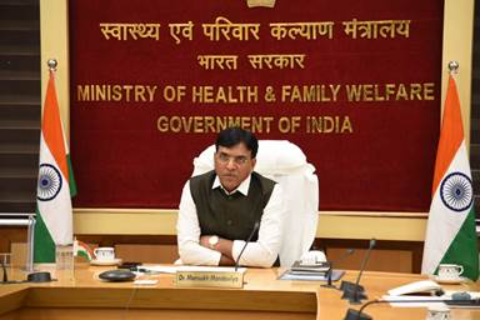
At the outset, Union Health Minister thanked the media for their crucial role during the COVID Pandemic. He said that in such testing times, mediapersons rose to the occasion in fighting the infodemic by providing factual information, ward off myths and fears, and address the dual issues of vaccine eagerness and vaccine hesitancy. Signifying the proactive role played by the officials of PIB, DD News, AIR News and media personnel during the Covid crisis, he said that it is not just the government’s efforts but ‘Sabka Saath, Sabka Vikas, Sabka Vishwas and Sabka Prayaas’ that has made us execute one of the largest and most successful vaccination programmes in the world. He expressed deep condolences for the journalists who lost their lives during this period.
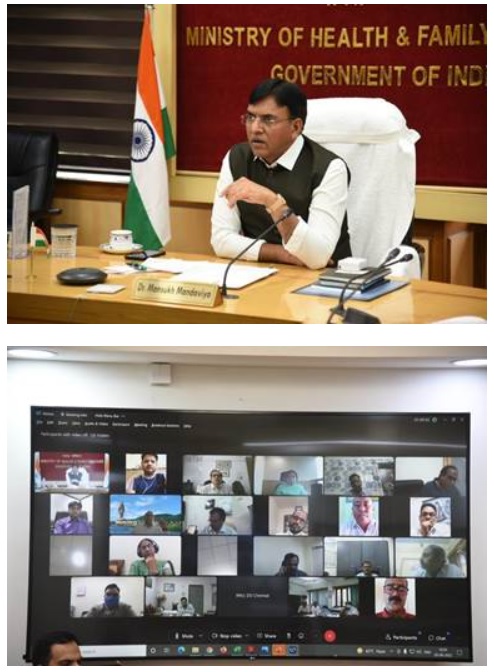
He further emphasized, “Democracy's fourth pillar-Media- has set a high standard in demonstrating their potential during the pandemic.” He urged to spread the message that for a Samruddh Bharat, we need a Swasthya Bharat and for a Swasthya Bharat, we need Swasthya Nagrik. “We have started the second phase of Har Ghar Dastak for encouraging the masses towards full vaccination coverage. I seek your support in carrying the message of full COVID vaccination to the masses”, he said. Union Health Minister urged media to support the ongoing efforts of TB elimination, cataract, telemedicine and eSanjeevani and various other initiatives of the Ministry at the regional level and motivate citizens to come forward in large numbers and become a part of these campaigns enthusiastically through Jan Bhagidaari.
Dr Mansukh Mandaviya said that India considers health as a Seva and the country is ready to take a leading global role for providing healthcare services to the world through its trained and competent manpower. He said that India is at a key inflexion point of not just ‘Heal in India’ through its vibrant medical value tourism, but also ‘Heal by India’, where our medical professionals can be used to serve not just our country but at the global level.
A detailed presentation with a focus on Covid-19 pandemic management, Covid-19 Vaccination Journey covering the key milestones and current status, Har Ghar Dastak Campaign, India’s support to Global Vaccination Efforts under the Vaccine Maitri initiative, CoWIN as a Global Good and the critical role of media in ensuring effective communication with the community during Covid-19 management was made by Shri Lav Agarwal, Jt. Secretary, Union Health Ministry.
The participants shared their experiences, best practices from the States, challenges they face in the field and innovative suggestions.
Government of India has been supporting the efforts of States and UTs for effective management of COVID patients in vaccination, under the ‘Whole of Government” approach since January this year.
COVID being a Pandemic with worldwide impact, there has been a global high demand of vaccines with limited number of manufacturers with limited manufacturing capacity across countries. India with a population of 1.4 billion houses a substantial share of the World Population, estimated to be 7.7 billion by the World Bank.
In India, two vaccines wereapproved by the regulatory body in January 2021. The two manufacturers: Serum Institute and Bharat Biotech had a capacity to provide around 1 crore doses in the month of December, 2020.
National Expert Group on Vaccine Administration for COVID-19 (NEGVAC) was already established in August 2020 to provide guidance on all aspects of vaccine introduction including prioritization of beneficiaries, procurement, vaccine selection and its delivery.
The priority of beneficiaries for COVID-19 vaccination in India has been done based on the review of available scientific evidence, guidelines proposed by WHO, global examples and practices followed in other countries with the primary objective of:
• Protecting the Healthcare and Frontline workers and thereby the Pandemic response system.
• Preventing deaths due to COVID19 and protect individuals at highest risk and vulnerability of mortality due to disease.
Accordingly, the vaccination drive in our country has been sequentially expanded to cover the prioritized groups starting with Health Care Workers (HCWs) on 16th Jan’21 followed by Front Line Workers (FLWs) from 2nd Feb’21, persons aged 60 years and above and those aged 45-59 years with identified 20 co-morbidities were covered from 1st Mar’21. Subsequently, from 1st Apr’21, all persons aged 45 years and above are eligible for vaccination.
Such an approach has yielded positive results by achieving more than 90% 1st dose coverage amongst registered HCWs and around 84% coverage of 1stdose amongst registered FLWs thereby protecting this cohort who is involved in providing Health Care Services, Surveillance and Containment activities amid the 2nd wave of COVID-19 pandemic.
Similarly, with the focus on reducing mortality, the next phase involved providing vaccination to persons aged 60 years and above and those aged 45-59 years with co-morbidities from 1st March’21 followed by all persons aged 45 years and above from 1st April’21.
The Phase-III of COVID-19 vaccination has begun from 1st may’21 wherein all citizens aged 18 years and above are eligible for vaccination. A ‘Liberalised Pricing and Accelerated National COVID-19 Vaccination Strategy’ was adopted on 1st May 2021 which is guiding the ongoing Phase-III of COVID-19 vaccination Drive. This strategy aims at incentivizing the vaccine manufacturers to ramp up the vaccine production and also attract new manufacturers. This will augment the vaccine production resulting in wider availability of vaccines resulting in flexibility in pricing, procurement & administration of vaccines ultimately resulting in improved coverage of vaccination.
As of date, India is using three vaccines against COVID-19 in its immunization drive; this includes two made in India vaccines - Serum Institute of India’s Covishield and Bharat Biotech’s Covaxin who have supplied about 7.92 crore vaccine doses in the month of May2021
The manufacturing capacities have been ramped up. Vaccine being a biological product takes time for harvesting and quality testing. This cannot be done overnight to ensure a safe product. Thus, increase in capacity of manufacturing too needs to be a guided process.
The Russian Sputnik V is the third vaccine to get approval from the Drug Controller General of India (DCGI) for restricted use in emergency situation and is being used in few private hospitals which are expected to be increased over the coming days.
Govt. of India, through NEGVAC, is doing regular interaction with national and international vaccine manufacturers like Pfizer, Moderna etc. to make the COVID-19 vaccines available in country.
The concrete actions are a stern indication that Govt. of India is making all out efforts to increase the vaccine production in the country as well as attracting the foreign vaccine manufacturers to supply the required vaccine doses for national covid vaccination programme.
Despite the constraints of availability, India has fared well in covering 200 million persons in only 130 days which is the third largest coverage in the world.
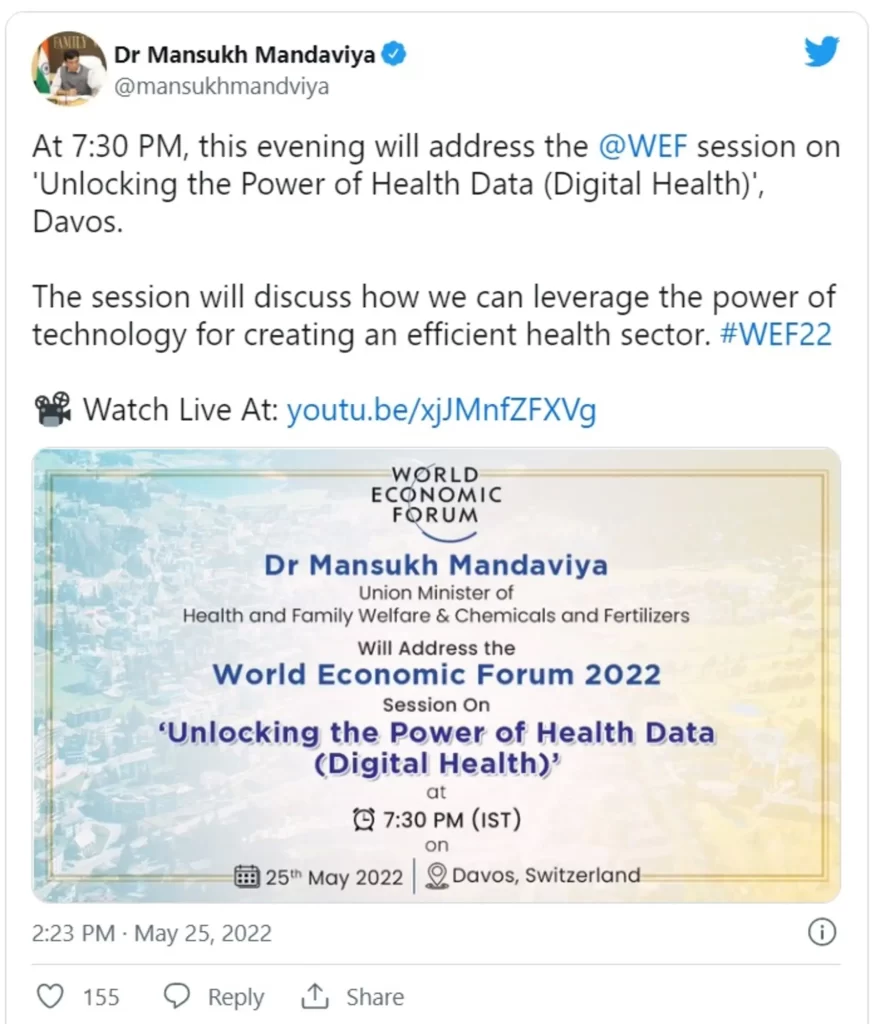
In a historic address at the World Economic Forum Annual Meeting in Davos at Congress Centre, the Union Minister of Health and Family Welfare and Chemicals and Fertilizers, Dr. Mansukh Mandaviya exhorted India's commitment to strengthen the Digital Health System and in closing the vaccine gap. Underscoring the need to strengthen Equitable Vaccine Manufacturing Collaborative (EVMC), the Union Minister envisaged, "Digital health is a great equaliser and enabler to support Universal Health Coverage and Sustainable Development Goals and can help ensure accessibility and affordability of health service delivery.” At the World Economic Forum Annual Meeting, the Union Health Minister delivered the opening remarks for “Unlocking the Power of Digital Health” and “Closing Vaccines Gap” Sessions today.
Digital health is a great equaliser and enabler to support Universal Health Coverage and Sustainable Development Goals and can help ensure accessibility and affordability of health service delivery. With prime focus on moving from siloed to an ecosystem approach for digital health, India is creating a national framework for digital health in India.
With prime focus on moving from siloed to an ecosystem approach for digital health, India is creating a national framework for digital health in India. Under Ayushman Bharat (Long Live India) Digital Mission, India has embarked on digital transformation of healthcare in India. The focus is on creation of a longitudinal Electronic Health Record for more than 1.3 billion people of India. We have already issued more than 220 million Unique Health IDs along with health facilities and provider registry. India has already utilised digital health interventions for its national program management. Reproductive & Child Healthcare IT platform tracks more than 120 million pregnant women for their ANC, PNC check-up, delivery planning and over 90 million children for immunization. Health Management Information system regularly collates data regarding health programmes from more than 200,000 health facilities.
Through the NCD application, we have screened more than 80 million citizens for diabetes, hypertension and cancers, in turn creating a population profile of India. Telemedicine platform e-Sanjeevani has benefited more than 390 million beneficiaries through video consultations during COVID-19 pandemic, making it the biggest such platform in the world.
CoWIN platform monitors name-based vaccination and has monitored administration of more than 1.92 billion vaccination doses, including beneficiary registration, AEFI monitoring and a QR code based digital digital certificate. India has promoted digital health agenda at global level as Chair in Global Digital Health Partnership. It was India which had moved the Digital Health Resolution in WHO to prioritise the global framework for digital health. We have offered Co-WIN as a digital public good to other countries to aid their vaccination efforts, aligned with India’s commitment to the traditional philosophy of “Vasudhaiva Kutumbakam” i.e. The World Is One Family. Digital health interventions can help penetrate health service delivery till the last mile ensuring equitable healthcare service delivery. With technologies like Artificial Intelligence, Cloud computing, 5G, nanotech, we need to create a tech supported healthcare service delivery which is resilient, reliable, and accessible till the last mile.
India has been known as the Pharmacy of the World. India has shown its prowess in vaccine research and development, manufacturing, and implementation, when we indigenously developed Covid-19 vaccines and achieved the monumental task of administering more than 1.92 billion vaccines.
With paramount challenges of population, diversity, vaccine hesitancy and vaccine eagerness and coverage for vulnerable sections, we embarked with meticulous planning and advanced research under overall leadership of Hon’ble Prime Minister Modi, much before other countries and have been successful in saving many lives. India would like to further support and strengthen our ongoing relationship with Africa. India offers to support in augmenting research and development capability of African countries on medical countermeasures.
India would also like to extend its support to Africa in taking the journey from vaccine availability till vaccination with focus on implementation based on India’s experience of vaccination 96 % of its population with 1st dose and 86% with both doses.
With the Hon'ble Prime Minister's vision of One Earth One Health, India has always supported the World. Under Vaccine Maitri we supplied vaccines to 100 countries and provided drugs to 150 countries during COVID.
We have also provided our COWIN platform to the world as a global public good. In this session on Closing the Vaccines gap, I envisage learning global best practices and am sure that this session will provide a programme of work for the Equitable Vaccine Manufacturing Collaborative (EVMC) designed to strengthen private - public sector partnerships across the vaccine manufacturing value chain in low and middle-income countries. India looks forward to supporting closing the vaccine gap in Africa.
The National Health Authority (NHA) under its flagship scheme of Ayushman Bharat Digital Mission (ABDM) announced the launch of a revamped Ayushman Bharat Health Account (ABHA) mobile application. The ABHA app, previously known as NDHM Health Records app is available for download from the Google Play Store and already has over 4 lakh downloads. The updated version of the ABHA app has new User Interface (UI) and added functionalities that enable individuals to access their health records anytime and anywhere. Existing ABHA app users can also update their previous app versions to the latest one.
The ABHA mobile application enables an individual to create an ABHA address (username@abdm), an easy to remember username that can be linked with the 14 digit randomly generated ABHA number. The mobile application also enables users to link their health records created at ABDM compliant health facility and view them in their smartphones. The application also allows self-uploading of physical health records in the ABDM compliant health lockers along with sharing of digital health records such as diagnostic reports, prescriptions, CoWIN vaccination certificate etc. after the consent of an individual through the ABDM network.
In addition to this, ABHA mobile application has new functionalities such as edit profile, link and unlink ABHA number (14 digit) with ABHA address. Other functionalities such as Login via face authentication / fingerprint/ biometric and ability to scan QR code at the counter of the ABDM compliant facility for express registration shall also be released soon.
Elaborating on the ABHA mobile app, Dr. R.S. Sharma, CEO, National Health Authority (NHA) said: “The ABHA app will be instrumental in helping citizens to create their longitudinal health records. The patients can access their health records with the help of their ABHA address in seconds which will empower them in many ways. It will enable them to save their health history on a single platform and access or share their health records anytime and anywhere without a worry of losing them. This digitization of data exchange will ensure better clinical decision making and continuum of care.”
The Ayushman Bharat Health Account (ABHA) Mobile App (previously known as NDHM Health Records or PHR App) can be downloaded from the Google Play Store or by clicking on this link: https://play.google.com/store/apps/details?id=in.ndhm.phr . The iOS version of the ABHA mobile app will be launched shortly.
More information on ABDM is available here: https://abdm.gov.in/
In a historic address at the 75th session of the World Health Assembly in Geneva at WHO HQ, the Union Minister of Health and Family Welfare and Chemicals and Fertilizers, Dr. Mansukh Mandaviya exhorted India's commitment to build a more resilient global health security architecture. Underscoring the need to strengthen WHO, the Union Minister noted, "As highlighted by India’s Prime Minister, there is a need to build a resilient global supply chain to enable equitable access to vaccines and medicines, streamlining WHO's approval process for vaccines and therapeutics and strengthen WHO to build a more resilient global health security architecture". As a responsible member of the global community, India is ready to play a key role in these efforts, he added.
The Union Minister noted, "India believes that this year’s theme linking peace and health, is timely & pertinent because there can be no sustainable development & universal health & wellbeing without peace".
However at the session, India also raised dismay and concern over WHO’s recent exercise on all cause excess mortality, where country specific authentic data published by the statutory authority has not been taken into account. In this regard, the Union Health Minister conveyed the collective disappointment of the Central Council of Health and Family Welfare, a representative body of Health Ministers from all States of India, as they passed a unanimous resolution regarding the approach and methodology of WHO on excess mortality reports.
India believes that this year’s theme linking peace and health, is timely & pertinent because there can be no sustainable development & universal health & wellbeing without peace.
India firmly believes that WHO has a Central role to play in achieving the goal of Health for all in an objective & result oriented manner. It should be our collective endeavour to ensure that WHO is fit for the purpose to deal with contemporary realities. India has always constructively contributed to make WHO reflect the aspirations of Member States & that its processes must be driven by Member States.
In this context, it is with a sense of dismay and concern that India notes WHO’s recent exercise on all cause excess mortality where our Country specific authentic data published by the statutory authority has not been taken into account.
Consequently, the Central Council of Health and Family Welfare, a representative body of Health Ministers from all States within India, constituted under Article 263 of Constitution of India, passed a unanimous resolution asking me to convey their collective disappointment and concern with WHO’s approach in this regard.
There is a need to ensure centrality of WHO in global architecture & increase assessed contribution to WHO in a phased manner, but that should be linked to an accountability framework, value for money approach & genuine engagement with Member States.
India would like to highlight that besides equitable access to medical countermeasures including aspects related to intellectual property, need for cost-effective research, technology transfer and regional manufacturing capacities must remain an important focus area.
India’s Hon’ble Prime Minister Modi ji has highlighted the need for building a resilient global supply chain to enable equitable access to vaccines and medicines; the need for streamlining WHO's approval process for vaccines and therapeutics and reform as well as strengthening of WHO to build a more resilient global health security architecture. As a responsible member of the global community, India is ready to play a key role in these efforts.
Union Minister of State for Health and Family Welfare, Dr Bharati Pravin Pawar today launched National Emergency Life Support (NELS) courses for doctors, nurses and paramedics. Apart from the training modules, the program also includes developing training infrastructure in all States/UTs to implement the NELS course and creating a cadre of trainers to train doctors, nurses and paramedics working in emergency departments of the hospitals and ambulance services.
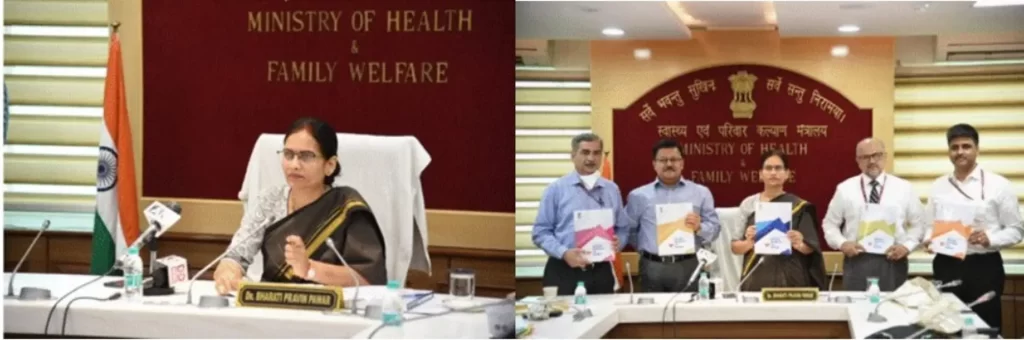
The Union Minister of State said that till now, health care professionals in the country had to rely on foreign modules and paid courses which were not only expensive but were also limited in scope to a handful of emergencies without considering needs and priorities of our population landscape. “Therefore, realizing the Hon’ble Prime Minister’s policy of ‘Make in India’ and ‘Atmanirbhar Bharat’, the NELS provides standardized curriculum which is based on Indian context and developed in India”, she stated.
Dr. Bharati Pravin Pawar highlighted that the Government is committed to continuous strengthening of delivery of Covid-19 and non-Covid essential health services, with the medium to a long-term goal of enhancing preparedness capacities to manage medical emergencies and thus minimise loss of precious lives. She stated that “Hon’ble Prime Minister, Shri Narendra Modi ji has always emphasized on providing affordable and best quality health services to the citizens. It is the need of the hour that India embarks on creating a world-class, efficient, professional and integrated system, enabled by technology, for the care of any victim of an accident, emergency or trauma in any part of the country.” Talking about the National Health Policy of 2017, she said that it envisaged the creation of a unified emergency response system, linked to a dedicated universal access number, with a network of emergency care, provision of life support ambulances and trauma management centres.
Dr. Bharati Pravin Pawar further added, “To keep pace with technological advancement advancements, parallel efforts are needed for human resource development by equipping doctors, nurses and paramedics working in emergency departments of hospitals. The training should also be imparted to those providing pre-hospital care with standardized life-saving skills, to minimize mortality due to all types of medical emergencies in the country.”
MoS (HFW) requested the States to send f proposals for establishing NELS Skill Centres at their medical colleges and urged all Skill Centers to ensure that trainings are not only operationalized but also utilized to the maximum extent to improve the quality of emergency care services in the State. She also requested Disaster Management Cell to regularly interact with participating institutions and monitor their activities to make this a successful initiative.
The activities under the NELS entail developing emergency life support training modules for doctors, nurses and paramedics after experts’ consultations and based on the Indian context, setting up and equipping skill centres in medical colleges under Center/States to impart skill-based training on emergency life support for all categories of health functionaries, 120 skills centres to be established under SFC (FY: 2021-26) (out of which 90 skill centres are in various stage of development). This initiative will lead to creation of a pool of trained doctors, nurses and paramedics in the country with skills to provide standardized emergency life support and reduce mortality due to medical emergencies. This will contribute to overall disaster preparedness and response capacities in providing emergency clinical care. NELS course is comprehensive and deals with the management of medical emergencies, surgical emergencies, cardiac emergencies, respiratory emergencies including ventilator management protocol for COVID-19 and other disease, trauma-related emergencies, obstetric emergencies, paediatric emergencies, Snake bites, poisoning etc.
Shri Rajesh Bhushan, Union Health Secretary, Prof. Rajesh Malhotra, Head of Orthopedics & Chief, JPN Trauma Centre (AIIMS), Dr Atul Goel, DGHS and other senior officials from Ministry of Health and Family Welfare were present in the meeting.
Dr. Mansukh Mandaviya, Union Minister for Health and Family Welfare, released the findings of a third party assessment of Ayushman Bharat – Health and Wellness Centres (AB-HWC) in 18 states of India, in the presence of Dr. Vinod Paul, Member (Health), NITI Aayog and Shri Rajesh Bhushan, Union Health Secretary, here today.

Appreciating the findings of the report, Dr Mandaviya stated that, “AB-HWC was envisioned by the hon’ble Prime Minister to provide affordable and accessible healthcare to the last mile. In this regard, third party evaluation is important for proper assessment of the functioning and implementation of the scheme”. He stated that the report will act as a “guiding principle” to plan better in the future.
Underscoring the importance of feedback and monitoring, the Union Health Minister noted that necessary steps will be taken to further strengthen the scheme. He highlighted that the Union government is coordinating with states to ensure last mile delivery through teleconsultation. He stated that “the govt is committed to provide best healthcare to all”.

Dr VK Paul congratulated the research teams for the assessment report and suggested that a governance structure should be established for daily monitoring and review of AB-HWCs. He also highlighted the need to further train the human resources at AB-HWCs.
Shri Rajesh Bhushan noted that this report will work like a foundation for future independent assessments of AB-HWCs and help in planning and redirecting efforts for ensuring the implementation of the objectives of the scheme. The assessment of AB-HWCs in 18 states has been done in two phases by non-governmental entities, GRAAM and JHPIEGO as well as AIIMS, New Delhi from Govt. Sector for the year 2020-21.
The primary aim of this exercise was to assess the pace of rollout of AB-HWCs in different states and to identify specific challenges in their rollout. Given the early stage of implementation, the assessment focussed primarily on the inputs and processes that contribute to the functionality of HWC and reviewed any gains in short-term outputs including community use of the expanded range of services with a focus on chronic non-communicable diseases care.
In keeping with the priorities for AB-HWC, the assessment specifically focussed on free essential medicines, diagnostic services, teleconsultation services and health promotion activities. Given that the ongoing COVID-19 pandemic occurred during the process of the implementation, this assessment also allowed an evaluation of the bidirectional impact of HWC roll-out and the COVID pandemic.
The assessment was undertaken using a cross-sectional study design with a mixed-methods approach. The 18 states were selected to cover the spectrum of epidemiological transition levels as defined by the Global Burden of Disease India study with a higher focus on North-Eastern states. The study covered a sample of 317 facilities across eighteen states with 117 PHCs/UPHCs and 220 SHCs. 1,002 users from upgraded and 1,015 users from non-upgraded facilities were interviewed. The assessment covered both types of comparisons – a) pre and post conversion of the HWCs; and b) HWCs and non-HWCs within the same district.
The following are the key findings of the report:
The launch of AB-HWC has enabled translation of the vision of moving from selective to comprehensive primary health care package enunciated in the National Health Policy 2017.
The implementation of AB-HWC scheme is on track in most states with a clear roadmap for achieving targets set for December 2022.
Overall, there has been an improvement in equity in access, despite existing constraints such as infrastructure availability and status of peripheral health facilities.
Effective communication was noted from district to PHC-HWC and SHC-HWC resulting in translation of policy decisions into action, faster and better.
Client satisfaction with the services provided was much higher among those who received services from HWCs as compared to those who received services from non-HWCs across all the four parameters measured – treatment, medicines, diagnostics and cleanliness.
The Evaluation also brought out requirement of a definite timeline for rolling out all the services packages. The timelines have now been fixed.
Shri Vikas Sheel, AS & MD (NHM), Health Ministry, Shri Vishal Chauhan, JS, Health Ministry and other senior officials of the Union Health Ministry were present in the meeting along with NHM Mission Directors and other officials from States/UTs.
The National Health Authority (NHA) organized an exclusive convention for technology partners of Ayushman Bharat Digital Mission (ABDM) at New Delhi on 13th May 2022. The event brought together representatives from over 40 health tech organizations from the government and private sector to discuss the different ways in which the digital health ecosystem of India can be strengthened further.
Addressing the participants, Dr. R. S. Sharma, CEO, NHA said – “The core objective of ABDM is to leverage technology to deliver health services to remotest areas of the country. To address the lack of infrastructure and access to doctors, ABDM envisages all healthcare-related activities to move online. For this, it is imperative that we take up the onboarding of healthcare professionals and health facilities in the national registries of HPR (Healthcare Professionals Registry) and HFR (Health Facilities Registry) being built by ABDM. The health tech players can bring in innovative solutions with lesser steps to onboard professionals & facilities using the open APIs published. They can further train other small players on ABDM onboard process and spread awareness about benefits of registering in HFR/HPR.”
“We also seek inputs from the health tech partners as to how we can activate the ecosystem for building digital public goods (DPGs), expanding the scope of DPGs like online reservation system (ORS) created by NIC, blood bank by NIC/CDAC, universal immunization, NOTTO, and also taking them to the end-users in a more structured and easily adaptable manner.” – Dr. Sharma added further.
The team from ABDM organized a few informative sessions on the scheme updates, upcoming features under ABDM and the challenges faced on the way. Between each session, the floor was left open for an open-house discussion and feedback session. The participants shared key learnings and suggestions based on their on-ground experience and deep understanding of the market as well as user behavior.
The NHA team also felicitated the developers of 40 digital health solutions integrated with ABDM with certificates. The convention participants represented the below ABDM integrated solutions (listed category-wise in no particular order):
HMIS solutions like e-Hospital by NIC, e-Sushrut by Centre for Development of Advanced Computing (C-DAC) Noida, Medmantra by Apollo Hospitals, MediXcel by Plus91 Technologies Private Limited, EkaCare by Orbi Health, Bahmni by Thoughtworks Technologies, DocOn by DocOn Technologies, Bajaj Finserv Health for Doctors and Bajaj Finserv Health App by Bajaj Finserve Health Limited, DrucareOne by Drucare Pvt Ltd, Athma by Narayana Health Limited and Amrit by Piramal Swasthya Management and Research Institute.
LMIS solution like Patient Registration Application by Dr Lal Pathlabs Ltd, Centralised Laboratory Information Management Systems (CLIMS) by SRL Limited and CrelioHealth by Crelio Health Software.
Health Tech solutions like Practo by Practo Technologies, Verraton Health by Verraton Health Pvt. Ltd, MarSha Health Clinical Decision Support System (CDSS) by MarSha Healthcare, Indian Joint Registry (IJR) by NEC Software Solutions India, Paytm by One97 Communications Limited, JioHealthHub by Reliance Digital Health Limited, Raxa by Raxa Health Information Services Private Limited, Doxper by InformDS Technologies Private Limited, MEDPlat by ArguSoft India Ltd, Pristyn Care by GHV Advanced Care Private Limited, ALA CARE by Alafied Solutions Private Limited and Curelink by Curelink Private Limited
Personal Health Records (PHR) app like Aarogya Setu by National Informatics Centre (NIC), DigiLocker by National e-Governance Division, DRiefcase by Driefcase Healthtech Pvt Ltd and DocPrime by DocPrime Technologies
Other health tech solutions developed by Central and State Governments like CoWIN by Ministry of Health & Family Welfare (MoHFW), Nikshay by Central TB Division, MoHFW, e-Aarogya by Health Department DNH & DD, ANM AP HEALTH app for Andhra Pradesh Medical Staff and EHR by Andhra Pradesh Health and Family Welfare Department, CPHC-NCD Software by National Institute of Health & Family Welfare (NIHFW), Transaction Management System (TMS) and Beneficiary Identification System (BIS) of Pradhan Mantri Jan Arogya Yojana (PM-JAY) by National Health Authority (NHA), National Viral Hepatitis Control Program (NVHCP), Integrated Health Management System by West Bengal Health and Family Welfare, Reproductive & Child Health (RCH) Portal and Anmol application of National Health Mission (NHM) by NIC and e-Sanjeevani by C-DAC Mohali.
Speaking on the feedback received from the ABDM partners, Dr. Praveen Gedam, Additional CEO & Mission Director, ABDM said - “The discussions with the integrators were very fruitful. We received good feedback on the technical issues faced by different HMIS, LMIS, health tech, health locker and other solution providers in onboarding of patients as well as doctors. Their perspective on the practical challenges and suggestions on process improvisations have been duly noted by the ABDM team. We look forward to incorporate these and develop a more robust ecosystem.”
Union Minister of State for Health and Family Welfare, Dr Bharati Pravin Pawar today addressed an event to mark the International Nurses day. The event was organised by the Indian Nursing Council in collaboration with the Ministry of Health and Family Welfare. International Nurses Day is a global event observed on the birth anniversary of Florence Nightingale, the founder of modern nursing, to honour the nurses in healthcare, for their diligence and service to society.
Congratulating the entire nursing fraternity for their dedicated service to the nation, Dr. Bharati Pravin Pawar said, “Nurses play a vital role in the healthcare industry and are the most important link between a doctor and the patient. Nurses are the heroes who attend to the needs of their patients, be it day or night without a frown on their face. They are the backbone of the healthcare industry, who tirelessly take care of all the requirements of the patients.”
Applauding the remarkable role of the nursing fraternity in the COVID pandemic, the Union Minister of State stated that no words are enough to thank the contribution made by the nurses during the COVID pandemic. This fills us with the deep thought of gratitude and respect for this noble profession. She further noted that Nursing is currently the largest occupational group in the health sector, accounting for approximately 59% of the health professionals and serves as the first point of contact and this makes their role all the more important in the healthcare delivery system. “A strong nursing sector is an essential building block of a strong healthcare sector. Nurses are the foundation of hospitals. They are the heart and soul of caring. Nurses play a key role in individual and community’s health. Investing in nursing will help in achieving our objectives of Universal Health Coverage through improved health services and disease prevention”, she added.
Highlighting the initiatives of the Government in the Nursing sector, the Union MoS briefed about a technology platform ‘Nurses Registration & Traking System’- A Live Register of Nurses developed by Indian Nursing Council and Ministry of Health and Family Welfare. The Indian Nurses Live Register is an online registry which provides latest information of the currently practicing nurses, thereby helping the Government in better manpower planning and policy making for the nursing professionals in India. In addition to this, Indian Nursing Council (INC) has also set up a skill simulation lab in Delhi NCR to provide state-of-the-art training to nursing faculty. Further, Nurse practitioner in Critical Care residency program has been developed by INC and specialized courses in Geriatric and psychiatry nursing are in pipeline, she added.
Union Minister of Health and Family Welfare, and Chemicals and Fertilizers Dr Mansukh Mandaviya today addressed a round table meeting with top corporate hospitals at Nirman Bhavan, New Delhi.

Speaking at the occasion, Dr Mansukh Mandaviya highlighted the need to strengthen the approach of hospitals to collaboratively provide high-quality healthcare services to the deserved population of the country. He stressed that the various challenges stated by the hospitals can be resolved through the collective efforts of the government and the stakeholders. He stated “We can study the best practices across the globe; however, India should focus to design its own model to establish a cost-effective and high-quality healthcare ecosystem.
He also added that “We need to make health accessible, affordable, and patient-friendly”. He emphasized the contributions of the hospitals to the successful implementation of any Public Health scheme. The government is taking various initiatives like Heal in India, and Heal by India to promote medical value tourism. He also highlighted the need to strengthen the approach of hospitals to collaboratively provide high-quality healthcare services and assured the industry of full support in realising Hon’ble Prime Minister’s vision of Universal Health Coverage.
Shri Rajesh Bhushan, Union Health Secretary said, “During the transition phase, various hurdles can occur which shall be resolved over the course of the journey”. To achieve the same, regular feedback from all the stakeholders is paramount. It is the top priority of the Govt to stabilize the system.”
Dr.Vinod Paul, Member (Health), NITI Aayog, Dr R S Sharma, CEO, NHA, and Senior Officials from Health Ministry and NHA were present.