
Union Health Minister Shri Jagat Prakash Nadda today launched the Annual Nationwide Mass Drug Administration (MDA) Campaign for the Elimination of Lymphatic Filariasis (LF) through a video conference with State Health Ministers and senior officials from 12 identified LF-endemic States, marking a significant step towards achieving the national goal of eliminating LF as a public health problem. The nationwide campaign seeks to accelerate efforts to interrupt disease transmission, reduce morbidity, and ensure equitable access to preventive healthcare interventions for vulnerable populations across the country.
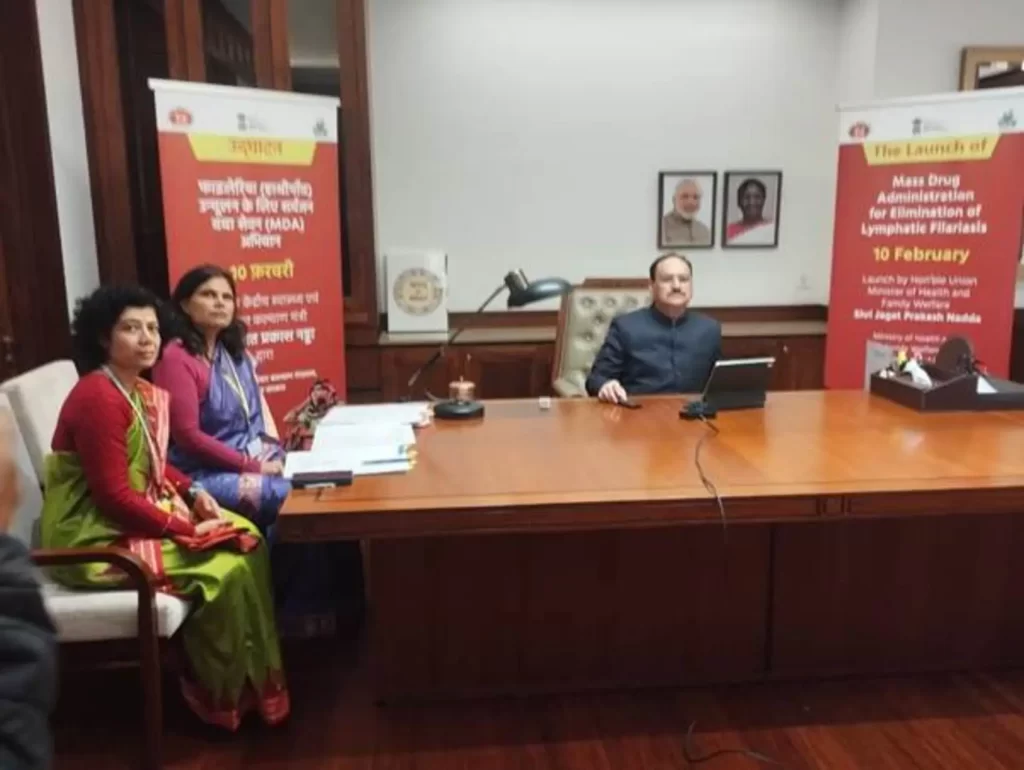
Lymphatic filariasis (LF), commonly known as elephantiasis (Haatipaon), is a vector-borne disease transmitted by the female Culex mosquito, which breeds in polluted and stagnant water. The infection damages the lymphatic system and can lead to chronic morbidity, disability and social stigma. The Government of India has accorded high priority to eliminating LF as a public health problem by end-2027, ahead of the global Sustainable Development Goal (SDG) target of 2030. Currently, LF is endemic in 348 districts across 20 States and Union Territories. Of these, 41 per cent (143 districts) have successfully stopped Mass Drug Administration (MDA) after clearing Transmission Assessment Survey (TAS-1), while 50 per cent (174 districts across 14 States) continue to implement annual MDA due to microfilaria rates above 1 per cent. The remaining 9 per cent (31 districts) are at various stages of transmission assessments. As of 2024, over 6.20 lakh cases of lymphoedema and 1.21 lakh cases of hydrocele have been reported from endemic districts, underscoring the need for sustained and intensified efforts.
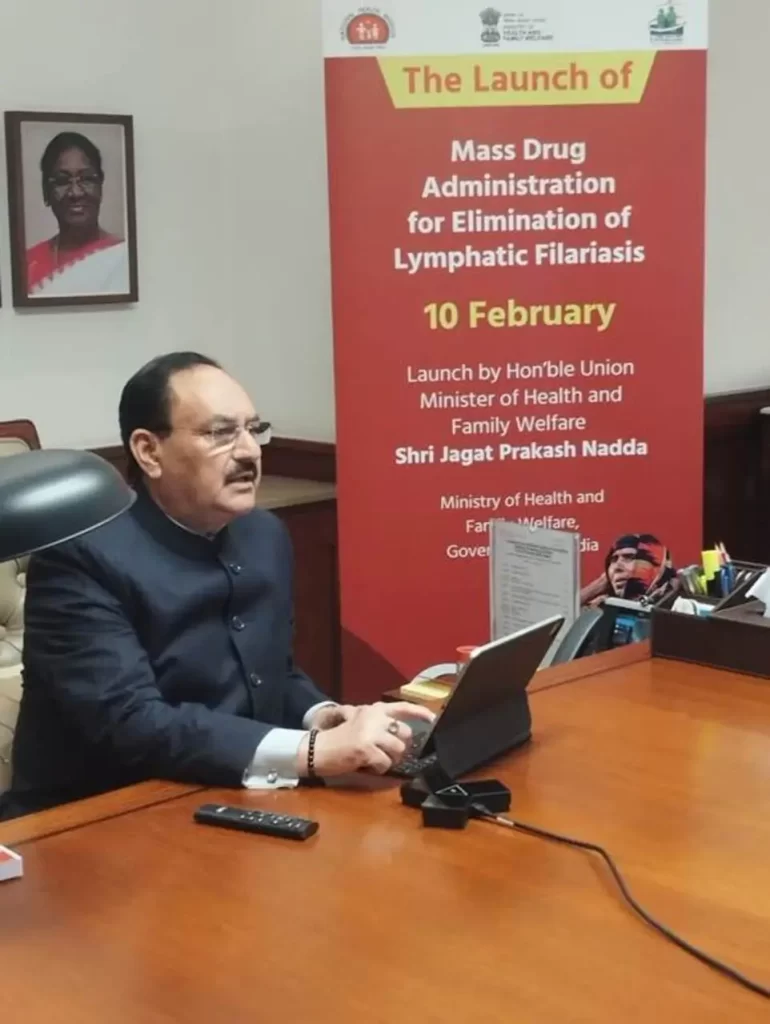
Addressing the gathering, Shri Jagat Prakash Nadda reaffirmed the Government of India’s unwavering commitment to eliminate Lymphatic Filariasis (LF) by 2027, well ahead of the global Sustainable Development Goal (SDG) target of 2030. He highlighted that LF not only affects the health and quality of life of patients, but also severely impacts their livelihood, economic productivity, and social well-being, often leading to social stigma and long-term hardship for entire families. He emphasized that eliminating LF is therefore not merely a health objective, but a critical social and economic imperative.
The Union Health Minister also underscored the significant progress achieved through mission-mode implementation of the Mass Drug Administration (MDA) campaign, particularly through directly observed treatment, which has yielded encouraging on-ground results. He stressed the need to strengthen the ecosystem for vector control, alongside sustained MDA, to effectively interrupt disease transmission. Highlighting last-mile challenges, Shri Nadda pointed out that ensuring direct observation of drug consumption and addressing public hesitancy towards medication remain key concerns, which must be tackled through intensive awareness, community engagement, grievance redressal, and trust-building measures.
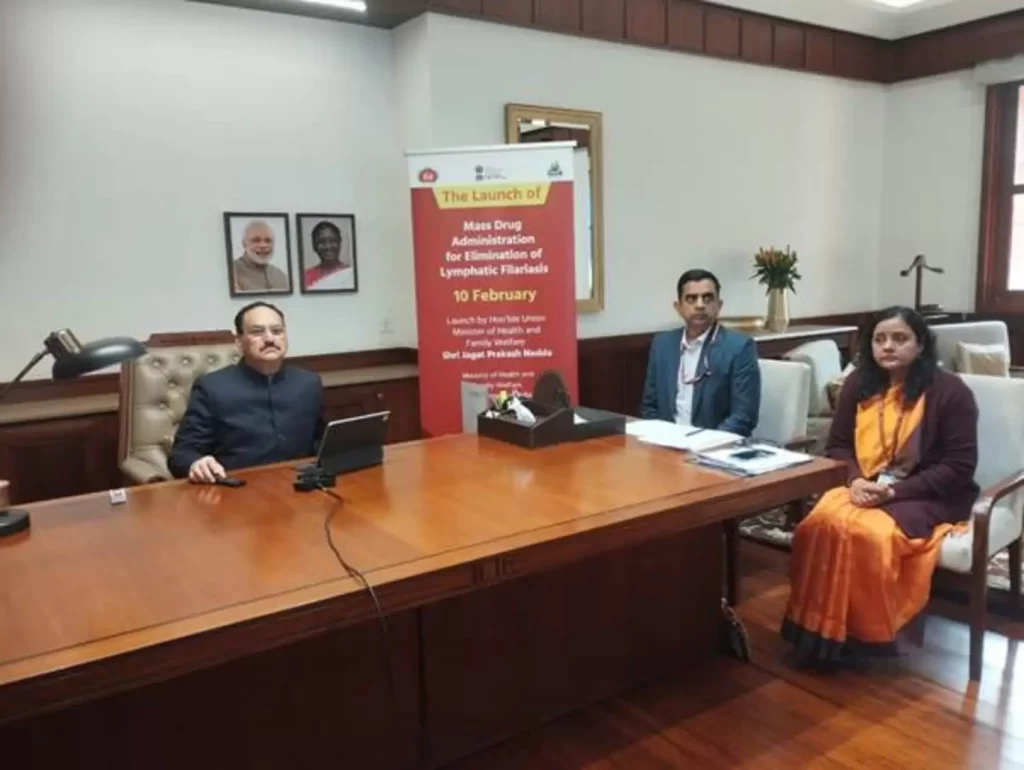
Shri Nadda further emphasized the importance of Morbidity Management and Disability Prevention (MMDP), including timely hydrocele surgeries and distribution of medicines, to improve quality of life for affected individuals. He noted that Ayushman Arogya Mandirs (AAMs) can play a pivotal role in early screening, detection and prompt treatment, thereby preventing disease progression. He also highlighted that hydrocele surgery has been included under Ayushman Bharat–Pradhan Mantri Jan Arogya Yojana (AB-PMJAY), ensuring financial protection and improved access to care for patients.
Referring to the current campaign being implemented across 719 blocks in 124 districts of 12 States, Shri Nadda stressed the need to consistently bring down the microfilaria prevalence rate to below one per cent in all endemic areas. He called for a whole-of-government and whole-of-society approach, with active involvement of Panchayat representatives, particularly Pradhan of all 719 blocks, along with allied ministries and departments, to ensure seamless implementation, strong community participation, and accelerated progress towards achieving a filariasis-free India by 2027.
About Mass Drug Administration (MDA) Campaign
India has intensified efforts to eliminate Lymphatic Filariasis (LF) through the adoption of an Enhanced Five-Pronged Strategy, with the India Mass Drug Administration (MDA) campaign as its central pillar. From February 2026, the National LF Programme has transitioned to a unified annual MDA campaign, replacing the earlier biannual rounds conducted on 10th February and 10th August alongside National Deworming Day (NDD). This strategic shift addresses challenges related to monsoon disruptions, logistical constraints, limited time for surveillance, and the operational burden of two annual rounds, while enabling streamlined operations, stronger supervision, higher coverage, and adequate time for critical surveillance activities such as Night Blood Surveys, Pre-TAS, TAS, Impact Surveys, and Morbidity Management and Disability Prevention (MMDP) interventions. The transition aims to improve programme efficiency and accelerate progress towards achieving elimination of LF by 2027.
As a result of sustained programme efforts, MDA coverage among the total population improved from 75 per cent in 2014 to 85 per cent in 2025, supported by an emphasis on directly observed consumption. The proportion of LF-endemic districts that successfully stopped MDA after clearing Transmission Assessment Survey-1 (TAS-1) increased from 15 per cent (39 districts) in 2014 to 41 per cent (143 districts) in 2025 among the 348 endemic districts. Engagement of medical colleges in Coverage Evaluation Surveys expanded from 1 per cent in 2019 to 96 per cent in 2024, with 199 colleges actively involved, while endemic States reported MDA data online through the Integrated Health Information Portal (IHIP) and updated line lists of microfilaria/antigen-positive, lymphoedema and hydrocele cases. Between 2023 and 2025, a 32 per cent decline in blocks conducting MDA was recorded, with the 2025 campaign covering 14 States, 161 districts and 1,090 blocks, targeting 21.71 crore population, achieving 96 per cent coverage against eligible population, and ensuring 18.48 crore individuals consumed anti-filarial drugs.
Achieving over 90 per cent drug compliance necessitates extensive community outreach and sustained household-level awareness efforts. In this regard, allied ministries and departments including Panchayati Raj, Rural Development (NRLM), Women and Child Development, Education, Youth Affairs, Tribal Affairs and Agriculture have been actively engaged, ensuring strong multi-sectoral collaboration. For the 10th February 2026 MDA campaign, 124 districts (55 DA and 69 IDA) across 12 States have been provisionally identified, with the campaign launch aimed at securing high-level commitment, strengthening inter-sectoral coordination, enhancing visibility, and mobilizing communities to accelerate progress towards a filariasis-free India by 2027.
Smt. Punya Salila Srivastava, Secretary, Ministry of Health and Family Welfare, Ms. Aradhna Patnaik ,AS & MD, NHM, Ministry of Health and Family Welfare, and Shri Nikhil Gajraj, Joint Secretary (VBD), Ministry of Health and Family Welfare were present on the occasion.
The Ministry of Health and Family Welfare provides technical and financial support to the States/UTs to strengthen the public healthcare system including expansion of infrastructure and provisions for specialists’ posts, based on the proposals received in the form of Programme Implementation Plans (PIPs) under National Health Mission. Government of India provides approval for the proposal in the form of Record of Proceedings (RoPs) as per norms & available resources. The details are available in public domain at:
https://nhm.gov.in/index1.php?lang=1&level=1&sublinkid=1377&lid=744
As per established norms, in rural areas, an Ayushman Arogya Mandir - Sub Health Centre (SHC-AAM) for a population of 5,000 (in plains) and 3000 (in hilly and tribal areas), an Ayushman Arogya Mandir -Primary Health Centre (AAM- PHCs) for a population of 30,000 (in plains) and 20,000 (in hilly and tribal areas) and Community Health Centre (CHC) for a population of 1,20,000 (in plains) and 80,000 (in hilly and tribal areas) are suggested. Further, District Hospital (DH), Sub- District Hospital (SDH) and First Referral Unit provide secondary care services for rural & urban areas.
This Ministry supports ‘Free Diagnostics Service Initiative (FDSI)’ programme under NHM with the aim to provide accessible and affordable pathological and radiological diagnostics services closer to the community, which in turn reduces the Out-of-Pocket Expenditure (OOPE). Diagnostics services are provided free of cost at all levels of public health facilities (14 tests at Ayushman Arogya Mandir - Sub Health Centre (SHC-AAM), 63 at Ayushman Arogya Mandir -Primary Health Centre (AAM- PHCs), 97 at Community Health Centres, 111 tests at Sub District Hospitals and 134 tests at District Hospitals).
In February 2018, the Government of India announced the establishment of 1,50,000 Ayushman Arogya Mandirs (AAMs), erstwhile Ayushman Bharat Health and Wellness Centres (AB-HWCs), across the country by December 2022. As updated by the States/UTs in AAM portal, a total of 1,82,944 Ayushman Arogya Mandirs have been established and operationalized as on 31.12.2025, by transforming existing Sub-Health Centres (SHC) and Primary Health Centres (PHC) in rural and urban areas to deliver the expanded range of comprehensive primary healthcare services with complete 12 package of services that includes preventive, promotive, curative, palliative and rehabilitative services which are universal, free, and closer to the community.
Various other initiatives carried out under NHM for improving timely access to quality care for all citizens to the people residing in remote and underserved area of the country are National Ambulance Services (NAS), Mobile Medical Units (MMUs) , ASHAs, 24 x 7 Services and First Referral facilities, Prime Minister's National Dialysis Programme (PMNDP) , Free Diagnostics Service Initiative and Free Drugs Service Initiative, various activities under Reproductive & Child Health, Pradhan Mantri TB Mukt Bharat Abhiyaan (PMTBMBA) and Universal Immunization programme & Telemedicine are also being implemented with NHM support to improve healthcare access particularly in rural areas.
India has recorded substantial improvements in timely access to quality care for all citizens over the past decade. The Maternal Mortality Ratio (MMR) declined from 130 per lakh live births in 2014–16 to 88 per lakh live births in 2021–23 (SRS 2021–23). According to the UN-MMEIG 2023 report, India has achieved an 86% reduction in MMR since 1990, surpassing the global decline of 48%. Similarly, the Infant Mortality Rate (IMR) decreased from 39 per 1,000 live births in 2014 to 25 per 1,000 live births in 2023 (SRS 2023). The Under-5 Mortality Rate (U5MR) also declined from 45 in 2014 to 29 in 2023 (SRS 2023).
The Union Minister of State for Health and Family Welfare, Shri Prataprao Jadhav stated this in a written reply in the Rajya Sabha today.
In the last 5 years, India have improved by 79 ranks in EoDB rankings published by World Bank Group as Doing Business Report. As per the latest DBR ranking published in 2019, India ranked at 63.
Following the discontinuation of the DBR Report in 2020, the World Bank launched the B-Ready Assessment in 2024 to evaluate 180+ countries over three years across 10 topics spanning the entire business lifecycle: Business Entry, Business Location, Utility Services, Labor, Financial Services, International Trade, Taxation, Dispute Resolution, Market Competition, and Business Insolvency. India is to be part of the Third B-Ready Report, schedule to release in 2026.
With a view to improve India's business climate, attract investments, and foster economic growth, Department for Promotion of Industry and Internal Trade (DPIIT) has launched several initiatives including Business Reforms Action Plan (BRAP) under the overall umbrella initiative of Ease of Doing Business.
BRAP initiative was launched in 2014 by the Department for Promotion of Industry and Internal Trade (DPIIT). It focuses on streamlining regulations, reducing compliance burdens, and implementing digital solutions to improve the business environment in India. Key reforms include establishing single window systems, simplifying building permissions, enhancing inspection procedures, and digitizing various business processes. These reforms aim to make India a more attractive destination for both domestic and foreign investment.
So far, seven editions of BRAP (2015, 2016, 2017-18, 2019, 2020, 2022 and 2024) have been completed, wherein States/UTs have been assessed. The seventh edition, BRAP 2024, is currently in progress. Over 9,700 reforms have been carried out across States and Union Territories. State/UT Ranking on Ease of Doing Business.
Under the Regulatory Compliance Burden (RCB) initiative, launched by the Government of India in 2020, Central Ministries/Departments and States/UTs undertook a self-identification exercise to reduce burdensome compliances for businesses and citizens. As a result, over 47,000 compliances have been reduced during the last five years.
Of the total compliances reduced:
Further, under the RCB+ initiative, 4,846 compliances have been reduced out of 6,262 identified compliances across 23 Acts commonly implemented by States/UTs.
The Jan Vishwas (Amendment of Provisions) Act, 2023 was passed in both Houses of the Parliament (Lok Sabha on 27th July 2023, Rajya Sabha on 02nd August 2023) and received President's Assent on 11th August 2023. The Act decriminalizes 183 provisions under 42 Acts administered by 19 Ministries/ Departments.
The Act employs various approaches to decriminalization, including the removal of both imprisonment and fines, conversion of imprisonment and/or fine into penalties, and the introduction of compounding of offenses in certain cases. DPIIT on recommendations of the Joint Parliamentary Committee initiated the process of further identifying minor criminal provisions to be compiled for another common amendment bill.
The Jan Vishwas (Amendments of Provisions) Bill, 2025 was approved by the Union Cabinet on 12.08.2025 and was subsequently laid before the Lok Sabha on 18 August 2025. Thereafter, the Bill was referred to the Select Committee constituted under the Chairmanship of Shri Tejasvi Surya. At present, the Bill is under examination by the said Committee.
This exercise builds on the success of the Jan Vishwas (Amendment of Provisions) Act, 2023 by expanding the reform agenda to cover 16 Central Acts administered by 10 Ministries/Departments. A total of 355 provisions are proposed to be amended 288 provisions decriminalized to foster Ease of Doing Business, and 67 provisions proposed to be amended to facilitate Ease of Living.
To systematically reduce regulatory overlaps and eliminate redundant compliances, the Government adopted a multi-stage institutional and analytical approach under the RCB initiative. Key measures undertaken include:
These measures have enabled elimination of redundant compliances, reduction of regulatory overlaps, and harmonisation of regulatory frameworks across jurisdictions.
The Government of India has undertaken a series of comprehensive reforms under the Business Reform Action Plan (BRAP), which cut across critical areas such as Labour, Environment, Land Administration, and Taxation. These measures have significantly reduced both turnaround time and cost for setting up and operating businesses in the country. The intent of the Government is clear—to create a favorable and enabling environment for enterprises, thereby strengthening India’s position as an attractive investment destination.
BRAP, true to its dynamic nature, has continuously evolved to incorporate additional reforms, focus sectors, and the adoption of Information and Communication Technology (ICT) for delivering quality and efficient services to businesses. The reforms include initiatives such as online delivery of services through single-window systems, simplified environmental clearances, digitized registrations and renewals, and streamlined processes for utility connections. Furthermore, digital integration has been extended to the creation of land banks and Geographic Information Systems (GIS) for industrial parks, integrated with the India Industrial Land Bank (IILB), which provides comprehensive investor-related information.
In addition to BRAP, the Government has introduced key initiatives such as Reducing Compliance Burden (RCB), Decriminalization of business laws, and the National Single Window System (NSWS). These initiatives are designed to provide further impetus to ease of doing business in India. The Government remains determined to build an investment-friendly ecosystem that supports both domestic and foreign investments, with a strong focus on removing sectoral hurdles and establishing multiple investment hubs across the nation.
The Department for Promotion of Industry and Internal Trade (DPIIT) has operationalized the National Single Window System (NSWS) to facilitate clearances and approvals for businesses. At present, registered businesses are able to track the status of their applications through the Investor Dashboard, which provides visibility into approval status and enables monitoring of progress in a transparent and time bound manner.
Currently, 32 Central Ministries/Departments and 33 States/UTs have been integrated with NSWS for facilitating and streamlining G2B approvals with access to 300+ G2B approvals of Central Departments and 3000+ G2B approvals of States/UTs. The NSWS helpline can be reached over call and email by business users for any grievances or support required for any issue related to NSWS. Daily grievance call mechanism is also in place for users requiring support to resolve their issues
This initiative is aimed at strengthening transparency, accountability, and efficiency in regulatory processes, thereby enhancing investor confidence and contributing to the Government’s ongoing efforts to improve the ease of doing business in the country.
This information was given by the Minister of State for Ministry of Commerce & Industry, Shri Jitin Prasada, in a written reply in the Lok Sabha today.
***
Abhishek Dayal/Shabbir Azad/Anushka Pandey
ANNEXURE
Ranking of States/UTs under BRAP since inception
BRAP 2015
| Leaders | NONE |
| Aspiring Leaders | Andhra Pradesh, Chhattisgarh, Gujarat, Jharkhand, Madhya Pradesh, Odisha, Rajasthan, |
| Acceleration Required | Haryana, Maharashtra, Punjab, Telangana, Karnataka, Uttar Pradesh, West Bengal, Delhi, Tamil Nadu, |
| Jump Start Needed | Uttarakhand, Bihar, Himachal Pradesh, Andaman & Nicobar, Arunachal Pradesh, Assam, Chandigarh, Jammu & Kashmir, Meghalaya, Nagaland, Puducherry, Sikkim, Tripura & Goa, Kerala |
BRAP 2016
| Leaders | Andhra Pradesh, Chhattisgarh, Gujarat, Haryana, Jharkhand, Madhya Pradesh, Maharashtra, Odisha, Punjab, Rajasthan, Telangana, and Uttarakhand |
| Aspiring Leaders | Bihar, Karnataka, Uttar Pradesh and West Bengal. |
| Acceleration Required | Delhi, Himachal Pradesh and Tamil Nadu |
| Jump Start Needed | Andaman and Nicobar, Arunachal Pradesh, Assam, Chandigarh, Dadra Dadra & Nagar Haveli, Daman & Diu, Goa, Jammu & Kashmir, Kerala, Lakshadweep, Manipur, Meghalaya, Mizoram, Nagaland, Puducherry, Sikkim and Tripura. |
BRAP 2017-2018
| Top Achievers | Andhra Pradesh, Telangana, Haryana, Jharkhand, Gujarat, Chhattisgarh, Madhya Pradesh, Karnataka & Rajasthan |
| Achievers | West Bengal. Uttarakhand, Uttar Pradesh, Maharashtra, Odisha and Tamil Nadu |
| Fast Movers | Himachal Pradesh, Assam and Bihar |
| Aspirers | Goa, Punjab, Kerala, Jammu & Kashmir, Delhi, Damn & Diu, Tripura, Dadra & Nagar Haveli, Puducherry, Nagaland, Chandigarh, Mizoram, Andaman & Nicobar, Manipur, Sikkim, Arunachal Pradesh and Lakshadweep |
BRAP-2019
| Sl. No. | Ranking of States |
| 1. | Andhra Pradesh |
| 2. | Uttar Pradesh |
| 3. | Telangana |
| 4. | Madhya Pradesh |
| 5. | Jharkhand |
| 6. | Chhattisgarh |
| 7. | Himachal Pradesh |
| 8. | Rajasthan |
| 9. | West Bengal |
| 10. | Gujarat |
| 11. | Uttarakhand |
| 12. | Delhi |
| 13. | Maharashtra |
| 14. | Tamil Nadu |
| 15. | Lakshadweep |
| 16. | Haryana |
| 17. | Karnataka |
| 18. | Daman and Diu |
| 19. | Punjab |
| 20. | Assam |
| 21. | Jammu and Kashmir |
| 22. | Andaman & Nicobar |
| 23. | Dadra & N. Haveli |
| 24. | Goa |
| 25. | Mizoram |
| 26. | Bihar |
| 27. | Puducherry |
| 28. | Kerala |
| 29. | Arunachal Pradesh |
| 30. | Chandigarh |
| 31. | Manipur |
| 32. | Meghalaya |
| 33. | Nagaland |
| 34. | Odisha |
| 35. | Sikkim |
| 36. | Tripura |
BRAP 2020
| Top Achievers | Andhra Pradesh, Gujarat, Haryana, Karnataka, Punjab, Tamil Nadu and Telangana |
| Achievers | Himachal Pradesh, Madhya Pradesh, Maharashtra, Odisha, Uttarakhand, Uttar Pradesh |
| Aspirers | Assam, Chhattisgarh, Goa, Jharkhand, Kerala, Rajasthan, West Bengal |
| Emerging Business Ecosystems | Andaman & Nicobar, Bihar, Chandigarh, Dadra & Nagar Haveli and Daman & Diu, Delhi, Jammu & Kashmir, Manipur, Meghalaya, Nagaland, Puducherry, Tripura |
BRAP 2022
| Y Category | |
| B2G | |
| Category | States/ UTs |
| Fast Mover | Gujarat |
| Aspirers | Andhra Pradesh, Telangana, Maharashtra, Haryana, Uttar Pradesh, Uttarakhand, Odisha, Himachal Pradesh, Punjab, Madhya Pradesh, Tamil Nadu, Kerala, Karnataka, Chhattisgarh, West Bengal, Bihar, Goa, Jharkhand, Rajasthan, Assam, Delhi, J&K |
| C2G | |
| Category | States/ UTs |
| Aspirers | Kerala, Gujarat, Telangana, Maharashtra, Tamil Nadu, Uttarakhand, Haryana, Madhya Pradesh, Odisha, Karnataka, Rajasthan, Himachal Pradesh, Andhra Pradesh, Uttar Pradesh, Goa, Bihar, Delhi, West Bengal, Assam, Chhattisgarh, J&K, Jharkhand, Punjab |
| X Category | |
| B2G | |
| Category | States/ UTs |
| Aspirers | Dadar & Nagar Haveli and Daman & Diu, Tripura, Chandigarh, Meghalaya, Manipur, Mizoram, Puducherry, Andaman & Nicobar Islands, Arunachal Pradesh |
| C2G | |
| Category | States/ UTs |
| Aspirers | Chandigarh, Dadar & Nagar Haveli and Daman & Diu, Meghalaya, Andaman and Nicobar Islands, Tripura, Puducherry, Mizoram, Arunachal Pradesh, Manipur |
BRAP 2024
| Y Category | |
| Category | States/UTs |
| Fast Movers | Odisha, Punjab, Andhra Pradesh, Rajasthan, Madhya Pradesh, Kerala, Assam, Uttarakhand, Jammu & Kashmir, Karnataka |
| Aspirers | West Bengal, Tamil Nadu, Maharashtra, Gujarat, Uttar Pradesh, Chhattisgarh, Haryana, Telangana, Jharkhand, Himachal Pradesh, Goa, Bihar, Delhi |
| X Category | |
| Category | States/UTs |
| Aspirers | Tripura, Meghalaya, Chandigarh, Dadra and Nagar Haveli and Daman and Diu, Andaman & Nicobar Islands, Puducherry,, Nagaland, Arunachal Pradesh, Mizoram, Sikkim, Lakshadweep, Manipur |
| Y Category | |
| Category | States/UTs |
| Achievers | Andhra Pradesh, Punjab |
| Fast Movers | Rajasthan, Odisha, Madhya Pradesh, Kerala, West Bengal, Maharashtra, Jammu & Kashmir, Assam, Tamil Nadu, Uttarakhand, Gujarat |
| Aspirers | Karnataka, Uttar Pradesh, Chhattisgarh, Haryana, Jharkhand, Telangana, Himachal Pradesh, Goa, Bihar, Delhi |
| X Category | |
| Category | States/UTs |
| Aspirers | Tripura, Meghalaya, Chandigarh, Dadra and Nagar Haveli and Daman and Diu, Andaman & Nicobar Islands, Puducherry, Arunachal Pradesh, Nagaland, Mizoram, Sikkim, Lakshadweep, Manipur |
Health Dynamics of India (HDI) (Infrastructure & Human Resources), 2022-23 is an annual publication, based on Health care administrative data reported by States/UTs. Details of doctor, nurse and specialist availability ratios in public health facilities can be assessed at the following link of HDI 2022-23:
There are 13,88,185 registered allopathic doctors and 7,51,768 registered AYUSH practitioners. Assuming that 80% of registered practitioners in both the allopathic and AYUSH systems are available, the doctor-population ratio in the country is estimated to be 1:811, which is better than World Health Organization (WHO) standard of 1:1000.
As informed by Indian Nursing Council (INC), there are 39.40 lakh nursing personnel in the country and assuming 80% active, resulting in a nurse to population ratio of 2.23 nurses per thousand population. There are 5310 Nursing institutions including 806 government institutions producing nearly 3.82 lakh nursing personnel annually, to meet the requirement of nursing personnel in the country.
The primary responsibility of strengthening public healthcare system, including filling up of the vacancies in Government Hospitals lies with the respective State/UT Governments. The Ministry of Health and Family Welfare provides technical and financial support to the States/UTs to strengthen the public healthcare system in rural areas based on the proposals received in the form of Programme Implementation Plans (PIPs) under National Health Mission. Government of India provides approval for the proposal in the form of Record of Proceedings (RoPs) as per norms & available resources. States/ UTs to ensure availability of HR by creating adequate number of regular posts as per the Indian Public Health Standards (IPHS) in the long run and using NHM posts in the short to medium term to fill critical gaps. The NHM supplements the regular human resources by filling up the gaps in human resources in secondary and primary care facilities (District Hospital and below) as per IPHS.
The Union Minister of State for Health and Family Welfare, Shri Prataprao Jadhav stated this in a written reply in the Rajya Sabha today.
PM GatiShakti National Master Plan (PMGS NMP), a transformative approach for planning and development of infrastructure in the country, was launched in October 2021. The Network Planning Group (NPG), constituted under the PM Gati Shakti National Master Plan (PMGS-NMP) framework, evaluates the critical infrastructure projects of the Central Government to ensure integrated planning, multimodality, inter-modality, synchronization of efforts, last mile connectivity, comprehensive development in and around the project location, data-driven decision makings, etc at the planning stage. As on date, 352 infrastructure projects with total estimated cost of ₹ 16.10 Lakh Crore have been evaluated through the NPG mechanism. Out of these 352 projects, 201 projects have been sanctioned - out of which, 167 projects are under implementation.
Ministry of Finance, Department of Expenditure through Part-II (for PM Gati Shakti related expenditure) of the "Scheme for Special Assistance to States for Capital Investment for 2022-23" made a provision of ₹ 5000 crores for disbursement among the States for infrastructure development in the form of 50 years interest-free loan. Details of projects of the States, approved under the Part-II of the “Scheme for Special Assistance to the States for Capital Investment” and funds allocated.
Monitoring of implementation of ongoing Central Sector Projects, including the infrastructure projects planned and evaluated under the PM Gati Shakti framework, costing ₹150 crore and above are carried out by the Ministry of Statistics and Programme Implementation (MoSPI). A detailed flash report, showing status, cost overruns etc., is being published from July 2025 onwards on PAIMANA (Project Assessment Infrastructure Monitoring and Analytics for Nation Building) portal (i.e. https://ipm.mospi.gov.in/ReportPage).
Further, an institutional mechanism, i.e. Project Monitoring Group (PMG), has been set up with the objective of milestone-bases monitoring of projects and for expediting issue resolution and fast tracking the execution of large-scale infrastructure projects (having estimated cost of Rs.500 Crore & above). PMG has implemented a unique 5-tier Escalation framework that ensures issues are addressed at the appropriate level, beginning with the respective Ministry for regular issues and escalating upto the PRAGATI (Pro-Active Governance and Timely Implementation) forum for complex issues. This approach streamlines the review mechanism, prevents duplication and enables higher authorities to focus on critical issues. To resolve bottlenecks and ensure timely completion of projects, the PM GatiShakti National Master Plan has been integrated with the PMG that has expedited resolution of issues and regulatory bottlenecks in implementation of the projects.
This information was given by the Minister of State for Ministry of Commerce & Industry, Shri Jitin Prasada, in a written reply in the Lok Sabha today.
***
Abhishek Dayal/Shabbir Azad/Anushka Pandey
ANNEXURE-A
Ministry-wise details of Projects evaluated through the NPG Mechanism under the PM GatiShakti Framework
| Ministry/Department | Numberof Projects evaluated by NPG | Sanctioned | Yet to beSanctioned | UnderImplementation | TotalEstimated Cost(Rs. in Crore) |
| Ministry of Road Transport and Highways | 164 | 87 | 77 | 55 | 8,61,821 |
| Ministry of Railways | 137 | 83 | 54 | 83 | 4,22,324.84 |
| Ministry of Housing and Urban Affairs | 23 | 7 | 16 | 7 | 2,01,264 |
| Ministry of Petroleum and Natural Gas | 4 | 4 | 0 | 3 | 9,271 |
| Ministry of Ports, Shipping and Waterways | 3 | 2 | 1 | 1 | 49,758.86 |
| Ministry of Civil Aviation | 5 | 3 | 2 | 3 | 7,871 |
| NICDC, Departmentfor Promotion of Industry and Internal Trade | 12 | 12 | 0 | 12 | 28,693 |
| Ministry of New andRenewable Energy | 01 | 1 | 0 | 1 | 20,773.70 |
| Ministry of Electronics and Information Technology | 01 | 0 | 1 | 0 | 4,680 |
| Ministry of Textiles | 02 | 02 | 0 | 2 | 3,957 |
| Grand Total | 352 | 201 | 151 | 167 | 16,10,414 |
ANNEXURE-B
State Wise Fund Allocation Under Part-II of the Scheme for Special Assistance to States for Capital Investment for 2022-23.
| Sr.No. | States | No. of Projects approved by theDepartment of Expenditure (DoE) | Approved Capital Expenditure(Rs. in Crores) |
| 1 | West Bengal | 30 | 376 |
| 2 | Chhattisgarh | 27 | 168.42 |
| 3 | Bihar | 21 | 502.92 |
| 4 | UttarPradesh | 15 | 896.91 |
| 5 | MadhyaPradesh | 11 | 393 |
| 6 | Maharashtra | 8 | 316 |
| 7 | Tamil Nadu | 8 | 204 |
| 8 | Rajasthan | 7 | 301 |
| 9 | Assam | 6 | 156 |
| 10 | Nagaland | 5 | 28.43 |
| 11 | Kerala | 4 | 96 |
| 12 | Tripura | 4 | 35 |
| 13 | Gujarat | 3 | 174 |
| 14 | Haryana | 3 | 55 |
| 15 | Jharkhand | 3 | 165 |
| 16 | Manipur | 3 | 36 |
| 17 | HimachalPradesh | 3 | 42 |
| 18 | ArunachalPradesh | 3 | 87.85 |
| 19 | AndhraPradesh | 2 | 202 |
| 20 | Karnataka | 2 | 182 |
| 21 | Meghalaya | 2 | 38 |
| 22 | Mizoram | 2 | 25 |
| 23 | Uttarakhand | 2 | 56 |
| 24 | Goa | 1 | 19 |
| 25 | Punjab | 1 | 90 |
| 26 | Sikkim | 1 | 19 |
| 27 | Telangana | 1 | 100 |
| 28 | Odisha | 0 | 0 |
| Total | 178 | 4764.53 |
Source: Department of Expenditure’s Office Memorandum (OM) for approval of projects under Part-II of the Scheme for Special Assistance to States for Capital Investment for 2022-23
Food Safety and Standards Authority of India (FSSAI) is mandated to lay down science-based standards for articles of food and to regulate their manufacture, storage, distribution, sale and import to ensure availability of safe and wholesome food for human consumption. The implementation and enforcement of the Food Safety and Standards (FSS) Act, 2006 is a shared responsibility between the Central and State Governments.
FSSAI through its regional offices and States/UTs food safety departments, conducts surveillance, inspection, monitoring and random sampling to check & verify compliance with the standards & requirements laid down under the FSS Act, 2006 & regulations made thereunder. FSSAI is responsible for laying down science-based standards and ensuring overall coordination, the State Food Safety Authorities are primarily responsible for enforcement at the field level.
To ensure compliance with the set standards, limits, & other statutory requirements under the Act and regulations made thereunder, FSSAI, through its 4 (four) Regional Offices and State/UT food safety authorities conducts regular localized/targeted special enforcement and surveillance drives.
To ensure the quality and safety of food and food products through testing, FSSAI has notified 246 National Accreditation Board for Testing and Calibration Laboratories for primary analysis of food samples and 24 Referral Food Laboratories, for the analysis of appellate samples. To address the deficiency of food testing infrastructure in remote areas and to improve consumer access to such services, there are Mobile Food Testing Laboratories, known as Food Safety on Wheels (FSWs) at the State/UT levels. Currently, 305 FSWs are deployed across 35 States/ UTs. These mobile labs are equipped to perform basic tests for common adulterants in food products. These multipurpose vehicles not only serve as mobile testing units but also play a vital role in spreading food safety awareness and provide training programmes.
Details of enforcement action on various food safety issues (including food adulteration) in the FY 2023-24, FY 2024-25 and FY 2025-26 (so far) is annexed at Annexure-I and Annexure-II, respectively.
The Union Minister of State for Health and Family Welfare, Shri Prataprao Jadhav stated this in a written reply in the Rajya Sabha today.
********
Annexure-I
Details of enforcement action on various food safety issues (including food adulteration)
| S. No. | State/UT | FY 2023-24 | FY 2024-25 | ||
| No. of Samples Analysed | No. of Samples found non-conforming | No. of Samples Analysed | No. of Samples found non-conforming | ||
| 1 | Andaman And Nicobar Islands | 0 | 0 | 810 | 4 |
| 2 | Andhra Pradesh | 6439 | 472 | 5984 | 514 |
| 3 | Arunachal Pradesh | 501 | 11 | 125 | 9 |
| 4 | Assam | 1139 | 125 | 1705 | 234 |
| 5 | Bihar | 2806 | 126 | 2863 | 124 |
| 6 | Chandigarh | 311 | 49 | 374 | 65 |
| 7 | Chhattisgarh | 1373 | 167 | 2069 | 270 |
| 8 | Dadra and Nagar Haveli & Daman & Diu | 185 | 0 | 56 | 0 |
| 9 | Delhi | 3412 | 150 | 2624 | 130 |
| 10 | Goa | 599 | 16 | 1172 | 74 |
| 11 | Gujarat | 15841 | 910 | 12387 | 901 |
| 12 | Haryana | 3485 | 856 | 2233 | 500 |
| 13 | Himachal Pradesh | 1618 | 401 | 1587 | 293 |
| 14 | Jammu & Kashmir | 9057 | 750 | 6955 | 651 |
| 15 | Jharkhand | 384 | 292 | 364 | 138 |
| 16 | Karnataka | 5492 | 286 | 9371 | 662 |
| 17 | Kerala | 10792 | 1304 | 10767 | 1635 |
| 18 | Ladakh | 638 | 11 | 417 | 45 |
| 19 | Lakshadweep | 0 | 0 | 0 | 0 |
| 20 | Madhya Pradesh | 13998 | 2022 | 13920 | 1635 |
| 21 | Maharashtra | 5087 | 1174 | 5403 | 1250 |
| 22 | Manipur | 168 | 3 | 126 | 1 |
| 23 | Meghalaya | 123 | 7 | 388 | 5 |
| 24 | Mizoram | 0 | 0 | 0 | 2 |
| 25 | Nagaland | 138 | 3 | 223 | 11 |
| 26 | Orissa | 2003 | 252 | 2282 | 273 |
| 27 | Puducherry | 31 | 0 | 173 | 0 |
| 28 | Punjab | 6041 | 929 | 4131 | 748 |
| 29 | Rajasthan | 18536 | 3493 | 13840 | 3788 |
| 30 | Sikkim | 231 | 0 | 254 | 0 |
| 31 | Tamil Nadu | 18146 | 2237 | 18071 | 2240 |
| 32 | Telangana | 6156 | 973 | 3347 | 324 |
| 33 | Tripura | 87 | 0 | 123 | 5 |
| 34 | Uttar Pradesh | 27750 | 16183 | 30380 | 16500 |
| 35 | Uttarakhand | 1998 | 192 | 1509 | 140 |
| 36 | West Bengal | 5948 | 414 | 14502 | 1217 |
| Total | 1,70,513 | 33808 | 1,70,535 | 34,388 | |
Annexure-II
Details of enforcement action on various food safety issues (including food adulteration)
in the FY 2025-26 (till date)
| Year | No. of Samples Analysed | No. of Samples found non-conforming |
| 2025-26 | 1,55,306 | 27,567* |
*The data for FY 2025–26 is provisional.
Air pollution is one of the aggravating factors for respiratory ailments and associated diseases, however, there are no conclusive data available to establish direct correlation of disease exclusively due to air pollution. Health effects of air pollution are synergistic manifestation of factors which include food habits, occupational habits, socioeconomic status, medical history, immunity and heredity etc. of the individuals.
A Technical Expert Group has been constituted under the chairpersonship of Director General of Directorate General of Health Services to provide specialized expert guidance and recommendations on specific technical issues pertaining to Chronic Respiratory Diseases (Chronic obstructive pulmonary disease (COPD) & Asthma).
Government of India has taken several steps to address air pollution issues which are at Annexure.
The Union Minister of State for Health and Family Welfare, Shri Prataprao Jadhav stated this in a written reply in the Rajya Sabha today.
India has been designated as the Country of the Year at BIOFACH 2026, the world’s leading trade fair for organic products, scheduled to be held from 10th to 13th February 2026 at Nuremberg, Germany.
The Agricultural and Processed Food Products Export Development Authority (APEDA), under the Ministry of Commerce and Industry, Government of India, is organising India’s participation at BIOFACH 2026 with a prominent and high-impact presence. India’s participation will highlight the country’s rich agricultural heritage and its strength as a major global supplier of organic products.
BIOFACH Germany is the world’s largest and most influential exhibition dedicated exclusively to organic food and agriculture. APEDA has been participating in BIOFACH for more than a decade and has consistently maintained a strong presence at the event.
India’s participation at BIOFACH 2026 marks a significant scale-up compared to previous editions, reflecting the expanding footprint of Indian organic exports, increased global demand for organic products, and growing participation from exporters, associations, and Farmer Producer Organisations (FPOs).
After a span of 14 years, India’s organic farming sector is set to take centre stage once again at BIOFACH 2026.
The India Country Pavilion, set up by APEDA, will span an area of 1,074 square metres and will feature 67 co-exhibitors, including exporters of organic products, Farmer Producer Organisations (FPOs), cooperatives, organic laboratories, state government organisations, and commodity boards. The pavilion will showcase a wide range of organic products such as rice, oilseeds, herbs, spices, pulses, cashew, ginger, turmeric, large cardamom, cinnamon, mango puree, and essential oils, among others.
Exhibitors from more than 20 States and Union Territories are participating in the India Pavilion, reflecting the country’s vast agricultural and regional diversity. These include Assam, Meghalaya, Manipur, Delhi, Gujarat, Haryana, Karnataka, Kerala, West Bengal, Madhya Pradesh, Maharashtra, Rajasthan, Arunachal Pradesh, Tamil Nadu, Telangana, Uttar Pradesh, Jammu and Kashmir, and Uttarakhand. The participation highlights region-specific organic produce and value-added food products, demonstrating India’s year-on-year expansion in international organic trade engagement.
In addition to product displays, visitors to the India Pavilion will be offered curated food tastings showcasing the flavours and aromas of Indian organic products. Live sampling of aromatic biryani prepared using premium organic basmati rice and spices will be organised. Further, five GI-tagged rice varieties, namely Indrayani rice, Navara rice, Gobindbhog rice, Red rice, and Chak Hao (Black rice), will be served to visitors to highlight India’s heritage rice varieties.
APEDA has also undertaken extensive branding and high-impact promotional activities at prominent locations across the Nuremberg Messe Exhibition Centre, as part of India’s designation as Country of the Year at BIOFACH 2026.
As global attention increasingly shifts towards sustainability and environmentally responsible lifestyles, India’s participation as Country of the Year at BIOFACH 2026 reinforces its position as a global leader in organic agriculture. India remains committed to supplying high-quality, sustainably produced organic products that meet international standards.
APEDA continues to support Indian exporters through focused initiatives aimed at enhancing their global competitiveness and strengthening India’s position as the organic food basket of the world.
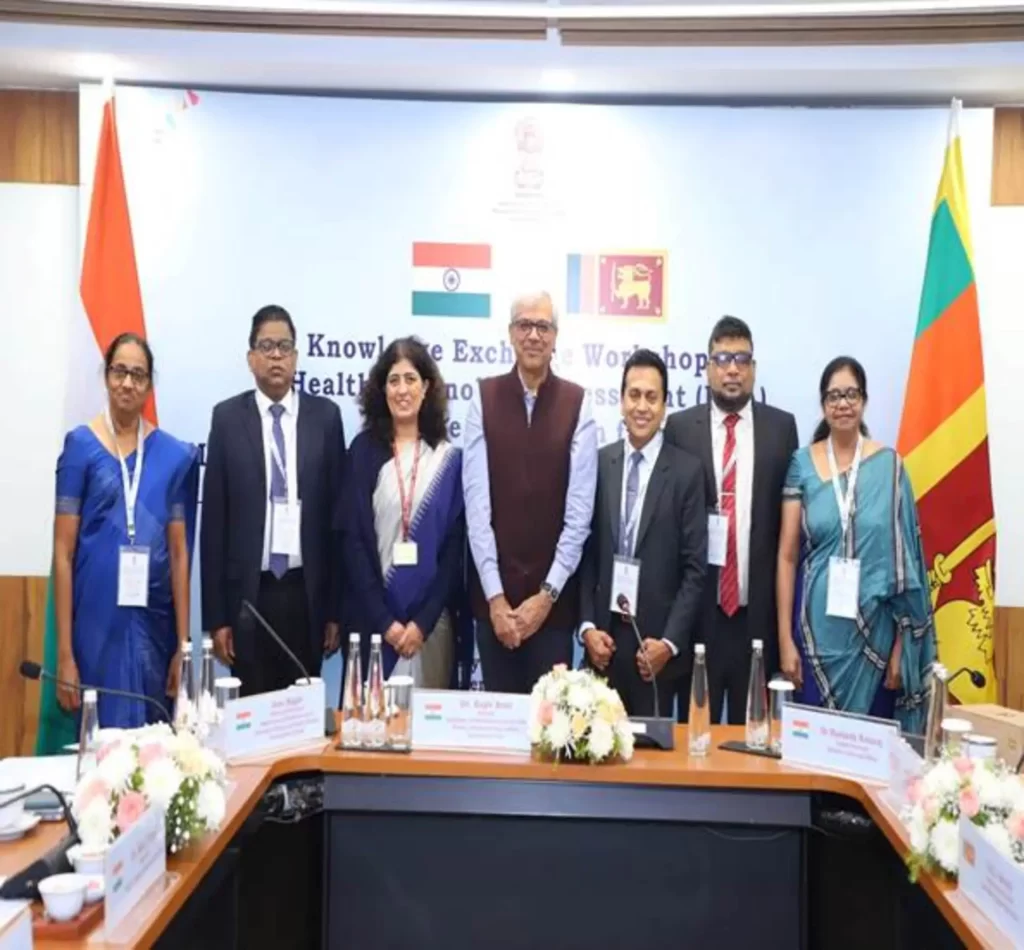
The five-day Knowledge Exchange Workshop on Health Technology Assessment (HTA) for a delegation from the Ministry of Health, Government of Sri Lanka, formally commenced today at the Sushma Swaraj Bhawan in New Delhi. Hosted by the Department of Health Research (DHR), Ministry of Health and Family Welfare, Government of India, in collaboration with the Ministry of External Affairs, the workshop aims to develop a strategic pathway for advancing and institutionalizing HTA in Sri Lanka.
Dr. Rajiv Bahl, Secretary DHR & DG of Indian Council of Medical Research (ICMR), welcomed the delegates and addressed the inaugural session. He described the initiative as a significant strategic milestone in bilateral healthcare diplomacy and HTA knowledge exchange, underscoring India's commitment to supporting regional health initiatives.
Smt. Anu Nagar, Additional Secretary, DHR, also highlighted the impactful contributions of HTAIn to India's healthcare landscape and expressed confidence that this knowledge exchange will benefit the institutionalization of HTA in Sri Lanka.
HTAIn (Health Technology Assessment India), an attached office of DHR, plays a pivotal role in evaluating healthcare technologies and ensuring cost-effective, evidence-based health interventions across India. The 5 day workshop, will cover a wide range of topics, including HTA institutional frameworks, governance, methodologies, pricing, and procurement decisions. The objectives include identifying potential collaborative initiatives to strengthen HTA capacities and systems in both nations
Basel, 07 February 2026 - Roche (SIX: RO, ROG; OTCQX: RHHBY) announced today new late-breaking data from the Phase III FENtrepid study showing the investigational Bruton’s tyrosine kinase (BTK) inhibitor fenebrutinib met its primary endpoint of non-inferiority compared to OCREVUS (ocrelizumab) in reducing disability progression in patients with primary progressive multiple sclerosis (PPMS). Fenebrutinib showed a 12% reduction in the risk of disability progression compared to OCREVUS, the only approved medicine for PPMS, as measured by the time to onset of 12-week composite confirmed disability progression (cCDP12) (hazard ratio [HR] 0.88; 95% confidence interval [CI]: 0.75, 1.03) with curves separating as early as 24 weeks. A consistent treatment effect on cCDP12 was observed across patient subgroups and for the entire treatment duration.
The cCDP12 primary endpoint included the confirmed disability progression (CDP) based on the Expanded Disability Status Scale (EDSS) for functional disability, the timed 25-foot walk (T25FW) for walking speed and the nine-hole peg test (9HPT) for upper limb function. The strongest treatment effect was observed on the risk of worsening on the 9HPT by 26% (HR 0.74; 95% CI: 0.56, 0.98) compared to OCREVUS.
“Fenebrutinib showed a consistent clinical benefit as early as week 24, notably in upper limb function, which is essential for preserving independence and daily functioning,” said Professor Amit Bar-Or, Director of the Center for Neuroinflammation and Neurotherapeutics, Perelman School of Medicine, University of Pennsylvania. “With only one disease-modifying therapy available for people with PPMS, fenebrutinib has the potential to be a high-efficacy, oral treatment option that acts directly in the brain, targeting progressive biology, and may slow disability.”
“Fenebrutinib represents the first potential scientific breakthrough for the PPMS community in over a decade, demonstrating a meaningful clinical benefit in reducing disability progression in a study versus the only approved treatment in PPMS,” said Levi Garraway, M.D., Ph.D., Roche’s Chief Medical Officer and Head of Global Product Development. “We look forward to advancing our regulatory submission following the upcoming readout of our second pivotal RMS study, FENhance 1.”
Additionally, a post-hoc analysis showed that fenebrutinib was superior to OCREVUS on a composite endpoint including two of the three components of cCDP12 (EDSS and 9HPT), with a 22% reduction in risk (HR 0.78; 95% CI: 0.64, 0.95).
Adverse events (AEs) commonly (≥10%) observed in the fenebrutinib group were comparable to OCREVUS: infections (67.0% vs 70.9%), nausea (12.0% vs 7.1%) and haemorrhage (10.2% vs 8.1%). Transient and reversible liver enzyme elevations were observed more often in the fenebrutinib group (13.3% vs 2.9%), and all cases resolved after study drug discontinuation. No Hy’s law cases (an indicator for potential severe liver injury) were observed. Serious AEs were reported in 19.1% of patients receiving fenebrutinib (vs 18.9% on OCREVUS) and led to 4.3% withdrawing from treatment (vs 3.0% on OCREVUS). In the FENtrepid study there were 1.4% fatal cases in the fenebrutinib arm vs 0.2% in the OCREVUS arm, all of which were assessed as unrelated to the study treatment by the investigators and no pattern was observed in timing or cause. Epidemiological studies have shown that fatality rates are higher in people living with MS compared to the general population.1-4
Results were shared today as a late-breaking oral presentation at the Americas Committee for Treatment and Research in Multiple Sclerosis (ACTRIMS) Forum 2026 in San Diego, California. These data follow Roche’s announcement in November 2025 that the FENtrepid study and the first of two Phase III relapsing multiple sclerosis (RMS) studies (FENhance 2) met their primary endpoints. Once the second RMS study (FENhance 1) has read out, which is expected in the first half of 2026, data from all Phase III fenebrutinib trials will be submitted to regulatory authorities.
About the FENtrepid study
FENtrepid is a Phase III multicentre, randomised, double-blind, double-dummy, parallel-group study to evaluate the efficacy and safety of fenebrutinib compared with OCREVUS in 985 adult patients with primary progressive multiple sclerosis (PPMS). Eligible participants were randomised 1:1 to receive treatment with either daily oral fenebrutinib (and placebo matched to intravenous [IV] OCREVUS) or IV OCREVUS (and placebo matched to oral fenebrutinib) for at least 120 weeks.
The primary endpoint is the time to onset of 12-week composite confirmed disability progression (cCDP12). The cCDP incorporates three measures of disability – total functional disability measured by the confirmed disability progression (CDP) based on the Expanded Disability Status Scale (EDSS), walking speed measured by the timed 25-foot walk (T25FW) and upper limb function measured by the nine-hole peg test (9HPT). This comprehensive composite endpoint offers greater sensitivity than the EDSS alone, capturing additional aspects of disability and often earlier. Key secondary endpoints include the time to onset of 24-week composite confirmed disability progression (cCDP24), 12-week confirmed disability progression (CDP12) and 24-week confirmed disability progression (CDP24).
Following the double-blind treatment period, patients have the option to enter an open-label extension (OLE) phase, in which all patients receive treatment with fenebrutinib.
About fenebrutinib
Fenebrutinib is an investigational oral, central nervous system (CNS)-penetrant, reversible and non-covalent Bruton’s tyrosine kinase (BTK) inhibitor with an optimised pharmacokinetics (PK) profile and high potency. While most current BTK inhibitors are covalent and irreversible, meaning they form a permanent chemical bond with the enzyme, fenebrutinib binds and then eventually releases the enzyme. These design features may help limit off-target effects.
Fenebrutinib has a selectivity for BTK 130 times greater than other kinases which means that it can bind to its intended BTK target without interfering in other kinases. Fenebrutinib can act throughout the body and also cross the blood-brain barrier into the CNS to target chronic inflammation. It is uniquely designed to target relapsing and progressive biology by inhibiting cells in the immune system known as B cells and microglia. Targeting B cells helps control the acute inflammation that causes relapses, while targeting microglia inside the brain addresses the chronic damage that is thought to drive long-term disability progression.
The fenebrutinib Phase III programme includes two similarly designed trials in relapsing multiple sclerosis (RMS) (FENhance 1 and 2) with active comparator teriflunomide and the only trial in primary progressive multiple sclerosis (PPMS) (FENtrepid) in which a BTK inhibitor is being evaluated against OCREVUS.
To date, more than 2,700 patients and healthy volunteers have been treated with fenebrutinib in Phase I, II and III clinical programmes across multiple diseases, including multiple sclerosis and other autoimmune disorders.
About multiple sclerosis
Multiple sclerosis is a chronic disease that affects more than 2.9 million people worldwide. People with all forms of multiple sclerosis experience disease progression from the beginning of their disease. Therefore, an important goal of treating multiple sclerosis is to slow, stop and ideally prevent progression as early as possible.
Approximately 85% of people with multiple sclerosis have a relapsing form of the disease (RMS) characterised by relapses and also worsening disability over time. Primary progressive multiple sclerosis (PPMS) is a debilitating form of the disease marked by steadily worsening symptoms but typically without distinct relapses or periods of remission. Approximately 15% of people with multiple sclerosis are diagnosed with the primary progressive form of the disease. Until the FDA approval of OCREVUS®, there had been no FDA-approved treatments for PPMS and OCREVUS is still the only approved treatment for PPMS.
About Roche in Neuroscience
Neuroscience is a major focus of research and development at Roche. Our goal is to pursue groundbreaking science to develop new treatments that help improve the lives of people with chronic and potentially devastating diseases.
Roche is investigating more than a dozen medicines for neurological disorders, including multiple sclerosis, spinal muscular atrophy, neuromyelitis optica spectrum disorder, Alzheimer’s disease, Huntington’s disease, Parkinson’s disease and Duchenne muscular dystrophy. Together with our partners, we are committed to pushing the boundaries of scientific understanding to solve some of the most difficult challenges in neuroscience today.
About Roche
Founded in 1896 in Basel, Switzerland, as one of the first industrial manufacturers of branded medicines, Roche has grown into the world’s largest biotechnology company and the global leader in in-vitro diagnostics. The company pursues scientific excellence to discover and develop medicines and diagnostics for improving and saving the lives of people around the world. We are a pioneer in personalised healthcare and want to further transform how healthcare is delivered to have an even greater impact. To provide the best care for each person we partner with many stakeholders and combine our strengths in Diagnostics and Pharma with data insights from the clinical practice.
For over 125 years, sustainability has been an integral part of Roche’s business. As a science-driven company, our greatest contribution to society is developing innovative medicines and diagnostics that help people live healthier lives. Roche is committed to the Science Based Targets initiative and the Sustainable Markets Initiative to achieve net zero by 2045.
Genentech, in the United States, is a wholly owned member of the Roche Group. Roche is the majority shareholder in Chugai Pharmaceutical, Japan.
For more information, please visit www.roche.com.
All trademarks used or mentioned in this release are protected by law.
References
[1] Manouchehrinia A, et al. Mortality in multiple sclerosis: meta-analysis of standardised mortality ratios. J Neurol Neurosurg Psychiatry. 2016;87:324–331.
[2] Smyrke N, et al. Standardized mortality ratios in multiple sclerosis: Systematic review with meta-analysis. Acta Neurol Scand. 2021;00:1–11.
[3] Scalfari A, et al. Mortality in patients with multiple sclerosis. Neurology. 2013;81:184–192.
[4] Kingwell E, et al. Causes that Contribute to the Excess Mortality Risk in Multiple Sclerosis: A Population-Based Study. Neuroepidemiology. 2020;54:131–139.
Roche Global Media Relations
Phone: +41 61 688 8888 / e-mail: media.relations@roche.com
| Hans Trees, PhD Phone: +41 79 407 72 58 | Nathalie Altermatt Phone: +41 79 771 05 25 |
| Lorena Corfas Phone: +41 79 568 24 95 | Simon Goldsborough Phone: +44 797 32 72 915 |
| Karsten Kleine Phone: +41 79 461 86 83 | Kirti Pandey Phone: +49 172 6367262 |
| Yvette Petillon Phone: +41 79 961 92 50 | Dr Rebekka Schnell Phone: +41 79 205 27 03 |
Roche Investor Relations
| Dr Bruno Eschli Phone: +41 61 68-75284 e-mail: bruno.eschli@roche.com | Dr Sabine Borngräber Phone: +41 61 68-88027 e-mail: sabine.borngraeber@roche.com |
| Dr Birgit Masjost Phone: +41 61 68-84814 e-mail: birgit.masjost@roche.com |
Investor Relations North America
| Loren Kalm Phone: +1 650 225 3217 e-mail: kalm.loren@gene.com |
Attachment