
The Department of Pharmaceuticals (DoP), Ministry of Chemicals and Fertilizers has released on its website, an Approach Paper for the Draft National Policy for the Medical Devices, 2022, inviting feedback and remarks of the Industry and stakeholders, till the 25th of March 2022. In line with the mandate of promoting aspects of the medical device industry, the Department of Pharmaceuticals, realising the need to have a holistic policy to accelerate growth and explore the potential of the Medical Devices Sector, has published thiz approach paper, after extensive stakeholder consultations, for the Sunrise Sector of Medical Devices, popularly called as MedTech Sector. The Sector is expected to grow in market size from the present 11 Bn USD to 50 Bn USD by 2025.
The medical devices sector in India is an essential and integral constituent of the Indian healthcare sector, particularly for the prevention, diagnosis, treatment and management of all medical conditions, diseases, illnesses, and disabilities. The Medical Device Sector has remained largely unregulated till 2017 when Medical Device Rules, 2017 were framed by CDSCO for comprehensive regulation of MDs in a phased manner, especially on the quality, safety, and efficacy aspects, under the Drugs and Cosmetic Act, 1940
The medical device is a multi-product sector, with the following broad classifications: (a) Electronics Equipment; (b) Implants; (c) Consumables and Disposables; (d) IVD reagents; and (e) Surgical Instruments. The Indian medical device market has a significant presence of multinational companies with about 80% of the sales by value generated from imported medical devices. The Indian medical devices sector’s contribution has become even more prominent as India supported the global battle against COVID-19 pandemic through the production of medical devices & diagnostic kits, e.g., Ventilators, RT-PCR kits, IR Thermometers, PPE Kits & N-95 masks.
The sector requires special coordination and communication among Industry and Stakeholders because of its diversified nature, continuous innovation & variation. The Department, through various programmatic and schematic interventions such as PLI scheme for promoting domestic manufacturing of Medical Devices, Promotion of Medical Devices Parks intends to encourage the domestic manufacturing of Medical Devices. Realizing that the sector demands high level of coordination between the regulators which have a specific legal function but are spread over various Departments such as DoHFW, D/o Consumer Affairs, Atomic Energy Regulation Board, National Institute of Biologicals, MoEF&CC, etc, the DoP attempts to resolve many of the issues through the institutional arrangements viz Standing Forums, Regulatory Round Tables, etc.
The proposed policy strives to put in place a comprehensive set of measures for ensuring sustained growth and development of the sector and addressing the further challenges of the Sector such as regulatory streamlining, skilling of human resources and lack of technology for high end equipment and lack of appropriate infrastructure, through a coherent policy framework.
The Draft National Policy further aims to facilitate an orderly growth of the sector for the coming years. This policy, while addressing the core objectives of accessibility, affordability, safety and quality, focus on self-sustainability and innovation and the salient features are as follows;
Regulatory streamlining in order to optimize regulatory processes and multiplicity of agencies for enhanced ease of doing business, along with harmonization with global standards to ensure standardization.
Quality Standards and Safety of the Devices in order to provide safe devices to the consumers, in harmony with the global standards.
Building Competitiveness through fiscal and financial support for stimulating the development of the local manufacturing ecosystem with private sector investments.
Infrastructure Development to provide best-in-class physical foundation, including medical devices parks with common facilities such as testing centres, to improve cost competitiveness and enhance attraction of domestic manufacturers.
Facilitating R&D and Innovation with a focus on enhanced collaboration in innovation and R&D projects, global partnerships, and joint ventures among key stakeholders to bridge the gap between academic curriculum and industry requirements.
Human Resource Development to ensure relevant curriculum at higher education level, skilling of various stakeholders, creation of future-ready HR with required skill sets across the innovation value chain.
Awareness Creation and Brand Positioning in creating awareness and positioning India as a hub for manufacturing of medical devices as part of the “Make in India, Make for the World” initiative.
This Policy envisions that by 2047, our Country
will be having few National Institutes of Medical Devices Education and Research (NIMERs) on the lines of NIPERs;
Will be home & originator to 25 high-end futuristic technologies in MedTech
will have a MedTech Industry of $100-300 Bn size with 10-12% of Global Market Share.
The Draft policy can be accessed at https://pharmaceuticals.gov.in/policy.
The Union Cabinet, chaired by Prime Minister Shri Narendra Modi was apprised of a Memorandum of Understanding (MoU) signed between the Indian Council of Medical Research (ICMR) and the National Institute of Allergy and Infectious Diseases (NIAID), National Institute of Health of Department of Health and Human Services, USA, in September 2021 and in accordance with Rule 7(d)(i) of Second Schedule of Government of India (Transaction of Business) rules 1961.
Cooperation shall be undertaken primarily in Chennai, India at the National Institute for Research on Tuberculosis (NIRT) of ICMR in the scientific area, including but not limited to, basic, translational and applied innovative research, epidemiology, medicine, molecular biology, medical entomology, parasitology, immunology, medicine, microbiology and virology, with a focus on techniques for prevention, diagnosis and treatment of tropical infectious and allergic diseases.
Focus on collaboration includes tuberculosis, parasitic infections, HIV/AIDS, Allergic diseases, immune system diseases, other emerging and re-emerging pathogens, and other diseases of shared scientific interest.
The U.S. Government and the Government of the Republic of India may provide funding support for activities under this MoU depending on the availability of resources. The Parties may seek additional funding and active participation from governmental, non-governmental, private sector, foundation, and other sources, as necessary and consistent with usual and customary practice, to support individual projects. The Parties may expend funds based on the individual, approved budgets of jointly approved, collaborative research projects and related activities.
All activities pursuant to this MoU shall be conducted in accordance with applicable laws, regulations, procedures, policies, and guidelines prevailing in the countries of respective Parties and shall be subject to the availability of personnel, resources, and appropriated funds.
The scope of employing Indian scientists/researchers/students on contractual/project mode, as per applicable rules, under collaborative research projects emanating from the ICER program would help them in learning various techniques/skill development and capacity building in the area of TB and other diseases.
The Indo-US joint statement was originally signed in 2003 for the establishment of an International Center for Excellence in Research (ICER) in Chennai. The same has been extended in 2008 and again renewed in 2017 and now renewed as MOU. The ICER is located in Chennai and is a partnership between NIAID and the National Institute for Research on Tuberculosis (NIRT) of ICMR. This collaboration has supported over 13 clinical protocols, helped in developing a seminal understanding of the immunology of helminth infections, elaborated the effects of diabetes mellitus on the immune response to tuberculosis, undertaken several studies to understand malnutrition and tuberculosis, started a pilot study to study the effects of helminth infection, SARS-CooV-2 seropositivity on the immune response, etc.
The Union Cabinet, chaired by Prime Minister Shri Narendra Modi was apprised of a Memorandum of Understanding (MoU) signed between the Indian Council of Medical Research (ICMR) and the Oxford University, the UK in November 2021 and in accordance with Rule 7(d)(i) of the Second Schedule of the Government of India (Transaction of Business) rules 1961.
The Objectives under the MoU are Capacity building for Indian scientists and researchers, Collection of data compliant with international standards and regulatory requirements, Development of India towards becoming a regional hub for capacity development using its own funds and following the principles of equity and sovereignty, jointly raise and pool funds with time-bound hosting of IDDO secretariat towards achieving the outcomes at ICMR, and building partnership in and beyond data and skill-sharing with equity and transparency.
Both the parties have agreed to exchange and share ideas on three vector-borne diseases in the elimination phase (malaria, visceral leishmaniasis, filariasis) & emerging infections, Support and develop best practices for data management, data documentation, data sharing and the development of equitable governance frameworks, explore opportunities for collaboration on research programs and to develop a three-year work plan on capacity strengthening, exchange of research fellows, training on data management and statistical analysis.
The Parties shall each bear their own costs in relation to the collaboration envisaged by this MOU. If the Parties subsequently secure funding for an element of the activities envisaged by this MOU, and part of that funding is intended to be passed to the other Party, an Additional Agreement will be executed to govern the activity in question.
Union Minister for Chemicals and Fertilisers Shri Mansukh Mandaviya interacted with the participants of PLI scheme on 08th March 2022. Six Industry participants of the PLI schemes for medical devices that have successfully commissioned production of Projects approved under these PLI Schemes presented details in the Interaction.
The representatives from Panacea Medical Technologies Pvt. Ltd., Trivitron Healthcare Pvt. Ltd., Philips Global Business Services LLP., Microtek New Technologies Pvt. Ltd., Sahajanand Medical Technologies Pvt. Ltd., and Deck Mount Electronics Limited attended and appreciated the Scheme, launched by the Department of Pharmaceuticals. The representatives of these 6 projects presented their efforts in grounding and commissioning the projects despite the COVID-19 Pandemic and appreciated the support given by the Government for handholding and trying to resolve the issues. The Medical Devices, approved under PLI scheme and commissioned, include Linear Accelerator (LINAC), Rotational Cobalt Machine, X Ray Equipment, C-Arm, MRI Coils, Oxygen Concentrators and Stents.
The Department of Pharmaceuticals has launched the “Production Linked Incentive (PLI) Scheme for Promoting Domestic Manufacturing of Medical Devices” in March 2020 to boost domestic manufacturing and attract large investments in the Medical Devices Sector. Under the scheme, financial incentive is given to selected companies at the rate of 5% of incremental sales of medical devices manufactured in India and covered under the Target segments of the scheme, for a period of five (5) years till 2027-28. The total financial outlay of the Scheme is Rs. 3,420 crore. Total 21 applicants have been approved for 49 products, with a potential to utilize incentive amount of Rs. 2541 crore.
Union Minister complimented the industry representatives for this achievement. He emphasized that Medical Devices sector in India has huge potential for growth in domestic as well in global markets. He noted that manufacturing of medical devices in India shall be significant step forward in strengthening the domestic supply chain. He urged industry participants to make concrete efforts toward increasing the localization impact and deepen the domestic manufacturing of components. The vision of Prime Minister for ‘Atamanirbhar Bharat’ in Medical Devices sector shall be taking shape with localization of critical medical devices and component thereof. He encouraged the MedTech industry to work towards reducing the Import-Export trade gap in the sector. He expressed his satisfaction on progress of schemes and congratulated the participants for successful implementation of projects and assured that the Government is committed for welfare of the state and development of the industry.
The Minister mentioned that Medical Device sector is an innovation driven industry and encouraged the participants to invest in R&D for sustainable global competitiveness and self-reliance in manufacturing. Hon’ble Minister also invited suggestions from the MedTech industry for creating an enabling environment for ease of doing business.
The meeting was attended by the Secretary, Department of Pharmaceuticals along with other Officers/Officials of the Department. Secretary, DoP has remarked that this PLI scheme is a significant initiative of governmental support to the domestic Medical Devices Industry and assured all the support to the PLI scheme beneficiaries through the Project development cell of the Department to commission the approved projects in a timely manner. Secretary also assured the Devices Industry of facilitatory support for the sunrise sector, to grow to 50 Bn USD by 2025.
Dr Mansukh Mandaviya, Union Minister for Health & Family Welfare and Chief Minister of Rajasthan Shri Ashok Gehlot virtually laid the foundation stone for two New Medical Colleges in Alwar and Nagaur in Rajasthan today, in the presence of Shri Prasadi Lal, Health Minister, Rajasthan and other functionaries.
Addressing the event, the Union Minister said that "it is a matter of great pride that laying of foundation stone for the two new medical colleges in Alwar and Nagaur is being done today at the historic land of Rajasthan. It indeed is a moment of great happiness for the people of Rajasthan".
Highlighting the importance of establishing medical colleges in the country, Dr Mansukh Mandaviya said that “Each medical college has a crucial role in providing quality medical education to its students and at the same time providing healthcare services to its citizens. It serves the purpose of creating a vibrant ecosystem for not just welfare but human resource development too.” He further added that, “Under the visionary leadership of Prime Minister Shri Narendra Modi it was decided to establish a medical college in every district of the country. These two Medical Colleges in Rajasthan are been established under this vision.” This will not only expedite bringing affordable healthcare facilities to the doorsteps of people but will also give impetus to medical education in the country, he added.
Dr. Mandaviya further stated that 23 Medical colleges in Rajasthan are being established under three phases out of which 7 under phase-1 has been completed. In the second phase, 1 medical college and in the third phase, 15 are being established in Rajasthan out of 75 medical colleges across the country.
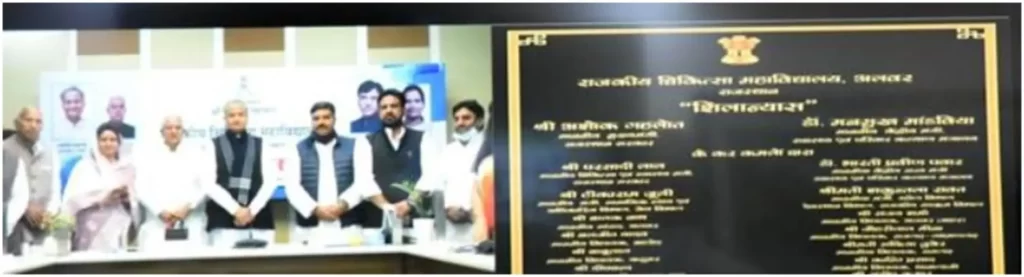
Dr. Mandaviya informed the gathering that “Since 2014 there has been a 54% increase in medical colleges from 387 in 2013 to 596 in 2021-22. UG and PG seats have also seen a growth of 75% and 93% respectively since 2013-14. Even in Rajasthan, the number of Undergraduate and Postgraduate seats have more than doubled from 2013-14 to 2021-22. This underscores the Govt. of India’s and State Govt’s mutual commitment in boosting healthcare in the country".
The Union Health Minister urged the State Government to ensure that timelines of establishment of the Medical Colleges are adhered to ensure that quality healthcare is provided to the people of the region in a time bound manner.
Chief Minister of Rajasthan, Shri Ashok Gehlot in his address thanked the constant support of the Government of India in upgrading the health infrastructure in the State. He said that the Government of Rajasthan is working with Central Government in implementing various welfare programs which are crucial in improving the health metrics of the state.
Union Health Secretary Shri Rajesh Bhushan, Dr. Manohar Agnani, Additional Secretary (Health), Ms. V. Hekali Zhimomi, Joint Secretary, Chief Secretary, Rajasthan Smt Usha Sharma , Principal Secretary to Chief Minister Shri Kuldeep Ranka, Principal Secretary (Dept of Medical Education, Rajasthan) Shri Vaibhav Galriya, Commissioner, (Dept of Medical Education, Rajasthan) Ms. Shivangi Swarnkar also attended the event along with senior government officials and members of the medical fraternity.
Union Minister of State for Health and Family Welfare, Dr Bharati Pravin Pawar virtually chaired the inauguration ceremony of the 2021 MBBS Batch of AIIMS, Kalyani, here today.
Congratulating the students and the administration, the Union Minister of State expressed her happiness at the start of the third academic session of 2021 of All India Institute of Medical Sciences, Kalyani, which is starting with a batch of 125 MBBS students.
Reiterating the history of AIIMS, the Union Minister of State said that it is the vision of our Hon'ble Prime Minister to establish AIIMS in every state. As a result of which, a total of 22 AIIMS approvals have been received so far. In addition to the establishment of AIIMS, priority has been given to the development of modern treatment facilities and an increase in the number of skilled doctors, so that affordable treatment can be provided to the poor, she added.
“Hon’ble Prime Minister Shri Narendra Modi believes that the future belongs to societies that invest in healthcare. An example of this pious objective is the Kalyani AIIMS, which is being built at a cost of Rs 1,754 crore, which will be a 960-bed hospital spread over 179.82 acres. All India Institute of Medical Sciences has three pillars - Medical education in various subjects, Research in biomedical science and providing medical service of the highest level. There is no doubt that AIIMS Kalyani will prove to be a milestone in the field of health in West Bengal and it will emerge as an institute of excellence soon”, she further added.
She congratulated all the students who have secured good scores in NEET Exam 2021 and have taken admission in MBBS course of AIIMS Kalyani. Along with this, she also congratulated the parents of these future doctors of India, who have instilled the spirit of human service in their children. And, requested the people to work together and ensure that AIIMS, Kalyani works to its full potential. The Union Minister of State said that it is our collective responsibility that AIIMS Kalyani provides affordable medical services to the people of Bengal, so that, the vision of providing affordable medical facilities to the last mile is realised at the earliest.
Dr Chitra Sarkar, former Dean of Research at AIIMS, Delhi and President of AIIMS Kalyani, Dr Ramji Singh, Executive Director, AIIMS Kalyani and other senior professors, officers, students and family members of all the students were present in the meeting.
Union Minister of State for Health and Family Welfare, Dr. Bharati Pravin Pawar virtually addressed the Western Region Dissemination Workshop of the fifth National Family Health Survey (NFHS), here today.
The Union Minister started her address by thanking the dignitaries present at the event and expressing her appreciation for NFHS for providing high-quality data on health and family welfare, and emerging issues in this area.
The NFHS provides estimates on key indicators related to population, family planning, child and maternal health, nutrition, adult health, and domestic violence, among others which play a crucial role in shaping health and welfare policies. The scope of the survey has expanded over the years and in addition to emerging population and health issues, several biomarkers have been included in NFHS-5 to cover diabetes, hypertension, anthropometric measurements, anaemia, HbA1c, D3 and antimalarial parasites.
Speaking on the occasion, Dr Pawar said that “over the years, results from the various rounds of NFHS have been extensively used for evidence-based decision making and policy formulation.” She further said that “the results from NFHS-5 will be useful in setting benchmarks and examining the progress made in the health sector over time. Besides providing evidence for the effectiveness of ongoing programmes, the data from NFHS-5 helps in identifying the need for new programmes with an area specific focus and identifying groups that are most in need of essential services.”
The Minister highlighted that NFHS-5 results have been released at a critical juncture as they “help in assessing the progress made towards meeting the Sustainable Development Goals (SDG) by 2030 and help us take steps for achieving the goals.” She added that NFHS-5 provides data source for 27 SDG indicators.
Dr Pawar informed that “there is substantial increase in the maternal and child health indicators in some states/UTs. Institutional births have shown substantial increase and C-section births have also risen.” She however noted that “anaemia among women continues to remain a challenge and a lot more thinking needs to go in to address this issue.”
The Minister also informed that under the dynamic leadership of Honourable Prime Minister, Shri Narendra Modi, “aggressive implementation of Central Government programs like Swachh Bharat Mission has led to considerable improvement in water, sanitation and hygiene (WASH) indicators for States/UTs”. She noted that “there is improvement in child health and women’s empowerment indicators like ownership of house or land, use of mobile phone but at the same time violence against women is still existent and so there is much to do in this area as well.”
Dr Bharati Pravin Pawar ended her address by thanking all the dignitaries for their contribution to healthcare in India and urging them to “work in tandem and play supportive role to help the government not only formulate meaningful policies and programs but also to ensure that they get implemented and achieve the goals setup to make our country to achieve a vision of Quality health for all as envisioned by Honourable Prime Minister.”
Dr Mansukh Mandaviya, Union Minister of Health and Family Welfare stressed on the importance of collaborative efforts for enhancing awareness among communities regarding hearing disorders and hearing impairment. He stated that “With Jan Bhagidari and Jan Andolan, everyone can effectively contribute to adding to the existing knowledge among communities regarding benefits of early identification, and timely treatment of hearing disorders”. When left undetected and untreated, hearing ailments can transform into disabilities thereby adversely impacting the productivity and quality of life of many. He was addressing the 10th anniversary of World Hearing Day celebrations at Dr. Ambedkar International Centre in the presence of Dr. Bharati Pravin Pawar, Union Minister of State for Health and Family Welfare, here today. The theme for this year's World Hearing Day is "To hear for life, listen with care"
The Union Health Minister acknowledged the crucial role of ASHAs and ANMs, Doctors, NGOs, nurses in creating awareness in this regard. He urged them to further educate the communities and parents of young children for early screening and identification of hearing impaired. He also cautioned everyone that “We should not self-medicate, but consult with doctors and proper caution should be taken before taking any medication related to hearing problems.” He also stated that in the modern age of technological growth, almost all causes of hearing loss including exposure to loud sounds can be prevented and treated. Use of technology can be a game changer in achieving this, he added.
He highlighted the commitment of the Government towards healthcare of the elderly. The Union Minister pointed out, “The elderly and children are being given the priority for treatment of hearing loss. The Government is committed towards the welfare of all people and especially the elderly.” He also informed that the Union Ministry of Health and Family Welfare already has a programme dedicated to addressing the various health related problems of the elderly called the “National Programme for the Health Care of Elderly” (NPHCE).
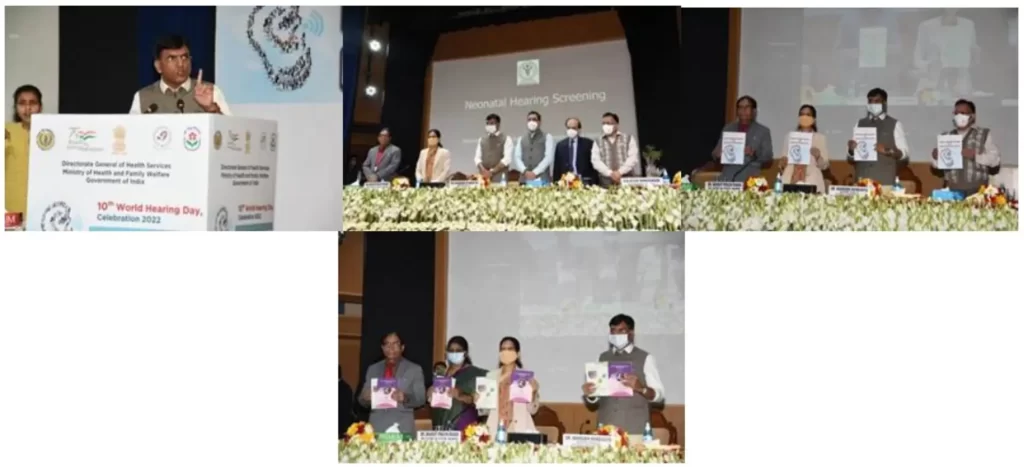
The Union Minister virtually inaugurated Neonatal Hearing Screening Facilities for hearing impaired at AIIMS and 11 Outreach Service Centre (OSC) , All India Institute of Speech and Hearing (AIISH), Mysore. He also released a book of guidelines for Hearing and Screening for children and elderly along with the last two years screening report for newborn, school going and adults. While releasing the guidelines, the Union Health Minister highlighted that more than 1 lakh infants per year in India are diagnosed with hearing problems. He further added, “This shows it is an emerging challenge. These guidelines would benefit various age groups and hence, must be promoted. With the launch of Neonatal Hearing Screening Facility, AIIMS, New Delhi and Eleven (11) OSC AIISH, Mysore, capacity for screening, early identification and prevention will immensely increase.”
Dr Bharati Pravin Pawar, Minister of State of Health and Family Welfare said that the World Hearing Day reminds us of our responsibilities towards the hearing impaired. She stressed on importance of pregnant women and mothers being aware of this issue and take treatment for their children with any hearing impairment at the earliest.
The Union Health Secretary, Shri Rajesh Bhushan said that the India’s first programme related to hearing problem- National Programme for Prevention and Control of Deafness (NPCCD), started in 2006 under NHM has three pillars:
Creating awareness regarding prevention, early identification and treatment of hearing disorders
Training of professionals at all levels, including ASHA workers, ANMs, GDMOs and ENT Surgeons etc.
Strengthening service delivery related to screening, treatment and rehabilitation.
It is to be noted that the entire event was translated live into sign language by Ms. Deepali, a young student from the Indian Sign Language Research and Training Center ( ISLRTC). It was widely appreciated by the Hon'ble Ministers, dignitaries and the attendees.
Senior officers of Union Ministry of Health and Family Welfare along with officers and experts from AIIMS, Dr RML Hospital, NCDC, DGHS etc., were present at the event.
On 3rd Day of Jan Aushadhi Diwas week long celebrations, Jan Aushadhi Bal Mitra programme has been conducted across the country at 75 locations to engage children as our Bal Mitras with Jan Aushadhi scheme to educate them about the benefits of the Pariyojana, price difference between Jan Aushadhi medicines and branded medicines, savings, Jan Aushadhi Seva Bhi Rozgar Bhi, etc.
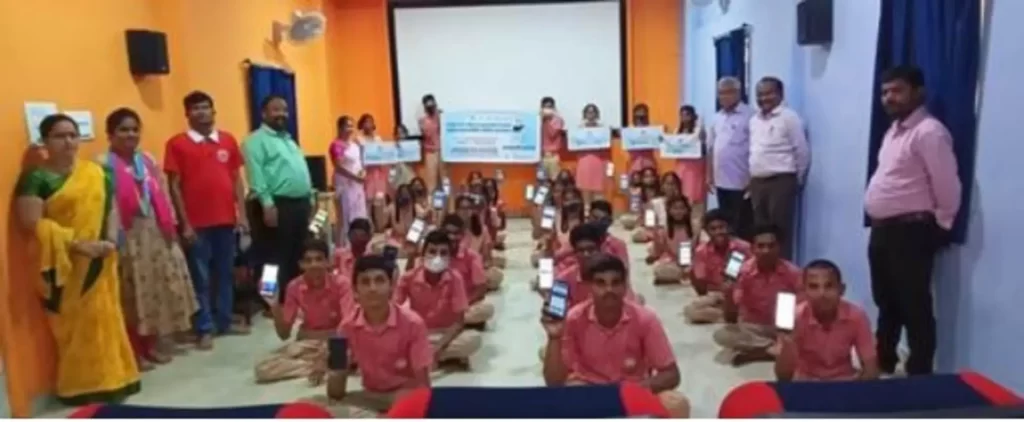
In addition to this, to engage our Bal Mitra’s with Jan Aushadhi, PMBI has conducted an online quiz on Jan Aushadhi through MyGov platform with a prize of Rs. 200/- coupon each to 100 Bal Mitras. PMBI has organized release of sky lanterns and balloons at 75 locations, across the country to spread the message of the Jan Aushadhi.
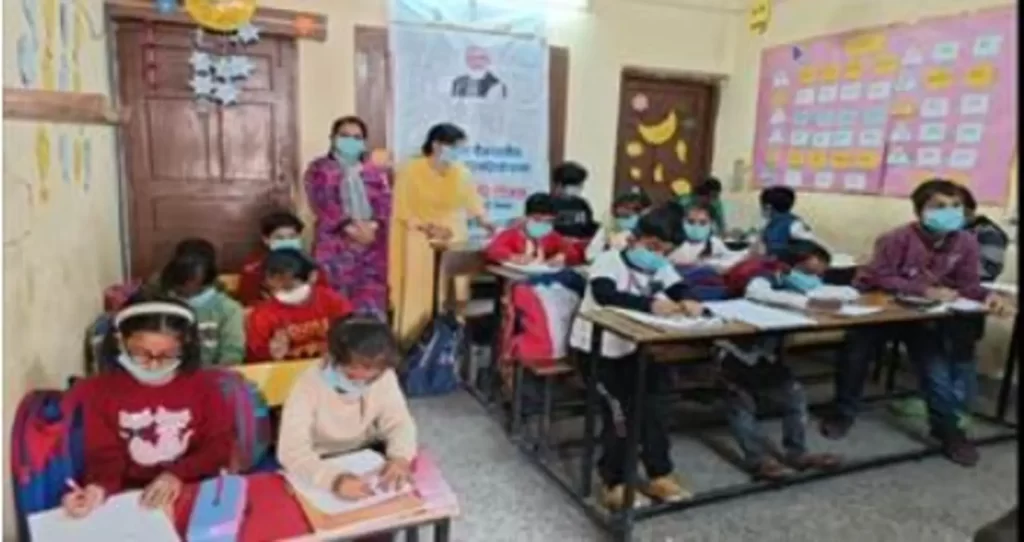
The programme this year is being held under the aegis of Azadi Ka Amrit Mahotsav commemorating 75 years of India's independence which is an initiative of the Government of India to celebrate and commemorate 75 years of progressive India and the glorious history of its people, culture and achievements.
Minister of State for Chemicals & Fertilizers and New & Renewable Energy, Govt. of India Shri Bhagwanth Khuba flagged off Jan Aushadhi Rath, Jan Aushadhi Mobile Vans and Jan Aushadhi E-rickshaws from in New Delhi as a part of the weeklong celebration across the country.
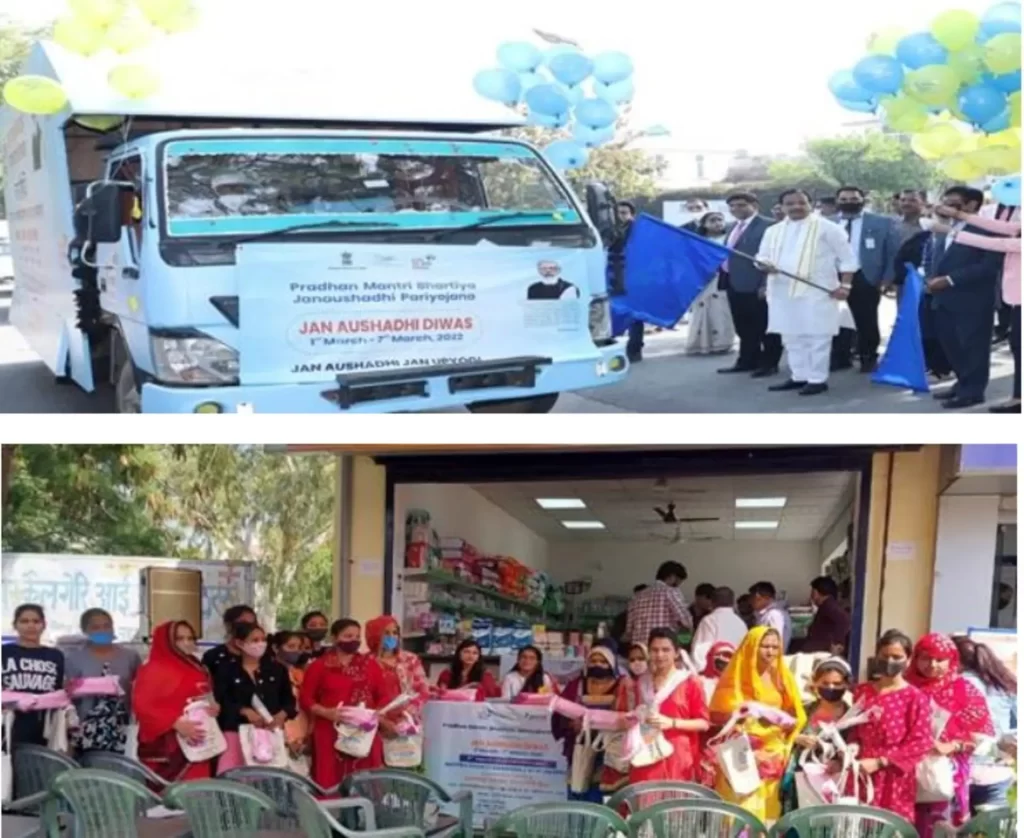
The Jan Aushadhi Rath will travel 7 days covering 4-5 States and Vans and E-rickshaws will travel across Delhi up to 7th March to raise awareness at the grassroot level about the benefits of the Pariyojana and Jan Aushadhi generic medicines which are available at affordable prices for all.
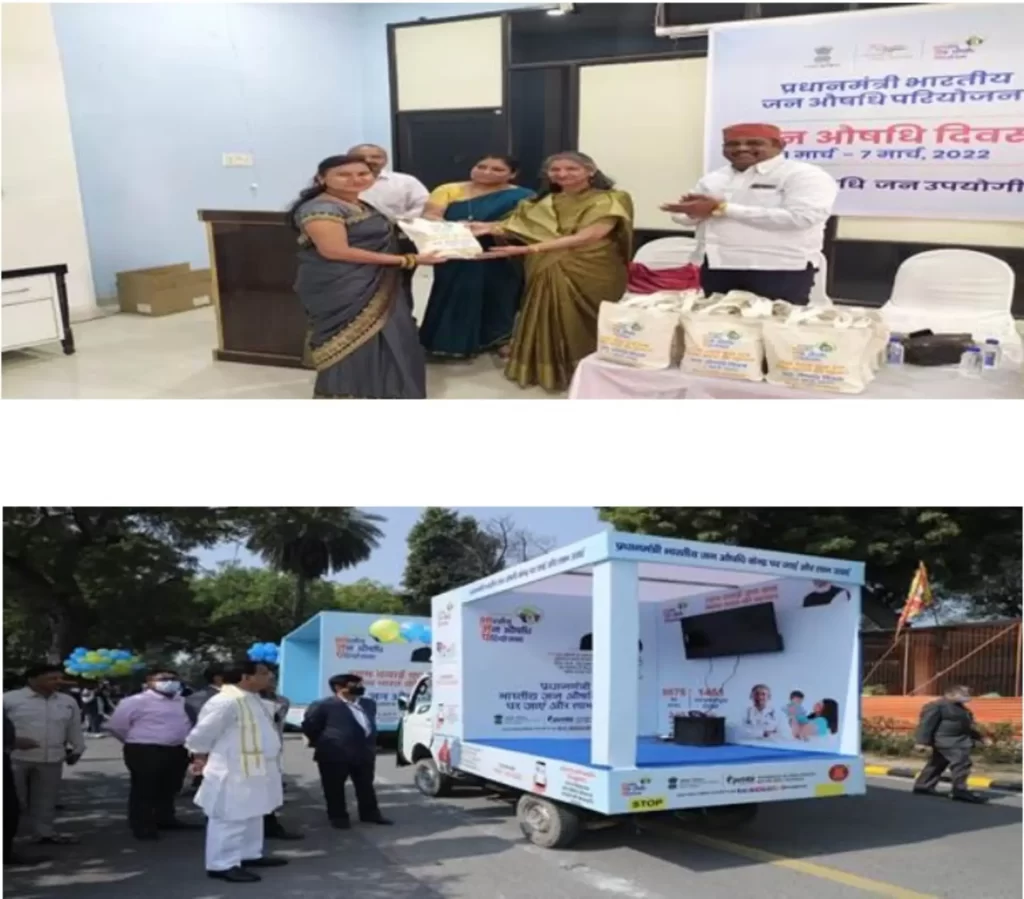
On the 2nd Day of Jan Aushadhi Diwas celebrations, Matri Shakti Samman programme were organised at 75 locations across the country to honor women of the country. During this event, a gift hamper containing various items of Jan Aushadhi which can be used by the women have been distributed. These events have been attended by women leaders, city mayors, public representatives, and other distinguished women from various walks of life.

All the programmes this year are being held under the aegis of Azadi Ka Amrit Mahotsav commemorating 75 years of India's independence.