
Union Health Ministry has rushed a high level multi-disciplinary team to Uttar Pradesh where a case of Zika Virus Disease case has been reported. A 57-year-old male from Kanpur, Uttar Pradesh has tested positive for Zika virus disease on 22nd October 2021.
The multidisciplinary team comprising of an entomologist, public health specialists and gynaecologist drawn from National Vector Borne Disease Control Programme, National Center for Disease Control and Dr. RML Hospital, New Delhi has been deployed by Union Health Ministry to assist the State Health authorities for control and containment measures of the Zika virus disease.
The team shall work closely with the State Health Department, take a stock of the situation on the ground and assess whether the Union Health Ministry’s Action Plan for Zika Management is being implemented. The team will also recommend necessary public health interventions for management of Zika in the state of Uttar Pradesh.
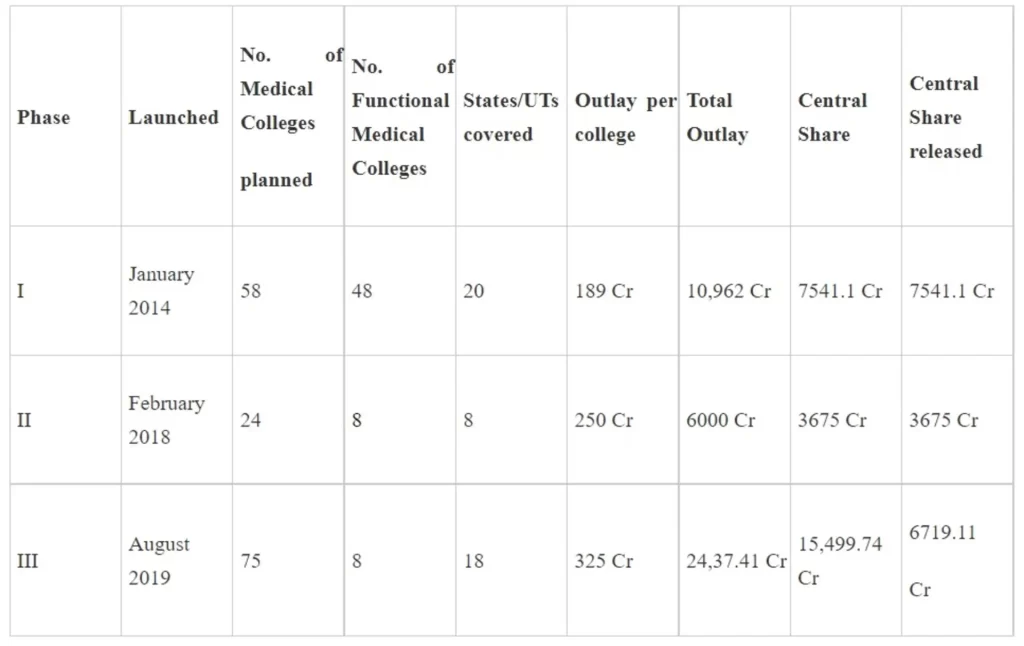
The Government of India has given a nod to as many as 157 new medical colleges in India since 2014 and has invested a total of ₹17,691.08 crore on these projects.
On completion, nearly 16000 undergraduate medical seats would be added. Of these, 6500 seats have already been created with the functioning of 64 new Medical Colleges.
Under the Centrally Sponsored Schemes (CSS), the Central Government has also provided about ₹2,451.1 crore for upgradation of existing state government or central government medical colleges to increase MBBS seats in the country.
Government of India has relentlessly pursued the aim of cultivating more human resources through Centrally Sponsored Schemes (CSS) that seek to address not only the issues of equity in medical education and but also geographic disparity in availability of medical care.
This is implemented by the following avenues:
Establishment of new Medical Colleges attached with existing district/referral hospitals, Upgradation of existing State Government/Central Government medical colleges to increase MBBS seats in the country and Strengthening and upgradation of State Government Medical colleges for starting new PG disciplines and increasing PG seats. Brief of the Centrally Sponsored Scheme: Establishment of new Medical Colleges attached with existing district/referral hospitals Under the Scheme, medical colleges are established in Districts which do not have either a Government or private medical college. Preference is given to underserved / backward / Aspirational Districts.
Under three phases of the scheme, 157 new medical colleges have been approved, out of which 63 medical colleges are already functional. Of the 157 new colleges that are being established under the Centrally Sponsored Scheme, 39 are being set up in Aspirational Districts.
As per the scheme guidelines, the State Government is the implementing agency and the planning, execution and commissioning of the projects is to be done by the State Government.
The achievements under the 3 phases are:
Upgradation of existing State Government/Central Government Medical Colleges to increase MBBS seats in the country:- With the objective of creating 10,000 MBBS seats in Government Colleges in the country, the Ministry of Health & Family Welfare is implementing the Centrally Sponsored Scheme for up-gradation of existing State Government/Central Government medical colleges to increase MBBS seats.
The funding pattern is 90:10 by Central and State Governments respectively for North Eastern States and Special category States and 60:40 for other States with the upper ceiling cost pegged at Rs.1.20 crore per seat.48 colleges in 15 states has been approved for increase of 3325 seats with Rs 6719.11 Cr released as Central Share.
Strengthening and upgradation of State Government Medical colleges for starting new PG disciplines and increasing PG seats:- This initiative has been undertaken in two phases:
Phase-I of the scheme was launched in the XI Plan period with the objective of strengthening and upgrading State/Central Government Medical Colleges to create new PG seats. A total of 72 Government Medical colleges in 21 States/UTs have been approved under the scheme for increasing 4058 PG seats. Funds to the tune of Rs.1049.3578 crore have been released under the scheme till date.
The objective of the Phase-II of the scheme was to create 4000 PG seats in Government Colleges in the country. The funding pattern is 90:10 by Central and State Governments respectively for North Eastern States and Special category States and 60:40 for other States with the upper ceiling cost pegged at Rs.1.20 crore per seat. A total of 16 Government Medical Colleges have been approved under the scheme for increasing 1741 PG seats till date. Funds to the tune of Rs.694.534 crore have been released under the scheme till date.
This Central Sector Scheme was envisaged to bridge the shortfall in manpower in the Medical Sector as also to bridge the geographical imbalance in availability of trained medical manpower across the country. Major milestones being achieved by the Scheme include increasing availability of health professionals, correcting existing geographical imbalance in the distribution of medical colleges, promoting affordable medical education, utilizing existing infrastructure of district hospitals and improving tertiary care in the Government sector.
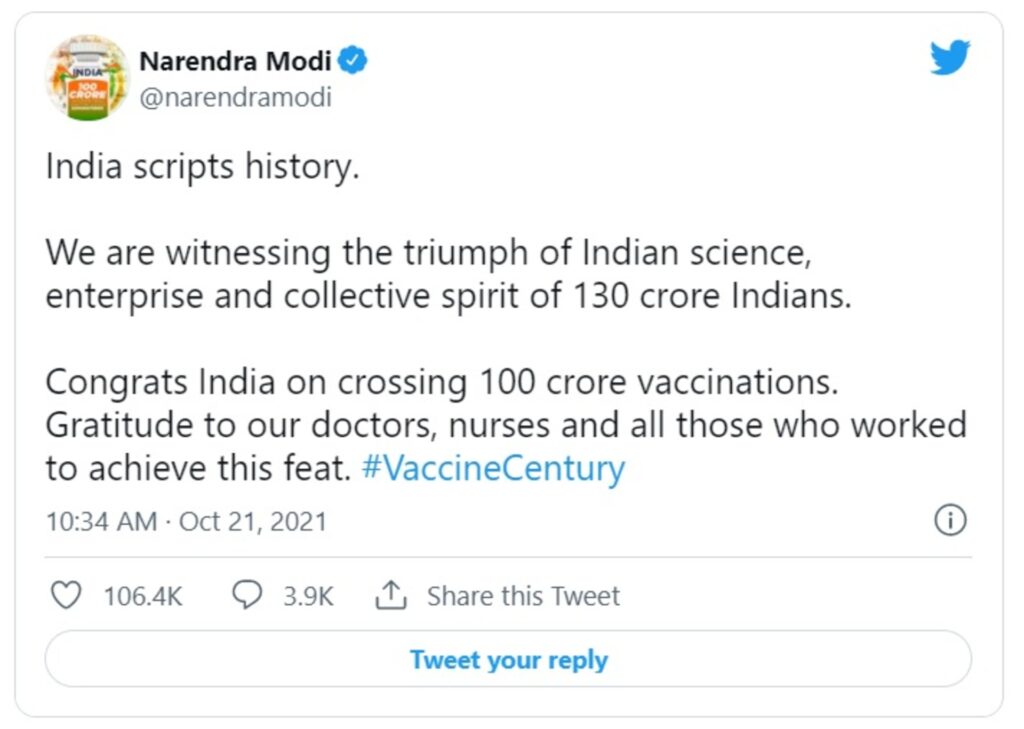
In a historic achievement, the cumulative COVID-19 vaccine doses administered in the country has surpassed the 100-crore milestone. In a tweet, Prime Minister Shri Narendra Modi congratulated the countrymen and expressed gratitude to the country’s scientific community and health professionals for working towards achieving this stupendous feat.
The Union Health Minister Dr. Mansukh Mandaviya also congratulated the country on achieving this landmark.

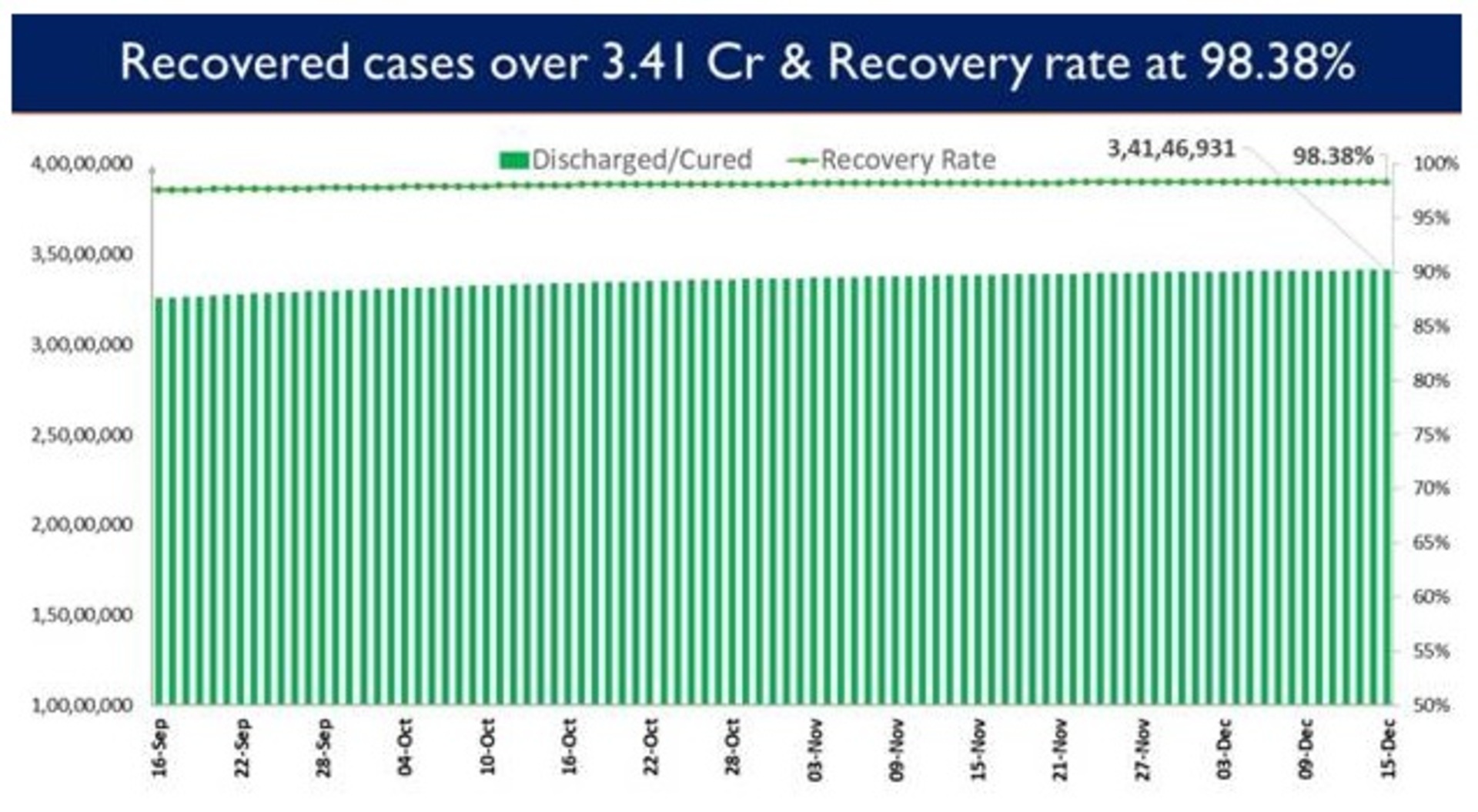
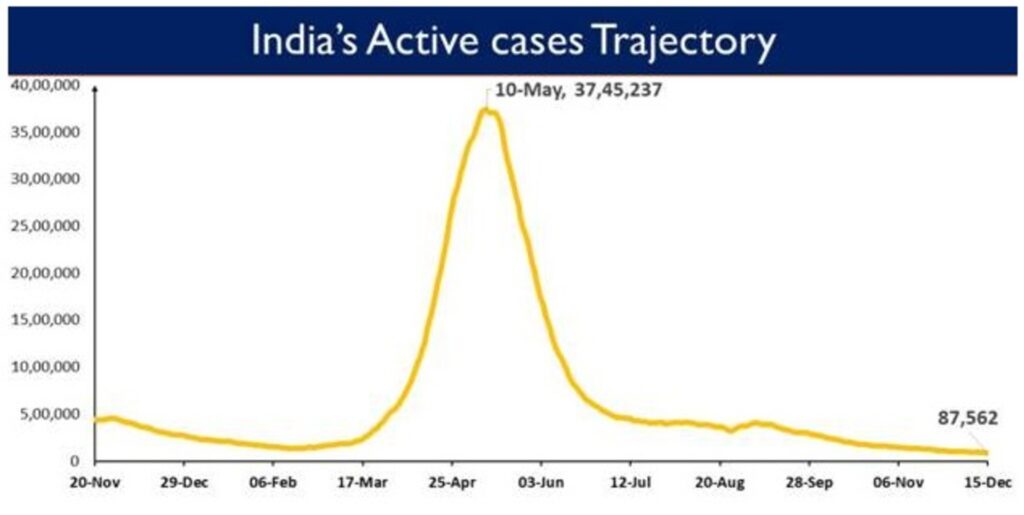
The recovery of 17,561 patients in the last 24 hours has increased the cumulative tally of recovered patients (since the beginning of the pandemic) to 3,34,95,808.
Consequently, India’s recovery rate stands at 98.15%. Recovery Rate is currently at its highest peak since March 2020.
Sustained and collaborative efforts by the Centre and the States/UTs continue the trend of less than 50,000 Daily New Cases that is being reported for 116 consecutive days now.
18,454 new cases were reported in the last 24 hours.
The Active Caseload remains below 2 lakh mark and is presently at 1,78,831. Active cases presently constitute 0.52% of the country's total Positive Cases, which is lowest since March 2020.
The testing capacity across the country continues to be expanded. The last 24 hours saw a total of
12,47,506 tests being conducted. India has so far conducted over 59.57 Cr (59,57,42,218) cumulative tests.
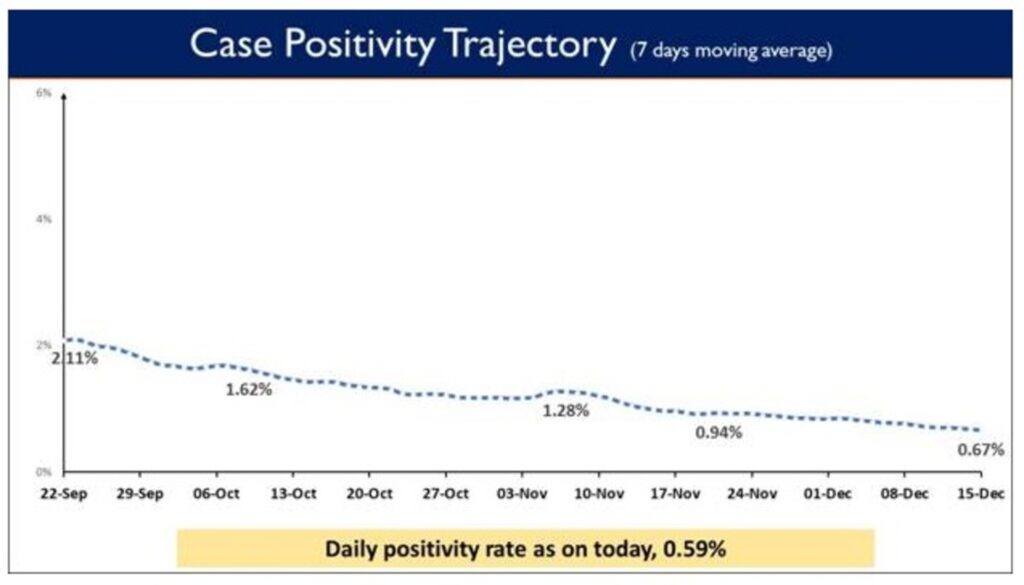
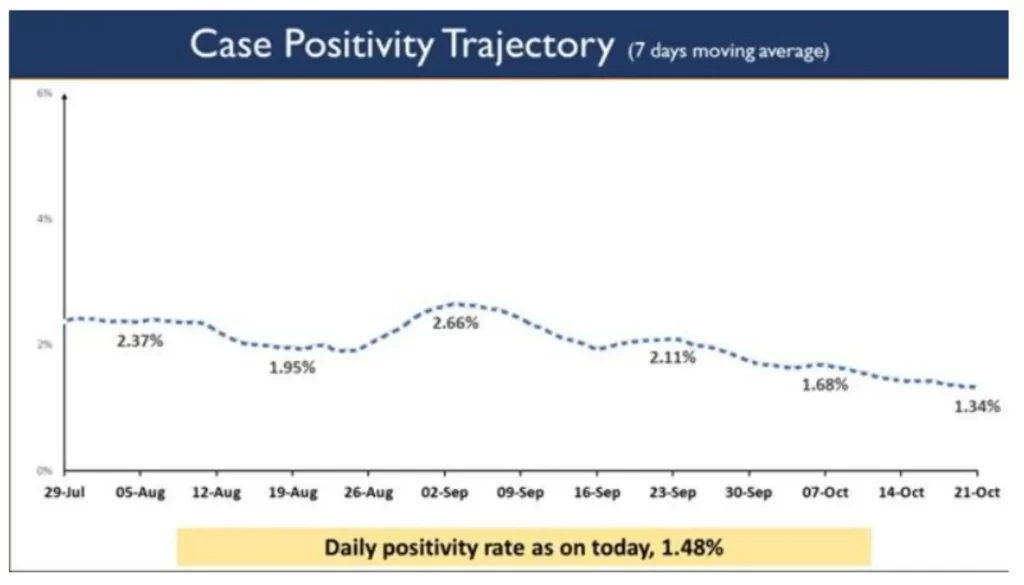
While testing capacity has been enhanced across the country, Weekly Positivity Rate at 1.34% remains less than 3% for the last 118 days now. The Daily Positivity rate reported to be1.48%. The daily Positivity rate has remained below3% for last 52 days and below 5% for 135 consecutive days now.
‘Pradhan Mantri Garib Kalyan Package (PMGKP): Insurance Scheme for Health Care Workers Fighting COVID-19’ was launched on 30.03.2020 to provide comprehensive personal accident cover of Rs. 50 Lakh to 22.12 lakh health care providers including community health workers and private health workers who may have been in direct contact and care of COVID-19 patients and may be at risk of being impacted by this.
Further, on account of the unprecedented situation, private hospital staff/retired/ volunteer/local urban bodies/contract/daily wage/ad-hoc/outsourced staff requisitioned by states/central hospitals/autonomous hospitals of central/states/UTs, AIIMS & Institute of National Importance (INI)/hospitals of Central Ministries specifically drafted for care of COVID-19 patients are also covered under the PMGKP.
The current period of the policy is ending on 20.10.2021.
Since the Covid-19 pandemic has still not abated and deaths of health workers deployed for COVID related duties are still being reported from different States/UTs,accordingly, the insurance policy has been extended w.e.f. 21.10.2021 for a further period of 180 days so as to continue to provide the safety net to the dependents of health workers who are deputed to take care of COVID-19 patients.So far, 1351 claims have been paid under the scheme.
A letter dt. 20.10.2021 to this effect has been issued to the Additional Chief Secretaries (Health)/Principal Secretaries (Health)/ Secretaries (Health) of all States/UTs for giving wide publicity amongst the health workers in their respective States/UTs.
Union Minister of State for Health and Family Welfare, Dr. Bharati Pravin Pawar virtually addressed the “FICCI Healthcare Excellence Awards” ceremony from Nirman Bhawan, today.
The Union Minister started her address by thanking the dignitaries present at the event and expressing her appreciation for FICCIfor contributing immensely to the Covid19 response in close coordinationwith the Empowered Groups, central and state governments.She also expressed her admiration for the contributions FICCI has made in bringing about various transformations and developments in the healthcare sector.
Speaking on the occasion, Dr Pawar said that a “great responsibility lies on us to achieve the Prime Minister’s dream of achieving affordable, accessible, safe and modern healthcare in India.” She further said that “the Government of India launched various nationwide programs for prevention, control and eradication of communicable and non-communicable diseases and improvement of maternal and child health”.
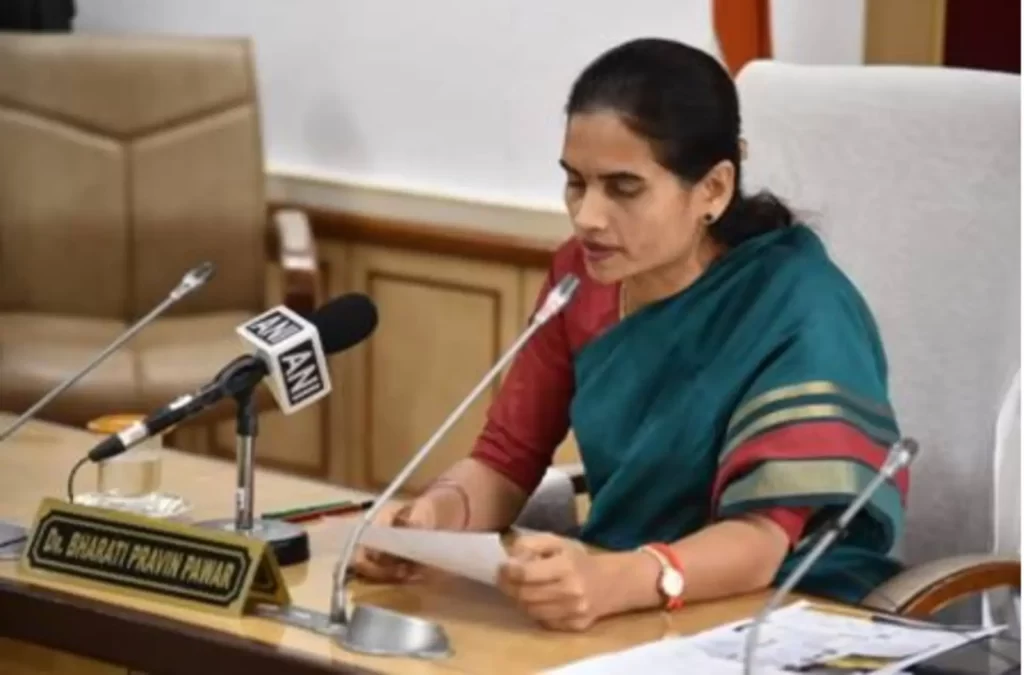
The Minister highlighted that in working towards the goal of achieving universal health coverage, the government launched the world’s largest public funded healthcare program, the ‘Ayushman Bharat Mission’. She added that the scheme has been expanded to include the Digital Health Mission that aims to converge the various components of healthcare ecosystem on one platform for seamless integration and better healthcare outcomes.
Dr Pawar informed that“the government has also launched numerous financial support schemes over the past couple of years for creating the appropriate environment for growth as well as augmenting public-private infrastructure of hospitals, public funded labs across the country. The National Medical Commission and the Paramedics Council have been key achievements in the field of medical education.”

The Minister also informed that India’s healthcare outcome indicators have shown consistent improvement in the past decade. She noted that “relentless efforts of the Central Government have resulted in launching of various nationwide programs for prevention, control and eradication of communicable and non-communicable diseases and improvement of maternal and child health.”
Detailing the success in the front of challenges posed by COVID19, the Union Minister highlighted that more than 99 crore doses of COVID-19 vaccines have been administered in the country and the government has set a target of vaccinating the country’s entire adult population by end of the year. She also informed the audience that under the “Make in India” initiative of the Honourable Prime Minister, Shri Narendra Modi, presently, “India is one of the leading countries in global medical devices market in the world.”

Dr Bharati Pravin Pawar ended her address by thanking FICCI and other dignitariesfor their contribution to healthcare in India and assured them of her government’s steadfast support in their activities.
Union Minister of Health and Family Welfare, and Minister of Chemical and Fertilizers, Dr. Mansukh Mandaviya, today virtually laid the foundation for the new building of ICMR School of Public Health at ICMR- National Institute of Epidemiology(NIE) Ayappakkam, Chennai. The foundation stone laying ceremony was presided over by Prof. Balram Bhargava, Padma Shri, Secretary of Department of Health Research and Director General of Indian Council of Medical Research (ICMR) in the distinguished presence of Dr J Radhakrishnan, Principal Secretary, Health and Family Welfare, Govt of Tamil Nadu.
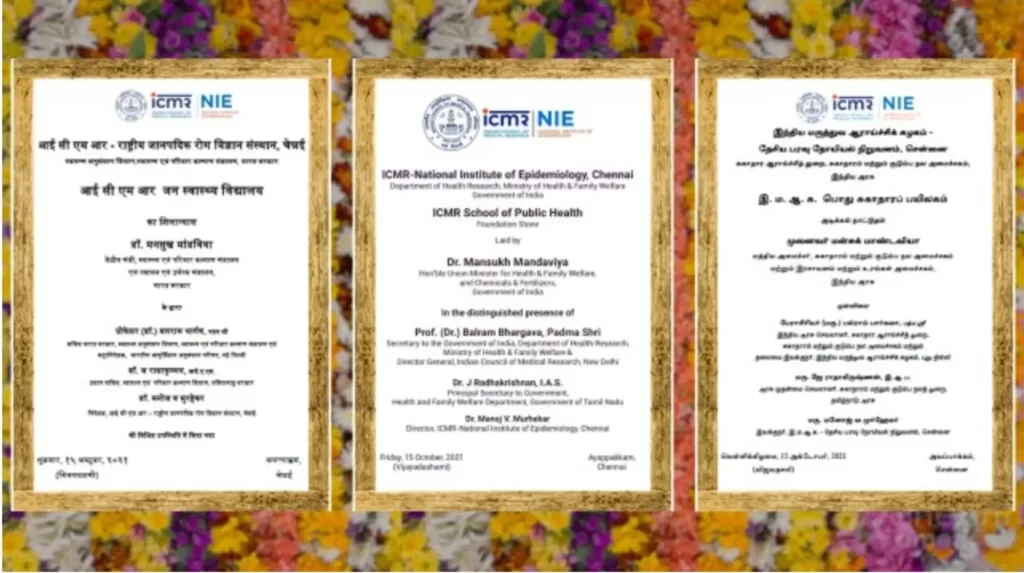
This new building of ICMR School of Public Health will be the first step towards ICMR-NIE’s goal of training at least 150 mid-level public health professionals over the next three years. Special focus is being provided to the states with an inadequately trained workforce.
Speaking on the occasion, Dr. Mansukh Mandaviya said that the School of Public Health would boost the public workforce in the country. ICMR has been at the forefront and this step would further strengthen their efforts in ramping up the health Infrastructure in the country.
Showcasing India’s achievements during this crisis, Dr. Mandaviya further mentioned that indigenous capacity building, be it in human resources or vaccination, India has been ramping up health infrastructure rapidly and this has boosted India’s stature on a global level. Today, countries are seeking India’s vaccines and this should make us and our countrymen proud of our efforts.
Reiterating the crucial role played by the health professionals, Dr. Mandaviya noted, “The health workforce is the channel for delivering health interventions to populations. A critical mass of health professionals is necessary to manage the health system and is often a crucial limiting factor in the delivery of quality health services.” He further stated that “It is time for the country to develop a public health culture by creating a robust public health education system.” He did not just emphasize that public health education needs to be at par with the International level but also must be able to respond to public health issues at local levels in our country. Noting the significance of holistic health education and its implementation to communities, he further added that, “There is a need to build a visible interface between public health training and communities so that the trained professionals can effectively deal with the problems in the communities. Interdisciplinary learning, which enables public health professionals to identify multiple determinants of health and influence them through multi-sectoral pathways, must be promoted. Public health learning needs to become more real-world oriented and equip the practitioner with problem-solving skills. It is imperative to increase the interface of public health education with the health system, especially with health services at various levels, to ensure that public health professionals can become effective change agents and elevate the health system toward greater efficiency and equity.”
The new facility will support the ongoing public health capacity programmes of ICMR-NIE. The Institute has been conducting Field Epidemiology Training Programmes (FETPs) meant to strengthen the public health workforce in India since 2001. The institute has trained more than 300 public health professionals from 30 States/UTs in the country, including 90 from Tamil Nadu. The FETP trainees from Indian public health systems learn public health skills by responding to public health emergencies such as disasters and outbreaks, evaluating how health programmes work, and doing epidemiologic studies to identify solutions to priority public health problems in their State. The institute conducts (1) Two-year India FETP leading to MPH (2) India Epidemic Intelligence Service (EIS)- Southern Hub (3) FETP –Non-Communicable Diseases and (4) Intermediate FETP – Non-Communicable Diseases.
The Department of Pharmaceuticals, Ministry of Chemicals & Fertilizers, and Invest India are organizing a Felicitation Ceremony for the winning start-ups of the ‘Pharma & Medical Devices Startup Grand Challenge’ through a video conference on Monday, 18th of October, 2021 from 5:00 p.m. to 6:00 p.m. The felicitation ceremony shall have Shri Amitabh Kant, CEO, NITI Aayog as the Guest of Honour, to encourage and congratulate the startups on their exemplary innovations. The event would also host noticeable stakeholders from the industry, celebrating the enormous efforts being undertaken by Indian innovators towards nation-building.
The Department of Pharmaceuticals launched the‘Pharma & Medical Devices Startup Grand Challenge’on February 26, 2021, at the ‘India Pharma & India Medical Device 2021’ Conference to provide impetus to innovation in these sectors and further spur economic growth. The Government Partners for the Startup Grand Challenge are the National Institutes of Pharmaceutical Education& Research (NIPERs) at Hyderabad and Ahmedabad, Invest India, and Startup India and Enabler Partners are Laurus Labs andBoston Scientific.
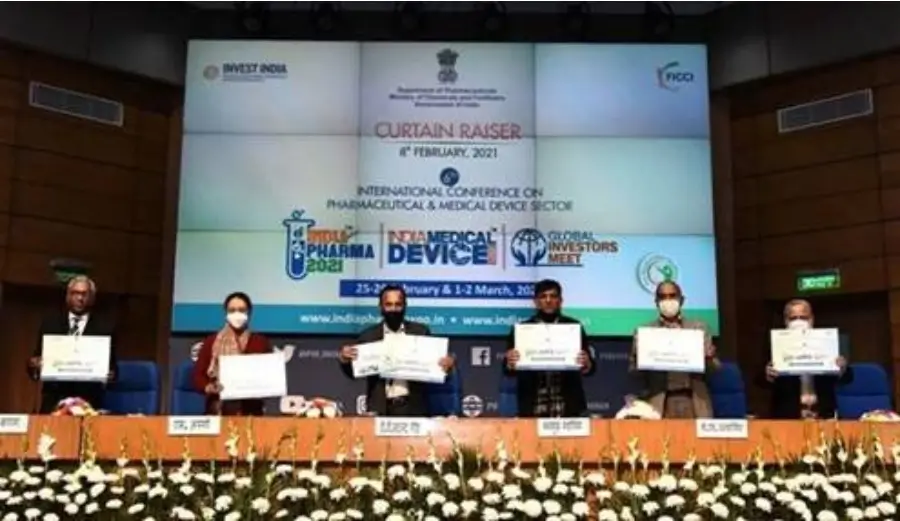
Applications for the program were hosted on the Startup India portal – www.startupindia.gov.in. A webinar was also conducted as part of the program to create awareness around the importance of innovation & new technologies in the pharmaceutical and medical devices sectors. Out of 310 startup applications received for the Startup Challenge, 218 were in the Medical Devices sector and 92 were in the Pharmaceuticals sector.
17 startups were shortlisted from the Medical Devices sector and 5 startups from the Pharmaceuticals sector for the second round of evaluation, where they pitched their ideas to an eminent jury panel over a video conference. After a rigorous two-stage evaluation process, four startups have been identified as winners and runners-up for both sectors. The two winning startups shall receive a cash grant of INR 15 Lakh each, and two runners-up would receive INR 7 Lakh each. Moreover, a dedicated mentor will be assigned to all four startups for 6 months, and a virtual Demo Day would be organized in the coming months for the top 20+ startups that made it to the second round of evaluation for the program, where they would pitch their ideas to officials from the Government Ministries/ Departments, Cooperatives, Corporate bodies, Investors, etc.
The Indian Pharmaceutical and Medical Devices sectors are contributing significantly to the advancement of the Indian economy. The country enjoys an important position in the global pharmaceuticals sector. Globally, India ranks 3rdin terms of pharmaceutical production by volume and 14th by value. Designated as the sunrise sectorunder the Make in India campaign, India is counted amongst the top 20 global medical devices market in the world and is the 4th largest market in Asia after Japan, China, and South Korea. Moreover, during COVID-19 pandemic, a large number of startups entered the domain, fuelled by strong investor interest.
Dr Bharati Pravin Pawar, Union Minister of State for Health and Family Welfare launched Phase II of awareness campaigns on HIV/AIDS & TB under Azadi ka Amrit Mahotsav, here today. She also virtually interacted with students from across the country and encouraged them to contribute to nation building, as India commemorates 75th year of Independence.
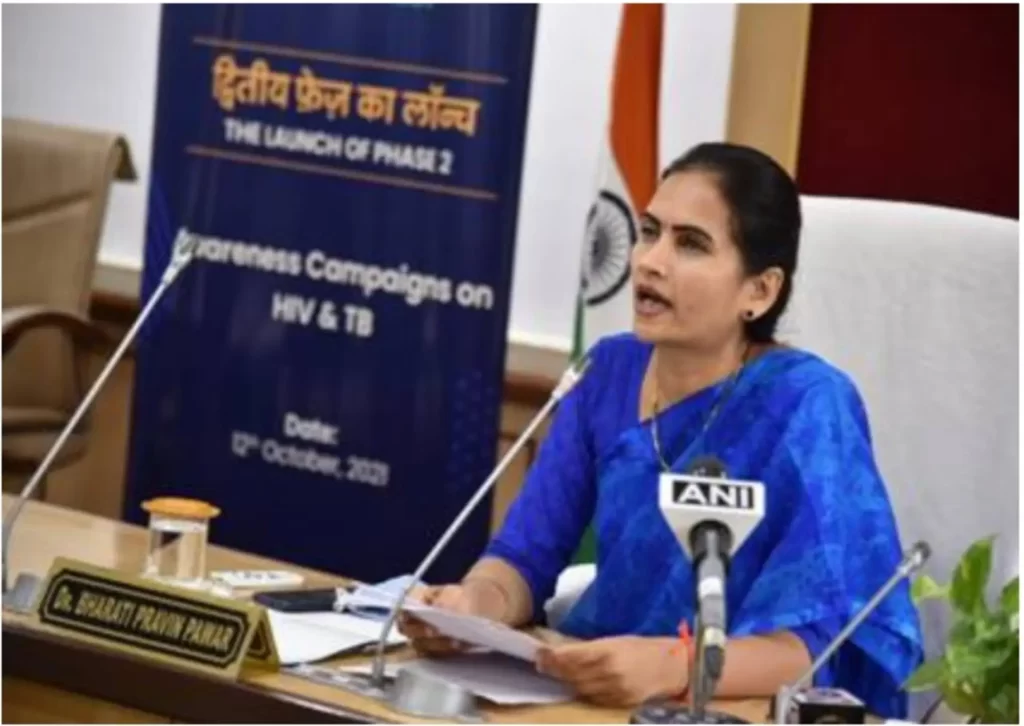
Expressing her happiness on the launch of this campaign, she said, “The New India@75 has provided a platform for the States for bringing students, adolescents, youth and other stakeholders to act together in national interest. Following the launch of Phase I, I am happy to note that weeklong activities like painting, extempore debate and mask making pertaining to awareness generation of HIV/AIDS, TB and Blood Donation were organized in 25 schools and 25 colleges of each State.”
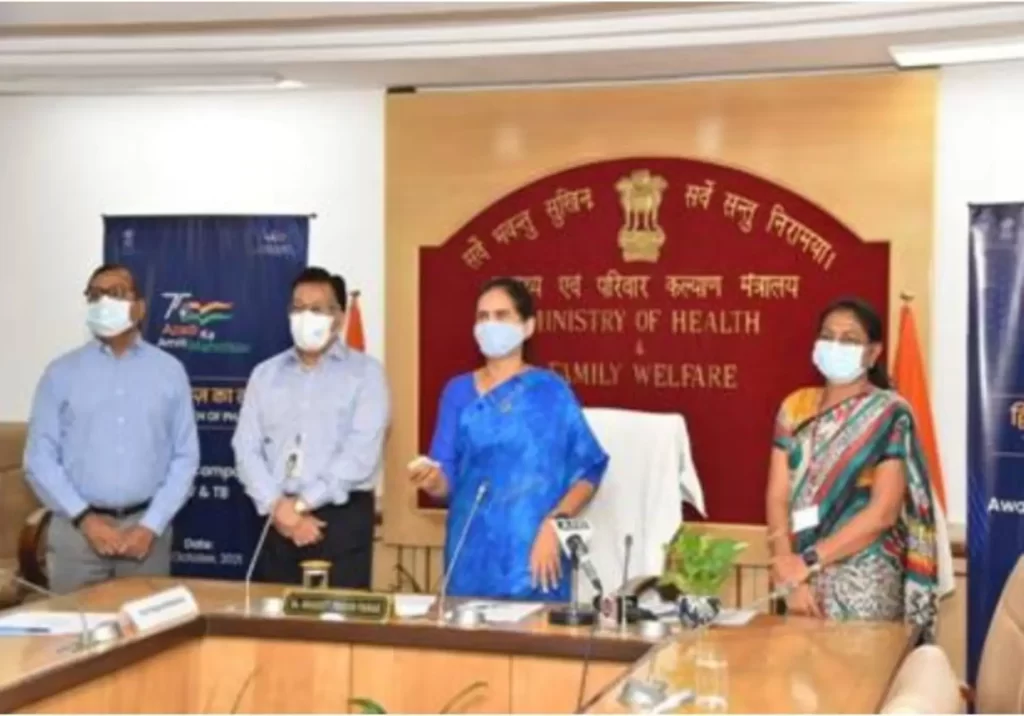
Dr Bharati Pravin Pawar congratulated National AIDS Control Organisation (NACO) for the successful launch of the ‘Phase 1 of Awareness Campaigns on HIV, TB and Promotion of Blood Donation’ on 12th August, on the occasion of International Youth Day. She also appreciated the NACO’s work in reaching out to a large number of youth throughout the country during the COVID-19 pandemic. On the occasion, she also released an e-booklet developed by NACO to showcase the variety of awareness activities conducted under Phase-1. This booklet will work as a guide to connect more students from across the country to participate in activities ahead.
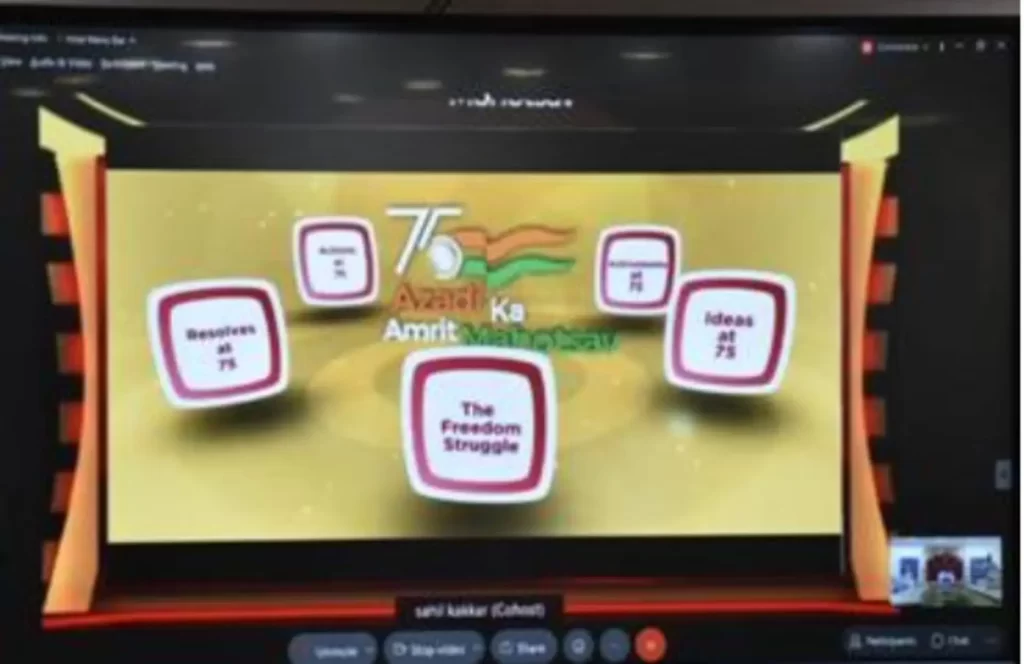
Virtually interacting with students across the country, she said, “I strongly feel 'Sabka Saath, Sabka Vikas, Sabka Vishwas and Sabka Prayaas' are important for making our country a great nation. Your contribution is most important for ‘Atmanirbhar Bharat, a self-reliant India’ as envisioned by our dynamic Prime Minister Shri Narendra Modi ji. Our Hon’ble Prime Minister has rightly said that "Indian youth from across the country are making our nation proud in many areas such as sports, robotics, machine-learning etc.” and are working on many products which have the potential to go global.``
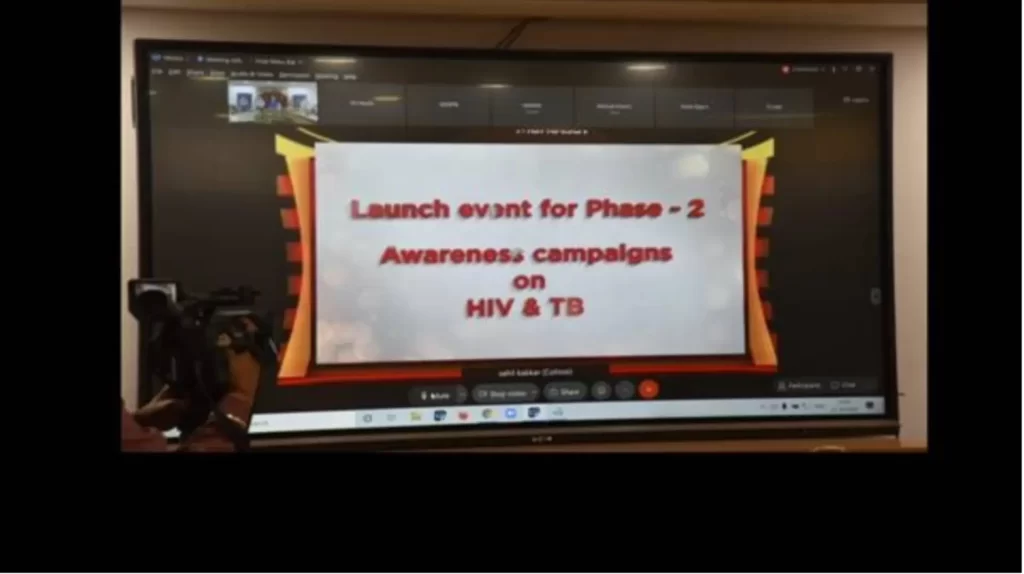
Expressing her firm belief in achieving health goals by fully engaging youth as partners and leaders in social developmental issues she said, “Engaging youth as community volunteers will go a long way in generating awareness about HIV/AIDS, tuberculosis, blood donation, about stigma and discrimination”. Highlighting India’s remarkable improvements in all health indicators such as life expectancy, infant mortality rate (IMR), maternal mortality rate (MMR) etc., she said that national programmes such as the National AIDS Control Programme and National TB Elimination Programme have played a very crucial role in improving India’s health indicators. Shri Rajesh Bhushan, Health Secretary, Ms. Arti Ahuja, Additional Secretary, Shri Alok Saxena, Additional Secretary, MoHFW & Director General, NACO, Ms. Nidhi Kesarwani, Director, NACO, Dr Anoop Kumar Puri, Deputy Director General, NACO and other senior Officials of the Ministry were also present. Link of the film shown during the event: “Youth are champions of change”: https://www.youtube.com/watch?v=MUWe7wj7ufE
The Domestic Vaccine Manufacturers and Manufacturers of Syringes have played an important and critical role in the effective implementation of World’s largest COVID Vaccination Program in India. India has so far administered nearly 94 Crore Vaccine doses and is nearing 100 Crore doses administration mark. With firm political commitment to vaccinate India’s last citizen, fulfilling the philosophy of ‘Antyodaya’ espoused by Pt. Deendayal Upadhyay, the Government has put in place a quantitative restriction on export of syringes to boost their domestic availability and uptake.
Syringes are vital to sustain the momentum of the program to vaccinate all eligible Citizens in shortest possible time. With a view to ensure adequate availability of the syringes, used to administer the vaccine, the Government of India has enacted this quantitative restriction on the export of following denominations of the syringes only: -
• 0.5 ml/ 1ml AD (auto – disable) syringes.
• 0.5 ml/1 ml/2 ml/3 ml disposable syringes.
• 1ml/2 ml/3 ml RUP (re-use prevention) syringes.
It is also clarified that it is not an Export ban on any kind/Type of Syringes, it is only quantitative restriction on the export of certain type of specified syringes, for limited duration of 3 months. Further, the syringes of denominations and types other than those mentioned above are not covered under Quantitative Restriction.
“Mental Health is an essential component of Holistic Health and awareness on it will go a long way to address the stigma surrounding it”. Dr. Mansukh Mandaviya, Union Minister for Health and Family Welfare stated this as he launched the Green Ribbon Initiative, here today. The event was organised by the Union Ministry of Health and Family Welfare in partnership with Hansraj College, Delhi to raise awareness on Mental Health as part of the activities being taken up during ongoing Mental Health Awareness Week, 5th-10th October.
10th October is observed around the world as World Mental Health Day.
On the occasion, Dr. Mansukh Mandaviya distributed green ribbons among the officials of the Union Health Ministry and media persons present to spread awareness regarding mental health. He also urged the students of Hansraj College to spread awareness regarding mental health issues among their peers and in the community.

Distributing green ribbons among senior officials, he said, “This green ribbon is a symbol of mental health. We need to spread more and more awareness about mental health in our society.” Dr. Mandaviya underscored that all types of Health and Wellbeing are essential for progress. “Without healthy individuals, there will not be a healthy family and by extension a healthy society and a healthy nation. Ill health, either physical or mental, leads to poor productivity thereby adversely affecting the growth and productivity of nations”, he stated. The Minister also exhorted the gathering to actively address the issue of Mental Health in India: “Out of ten, three students suffer from mental health issues. 14% of our children are suffering from mental health issues.” He spoke on the need to sensitize parents, teachers and other stakeholders to spot and assist young citizens in need of help. He observed, “We need to the conversation on mental health issues first within the family and gradually include the school environment too. We need to train our teachers in such a manner that they will be able to easily detect mental health issues in children”. He further stated that it is important to recognise, acknowledge and diagnose a mental health issue and treat it as such.”

Dr. Sunil Kumar, Director General of Health Services, Shri Vikas Sheel, Additional Secretary and Mission Director (National Health Mission), Shri Vishal Chouhan, Joint Secretary (Policy) and other senior Health Ministry officials were present on the occasion.