
The Government of India launched a “National Tele Mental Health Programme” on 10th October, 2022, to further improve access to quality mental health counselling and care services in the country. As on 2nd February 2026, 36 States/ UTs have set up 53 Tele MANAS Cells. Tele-MANAS services are available in 20 languages based on the languages opted by the States. More than 32.84 lakh calls have been handled on the helpline number since inception.
The Government has also launched Tele MANAS Mobile Application on the occasion of World Mental Health Day- October 10, 2024. Tele-MANAS Mobile Application is a comprehensive mobile platform that has been developed to provide support for mental health issues ranging from well-being to mental disorders.
Tele-MANAS Mobile Application has been expanded to include 10 additional regional languages — Assamese, Bengali, Gujarati, Kannada, Malayalam, Marathi, Tamil, Telugu, Odia, and Punjabi — along with the previously available languages, English and Hindi.
Tele-MANAS Mobile Application also assists visually challenged persons by making its mental health services accessible through a specially designed, user-friendly digital interface and a toll-free phone line that does not require screen use.
The Government has also launched the video consultation facility under Tele-MANAS, as another upgrade to the already existing audio calling facility.
The Government has established a dedicated Tele-MANAS Cell at the Armed Forces Medical College (AFMC), Pune to extend tele-mental health assistance and support to all Armed Forces service personnel and their dependents, further enhancing the mental health care services available to them.
The World Health Organisation India has assessed the impact of the Tele-Mental Health Assistance and Networking Across States (Tele-MANAS) in terms of its reach and user engagement across the country. A Rapid Assessment Report on Tele MANAS (2024) has been published by WHO, which provides an overview of programme performance, reach, utilisation patterns and user experience. The report is available on the website of the Ministry (https://mohfw.gov.in/sites/default/files/Rapid%20Assessment%20report%20on%20TeleMANAS.pdf).
The Union Minister of State for Health and Family Welfare, Shri Prataprao Jadhav stated this in a written reply in the Lok Sabha today.
National Centre for Disease Control (NCDC) under the Central Sector Umbrella Scheme implements National Programmes for Surveillance of Viral Hepatitis (2012), National Rabies Control Programme (2017), Programme for Prevention and Control of Leptospirosis (2013), National One Health Programme for Prevention and Control of Zoonosis (2013), Establishment & Strengthening of NCDC Branches (2015) and under the Central Sector component of Pradhan Mantri Ayushman Bharat Health Infrastructure Mission (PM-ABHIM) scheme implements strengthening surveillance of infectious disease and outbreak response comprising of establishment up of State branches, Bio Safety Level-3 Laboratory (BSL-3), NCDC regional branches, Metropolitan Surveillance Units, Strengthening of Integrated Health Information Platform (IHIP) and Strengthening and Upgradation of NCDC Head Quarters which are implemented across the country.
Further NCDC also implements various other programmes some of which are Integrated Disease Surveillance Programme (IDSP), National Programme for Prevention and Control of Snakebite Envenoming, National Programme on Climate Change and Human Health (NPCCHH) under Central Sponsored Schemes of National Health Mission. The details of the programmes/schemes of NCDC may be accessed at following link: https://ncdc.mohfw.gov.in/
The Government through National Health Mission (NHM) release funds to States/UTs based on the proposals received in Program Implementation Plans (PIPs). (The details of the PIP State/UT wise may be seen at: https://nhm.gov.in/index1.php?lang=1&level=1&sublinkid=1377&lid=744).
NCDC undertakes several measures to strengthen disease surveillance infrastructure in the country, including implementation of the Integrated Disease Surveillance Programme (IDSP) across all States/UTs, transition to the Integrated Health Information Platform (IHIP) in 2021 for paperless, case-based and near real-time surveillance, establishment of Central, State and District Surveillance Units, strengthening of District Public Health Laboratories (DPHLs), establishment of Metropolitan Surveillance Units (MSUs), designation of the Viral Hepatitis Laboratory at NCDC as a Centre of Excellence, and establishment as well as strengthening of NCDC State and Regional Branches.
The criteria adopted for identification of locations for establishing Metropolitan Surveillance Units (MSUs)includes population size and density, high disease burden and outbreak vulnerability, urbanization level (Tier-I and Tier-II cities), gaps in existing disease surveillance infrastructure, availability of supporting public health institutions.
The Union Minister of State for Health and Family Welfare, Shri Prataprao Jadhav, stated this in a written reply in the Lok Sabha today.
The National Health Mission (NHM) provides support for improvement in health infrastructure, availability of adequate human resources in health facilities, to improve availability and accessibility to quality healthcare especially for the under-served and marginalized groups in rural areas and tribal regions. This Ministry provides technical and financial support to the States/UTs to strengthen the public healthcare system, based on the proposals received in the form of Programme Implementation Plans (PIPs) under NHM.
A total of 1.82 lakh Ayushman Arogya Mandirs (AAMs) have been established and operationalized in the country by strengthening Sub Health Centres (SHCs) and Primary Health Centres (PHCs), including 30,817 AAMs in 178 tribal districts, which deliver expanded range of comprehensive primary healthcare services encompassing preventive, promotive, palliative, rehabilitative, and curative care.
Under NHM, norms have been relaxed for tribal/hilly/hard-to-reach areas to strengthen healthcare access. Population criteria for setting up of Sub Health Centres (SHCs), Primary Health Centres (PHCs) and Community Health Centres (CHCs) have been reduced to 3,000, 20,000 and 80,000 respectively. One Accredited Social Health Activist (ASHA) is allowed per habitation instead of per 1,000 population, and up to 4 Mobile Medical Units (MMUs) per district are permitted in tribal and hard-to-reach areas, compared to 2 in plain districts.
The Pradhan Mantri Ayushman Bharat Health Infrastructure Mission (PM-ABHIM) with an outlay of Rs.64,180 crore aims to provide support for infrastructure development for Sub-Health Centres, Urban Health and Wellness Centres, Support for Block Public Health Units, Integrated District Public Health Laboratories (IPHLs) and Critical Care Hospital Blocks (CCBs) which provides emergency & critical care services in the country. 168 IPHL and 110 CCBs have been approved in the tribal districts under PM-ABHIM.
The Government is making sustained efforts to ensure universal health coverage for tribal women across the country, through the Reproductive, Maternal, Newborn Child, Adolescent Health Plus Nutrition (RMNCAH+N) strategy under NHM, focusing on antenatal care, institutional deliveries, post-natal care and family planning services; Promotion of institutional deliveries through schemes such as Janani Suraksha Yojana (JSY) and Janani Shishu Suraksha Karyakram (JSSK); Regular outreach activities, health education and screening by ASHAs and other frontline workers in tribal habitations.
The teleconsultation services, available at all operational AAMs across the country including tribal regions, enables people to access the specialist services closer to their homes addressing concerns of physical accessibility, shortage of service providers and to facilitate continuum of care. Total teleconsultations conducted nationwide at AAMs are 42.66 crore, as on 31.12.2025.
Mobile Medical Units (MMUs) are supported under NHM to provide outreach services in remote villages with difficult terrain which are underserved and inaccessible. As per NHM-MIS report, a total of 1477 MMUs have been deployed across the country as on 30.06.2025.
Under the Pradhan Mantri Janjati Adivasi Nyaya Maha Abhiyan (PM-JANMAN), launched on 15th November, 2023 by MoTA, further relaxation in NHM norms has been provided up to 10 MMUs per district with Particularly Vulnerable Tribal Groups (PVTG) areas. Norms have been relaxed for one additional Auxiliary Nurse Midwife (ANM) for each Multi-Purpose Centre (MPC) constructed by MoTA. As per MMU portal, 763 MMUs under PM-JANMAN and 155 MMUs under Dharti Aaba Janjatiya Gram Utkarsh Abhiyan (DA-JGUA) are operational across the country for providing basic health services in tribal areas till 31.12.2025.
Ayushman Bharat Digital Mission (ABDM) aims to create an online platform enabling interoperability of health data within the health ecosystem to create longitudinal electronic health record of every citizen, make healthcare accessible for citizens including reducing the cost of care and enabling greater efficiencies in health service delivery between public and private Health care institutions.
Under National Health Mission (NHM), the performance of various health programmes is regularly assessed in the country including remote, hilly and tribal areas, through review meetings, mid-term reviews of key deliverables, field visits of senior officials, promoting performance by setting up benchmarks for service delivery & rewarding achievements etc. Common Review Missions (CRM) are conducted annually to assess and monitor the progress and implementation status of various schemes.
Health Dynamics of India (HDI) (Infrastructure & Human Resources), 2022-23 is an annual publication, based on healthcare administrative data reported by States/UTs. Details of availability of healthcare facilities and specialized human resources & gaps in the country including remote, hilly and tribal areas, State/UT-wise, may be seen at the following link of HDI 2022-23:
The Union Minister of State for Health and Family Welfare, Shri Prataprao Jadhav stated this in a written reply in the Lok Sabha today.
The India–Australia Business Case Studies Compendium, titled “Pitch Perfect Australia-India: Perfect Conditions for a $100 Billion Partnership”, was launched at the Indian Institute of Foreign Trade, Delhi Campus, bringing together policymakers, diplomats, industry leaders, and academia to discuss the next phase of economic collaboration between the two countries.
Jointly developed by the Indian Institute of Foreign Trade (IIFT) and Newland Global Group, the compendium captures real-world business journeys of companies operating across India and Australia. The publication captures real business journeys of companies operating across India and Australia, documenting market-entry experiences, growth strategies, and lessons from 30 organisations that have successfully navigated opportunities in both markets.
Commerce Secretary Shri Rajesh Agrawal complemented IIFT for its efforts to anchor this initiative underscoring its relevance for policy, industry, and academic stakeholders. He said, “The case studies are evidence-based on how the trade agreement has translated into real opportunities and has been used by businesses for their growth.” He further added, “This would play an important role in strengthening and enhancing the gains of the India–Australia Economic Cooperation and Trade Agreement (ECTA).”
Australian High Commissioner to India Mr. Philip Green OAM, praised the initiative and acknowledged IIFT’s role in fostering informed dialogue on bilateral trade. He noted, “The platforms bringing together academia, government, and industry are vital for the strong strategic relationship between India and Australia.
Joint Secretary, Ms. Petal Dhillon highlighted the growing momentum in India–Australia economic relations. She noted, “IIFT has played an important role in generating research-driven insights and facilitating dialogue that supports the strengthening and enhanced utilisation of the India–Australia Economic Cooperation and Trade Agreement (ECTA).”
Vice Chancellor, IIFT, Prof. Rakesh Mohan Joshi, highlighted the value of documenting real business journeys and turning them into learning resources for industry and academia alike. He noted, “The collaborations like this reflect IIFT’s commitment to bridging research and practice and to supporting India’s expanding footprint in global trade.”
Founder & CEO, Newland Global Group, Australia, Mr. Dipen Rughani, emphasised the role of business-driven case studies in enabling deeper bilateral engagement. Executive Director, Newland Global Group, Australia Ms. Natasha Jha Bhaskar, showcased success stories and lessons from companies operating in both markets. The session concluded with a panel discussion featuring representatives from government, trade bodies, and companies operating in both markets, followed by networking interactions among stakeholders.
Ambassador Anil Wadhwa appreciated the case compendium and said that it is a meaningful step toward strengthening India–Australia economic engagement.
With India and Australia working toward deepening economic ties, the compendium is expected to serve as a practical resource for businesses, policymakers, and researchers by identifying opportunities, addressing challenges, and showcasing successful cross-border collaborations.
The Indian Institute of Foreign Trade (IIFT), established in 1963 under the Ministry of Commerce & Industry, Government of India, is a premier institution dedicated to capacity building in international business through education, training, research, and consultancy. Granted Deemed-to-be-University status in 2002, IIFT has played a pivotal role in developing human resources and knowledge frameworks for India’s external trade and global business engagement.
The Government of India has undertaken various initiatives on advanced, personalized medicine including genomics, precision diagnostics and targeted therapies.
The ‘GENOMEINDIA’, funded by the Department of Biotechnology of the Central Government has completed whole genome sequencing (WGS) database of over 10,000 individuals representing all major population groups, across the country. GenomeIndia data represents Government of India's commitment to scientific inquiry and is poised to reshape health and science in India and beyond, fostering sustainable development through democratizing and disseminating this national genetic resource knowledge.
Ministry of Science and Technology has also launched the state-of-the-art Phenome India ‘National Biobank’ at the CSIR-Institute of Genomics and Integrative Biology in New Delhi. The Biobank aims to serve as the backbone of a nationwide cohort study, collecting comprehensive genomic, lifestyle, and clinical data from 10 thousand individuals across the country.
Department of Biotechnology has informed that under the BioE3 Policy, it has identified Precision Biotherapeutics as one of the thematic areas. Under this thematic area, DBT facilitates R&D, and manufacturing of indigenous mRNA therapeutics, monoclonal antibodies and Cell and Gene Therapies, by industry and academia, as cost effective solutions for improved health outcomes. The support traverses discovery and application oriented research to bridging the gap for scale up.
As reported by the Department of Biotechnology, Unique Methods for Management of Inherited Disorders (UMMID) initiative was started by them to address the burden of genetic disorders in the country. One of the components of the UMMID initiative is establishing NIDAN Kendras (National Inherited Disorders Administration Kendras) for providing clinical care broadly encompassing the activities of prenatal testing for genetic disorders, newborn screening for relatively common treatable genetic metabolic disorders, and genetic counseling of pregnant mothers carrying fetuses with high risk of genetic disorder.
Further, DBT supports Indian Tuberculosis Genomic Surveillance Consortium programme (InTGS) aiming to catalogue the existing and emerging drug resistance mutations in Mycobacterium tuberculosis. The initiative aims to leverage genomics and artificial intelligence for a faster and more comprehensive detection of drug resistance and support evidence-based strategies for more effective TB control and management.
The Department of Pharmaceuticals implements the Scheme for Promotion of Research and Innovation in Pharma-MedTech Sector (PRIP) to strengthen research and innovation by supporting projects across the innovation lifecycle from early research to product development and commercialisation. The PRIP scheme provides for disbursement of financial assistance to industries, MSMEs, start-ups for eligible R&D projects for the development or expeditious validation of new medicines; complex generics and biosimilars; and novel medical devices in identified priority areas taken up either in-house or in collaboration with the academia.
The Department of Health Research (DHR) has implemented the DHR-ICMR Advanced Molecular Oncology Diagnostic Services (DIAMOnDS) Scheme, with the aim of providing free of cost advanced molecular oncopathology diagnostic services to the poor and needy lung and breast cancer patients. Through its network of 25 DIAMOnDS centres across the country, the scheme aims to facilitate biomarker based precision and personalized treatment to the cancer patients. Moreover, through its Health Technology Assessment in India (HTAIn) Attached Office, DHR supports cost-effective studies for affordable advanced technology and their integration into National Health Programmes.
DHR through Indian Council of Medical Research (ICMR) promotes indigenous innovation by supporting high-risk, high-reward R&D to translate new diagnostics, drugs, biologics and medical devices from proof-of-concept to product development, including patient-specific and targeted therapies. This is complemented by national facilities such as mPRAGATI at IIT Delhi for precision design, fabrication, testing and validation.
Further DHR through its Human Resource Development (HRD) scheme supports capacity building in health research including personalised medicine and advanced technologies. ICMR through its pioneer initiatives like MedTech Mitra, Patent Mitra and Clinical Trial Network – INTENT supports regulatory handholding and clinical trials respectively. This support system is assisting quick translation of useful products and tools for betterment of health of the people.
ICMR has played a central role in shaping India’s environment for ethical research on advanced biomedical technologies by issuing national ethical guidelines governing biomedical research, biobanking, genomic data use, and secondary analysis of clinical samples and by co-developing national guidelines for gene therapy product development and oversight, providing a facilitatory pathway for advanced and targeted therapies.
The Union Minister of State for Health and Family Welfare, Shri Prataprao Jadhav stated this in a written reply in the Lok Sabha today.
Citing the India–European Union free trade agreement, Union Minister of Commerce and Industry Shri Piyush Goyal said that it covers nearly one-third of humanity, accounts for about 25 percent of global GDP and represents a significant share of global trade, while addressing the World Forum of Accountants organised by The Institute of Chartered Accountants of India (ICAI) in Greater Noida today. He said it was for no small reason that the President of the European Commission, had described the India–EU FTA as the “mother of all deals”.
Highlighting the vast potential of the European market, Shri Goyal said that the European Union alone imports goods worth nearly $7 trillion and services worth $3 trillion, together representing a $10 trillion market. He said that India’s current exports are only a small fraction of this potential and emphasised that the opportunities before India are unprecedented and must be seized.
The Minister said that India has signed eight free trade agreements in the last four years, reflecting a fundamental shift in the country’s engagement with the global economy. These agreements, he said, cover major economies across Europe and other regions, including the 27-nation European Union, the four-nation EFTA bloc comprising Switzerland, Liechtenstein, Norway and Iceland, the United Kingdom, Australia, New Zealand, the United Arab Emirates and Oman. The Minister noted that these agreements are opening up new and significant opportunities for Indian talent, skills and young professionals, while strengthening India’s integration with global value chains.
The Commerce Minister further added that India will soon conclude a free trade agreement with Chile, which will help secure access to critical minerals. Referring to the agreement with the EFTA countries, he said it includes a commitment of $100 billion in foreign direct investment into India, aimed at supporting infrastructure development, innovation and precision manufacturing. This investment, he said, has the potential to generate nearly 50 lakh jobs. He also highlighted New Zealand’s commitment to invest $20 billion in India over the next 15 years, compared to its total investment of only $70 million over the past 25 years.
Shri Goyal said that these commitments clearly reflect growing global confidence in India’s economic growth trajectory, youthful demographic advantage, skill base and integrity. He noted that Indian professionals are educated, aspirational, hardworking and trusted globally.
Highlighting the critical role of chartered accountants in India’s journey towards becoming a developed and prosperous nation by 2047, Shri Goyal said that chartered accountants have decided to be an integral part of India’s march towards Viksit Bharat — a developed and prosperous India by the time the country celebrates 100 years of Independence as a $30 trillion economy. He underlined that chartered accountants will play an important role not only within India but also as a bridge between India and the rest of the world.
Referring to the present global scenario, the Minister said the world is passing through volatile, uncertain, complex and ambiguous times. Coining the present situation as a truly turbulent and unpredictable phase, he noted that changes are happening rapidly and only those with self-confidence, talent, skills, the ability to think big and the courage to plan for the future will succeed. Amidst such uncertainty, Shri Goyal said, India stands out as an oasis of stability.
The Minister highlighted that India today has strong macroeconomic fundamentals and is the fastest-growing large economy in the world, with high growth rates and low inflation. He said India has a robust banking system and strong foreign exchange reserves. Despite turbulence in global trade markets, India’s exports of goods and services continue to grow, even in the current year. Expressing confidence in the abilities of 1.4 billion Indians, he said India will continue to grow relentlessly and soon become the world’s third largest economy.
Shri Goyal spoke about the changing mindset of the nation and recalled that in 2014 India was the 11th largest economy. He said it took decisive leadership of Prime Minister Shri Narendra Modi to transform the economy, instill confidence in citizens and accelerate growth. India, he said, is now confident of becoming the world’s third largest economy much earlier than earlier projections, a change that is visible even in the remotest corners of the country. He noted that India no longer engages with the world from a position of hesitation or defensiveness, but with confidence and self-belief. He added that India now enters into free trade agreements, which are fair, equitable and balanced.
Emphasising the role of professionals, Shri Goyal said chartered accountants have significant opportunities in India and abroad, including in global capability centres, investments and international partnerships. He said the profession plays a crucial role in certifying true and fair accounts, which builds investor confidence and attracts capital into the country.
The Minister noted that with over 5.25 lakh chartered accountants, including more than 4.25 lakh active professionals across 184 chapters in India and operations in 47 countries, the profession is well placed to showcase India’s strengths globally. He said the rigorous training and broad-based knowledge of Indian chartered accountants equip them to perform anywhere in the world.
Urging professionals to think big, Shri Goyal encouraged chartered accountants to aspire higher, forge partnerships, scale up operations and explore global opportunities. He called for expanding skill sets, moving beyond comfort zones and preparing for the opportunities of the Amrit Kaal.
The Minister stressed the need to integrate global exposure into professional training and curricula, covering areas such as international trade, manufacturing and services. He said no country can become developed without engaging with the world and urged the profession to equip itself to maximise global opportunities.
Concluding his address, Shri Goyal said that if professionals collectively commit to playing a larger role in India’s growth story, the chartered accountancy profession has the capacity to sustain the economy and help take India to greater heights during the Amrit Kaal. He expressed confidence that the profession will contribute significantly to making India a developed nation and an international superpower.
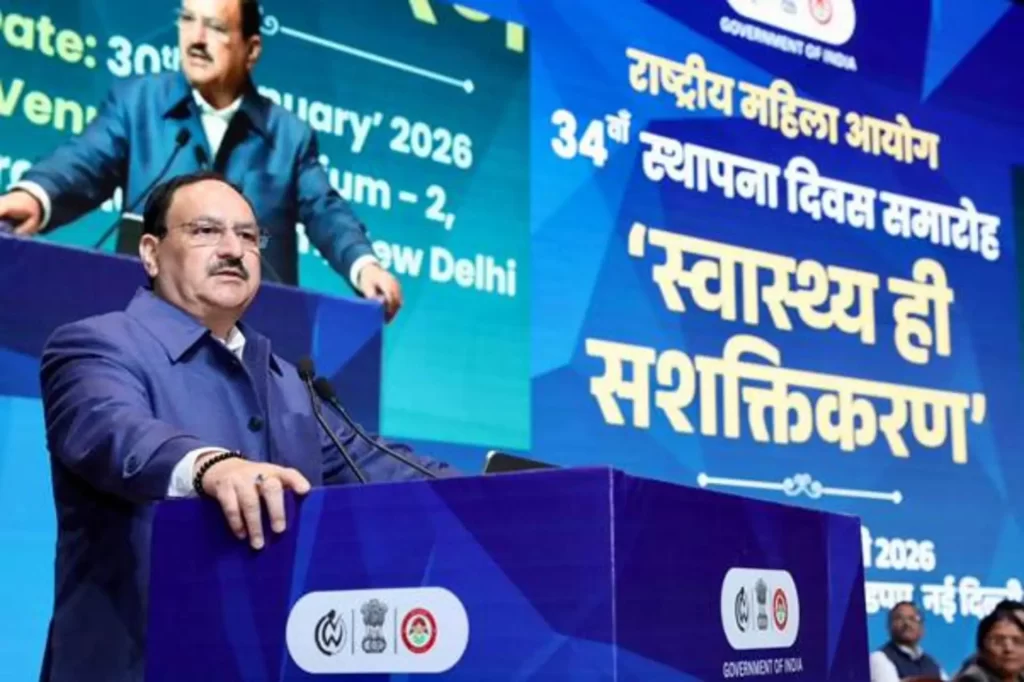
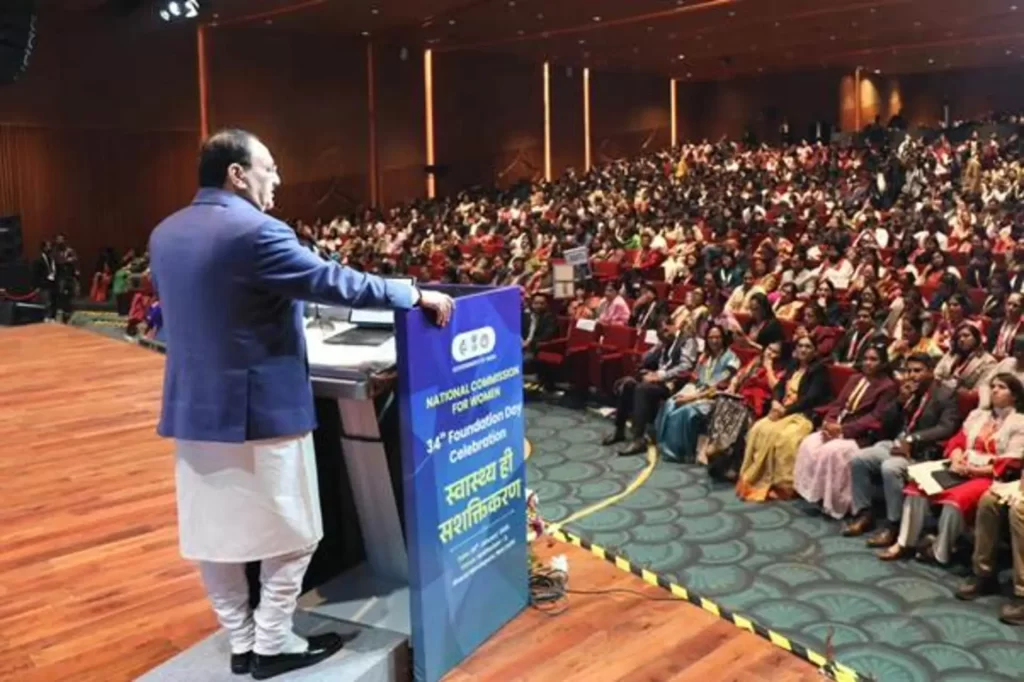
Union Minister for Health & Family Welfare and Chemicals & Fertilizers, Shri Jagat Prakash Nadda, today addressed the Foundation Day Programme of the National Commission for Women (NCW), reaffirming the Government of India’s steadfast resolve to promote women’s health, safety, dignity, and holistic empowerment.
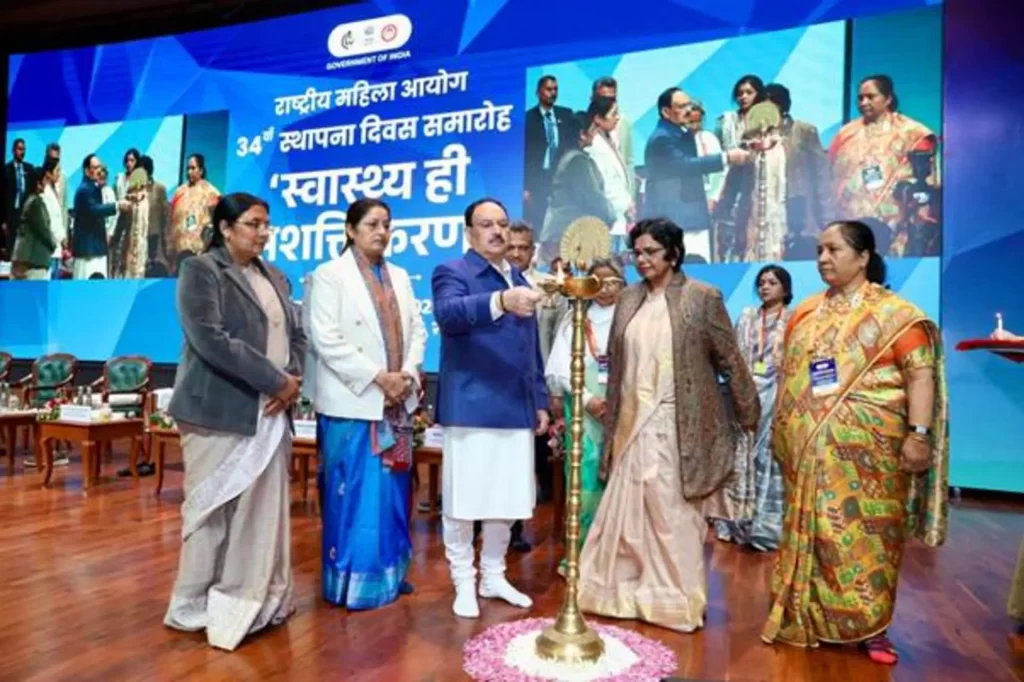
Delivering the Keynote address, Shri J.P. Nadda, Union Minister for Health & Family Welfare and Chemicals & Fertilizers, underscored the Government’s vision of women-led development, emphasizing that the empowerment of women is central to India’s inclusive growth and social transformation. He also stated that, the 34-year journey of the Commission reflects how institutions earn recognition not merely through legislation, but through their commitment, sensitivity, and sustained action in addressing complex issues related to women.
Highlighting the paradigm shift in India’s healthcare policy under the leadership of Hon’ble Prime Minister Shri Narendra Modi, the Union Health Minister said that the country has moved from a predominantly curative approach to a comprehensive preventive and promotive healthcare model. He noted that the National Health Policy, 2017 laid the foundation for integrated healthcare covering preventive, promotive, curative, palliative, and rehabilitative services. To deliver this vision, over 1.81 lakh Ayushman Arogya Mandirs have been established across the country to serve more than 1.4 billion citizens, with special focus on maternal and reproductive healthcare, which remains central among the twelve comprehensive healthcare service packages.
The Union Health Minister further informed that from the time a woman conceives until the child attains the age of 16 years, the Government ensures continuous healthcare monitoring, primarily through the dedicated efforts of ASHA workers. Through the U-WIN digital platform, a cohort of over 2.5 crore pregnant women and 2.5 crore children is currently being tracked to ensure timely immunization, antenatal care, and essential health interventions. Between 2016 and 2024, more than 7.5 crore antenatal check-ups have been conducted, while institutional deliveries have increased by 89 percent over the past decade, significantly improving maternal and child health outcomes. He also highlighted the pivotal role of ASHA workers in ensuring free drugs, diagnostics, and timely transportation to healthcare facilities.
Shri Nadda also noted with satisfaction that India’s Maternal Mortality Ratio (MMR) has declined sharply from 130 per lakh live births in 2014–15 to 88 per lakh live births, marking a faster reduction than the global average. Emphasizing the preventive dimension of healthcare, he said that Ayushman Arogya Mandirs are playing a transformative role in early screening and detection of diseases. As of Today, over 40 crore individuals have been screened for hypertension, leading to 6.8 crore diagnoses, while 40 crore have been screened for diabetes, resulting in 4.6 crore diagnoses. Similarly, 33.8 crore oral cancer screenings have identified over two lakh cases, 8.5 crore cervical cancer screenings have led to 90,000 diagnoses, and 15.8 crore breast cancer screenings have resulted in 75,800 detections, enabling early treatment and improved survival outcomes.
Addressing mental healthcare, the Union Minister highlighted the significance of Tele-MANAS, which provides round-the-clock mental health counselling in 20 languages, ensuring accessible, stigma-free support for women across diverse socio-cultural settings.
Furthermore, Union Health Minister highlighted that last year the Government launched the ‘Swastha Nari, Sashakt Parivaar Abhiyaan’, which witnessed an overwhelming participation of over 11 crore women across the country. Under the campaign, large-scale screening for non-communicable diseases (NCDs), tuberculosis, leprosy, and other health conditions was conducted, reflecting the Government’s proactive approach towards preventive and promotive healthcare. He noted that such targeted interventions are instrumental in early detection, timely treatment, and improved health outcomes for women.
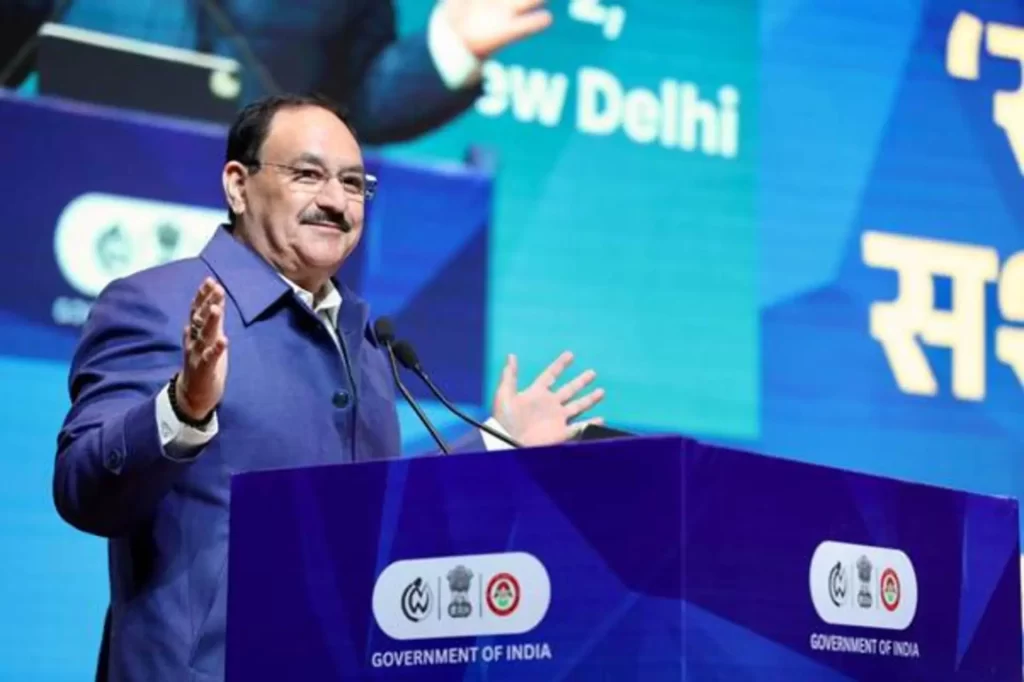
In his concluding remarks, Shri Nadda affirmed that under the visionary leadership of Hon’ble Prime Minister Shri Narendra Modi, women-centric governance would continue to remain at the forefront of national policy-making. He called upon all stakeholders to renew their resolve for sustained reforms, stronger implementation, and accelerated progress to ensure better outcomes for women and to build a more inclusive, equitable, and empowered India.
The Foundation Day Programme witnessed the release of several important publications and the launch of key initiatives, reflecting the National Commission for Women’s comprehensive approach towards awareness generation, capacity building, and women’s empowerment. These included the release of “Jagriti”, the monthly magazine of the National Commission for Women (NCW), aimed at promoting awareness on women-centric laws, rights, government initiatives, and inspirational success stories, and the Handbook on the “Maternity Benefit Act” (English & Hindi Versions), designed to enhance understanding and ensure effective implementation of maternity-related legal provisions, thereby strengthening protection of women’s rights and workplace equity.\
The programme also marked the launch of Pre-Marital Communication – Digital Training Modules, an innovative digital initiative to promote healthy communication, mutual respect, emotional well-being, and informed decision-making among couples, contributing to stronger family bonds and social harmony.
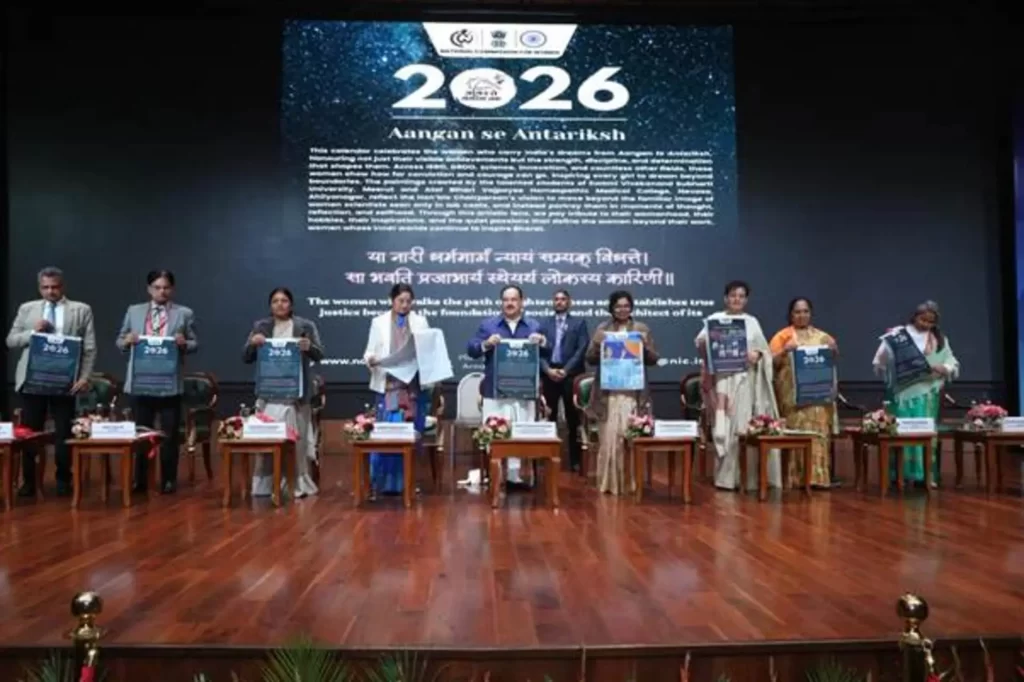
In addition, the ‘NCW Calendar on Women Scientists’ was released to celebrate the achievements and contributions of women scientists and to inspire young girls to pursue careers in science, technology, engineering, and mathematics (STEM). The occasion further featured the felicitation of eight Women Space Scientists under the theme “Aangan se Antariksh”, recognizing their exemplary contributions to India’s space and scientific endeavours and their role in motivating the next generation of women scientists.
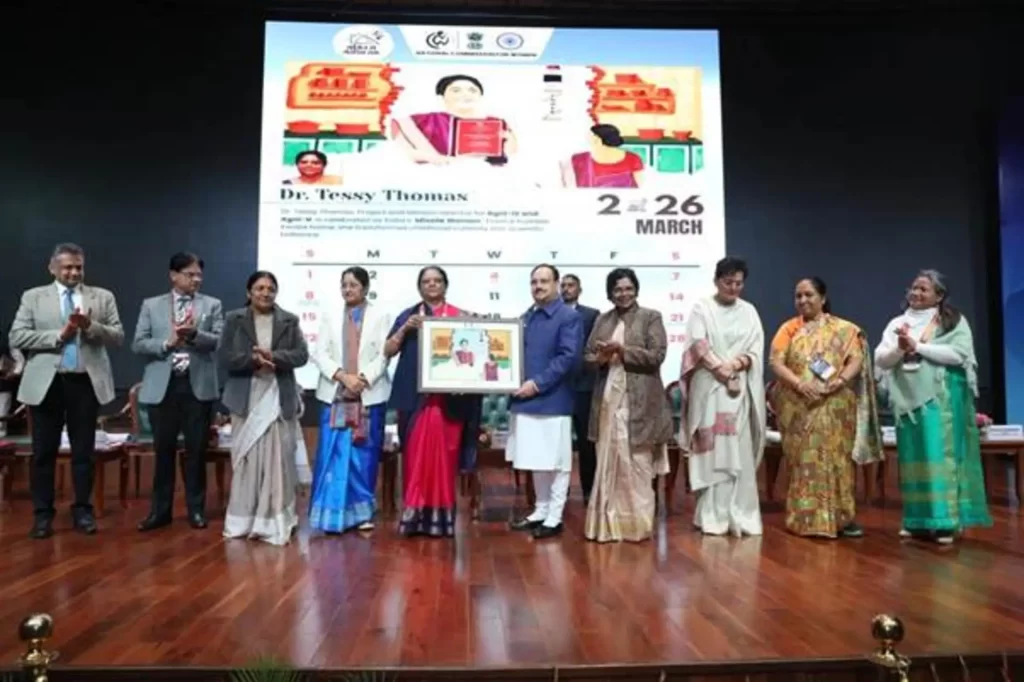
The programme also included the award of scholarships under the ‘Shakti Scholars Youth Research Fellowship’, aimed at encouraging young women researchers and scholars to pursue innovative research and contribute meaningfully to nation-building.
Smt. Annpurna Devi, Hon’ble Minister of Women and Child Development, Smt. Savitri Thakur, Minister of State, Ministry of Women and Child Development, Shri Sudeep Jain, Member Secretary, NCW, and Smt. Vijaya Rahatkar, Chairperson, National Commission for Women and Senior officials from Ministry, representatives of civil society and academicians were also present at the event.
On the occasion of National Leprosy Day, the Central Leprosy Division (CLD) under the Directorate General of Health Services (DGHS), Ministry of Health and Family Welfare organised a comprehensive Information, Education and Communication (IEC) outreach programme at Dilli Haat, here today. The programme was aimed at promoting awareness, early detection, and stigma reduction related to leprosy.

Dedicated IEC stall was set up to engage the public and disseminate key messages on the signs, symptoms, prevention, and treatment of leprosy. The outreach was designed to reach all age groups, including children, youth, adults, and the elderly, ensuring inclusive and wide-ranging community engagement. Large numbers of visitors and audience members actively interacted with programme officials and IEC facilitators.
The programme featured a Nukkad Natak (street play) focusing on early signs and symptoms of leprosy, followed by a cultural dance performance by children affected by leprosy. These children, supported by Rotary Club and trained in diverse skill domains, showcased confidence, talent and social inclusion, reinforcing messages of dignity and empowerment.
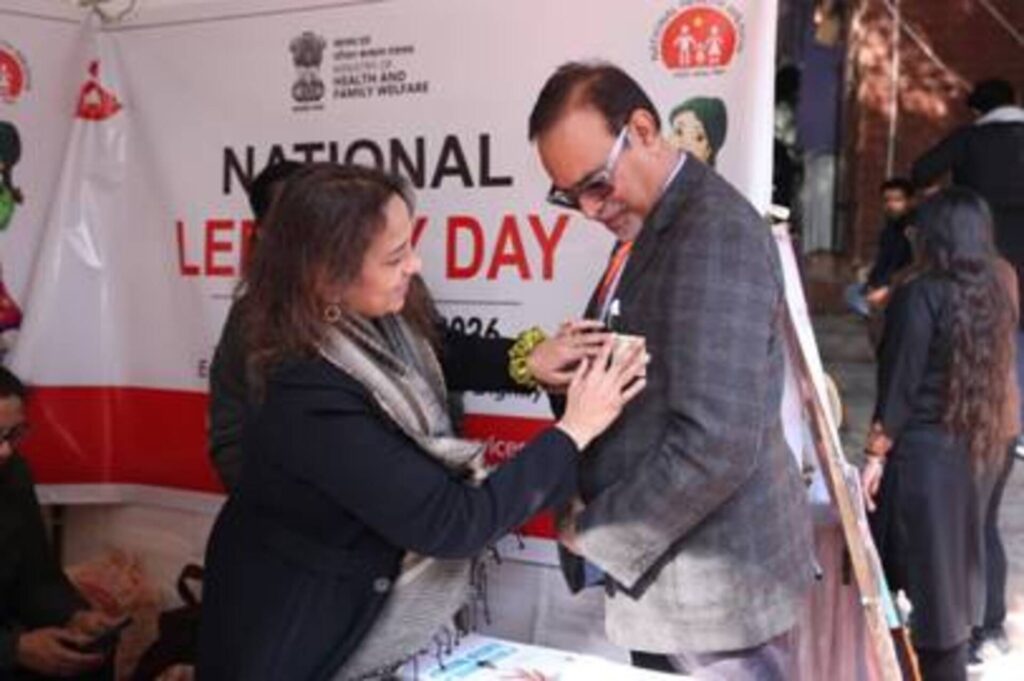
An innovative Self-Examination Mirror activity attracted enthusiastic participation from the audience, encouraging individuals to recognise early signs of leprosy and seek timely care. An interactive quiz was conducted to assess awareness levels and reinforce key messages, with prizes distributed to participants to enhance engagement.
A “100 Questions & Answers on Leprosy” pamphlet, along with other IEC pamphlets and brochures, was widely distributed to enhance awareness, promote behavioural change, encourage early reporting and treatment adherence, and reduce stigma and discrimination associated with leprosy.

During the programme, the audience and visitors collectively took a pledge not to discriminate against persons affected by leprosy, reaffirming the importance of compassion, inclusion, and social acceptance.

These activities reflect CLD’s commitment to community engagement and the shared journey towards a #LeprosyFreeIndia, in alignment with national efforts to interrupt transmission, promote early diagnosis, and ensure inclusive care for all.
Hon’ble Prime Minister Shri Narendra Modi and European Commission President H.E Ms. Ursula von der Leyen, today jointly announced the conclusion of the India–European Union Free Trade Agreement (India–EU FTA) at the 16th India–EU Summit, held during the visit of the European leaders to India. This announcement marks a historic milestone in India–EU economic relations and trade engagement with key global partners.
The conclusion of this FTA positions India and the European Union as trusted partners committed to open markets, predictability, and inclusive growth.
The FTA comes after intense negotiations since the re-launch of negotiations in 2022. The announcement of the FTA today marks the culmination of years of sustained dialogue and cooperation, between India and the EU, demonstrating the political will and shared vision to deliver a balanced, modern, and rules-based economic and trade partnership.
The European Union is India’s one of the largest trading partner, with bilateral trade in goods and services growing steadily over the years. In 2024–25, India’s bilateral trade in goods with the EU stood at INR 11.5 Lakh Crore (USD 136.54 billion) with exports worth INR 6.4 Lakh Crore (USD 75.85 billion) and imports amounting to INR 5.1 Lakh Crore (USD 60.68 billion). India-EU trade in services reached INR 7.2 Lakh Crore (USD 83.10 billion) in 2024.
India and EU are 4th and 2nd largest economies, comprising 25% of Global GDP and account for one third of global trade. Integration of the two large diverse and complementary economies will create unprecedented trade and investment opportunities.
Union Minister for Commerce and Industry, Shri Piyush Goyal, lauded the strategic vision and steadfast leadership of Hon’ble Prime Minister Shri Narendra Modi. He stated:
“The conclusion of the India–European Union Free Trade Agreement represents a defining achievement in India’s economic engagement and global outlook. This supports India’s approach to secure trusted, mutually beneficial and balanced partnerships.
Beyond a conventional trade deal, it represents a comprehensive partnership with strategic dimensions and is one of the most consequential FTA. India has secured unprecedented market access for more than 99% of Indian exports by trade value to the EU that also bolsters the ‘Make in India’ initiative. Beyond goods, it unlocks high-value commitments in services complemented by a comprehensive mobility framework enabling seamless movement of skilled Indian professionals.
India, powered by a young and dynamic workforce and one of the fastest-growing major economies, stands poised to leverage this FTA to create jobs, spur innovation, unlock opportunities across sectors, and enhance its competitiveness on the global stage.”
The India-EU trade pact covers conventional areas such as trade in goods, services, trade remedies, rules of origin, customs and trade facilitation, as well as emerging areas such as SMEs and digital trade, amongst others.
The India–EU FTA gives a decisive boost to its labour-intensive sectors such as textiles, apparel, leather, footwear, marine products, gems and jewellery, handicrafts, engineering goods, and automobiles bringing down tariffs up to 10% on almost 33 bn USD of exports to zero on entry into force of the Agreement. Beyond enhancing competitiveness, it empowers workers, artisans, women, youth, and MSMEs, while integrating Indian businesses more deeply into global value chains and reinforcing India’s role as a key player and supplier in global trade.
On automobiles, calibrated and carefully crafted quota based auto liberalisation package will not only allow EU auto makers to introduce their models in India in higher price bands but also open the possibilities for Make in India and exports from India in future. Indian consumers to benefit from high tech products and greater competition. The reciprocal market access in EU market will also open up opportunities for India made automobiles to access EU market.
India’s agricultural and processed food sectors are poised for a transformative boost under the India–EU FTA, creating a level playing field for Indian farmers and agrarian enterprises. Key commodities such as tea, coffee, spices, fresh fruits and vegetables, and processed foods will gain enhanced competitiveness, strengthening rural livelihoods, promoting inclusive growth, and reinforcing India’s position as a trusted global supplier. India has prudently safeguarded sensitive sectors, including dairy, cereals, poultry, soymeal, certain fruits and vegetables, balancing export growth with domestic priorities.
Beyond tariff liberalisation, the FTA provides measures to tackle non-tariff barriers through strengthened regulatory cooperation, greater transparency, and streamlined customs, Sanitary and Phytosanitary (SPS) procedures, and Technical Barriers to Trade disciplines.
Through CBAM provisions, commitments have been secured including a forward-looking most-favoured nation assurance extending flexibilities if any granted to third countries under the regulation, enhanced technical cooperation on recognition of carbon prices, recognition of verifiers, as well as financial assistance and targeted support to reduce greenhouse gas emissions and comply with emerging carbon requirements.
Services being dominant and faster-growing part of both economies will trade more in future. Certainty of market access, non-discriminatory treatment, focus on digitally delivered services, ease of mobility will provide boost to India’s services exports.
The FTA secures expanded and commercially significant commitments from the EU across key sectors of Indian strength, including IT and IT-enabled services, professional services, education, financial services, tourism, construction, and other business sectors.
India’s predictable access to EU’s 144 subsectors (which includes IT/ITeS, Professional Services, Other Business Services and Education Services) will provide boost to Indian service providers and enable them to provide competitive world class Indian services to EU’s consumers while EU’s access to 102 subsectors offered by India will bring in high tech services, investment into India from EU resulting in a mutually beneficial arrangement.
On mobility, the India-EU FTA provides a facilitative and predictable framework for business mobility covering short-term, temporary and business travel in both directions. These enable professionals to travel between the two economies to provide services under different scenarios. EU and India is providing mobility commitments to each other for Intra-Corporate Transferees (ICT) and Business Visitors, along with entry and working rights for dependents and family members of ICTs. The EU has also offered commitments in 37 sectors/sub-sectors for Contractual Service Suppliers (CSS) and 17 sectors/sub-sectors for Independent Professionals (IP), many of which are sectors of interest to India, including Professional Services, Computer and related Services, Research and Development Services, and Education Services.
India also secured a framework to constructively engage on Social Security Agreements over a five-year horizon, together with framework supporting student mobility and post-study work opportunities.
Additionally, India has also secured access for practitioners of Indian Traditional Medicine to work under home title in EU Member States where traditional medical practices are not regulated.
In financial services, the FTA promotes cooperation to advance innovation and secure cross-border electronic payments, while providing India with enhanced market access across several major EU member states. These provisions are expected to deepen financial integration and support the growth of financial services trade.
These commitments not only unlock high-value employment opportunities but also reinforce India’s position as a global hub for talent, innovation, and sustainable economic growth.
The FTA reinforces intellectual property protections provided under TRIPS relating to copyright, trademarks, designs, trade secrets, plant varieties, enforcement of IPRs, affirms Doha Declaration and recognises the importance of digital libraries, specifically the Traditional Knowledge Digital Library (TKDL) project initiated by India.
The FTA is expected to facilitate cooperation in critical areas like Artificial Intelligence, clean technologies, and semiconductors, supporting India's technological advancement.
The FTA is expected to substantially scale up trade, enhance export competitiveness, and integrate Indian businesses more deeply into the European and global value chains.
The India–EU FTA marks a new chapter in bilateral economic engagement, strengthening trade, and strategic cooperation between India and the 27-member EU bloc. Cognizant of multifarious objectives placed on trade, dynamic nature of trade, fast evolving technologies and increasing regulatory complexities, the Agreement embeds multiple review, consultation and response mechanisms to deal with new, sudden challenges which emerge in future. The Agreement relies on strong stewardship and trust to deliver gains for both sides.
EU becomes India’s 22nd FTA partner. The Government since 2014 has signed trade deals with Mauritius, UAE, UK, EFTA, Oman and Australia, and announced trade deal with New Zealand. In 2025, India signed trade deal with Oman and UK and announced conclusion of trade deal with NZ.
The India-EU trade deal, along with India’s FTA with the UK and the EFTA effectively opens up the entire European market for Indian businesses, exporters and entrepreneurs.
Beyond boosting commerce, it reinforces shared values, fosters innovation, and creates opportunities across sectors and stakeholders from MSMEs, women and skilled professionals to farmers and exporters. Aligned with India’s vision of “Viksit Bharat 2047,” the FTA positions India as a dynamic, trusted, and forward-looking partner on the global stage, setting the foundation for inclusive, resilient, and future-ready growth for both regions.
India and the European Union (EU) announced the conclusion of negotiations for a Free Trade Agreement (FTA), an important milestone in one of India’s most strategic economic partnerships. Designed as modern, rules-based trade partnership, the FTA responds to contemporary global challenges while enabling deeper market integration between the world’s 4th and 2nd largest economies.
With a combined market estimated at over INR 2091.6 Lakh Crore (USD 24 trillion), bringing unparalleled opportunities for the 2 billion people of India and the EU, the FTA unlocks significant potential for trade and innovation. The FTA delivers unprecedented market access for more than 99% of India’s export by trade value, while preserving policy space for sensitive sectors and reinforcing India’s developmental priorities.
Bilateral merchandise trade between India and the EU has demonstrated sustained growth, valued approximately at INR 11.5 Lakh Crore (USD 136.54 billion) in 2024-25, with India exporting roughly INR 6.4 Lakh Crore (USD 75.85 billion) to the EU. India-EU trade in services reached INR 7.2 Lakh Crore (USD 83.10 billion) in 2024.
Despite healthy and growing trade, there is a significant untapped potential considering the size of each other’s market and trade. The FTA provides an unparalleled pathway and holds immense promise for both, India and the EU, to emerge as each other’s major economic partners.
This FTA of strategic significance evolves India-EU relations from a traditional into a modern, multifaceted partnership, providing a stable and predictable environment for exporters, enabling Indian businesses including MSMEs to plan long-term investments, integrate into European value chains, and ensure consistent favourable market access amid global economic uncertainties.
Empowering Businesses and Securing Future through seamless Market Access
India Secures Strategic Access to European Markets
India has gained preferential access to the European markets across 97% of tariff lines, covering 99.5% of trade value, in particular:
Key labour-intensive sectors (such as textiles, apparel, marine, leather, footwear, chemicals, plastics/rubber, sports goods, toys, gems, and jewellery), comprising more than INR 2.87 Lakh
Crore (USD 33 billion) of exports that are currently subjected to import duty between 4% to 26%in the EU and are crucial for employment generation, will enter zero duty from entry into force of the FTA and thus gain enhanced competitiveness in the EU market. These sectors are poised to benefit from tariff liberalisation and enhanced competitiveness, enabling deeper integration into global and European value chains and simultaneously creating job opportunities.
India’s offer to the European Union
Overall, India is offering 92.1% of its tariff lines which covers 97.5% of the EU exports, in particular:
Imports of EU’s high technology goods are expected to diversify India’s import sources, thereby reducing input costs for businesses, benefit consumers and will create opportunities for Indian businesses to integrate into global supply chains.
Driving Agricultural Growth and Farmer Livelihoods, with adequate Safeguards
The FTA is expected to have a significant positive impact on the Indian agricultural and processed food sector. Preferential Market Access for agricultural products like tea, coffee, spices, grapes, gherkins and cucumbers, dried onion, fresh vegetables and fruits as well as for processed food products will make them more competitive in the EU.
This market access will strengthen farmers’ realised incomes, reinforce rural livelihoods, and elevate the global competitiveness of Indian agricultural products.
India has prudently safeguarded sensitive sectors, including dairy, cereals, poultry, soymeal, certain fruits and vegetables, etc. balancing export growth with domestic priorities. The FTA positions Indian agriculture to capture higher value in European markets, drive sectoral prosperity, and reinforces long-term resilience through sustained livelihood and reliable income opportunities.
Product Specific Rules aligned with existing Supply Chains
The FTA ensures that the goods exported under it undergoes adequate processing or manufacturing for them to get the originating status and preferential access. The product specific rules (PSRs) are balanced and aligned with existing supply chains. These PSRs ensure that substantial processing in the Parties is undertaken while providing for adequate flexibility to source inputs from global value chains.
Further, the FTA will facilitate ease of doing business by reducing the time and associated cost of compliance for Indian exporters by allowing self-certification through a Statement on Origin. The PSRs chart an innovative course by considering needs of MSMEs by locking in quotas for shrimps & prawns, and downstream aluminum products which would enable MSMEs to source non-originating inputs. They also incentivise ‘Make in India’ by building in transition period for certain PSRs in the machinery and aerospace sector.
Services-the key growth driver of trade in future
Services being dominant and faster growing part of both economies will trade more in future. Certainty of market access, non-discriminatory treatment, focus on digitally delivered services, ease of mobility are expected to provide boost to services exports.
Under the FTA, broader and deeper commitments have been secured from the EU across 144 services subsectors, including IT/ITeS, professional services, education, and other business services. This covers a vast range of services sectors spectrum in which Indian service providers will get a stable and conducive regime in the EU market to supply their services. India’s competitive, high-tech services are expected to drive India’s exports while benefitting EU businesses and consumers.
India’s offer on 102 subsectors covers EU priorities such as professional, business, telecommunications, maritime, financial, and environmental services. This will offer EU businesses a predictable regime to bring investment and innovative services to India thereby enhancing their exports and providing best in class services to Indian businesses. This mutually beneficial framework is set to accelerate trade in services, unlock new opportunities for Indian professionals and businesses, and strengthen India’s presence in high-value global markets, fostering innovation, skills mobility, and knowledge-based economic growth.
Powering India’s Talent across Europe
The FTA establishes an assured regime for temporary entry and stay for professionals, including Business Visitors, Intra-Corporate Transferees, Contractual Service Suppliers, and Independent Professionals.
Through a comprehensive mobility framework, India strengthens its position as a global hub for talent. The framework eases movement of employees (and their spouses and dependents) of Indian Corporates established in the EU in all services sectors. For business entities aiming to provide services under a contract to EU clients, India can access 37 sub-sectors including IT, business, and professional services.
Independent professionals intending to provide services to EU clients get certainty in 17 sub-sectors for Independent Professionals, covering IT, R&D, and higher education, creating expanded opportunities for Indian professionals and knowledge-driven trade. India and EU have agreed on constructive framework to enable Social Security Agreements in 5 years with all the EU Member States and a continuing conducive framework for entry of India students to study and avail post study work visa.
Expanding Horizons for Indian Traditional Medicine
The FTA is expected to provide a boost to Indian traditional medicine services and practitioners. In the EU Member States where regulations do not exist, AYUSH practitioners will be able to provide their services using the professional qualifications they gain in India.
The FTA also provides future certainty and locks in the openness of the EU for establishment of AYUSH wellness centres and clinics in the EU Member States. The FTA also envisages greater exchange with the EU to facilitate trade in Indian Traditional Medicine services.
Innovate, Protect, Prosper: Elevating Intellectual Property
The FTA reinforces intellectual property protections provided under TRIPS relating to copyright, trademarks, designs, trade secrets, plant varieties, enforcement of IPRs, affirms Doha Declaration and recognises the importance of digital libraries, specifically the Traditional Knowledge Digital Library (TKDL) project initiated by India. The IPR chapter provides for exchanging views and information on their respective laws and practices relating to the transfer of technology, including measures to facilitate information flows, business partnerships, etc.
Strengthening SPS and TBT Links for Safe, Standardised, Seamless trade
The FTA introduces enhanced cooperation on SPS and TBT matters. It will facilitate recognition of conformity assessment results, enabling equivalence on SPS measures on technical justification and localised responses to pest/ disease outbreaks. Through digitisation, information sharing, and adherence to international standards, the FTA reduces trade barriers, facilitates smoother market access, and strengthens regulatory predictability for exporters.
Sectoral gains under the India–EU FTA
Harvesting Growth beyond Farms: Preferential Access Fuels Agri Growth
India secures preferential market access for its agricultural exports, boosting competitiveness for processed foods, tea, coffee, spices, table grapes, gherkins and cucumbers, sheep and lamb meat, sweet corn, dried onion, and some other fruits and vegetable products.
This will strengthen rural incomes, women’s participation, and India’s position as a premium, trusted supplier in Europe.
Strategic safeguards for sensitive sectors like dairy, cereals, poultry, soymeal, certain fruits and vegetables, etc. ensure export growth while protecting domestic priorities.
Accelerating Exports through Engineering Excellence
With preferential market access for engineering goods presently facing tariffs as high as 22%, the FTA is expected to enhance India’s exports to the EU, which stood at approximately INR 1.44 Lakh Crore (USD 16.6 billion), and improve share in EU’s nearly INR 174.3 Lakh Crore (USD 2 trillion) engineering goods imports. The FTA is poised to empower MSME-led industrial hubs, catalysing industrial modernisation and global competitiveness.
Jobs and Growth: Labour-Intensive Industries Gain Competitiveness
Sectors like textiles, leather, footwear, marine, sports goods, toys, and gems and jewellery gain enhanced competitiveness through tariff elimination, supporting employment generation and EU market integration.
Stepping Up India’s Leather & Footwear exports in Europe
India’s world-acclaimed craftsmanship and MSME innovation in leather and footwear sector, supporting significant employment, is poised to unprecedented leap onto Europe’s stage.
Elimination of tariffs at entry into force of the FTA from up to 17% to zero across all tariff lines will help level the playing field for India’s exports to EU, valued at approximately INR 20.9 Thousand Crore (USD 2.4 billion) and improve share in EU’s nearly INR 8.71 Lakh Crore (USD 100 billion) leather and footwear imports. Regulatory alignment, simplified compliance, and support for design-led, sustainable products will enable a shift from low-margin production to value-added global leadership.
Marine Exports to get a Major Boost
Preferential access covering 100% of trade value, by reducing tariffs of up to 26% will unlock the EU marine market for imports (INR 4.67 Lakh Crore (USD 53.6 billion)). This enhanced market access is expected to significantly improve the competitiveness of India’s marine exports, while complementing and strengthening India’s export capacity in the marine sector, currently valued at INR 8,715 Crore (USD 1 billion) to the EU. The FTA will turbo-charge exports of shrimp, frozen fish, and value-added seafood exports, empowering coastal communities in Andhra Pradesh, Gujarat, Kerala, and beyond and India’s blue economy.
India’s Medical Instruments, Appliances, and vital Supplies
India’s medical Instruments, Appliances, and vital Supplies built on cutting-edge manufacturing, innovation, and skilled talent is set for a quantum leap in the EU. Tariffs of up to 6.7% eliminated across 99.1% of trade lines, enabling cost-competitive entry in European markets for lenses, spectacles, medical devices, measuring and testing instruments.
Promoting India’s Jewellery Export and creating enormous Job opportunities
The gems and jewellery sector, a blend of artistry, MSME entrepreneurship, and heritage craftsmanship, becomes more competitive in the EU market. From tariffs of up to 4% previously to gaining preferential access across 100% of trade value, India’s INR 23.5 thousand Crore (USD 2.7 Billion) jewellery exports become competitive through the FTA in INR 6.89 Lakh Crore (USD 79.2 billion) import market.
Threading Success: Textiles & Apparel high achievers
Gaining zero duty access in textiles and clothing, covering all tariff lines and reducing tariffs by up to 12%, would open up the EU’s INR 22.9 Lakh Crore (USD 263.5 billion) import market. Building on India’s current INR 3.19 Lakh Crore (USD 36.7 billion) in global textile and apparel exports, including INR 62.7 Thousand Crore (USD 7.2 billion) to the EU, such access would significantly expand opportunities, particularly in yarn, cotton yarn, cotton yarn, man-made fibre apparel, Ready-Made Garments, men’s and women’s clothing and home textiles. This would enable MSMEs to scale, generate employment, and reinforce India’s positioning as a reliable, sustainable, and high-value sourcing partner.
Plastics & Rubber exports to benefit extensively
India’s plastic and rubber industries will gain preferential access to the EU, a market with global imports valued at INR 27.67 Lakh Crore (USD 317.5 billion). With India’s current exports to the EU at INR 20.9 thousand Crore (USD 2.4 billion) and total global exports of INR 1.13 Lakh Crore (USD 13 billion), this access underscores substantial scope for growth. Enhanced access under FTA combined with India’s skilled manufacturing workforce and MSME-driven innovation, positions the country to increase employment, boost exports, and strengthen its global trade profile.
Chemicals: Expanding Exports, Generating Employment
FTA ensures zero duty on 97.5% of India’s chemical export basket by value, eliminating duties of up to 12.8% and boosting competitiveness across inorganic, organic, and agrochemicals. The FTA is expected to expand exports, strengthen MSME-led clusters and promote high-value, sustainable, and technologically advanced products, positioning India as a trusted supplier to EU’s nearly INR 43.57 Lakh Crore (USD 500 billion) chemical market for imports.
Unlocking opportunities in Mines and Minerals
Zero duty across 100% of tariff lines breaks cost barriers, ensuring India exports quality, reliable, and value-added minerals to the EU. The FTA unlocks opportunities to scale India’s presence in Europe’s high-value markets, while long-term, predictable access fuels partnerships with European manufacturers in steel, electronics, automotive, and renewable energy.
Significant Market Access for Home Décor, Wooden Crafts and Furniture
Lower duties of up to 10.5% provides enhanced access, boosting the competitiveness of Indian wooden, bamboo, and handcrafted furniture. The FTA supports growth in high-value, design-oriented segments and strengthens India’s role in global furniture supply chains.