
Vabysmo showed robust and sustained retinal drying up to 72 weeks and a safety profile consistent with previous studies
Regulatory applications for Vabysmo in RVO are under review by health authorities around the world; if approved, RVO would be the third indication in addition to nAMD and DME
Vabysmo is the first and only treatment that targets and inhibits two signalling pathways linked to a number of vision-threatening retinal conditions
Basel, 10 October 2023 - Roche (SIX: RO, ROG; OTCQX: RHHBY) today announced positive topline long-term results from the global phase III BALATON and COMINO studies, evaluating extended treatment intervals with Vabysmo® (faricimab) in macular edema due to branch and central retinal vein occlusion (BRVO and CRVO).1,2
From weeks 24 to 72, all people in both studies received Vabysmo using a treat-and-extend dosing regimen, which allows tailoring of their treatment interval according to the individual patient's response to treatment. Data showed that people treated with Vabysmo extended their treatment intervals up to every four months while maintaining the vision gains achieved in the first 24 weeks of the studies. Vabysmo continued to show robust and sustained drying of retinal fluid from baseline up to week 72, as measured by reduction in central subfield thickness. This is the first time that vision and anatomical improvements have been maintained for more than a year using a personalised treat-and-extend dosing regimen in global phase III studies for both BRVO and CRVO. In both studies, Vabysmo was generally well-tolerated and the safety profile was consistent with previous studies.
“These are the first retinal vein occlusion (RVO) studies to show vision maintenance and anatomical improvements up to 72 weeks in both central and branch RVO,” said Levi Garraway, M.D., Ph.D., Roche’s Chief Medical Officer and Head of Global Product Development. “These data further support Vabysmo’s potential as a new treatment for RVO, allowing people to preserve their vision while spending less time managing their condition.”
RVO impacts 28 million people globally and, if approved, would be the third indication for Vabysmo in addition to neovascular or ‘wet’ age-related macular degeneration (nAMD) and diabetic macular edema (DME).3-7 Together, the three conditions affect around 70 million people worldwide and are among the leading causes of vision loss.
Detailed results from weeks 24 to 72 of the phase III BALATON and COMINO studies will be presented at an upcoming medical meeting.
Data from the first 24 weeks of the phase III BALATON and COMINO studies, presented at Angiogenesis, Exudation and Degeneration 2023, demonstrated early and sustained vision improvement with Vabysmo, with both studies meeting their primary endpoints of non-inferior vision gains compared to aflibercept. A secondary endpoint showed that Vabysmo achieved rapid and robust drying of retinal fluid from baseline to week 24, as measured by reduction in central subfield thickness.12
Data up to 24 weeks have been submitted to global health authorities, including the United States Food and Drug Administration (U.S. FDA) and European Medicines Agency. A decision from the U.S. FDA is expected in late 2023. Vabysmo is uniquely engineered to target and inhibit two signalling pathways, which are linked to a number of vision-threatening retinal conditions, by neutralising angiopoietin-2 (Ang-2) and vascular endothelial growth factor-A (VEGF-A) to restore vascular stability.13,14 The level of Ang-2 is elevated in RVO and it is thought that increased Ang-2 expression drives disease progression.
To date, Vabysmo is approved in more than 80 countries around the world for people living with nAMD and DME, including the United States, Japan, the United Kingdom and the European Union, with public reimbursement in over 25 markets and more than 1.5 million doses distributed globally.
RVO is the second most common cause of vision loss due to retinal vascular diseases. It affects an estimated 28 million adults globally, mainly those aged 60 or older, and can lead to severe and sudden vision loss.3,17 The level of angiopoietin-2 (Ang-2) is elevated in RVO and it is thought that increased Ang-2 expression drives disease progression.11,15 RVO typically results in sudden, painless vision loss in the affected eye because the vein blockage restricts normal blood flow in the affected retina, resulting in ischaemia, bleeding, fluid leakage and retinal swelling called macular edema.17-19 Currently, macular edema due to RVO is typically treated with repeated intravitreal injections of anti-vascular endothelial growth factor therapies.18 There are two main types of RVO: branch retinal vein occlusion (BRVO), which affects more than 23 million people globally and occurs when one of the four smaller ‘branches’ of the main central retinal vein becomes blocked; and central retinal vein occlusion (CRVO), which is less common, affecting more than four million people worldwide, and occurs when the eye’s central retinal vein becomes blocked.
BALATON (NCT04740905) and COMINO (NCT04740931) are two randomised, multicentre, double-masked, global phase III studies evaluating the efficacy and safety of Vabysmo®️ (faricimab) compared to aflibercept. For the first 20 weeks, patients were randomised 1:1 to receive six-monthly injections of either Vabysmo (6.0 mg) or aflibercept (2.0 mg). From weeks 24 to 72, all patients received Vabysmo (6.0 mg) up to every four months, using a treat-and-extend dosing regimen.
The BALATON study was conducted in 553 people with branch retinal vein occlusion. The COMINO study was conducted in 729 people with central retinal or hemiretinal vein occlusion. The primary endpoint of each study was the change in best-corrected visual acuity from baseline at 24 weeks. Secondary endpoints (weeks 0-24) included change in central subfield thickness and drying of retinal fluid, from baseline over time up to week 24. Secondary endpoints (weeks 24-72) were treatment durability at 68 weeks and continuation of weeks 0-24 endpoints.
Roche has a robust phase III clinical development programme for Vabysmo. The programme includes AVONELLE-X, an extension study of TENAYA and LUCERNE, evaluating the long-term safety and tolerability of Vabysmo in neovascular or ‘wet’ age-related macular degeneration (nAMD), and Rhone-X, an extension study of YOSEMITE and RHINE, evaluating the long-term safety and tolerability of Vabysmo in diabetic macular edema (DME).20.21 Roche has also initiated several phase IV studies, including the ELEVATUM study of Vabysmo in underrepresented patient populations with DME, the SALWEEN study of Vabysmo in a subpopulation of nAMD highly prevalent in Asia, as well as the VOYAGER study, a global real-world data collection platform.22-24 Roche also supports several other independent studies to further understand retinal conditions with a high unmet need.
Vabysmo is the first bispecific antibody approved for the eye.4,6 It targets and inhibits two signalling pathways linked to a number of vision-threatening retinal conditions by neutralising angiopoietin-2 (Ang-2) and vascular endothelial growth factor-A (VEGF-A). Ang-2 and VEGF-A contribute to vision loss by destabilising blood vessels, causing new leaky blood vessels to form and increasing inflammation. By blocking pathways involving Ang-2 and VEGF-A, Vabysmo is designed to stabilise blood vessels.13,14 Vabysmo is approved in more than 80 countries around the world, including the United States, Japan, the United Kingdom and the European Union for people living with neovascular or ‘wet’ age-related macular degeneration and diabetic macular edema. Review by other regulatory authorities is ongoing.
Roche is focused on saving people’s eyesight from the leading causes of vision loss through pioneering therapies. Through our innovation in the scientific discovery of new potential drug targets, personalised healthcare, molecular engineering, biomarkers and continuous drug delivery, we strive to design the right therapies for the right patients.
We have the broadest retina pipeline in ophthalmology, which is led by science and informed by insights from people with eye diseases. Our pipeline includes gene therapies and treatments for geographic atrophy and other vision-threatening diseases, including rare and inherited conditions.
Applying our extensive experience, we have already brought breakthrough ophthalmic treatments to people living with vision loss. Susvimo™ (previously called Port Delivery System with ranibizumab) 100 mg/mL for intravitreal use via ocular implant is the first United States Food and Drug Administration-approved refillable eye implant for neovascular or ‘wet’ age-related macular degeneration that continuously delivers a customised formulation of ranibizumab over a period of months.25 Vabysmo® (faricimab) is the first bispecific antibody approved for the eye, which targets and inhibits two signalling pathways linked to a number of vision-threatening retinal conditions.4,6,13,14 Lucentis® (ranibizumab injection)^ is the first treatment approved to improve vision in people with certain retinal conditions.
Roche is a global pioneer in pharmaceuticals and diagnostics focused on advancing science to improve people’s lives. The combined strengths of pharmaceuticals and diagnostics under one roof have made Roche the leader in personalised healthcare – a strategy that aims to fit the right treatment to each patient in the best way possible.
Roche is the world’s largest biotech company, with truly differentiated medicines in oncology, immunology, infectious diseases, ophthalmology and diseases of the central nervous system. Roche is also the world leader in in vitro diagnostics and tissue-based cancer diagnostics, and a frontrunner in diabetes management.
Founded in 1896, Roche continues to search for better ways to prevent, diagnose and treat diseases and make a sustainable contribution to society. The company also aims to improve patient access to medical innovations by working with all relevant stakeholders. More than thirty medicines developed by Roche are included in the World Health Organization Model Lists of Essential Medicines, among them life-saving antibiotics, antimalarials and cancer medicines. Moreover, for the twelfth consecutive year, Roche has been recognised as one of the most sustainable companies in the Pharmaceuticals Industry by the Dow Jones Sustainability Indices (DJSI).
The Roche Group, headquartered in Basel, Switzerland, is active in over 100 countries and in 2020 employed more than 100,000 people worldwide. In 2020, Roche invested CHF 12.2 billion in R&D and posted sales of CHF 58.3 billion. Genentech, in the United States, is a wholly owned member of the Roche Group. Roche is the majority shareholder in Chugai Pharmaceutical, Japan
RAINBOWFISH study met its primary endpoint with 80% of babies sitting without support for at least five seconds after 1 year of Evrysdi treatment – without treatment these babies would never be able to sit
All babies were able to swallow and feed orally and none required permanent ventilation
Evrysdi is the only non-invasive SMA therapy and is approved in over 100 countries with more than 11,000 patients treated globall
Basel, 04 October 2023 - Roche (SIX: RO, ROG; OTCQX: RHHBY) today presented positive results from the primary analysis of the ongoing RAINBOWFISH study assessing the efficacy and safety of Evrysdi® (risdiplam) in babies with pre-symptomatic SMA (n=26), aged from birth to six weeks. The data were presented at the 28th World Muscle Society (WMS) Congress, 3-7 October 2023.
“Evrysdi is the only non-invasive SMA treatment and can be used within hours of birth, potentially allowing these babies to sit, stand and walk, similar to healthy individuals,” said Levi Garraway, M.D., Ph. D., Roche’s Chief Medical Officer and Head of Global Product Development. “Evrysdi has now demonstrated its safety and efficacy in babies, children and adults and these compelling data continue to reinforce our confidence in this treatment.’’
Clinical studies show that the loss of motor neurons may begin before symptoms start so initiating treatment early is critical for better outcomes. The RAINBOWFISH study included babies with two or more copies of the SMN2 gene. Generally, the lower the number, the more severe the disease.
The study met its primary endpoint with 80% of the primary efficacy population (n=5) sitting without support for at least five seconds after 1 year of Evrysdi treatment, assessed by Bayley Scales of Infant and Toddler Development, third edition (BSID-III). The primary efficacy population included babies with two SMN2 copies and a CMAP amplitude of ≥1.5 mV at baseline. CMAP amplitude measures the muscle response to a stimulus, and a low score correlates with symptom onset in SMA patients and worse functional outcomes. Of the 26 babies in the study, 81% could sit independently for 30 seconds, including all patients with low CMAP amplitude at baseline (<1.5 mV) and the majority were standing and walking. Without treatment, children with Type 1 SMA would never be expected to sit.
RAINBOWFISH was the first trial to assess cognition with a standardised scale (BSID) as an exploratory endpoint and results showed cognitive skills typical of normal child development after 1 year of Evrysdi treatment, assessed by BSID-III.
Adverse events (AEs) were more reflective of the age of the babies than underlying SMA. The majority of AEs were not considered treatment-related, and there were no deaths or AEs leading to withdrawal or treatment discontinuation. The most common AEs were teething, COVID-19, pyrexia, gastroenteritis, eczema and constipation. The AEs observed in the RAINBOWFISH primary analysis are generally consistent with those AEs seen in other Evrysdi trials in SMA.
“These data reinforce the value of beginning treatment for SMA before symptoms appear, with the goal of preserving motor neurons while they are still abundant,” said Richard Finkel, M.D., RAINBOWFISH Principal Investigator and Director of the Experimental Neuroscience Program at St. Jude Children’s Research Hospital. “Coupled with widespread newborn screening programs, early treatment could counteract the effects of the disease to give babies with pre-symptomatic SMA the best possible start in life.”
Roche is also investigating Evrysdi in combination with an anti-myostatin molecule, which is designed to promote muscle growth, among SMA patients 2-10 years of age in the Phase 2/3 MANATEE trial.
Evrysdi is a survival motor neuron 2 (SMN2) splicing modifier designed to treat SMA caused by mutations in chromosome 5q that lead to survival motor neuron (SMN) protein deficiency. Evrysdi is administered daily at home in liquid form and non-invasively by mouth or by feeding tube.
Evrysdi is designed to treat SMA by increasing and sustaining the production of SMN protein in the central nervous system (CNS) and peripheral tissues. SMN protein is found throughout the body and is critical for maintaining healthy motor neurons and core motor functions such as swallowing, speaking, and breathing.
Evrysdi was granted PRIME designation by the European Medicines Agency (EMA) in 2018 and Orphan Drug Designation by the U.S. Food and Drug Administration in 2017. In 2021, Evrysdi was awarded Drug Discovery of the Year by the British Pharmacological Society as well as the Society for Medicines Research Award for Drug Discovery. Evrysdi is currently approved in over 100 countries, and the dossier is under review in a further 15 countries.
Evrysdi is currently being evaluated in five multicentre trials in people with SMA:
FIREFISH (NCT02913482) – an open-label, two-part pivotal clinical trial in infants with Type 1 SMA. The study met its primary endpoint.
SUNFISH (NCT02908685) – a two-part, double-blind, placebo-controlled pivotal study in people aged 2-25 years with Types 2 or 3 SMA. The study met its primary endpoint.
JEWELFISH (NCT03032172) – an open-label exploratory trial designed to assess the safety, tolerability, pharmacokinetics and pharmacodynamics in people with SMA aged 6 months to 60 years who received other investigational or approved SMA therapies for at least 90 days prior to receiving Evrysdi. The study has completed recruitment (n=174).
RAINBOWFISH (NCT03779334) – an open-label, single-arm, multicentre study, investigating the efficacy, safety, pharmacokinetics, and pharmacodynamics of Evrysdi in babies (n=26), from birth to six weeks of age (at first dose) with genetically diagnosed SMA who are not yet presenting with symptoms. The study is fully enrolled.
MANATEE (NCT05115110) – a global phase 2/3 clinical study to evaluate the safety and efficacy of GYM329 (RG6237), an anti-myostatin molecule targeting muscle growth, in combination with Evrysdi for the treatment of SMA in patients 2-10 years of age. The FDA Office of Orphan Products Development granted GYM329 Orphan Drug Designation for the treatment of patients with SMA in December 2021. The study is currently recruiting.
In addition to bringing Evrysdi to people around the world, Roche also leads its clinical development as part of a collaboration with the SMA Foundation and PTC Therapeutics.
SMA is a severe, progressive neuromuscular disease that can be fatal. It affects approximately one in 10,000 babies and is the leading genetic cause of infant mortality. SMA is caused by a mutation of the survival motor neuron 1 (SMN1) gene, which leads to a deficiency of SMN protein. This protein is found throughout the body and is essential to the function of nerves that control muscles and movement. Without it, nerve cells cannot function correctly, leading to muscle weakness over time. Depending on the type of SMA, an individual’s physical strength and their ability to walk, eat or breathe can be significantly diminished or lost.
Neuroscience is a major focus of research and development at Roche. Our goal is to pursue groundbreaking science to develop new treatments that help improve the lives of people with chronic and potentially devastating diseases.
Roche is investigating more than a dozen medicines for neurological disorders, including multiple sclerosis, spinal muscular atrophy, neuromyelitis optica spectrum disorder, Alzheimer’s disease, Huntington’s disease, Parkinson’s disease and Duchenne muscular dystrophy. Together with our partners, we are committed to pushing the boundaries of scientific understanding to solve some of the most difficult challenges in neuroscience today.
Roche is a global pioneer in pharmaceuticals and diagnostics focused on advancing science to improve people’s lives. The combined strengths of pharmaceuticals and diagnostics under one roof have made Roche the leader in personalised healthcare – a strategy that aims to fit the right treatment to each patient in the best way possible.
Roche is the world’s largest biotech company, with truly differentiated medicines in oncology, immunology, infectious diseases, ophthalmology and diseases of the central nervous system. Roche is also the world leader in in vitro diagnostics and tissue-based cancer diagnostics, and a frontrunner in diabetes management.
Founded in 1896, Roche continues to search for better ways to prevent, diagnose and treat diseases and make a sustainable contribution to society. The company also aims to improve patient access to medical innovations by working with all relevant stakeholders. More than thirty medicines developed by Roche are included in the World Health Organization Model Lists of Essential Medicines, among them life-saving antibiotics, antimalarials and cancer medicines. Moreover, for the twelfth consecutive year, Roche has been recognised as one of the most sustainable companies in the Pharmaceuticals Industry by the Dow Jones Sustainability Indices (DJSI).
The Roche Group, headquartered in Basel, Switzerland, is active in over 100 countries and in 2020 employed more than 100,000 people worldwide. In 2020, Roche invested CHF 12.2 billion in R&D and posted sales of CHF 58.3 billion. Genentech, in the United States, is a wholly owned member of the Roche Group. Roche is the majority shareholder in Chugai Pharmaceutical, Japan
Late-breaking results from Phase III trial of OCREVUS (ocrelizumab) subcutaneous injection and Phase II trial of BTK inhibitor fenebrutinib in multiple sclerosis (MS) will be presented
10-year OCREVUS efficacy and safety data show significant benefit in slowing long-term disability progression and consistent long-term safety profile in MS
Additional OCREVUS real-world and clinical data show impact for underrepresented populations including more than 3,200 pregnant women and Black and Hispanic/Latinx patients with MS
Longer-term safety data and late-breaking efficacy data from Phase III trial of ENSPRYNG (satralizumab) in neuromyelitis optica spectrum disorder (NMOSD) will be presented
Basel, 02 October 2023 - Roche (SIX: RO, ROG; OTCQX: RHHBY) will present new data for OCREVUS® (ocrelizumab) and investigational Bruton’s tyrosine kinase (BTK) inhibitor fenebrutinib for multiple sclerosis (MS), and ENSPRYNG® (satralizumab) for neuromyelitis optica spectrum disorder (NMOSD). In total, Roche will be presenting 36 abstracts at the 9th Joint ECTRIMS-ACTRIMS Meeting (European and Americas Committees for Treatment and Research in Multiple Sclerosis) from 11-13 October 2023. Late-breaking data in MS includes the Phase Ib OCARINA I and Phase III OCARINA II studies evaluating an investigational subcutaneous OCREVUS injection. In addition, the Phase II FENopta study of fenebrutinib for people living with MS and late-breaking ENSPRYNG data for people with NMOSD, which includes longer-term data from the Phase III SAkuraMoon study, will also be presented.
“It is gratifying to see that OCREVUS and ENSPRYNG continue to show a favourable benefit/risk profile over many years in MS and NMOSD, and we are also pleased to share late-breaking results from our investigational MS medicine fenebrutinib and OCREVUS subcutaneous injection,” said Levi Garraway, M.D., Ph.D., Roche’s Chief Medical Officer and Head of Global Product Development. “We’ve developed these latest innovations with the goal of further improving the day-to-day lives of those living with MS.”
Roche will present 29 abstracts in MS, including three late-breaking presentations from the Phase Ib OCARINA I and Phase III OCARINA II studies on the OCREVUS subcutaneous injection in people with MS and the Phase II FENopta study of BTK inhibitor fenebrutinib in people with MS.
Highlights also include 10-year milestone data from the open-label extensions of Phase III OPERA I and II studies in relapsing MS (RMS) and ORATORIO study in primary progressive MS (PPMS) that show benefit on slowing long-term disability progression. OCREVUS is the only medicine approved for both RMS and PPMS, and by slowing disability progression it has fundamentally changed the landscape of MS treatment, with more than 300,000 patients treated globally. Safety outcomes from more than 6,000 patients across 12 OCREVUS clinical trials further support the medicine’s consistent favourable safety profile over 10 years.
Roche safety data will report pregnancy and infant outcomes from more than 3,200 pregnancies, and separate real-world data on pregnant women in the international MSBase registry will provide insights on the impact of OCREVUS and other disease-modifying therapies on relapses during and post-pregnancy. Further, one-year data from the first-ever clinical trial in Black and Hispanic/Latinx people with MS (Phase IV CHIMES trial) will show OCREVUS effectively controlled disease activity.
Roche will present seven NMOSD abstracts, including late-breaking, longer-term data from the Phase III SAkuraMoon open-label extension study and real-world data evaluating ENSPRYNG in people with NMOSD.
Infection is a major comorbidity in people with NMOSD, and analyses comparing infection rates across clinical trials, post-marketing settings and U.S. claims data suggest overall lower rates in the ENSPRYNG-treated population.
Follow Roche on X via @Roche and keep up to date with ECTRIMS-ACTRIMS 2023 news and updates by using the hashtag #MSMilan2023. Below are the details of all Roche presentations.
Multiple sclerosis (MS) is a chronic disease that affects more than 2.8 million people worldwide. MS occurs when the immune system abnormally attacks the insulation and support around nerve cells (myelin sheath) in the central nervous system (brain, spinal cord and optic nerves), causing inflammation and consequent damage. This damage can cause a wide range of symptoms, including muscle weakness, fatigue and difficulty seeing, and may eventually lead to disability. Most people with MS experience their first symptom between 20 and 40 years of age, making the disease the leading cause of non-traumatic disability in younger adults.
People with all forms of MS experience disease progression – permanent loss of nerve cells in the central nervous system – from the beginning of their disease even if their clinical symptoms aren’t apparent or don’t appear to be getting worse. Delays in diagnosis and treatment can negatively impact people with MS, in terms of their physical and mental health, and contribute to the negative financial impact on the individual and society. An important goal of treating MS is to slow, stop and ideally prevent disease activity and progression as early as possible.
Relapsing-remitting MS (RRMS) is the most common form of the disease and is characterised by episodes of new or worsening signs or symptoms (relapses) followed by periods of recovery. Approximately 85% of people with MS are initially diagnosed with RRMS. The majority of people who are diagnosed with RRMS will eventually transition to secondary progressive MS (SPMS), in which they experience steadily worsening disability over time. Relapsing forms of MS (RMS) include people with RRMS and people with SPMS who continue to experience relapses. Primary progressive MS (PPMS) is a debilitating form of the disease marked by steadily worsening symptoms but typically without distinct relapses or periods of remission. Approximately 15% of people with MS are diagnosed with the primary progressive form of the disease. Until the FDA approval of OCREVUS, there had been no FDA-approved treatments for PPMS.
OCREVUS is the first and only therapy approved for both RMS (including RRMS and active, or relapsing SPMS, in addition to clinically isolated syndrome [CIS] in the U.S.) and PPMS. OCREVUS is a humanised monoclonal antibody designed to target CD20-positive B cells, a specific type of immune cell thought to be a key contributor to myelin (nerve cell insulation and support) and axonal (nerve cell) damage. This nerve cell damage can lead to disability in people with MS. Based on preclinical studies, OCREVUS binds to CD20 cell surface proteins expressed on certain B cells, but not on stem cells or plasma cells, suggesting that important functions of the immune system may be preserved. OCREVUS is administered by intravenous infusion every six months. The initial dose is given as two 300 mg infusions given two weeks apart. Subsequent doses are given as single 600 mg infusions.
Fenebrutinib is an investigational oral, reversible and non-covalent Bruton’s tyrosine kinase (BTK) inhibitor that blocks the function of BTK. BTK, also known as tyrosine-protein kinase BTK, is an enzyme that regulates B-cell development and activation and is also involved in the activation of innate immune system myeloid lineage cells, such as macrophages and microglia. Pre-clinical data have shown fenebrutinib to be potent and highly selective, and it is the only reversible inhibitor currently in Phase III trials for MS. Fenebrutinib has been shown to be 130 times more selective for BTK vs. other kinases. These design features may be important as the high selectivity and reversibility can potentially reduce off-target effects of a molecule.
Fenebrutinib is a dual inhibitor of both B-cell and microglia activation. This dual inhibition may be able to reduce both MS disease activity and progression, thereby potentially addressing the key unmet medical need in people living with MS. The Phase III programme includes two identical trials in RMS (FENhance 1 & 2) with an active teriflunomide comparator and one trial in primary progressive MS (PPMS) (FENtrepid) in which fenebrutinib is being evaluated against OCREVUS® (ocrelizumab). To date, more than 2,500 patients and healthy volunteers have been treated with fenebrutinib in Phase I, II and III clinical programmes across multiple diseases, including MS and other autoimmune disorders.
ENSPRYNG, which was designed by Chugai, a member of the Roche Group, is a humanised monoclonal antibody that targets interleukin-6 (IL-6) receptor activity. ENSPRYNG was designed using novel recycling antibody technology which, compared to conventional technology, allows for longer duration of the antibody and subcutaneous dosing every four weeks.
Positive Phase III results for ENSPRYNG, as both monotherapy and in combination with baseline immunosuppressive therapy, demonstrate that IL-6 inhibition is an effective therapeutic approach for neuromyelitis optica spectrum disorder (NMOSD). ENSPRYNG is currently approved for NMOSD in 85 countries with further applications under review with numerous regulators. Roche continues to investigate ENSPRYNG in other autoantibody-mediated rare neurological diseases characterised by elevated IL-6 levels, indications including generalised Myasthenia Gravis (gMG), Myelin Oligodendrocyte Glycoprotein Antibody-associated Disease (MOGAD) and Autoimmune Encephalitis (AIE).
ENSPRYNG was granted Breakthrough Therapy Designation for the treatment of NMOSD by the FDA in December 2018 and designated as an orphan drug for NMOSD in the United States, Europe, Russia and Japan.
In addition,the FDA has designated satralizumab as an investigational orphan drug for gMG, MOGAD and AIE (NMDAR).
Neuroscience is a major focus of research and development at Roche. Our goal is to pursue ground-breaking science to develop new treatments that help improve the lives of people with chronic and potentially devastating diseases. Roche and Genentech are investigating more than a dozen medicines for neurological disorders, including MS, spinal muscular atrophy, neuromyelitis optica spectrum disorder, Alzheimer’s disease, Huntington’s disease, Parkinson’s disease, acute ischemic stroke, Duchenne muscular dystrophy and Angelman syndrome. Together with our partners, we are committed to pushing the boundaries of scientific understanding to solve some of the most difficult challenges in neuroscience today.
Roche is a global pioneer in pharmaceuticals and diagnostics focused on advancing science to improve people’s lives. The combined strengths of pharmaceuticals and diagnostics under one roof have made Roche the leader in personalised healthcare – a strategy that aims to fit the right treatment to each patient in the best way possible.
Roche is the world’s largest biotech company, with truly differentiated medicines in oncology, immunology, infectious diseases, ophthalmology and diseases of the central nervous system. Roche is also the world leader in in vitro diagnostics and tissue-based cancer diagnostics, and a frontrunner in diabetes management.
Founded in 1896, Roche continues to search for better ways to prevent, diagnose and treat diseases and make a sustainable contribution to society. The company also aims to improve patient access to medical innovations by working with all relevant stakeholders. More than thirty medicines developed by Roche are included in the World Health Organization Model Lists of Essential Medicines, among them life-saving antibiotics, antimalarials and cancer medicines. Moreover, for the twelfth consecutive year, Roche has been recognised as one of the most sustainable companies in the Pharmaceuticals Industry by the Dow Jones Sustainability Indices (DJSI).
The Roche Group, headquartered in Basel, Switzerland, is active in over 100 countries and in 2020 employed more than 100,000 people worldwide. In 2020, Roche invested CHF 12.2 billion in R&D and posted sales of CHF 58.3 billion. Genentech, in the United States, is a wholly owned member of the Roche Group. Roche is the majority shareholder in Chugai Pharmaceutical, Japan
Zilebesiran met primary endpoint demonstrating greater than 15 mmHg reduction of systolic blood pressure at three months of treatment compared to placebo
Study met key secondary endpoints showing consistent and sustained reductions of systolic blood pressure at six months
Zilebesiran demonstrated an encouraging safety and tolerability profile in adult patients with mild-to-moderate hypertension
Full study results to be presented at an upcoming scientific conference
Basel, 7 September 2023 - Roche (SIX: RO, ROG; OTCQX: RHHBY) and Alnylam announced today that the Phase 2 study KARDIA-1 of zilebesiran, an investigational RNAi therapeutic targeting liver-expressed angiotensinogen (AGT), met the primary endpoint. Zilebesiran demonstrated a clinically significant reduction in 24-hour mean systolic blood pressure (SBP) at month three, achieving a placebo-subtracted reduction greater than 15 mmHg with both 300 and 600 mg doses (p < 0.0001). The study also met key secondary endpoints showing consistent and sustained reductions of SBP at six months supporting quarterly or biannual dosing. In addition, the study showed that zilebesiran was associated with a potent and durable reduction of serum AGT levels through month six while demonstrating an encouraging safety and tolerability profile.
“These early results indicate the potential for zilebesiran to achieve sustained blood pressure reduction with quarterly or biannual dosing,” said Levi Garraway, M.D., Ph.D., Roche’s Chief Medical Officer and Head of Global Product Development. “Also, these data underscore the potential of this investigational medicine to provide transformative impact for many people living with uncontrolled hypertension.’’
The Phase 2 trial KARDIA-1 is a randomised, double-blind, placebo-controlled, multi-centre global dose-ranging study designed to evaluate the efficacy and safety of zilebesiran as monotherapy in adults with mild-to-moderate hypertension. The study enrolled 394 adults representing a diverse patient population with untreated hypertension or who were on stable therapy with one or more anti-hypertensive medications (after a washout period).
Hypertension is a growing global health crisis responsible for around 10 million deaths worldwide each year. Approximately one in three adults are living with hypertension globally, with up to 80% of individuals remaining uncontrolled despite the availability of several classes of oral anti-hypertensive treatments leaving them at an increased risk of cardiovascular, cerebrovascular and renal disease.
Earlier this year, Roche entered the partnership with Alnylam to co-develop and co-commercialise zilebesiran. The KARDIA study program also includes the Phase 2 study KARDIA-2 of zilebesiran used in combination with one of three standard classes of anti-hypertensive medications which completed enrollment in June 2023. The topline results of KARDIA-2 are expected in early 2024.
The Phase 2 KARDIA-1 trial enrolled 394 adults with untreated hypertension or who were on stable therapy with one or more anti-hypertensive medications. Any patients taking prior anti-hypertensive medications completed at least a two- to four-week wash-out before randomisation. Patients were randomised to one of five treatment arms during a 12-month double blind (DB) period and DB extension period: 150 mg zilebesiran subcutaneously once every six months; 300 mg zilebesiran subcutaneously once every six months; 300 mg zilebesiran subcutaneously once every three months; 600 mg zilebesiran subcutaneously once every six months; or placebo. Patients who received placebo were randomised to one of the four initial zilebesiran dose regimens beginning at Month 6. The primary endpoint is defined as the change from baseline in SBP at Month 3, assessed by 24-hour ambulatory blood pressure monitoring (ABPM). Key secondary and exploratory endpoints in this study include additional measures of blood pressure reduction at six months, time-adjusted change in blood pressure, and change in daytime average and night-time average blood pressure.
The study met the primary endpoint demonstrating a dose-dependent, clinically significant reduction in 24-hour mean systolic blood pressure (SBP) measured by ABPM at month 3, achieving a placebo-subtracted reduction greater than 15 mmHg (p < 0.0001) with both 300 mg and 600 mg doses. The study also met key secondary endpoints including change in 24-hour mean SBP as measured by ABPM at month 6 as well as change in office SBP at month 3 and month 6, for all zilebesiran arms, compared to placebo.
Zilebesiran is an investigational, subcutaneously administered RNAi therapeutic targeting angiotensinogen (AGT) in development for the treatment of hypertension in high unmet need populations. AGT is the most upstream precursor in the Renin-Angiotensin-Aldosterone System (RAAS), a cascade which has a demonstrated role in blood pressure (BP) regulation and its inhibition has well-established anti-hypertensive effects. Zilebesiran inhibits the synthesis of AGT in the liver, potentially leading to durable reductions in AGT protein and ultimately, in the vasoconstrictor angiotensin (Ang) II. Zilebesiran utilises Alnylam’s Enhanced Stabilisation Chemistry Plus (ESC+) GalNAc-conjugate technology. It enables infrequent subcutaneous dosing with increased selectivity and the potential to achieve tonic blood pressure control demonstrating consistent and durable blood pressure reduction throughout a 24-hour period, sustained up to six months after a single dose of zilebesiran. The safety and efficacy of zilebesiran have not been established or evaluated by the FDA, EMA or any other health authority. Zilebesiran is being co-developed and co-commercialized by Alnylam and Roche.
Hypertension, or high blood pressure, is the leading cause of cardiovascular disease worldwide, and a major risk for premature mortality. Early effects of hypertension can include subtle target organ damage such as left-ventricular hypertrophy and cognitive dysfunction. Over time, uncontrolled hypertension can lead to cardiovascular disease including stroke (ischaemic and haemorrhagic), coronary artery disease, heart failure, peripheral artery disease, chronic kidney disease and end-stage renal disease, dementia, and Alzheimer’s disease.
There remains a significant unmet medical need, especially given the poor rates of adherence to existing daily oral medications, resulting in inconsistent blood pressure control and an increased risk for stroke, heart attack and premature death. In particular, there are a number of high unmet need settings where novel approaches to hypertension warrant additional development focus, including patients with high cardiovascular risk.
Roche is a global pioneer in pharmaceuticals and diagnostics focused on advancing science to improve people’s lives. The combined strengths of pharmaceuticals and diagnostics under one roof have made Roche the leader in personalised healthcare – a strategy that aims to fit the right treatment to each patient in the best way possible.
Roche is the world’s largest biotech company, with truly differentiated medicines in oncology, immunology, infectious diseases, ophthalmology and diseases of the central nervous system. Roche is also the world leader in in vitro diagnostics and tissue-based cancer diagnostics, and a frontrunner in diabetes management.
Founded in 1896, Roche continues to search for better ways to prevent, diagnose and treat diseases and make a sustainable contribution to society. The company also aims to improve patient access to medical innovations by working with all relevant stakeholders. More than thirty medicines developed by Roche are included in the World Health Organization Model Lists of Essential Medicines, among them life-saving antibiotics, antimalarials and cancer medicines. Moreover, for the twelfth consecutive year, Roche has been recognised as one of the most sustainable companies in the Pharmaceuticals Industry by the Dow Jones Sustainability Indices (DJSI).
The Roche Group, headquartered in Basel, Switzerland, is active in over 100 countries and in 2020 employed more than 100,000 people worldwide. In 2020, Roche invested CHF 12.2 billion in R&D and posted sales of CHF 58.3 billion. Genentech, in the United States, is a wholly owned member of the Roche Group. Roche is the majority shareholder in Chugai Pharmaceutical, Japan
Tecentriq subcutaneous (SC) is now approved in Great Britain for all indications of intravenous Tecentriq, including certain types of lung, bladder, breast and liver cancer, offering a faster, more convenient option to receive treatment
Administered under the skin within approx. seven minutes, Tecentriq SC saves time for patients and helps conserve resources in healthcare systems
Evaluations by the FDA, EMA and other health authorities globally are ongoing
Basel, 29 August 2023 - Roche (SIX: RO, ROG; OTCQX: RHHBY) announced today that Tecentriq® SC (atezolizumab) has been approved by the Medicines and Healthcare products Regulatory Agency (MHRA) in Great Britain. It will be provided by the National Health Service (NHS) England. Injecting Tecentriq subcutaneously (under the skin) takes approximately seven minutes, compared with 30-60 minutes for intravenous (IV) infusion. Tecentriq SC will be available to patients in Great Britain for all indications in which the IV formulation of Tecentriq has been previously approved, including certain types of lung, bladder, breast and liver cancer.2
Tecentriq SC is Roche’s fourth subcutaneous cancer therapy.3-5 Multiple oncology studies suggest that the majority of cancer patients generally prefer SC over IV administration due to reduced discomfort, ease of administration and shorter duration of treatment.6-10
“Cancer immunotherapy has transformed the way we treat cancer. Giving Tecentriq subcutaneously now offers patients a faster and more flexible treatment option and can free up resources for healthcare systems, while maintaining its established safety profile,” said Levi Garraway, M.D., Ph.D., Roche’s Chief Medical Officer and Head of Global Product Development. “We are working with health authorities globally to bring this option to many more patients around the world.”
The MHRA regulatory approval is the first for Tecentriq SC worldwide. It is based on pivotal data from the Phase IB/III IMscin001 study, which showed comparable levels of Tecentriq in the blood, when administered subcutaneously, and a safety and efficacy profile consistent with the IV formulation.11 While the IMscin001 trial was conducted within the hospital setting, Tecentriq SC may be suitable for out of hospital administration by a healthcare professional.
For Northern Ireland, the Tecentriq SC marketing authorisation application is currently under assessment by the European Medicines Agency (EMA). Evaluations by the US Food and Drug Administration (FDA) and other health authorities globally are also ongoing.
IMscin001 is a Phase IB/III, global, multicentre, randomised study evaluating the pharmacokinetics, safety and efficacy of Tecentriq SC, compared with Tecentriq IV, in patients with previously treated locally advanced or metastatic NSCLC for whom prior platinum therapy has failed. The study enrolled 371 patients.
In August 2022, part 2 of the study met its primary endpoints, demonstrating comparable levels of Tecentriq in the blood during a given dosing interval on the basis of established pharmacokinetic measurements; observed serum Ctrough and model-predicted area under the curve. Efficacy, as measured by the overall response rate and progression-free survival, was similar between the SC and IV treatment arms and consistent with the known profile of Tecentriq IV. The safety profile of Tecentriq SC was also consistent with that of Tecentriq IV.
Tecentriq SC combines Tecentriq with Halozyme Therapeutics’ Enhanze® drug delivery technology.
Tecentriq is a monoclonal antibody designed to bind with a protein called programmed death ligand-1 (PD-L1), which is expressed on tumour cells and tumour-infiltrating immune cells, blocking its interactions with both PD-1 and B7.1 receptors. By inhibiting PD-L1, Tecentriq may enable the activation of T-cells. Tecentriq is a cancer immunotherapy that has the potential to be used as a foundational combination partner with other immunotherapies, targeted medicines and various chemotherapies across a broad range of cancers.
The Enhanze drug delivery technology is based on a proprietary recombinant human hyaluronidase PH20 (rHuPH20), an enzyme that locally and temporarily degrades hyaluronan – a glycosaminoglycan or chain of natural sugars in the body – in the subcutaneous space. This increases the permeability of the tissue under the skin, allowing space for Tecentriq to enter, enabling it to be rapidly dispersed and absorbed into the bloodstream.
Tecentriq is approved for some of the most aggressive and difficult-to-treat forms of cancer. Tecentriq was the first cancer immunotherapy approved for the treatment of a certain type of early-stage (adjuvant) non-small cell lung cancer (NSCLC), small cell lung cancer (SCLC) and hepatocellular carcinoma (HCC). Tecentriq is also approved in countries around the world, either alone or in combination with targeted therapies and/or chemotherapies, for various forms of metastatic NSCLC, certain types of metastatic urothelial cancer (mUC), PD-L1-positive metastatic triple-negative breast cancer (TNBC), BRAF V600 mutation-positive advanced melanoma and alveolar soft part sarcoma (ASPS).
To learn more about Roche’s scientific-led approach to cancer immunotherapy, please follow this link: https://www.roche.com/solutions/focus-areas/oncology/cancer-immunotherapy
Roche is a global pioneer in pharmaceuticals and diagnostics focused on advancing science to improve people’s lives. The combined strengths of pharmaceuticals and diagnostics under one roof have made Roche the leader in personalised healthcare – a strategy that aims to fit the right treatment to each patient in the best way possible.
Roche is the world’s largest biotech company, with truly differentiated medicines in oncology, immunology, infectious diseases, ophthalmology and diseases of the central nervous system. Roche is also the world leader in in vitro diagnostics and tissue-based cancer diagnostics, and a frontrunner in diabetes management.
Founded in 1896, Roche continues to search for better ways to prevent, diagnose and treat diseases and make a sustainable contribution to society. The company also aims to improve patient access to medical innovations by working with all relevant stakeholders. More than thirty medicines developed by Roche are included in the World Health Organization Model Lists of Essential Medicines, among them life-saving antibiotics, antimalarials and cancer medicines. Moreover, for the twelfth consecutive year, Roche has been recognised as one of the most sustainable companies in the Pharmaceuticals Industry by the Dow Jones Sustainability Indices (DJSI).
The Roche Group, headquartered in Basel, Switzerland, is active in over 100 countries and in 2020 employed more than 100,000 people worldwide. In 2020, Roche invested CHF 12.2 billion in R&D and posted sales of CHF 58.3 billion. Genentech, in the United States, is a wholly owned member of the Roche Group. Roche is the majority shareholder in Chugai Pharmaceutical, Japan
Late-breaking post-hoc data indicate Vabysmo leads to less fibrosis, which may negatively impact vision, than aflibercept in people with diabetic macular edema (DME)
Real-world data reinforce that first-line Vabysmo use improves outcomes and extends treatment intervals rapidly during the first four months for people with neovascular or ‘wet’ age-related macular degeneration (nAMD) and DME
Clinical data reiterate Vabysmo’s positive anatomical outcomes, including reduced blood vessel leakage in the macula and greater and faster retinal fluid control
Vabysmo is currently approved in over 70 countries to treat nAMD and DME, with more than one million doses distributed globally
Basel, 20 July - Roche (SIX: RO, ROG; OTCQX: RHHBY) announced today that data from its ophthalmology portfolio will be highlighted in 25 abstracts at the 2023 American Society of Retina Specialists (ASRS) Annual Meeting, which will be held from 28 July to 1 August in Seattle, United States. The data further advance the depth of clinical and real-world evidence supporting the use of Vabysmo® (faricimab), the first and only bispecific antibody for the eye, for the treatment of neovascular or ‘wet’ age-related macular degeneration (nAMD) and diabetic macular edema (DME).1-14
“The clinical and real-world data at ASRS reinforce the improvement in outcomes brought by Vabysmo in two leading causes of vision loss, particularly new analyses suggesting that Vabysmo is associated with less vision-impacting fibrosis than aflibercept,” said Levi Garraway, M.D., Ph.D., Roche’s Chief Medical Officer and Head of Global Product Development. “By improving disease control while offering a potentially less frequent treatment regimen, Vabysmo may help people spend less time managing their condition.”
Vabysmo is currently approved in over 70 countries to treat nAMD and DME, with public reimbursement in over 20 markets and more than one million doses distributed globally.15 Neovascular AMD and DME are two leading causes of vision loss worldwide, affecting more than 40 million people.16-19
The following key data will be presented at ASRS 2023:
Late-breaker: Vabysmo’s effect on epiretinal membrane (ERM) formation in DME compared to aflibercept
Two-year post-hoc data from the YOSEMITE and RHINE phase III studies will be presented for the first time on ERM formation in DME patients, indicating Vabysmo leads to less retinal fibrosis than aflibercept.3 ERMs are fibrotic tissues on the surface of the retina, which may negatively impact the anatomy of the eye and compromise vision.20
Vabysmo drying and durability data
Data will be presented reiterating positive anatomical outcomes previously seen with Vabysmo treatment, including reduced blood vessel leakage in the macula, and greater and faster retinal fluid control.4,6,7 Blood vessel leakage can cause a build-up of fluid and swelling in the back of the eye, contributing to sight loss.21,22
Data will also further support how increased intervals between doses of Vabysmo to treat nAMD and DME, compared to aflibercept, do not compromise outcomes.
Vabysmo real-world data
Roche’s expanding programme of real-world studies for Vabysmo includes more than 8,500 participants in almost 30 countries.
Updates will be presented on real-world data from the FARETINA studies of Vabysmo in nAMD and DME looking at extended dosing intervals and impact on vision, including Vabysmo’s use as a first-line treatment.
Preliminary data on early outcomes and treatment patterns in the United Kingdom FARWIDE studies of Vabysmo in nAMD and DME will be shared for the first time.
In addition, independent investigator studies of Vabysmo are expected to be presented. The TRUCKEE study, which focused on real-world outcomes in people with nAMD across 14 sites in the United States is scheduled for presentation on 31 July during the Wet AMD Symposium 3 (1:38 PM to 1:44 PM PDT).
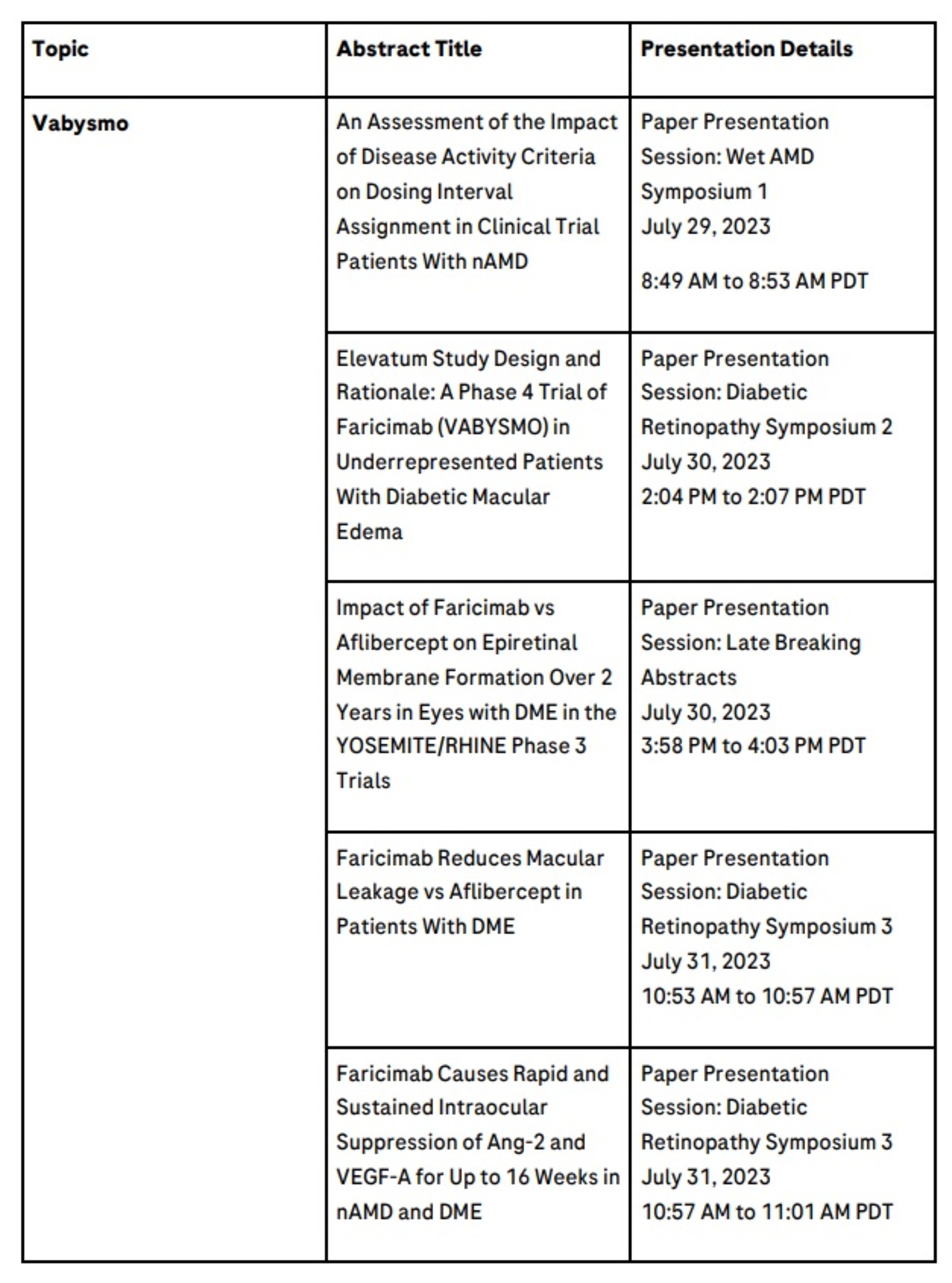
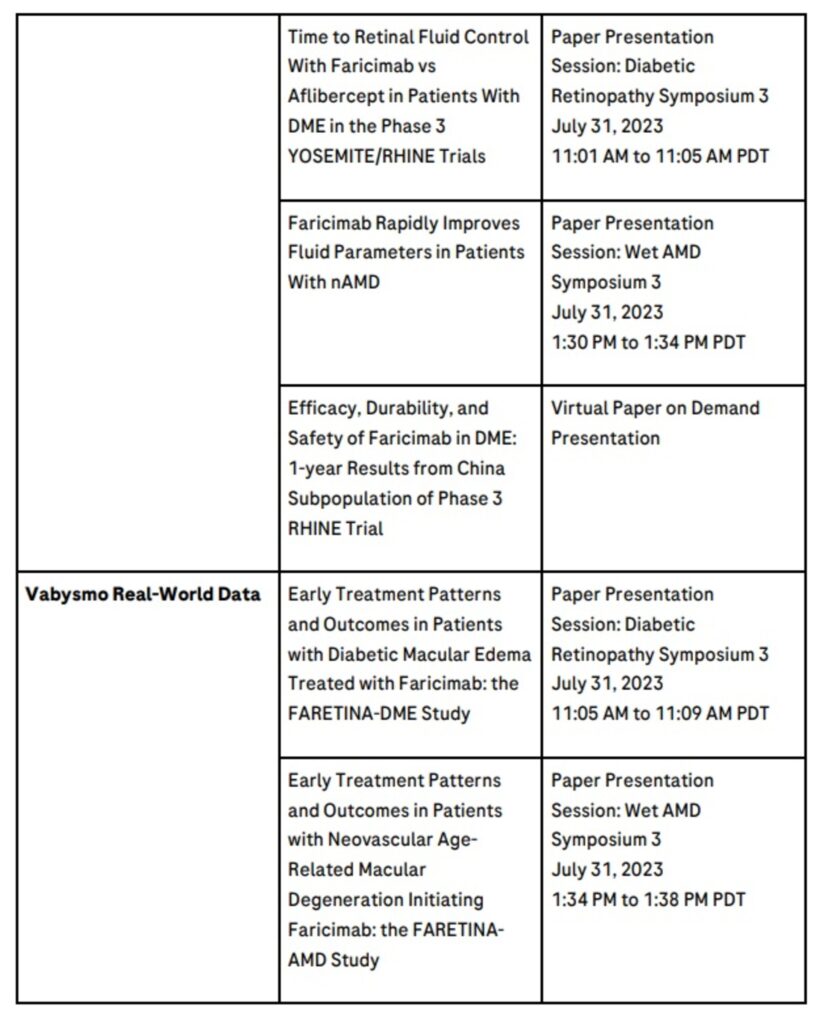
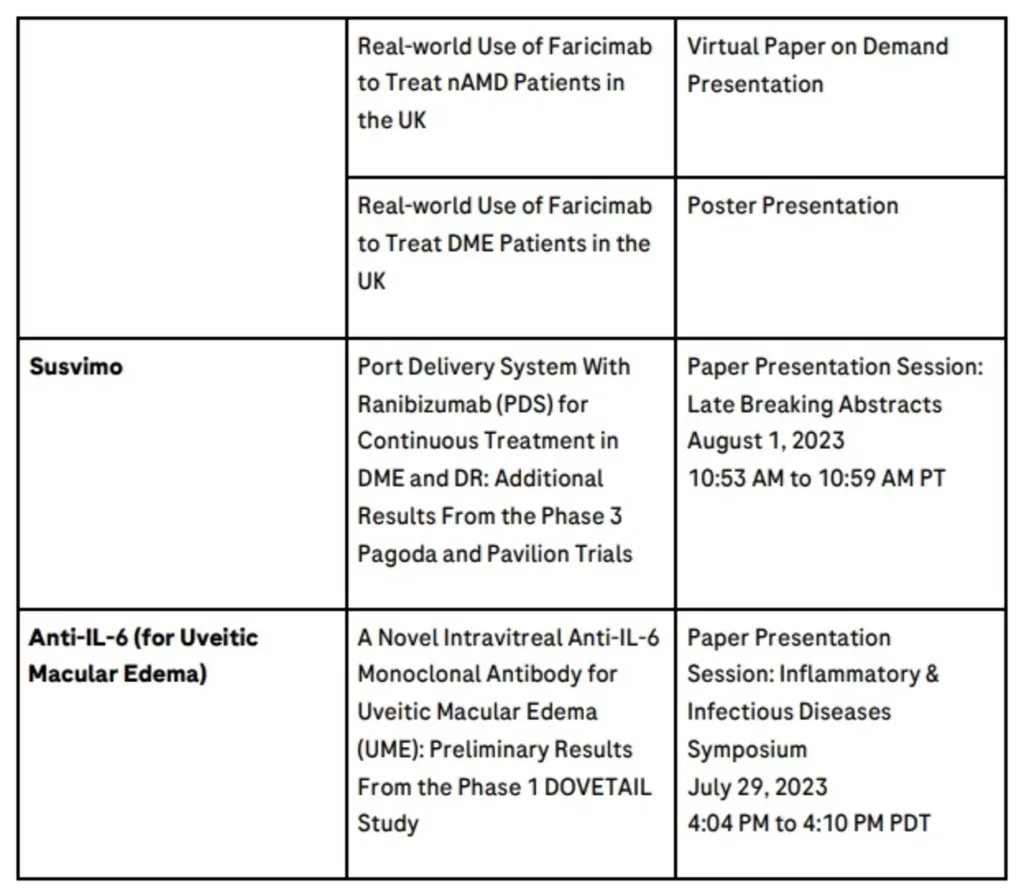
Further information on select Roche abstracts that will be presented at ASRS 2023 can be found in the table below.
Age-related macular degeneration (AMD) is a condition that affects the part of the eye that provides sharp, central vision needed for activities like reading.16 Neovascular or ‘wet’ AMD (nAMD) is an advanced form of the disease that can cause rapid and severe vision loss if left untreated.24,25 It develops when new and abnormal blood vessels grow uncontrolled under the macula, causing swelling, bleeding and/or fibrosis.24 Worldwide, around 20 million people are living with nAMD – the leading cause of vision loss in people over the age of 60 – and the condition will affect even more people around the world as the global population ages.
Affecting around 21 million people globally, diabetic macular edema (DME) is a vision-threatening retinal condition associated with blindness and decreased quality of life when left untreated.19 DME occurs when damaged blood vessels leak into and cause swelling in the macula – the central area of the retina responsible for the sharp vision needed for reading and driving.21,26 The number of people with DME is expected to grow as the prevalence of diabetes increases.
Roche has a robust phase III clinical development programme for Vabysmo® (faricimab). The programme includes AVONELLE-X, an extension study of TENAYA and LUCERNE evaluating the long-term safety and tolerability of Vabysmo in neovascular or ‘wet’ age-related macular degeneration (nAMD), and Rhone-X, an extension study of YOSEMITE and RHINE evaluating the long-term safety and tolerability of Vabysmo in diabetic macular edema (DME).28,29 In addition, Roche is investigating the efficacy and safety of Vabysmo in people with macular edema following retinal vein occlusion in two phase III studies, BALATON and COMINO.30,31 Roche has also initiated several phase IV studies, including the ELEVATUM study of Vabysmo in underrepresented patient populations with DME, the SALWEEN study of Vabysmo in a subpopulation of nAMD highly prevalent in Asia, as well as the VOYAGER study, a global real-world data collection platform.32-34 Roche also supports several other independent studies to further understand retinal conditions with a high unmet need.
Vabysmo® (faricimab) is the first bispecific antibody approved for the eye.13,14 It targets and inhibits two signalling pathways linked to a number of vision-threatening retinal conditions by neutralising angiopoietin-2 (Ang-2) and vascular endothelial growth factor-A (VEGF-A).35,36 Ang-2 and VEGF-A contribute to vision loss by destabilising blood vessels, causing new leaky blood vessels to form and increasing inflammation.35,36 By blocking pathways involving Ang-2 and VEGF-A, Vabysmo is designed to stabilise blood vessels. Vabysmo is approved in over 70 countries around the world, including the United States, Japan, the United Kingdom and in the European Union for people living with neovascular or ‘wet’ age-related macular degeneration and diabetic macular edema.13-15,37,38 Review by other regulatory authorities is ongoing.
Roche is focused on saving people’s eyesight from the leading causes of vision loss through pioneering therapies. Through our innovation in the scientific discovery of new potential drug targets, personalised healthcare, molecular engineering, biomarkers and continuous drug delivery, we strive to design the right therapies for the right patients.
We have the broadest retina pipeline in ophthalmology, which is led by science and informed by insights from people with eye diseases. Our pipeline includes gene therapies and treatments for geographic atrophy and other vision-threatening diseases, including rare and inherited conditions.
Applying our extensive experience, we have already brought breakthrough ophthalmic treatments to people living with vision loss. Susvimo™ (Port Delivery System with ranibizumab) 100 mg/mL for intravitreal use via ocular implant is the first U.S. Food and Drug Administration-approved refillable eye implant for neovascular or ‘wet’ age-related macular degeneration that continuously delivers a customised formulation of ranibizumab over a period of months.39 Vabysmo® (faricimab) is the first bispecific antibody approved for the eye, which targets and inhibits two signalling pathways linked to a number of vision-threatening retinal conditions by neutralising angiopoietin-2 (Ang-2) and vascular endothelial growth factor-A (VEGF-A).13,14,35,36 Lucentis®* (ranibizumab injection) is the first treatment approved to improve vision in people with certain retinal conditions.40
*Lucentis® (ranibizumab injection) was developed by Genentech, a member of the Roche Group. Genentech retains commercial rights in the United States and Novartis has exclusive commercial rights for the rest of the world.
Roche is a global pioneer in pharmaceuticals and diagnostics focused on advancing science to improve people’s lives. The combined strengths of pharmaceuticals and diagnostics under one roof have made Roche the leader in personalised healthcare – a strategy that aims to fit the right treatment to each patient in the best way possible.
Roche is the world’s largest biotech company, with truly differentiated medicines in oncology, immunology, infectious diseases, ophthalmology and diseases of the central nervous system. Roche is also the world leader in in vitro diagnostics and tissue-based cancer diagnostics, and a frontrunner in diabetes management.
Founded in 1896, Roche continues to search for better ways to prevent, diagnose and treat diseases and make a sustainable contribution to society. The company also aims to improve patient access to medical innovations by working with all relevant stakeholders. More than thirty medicines developed by Roche are included in the World Health Organization Model Lists of Essential Medicines, among them life-saving antibiotics, antimalarials and cancer medicines. Moreover, for the twelfth consecutive year, Roche has been recognised as one of the most sustainable companies in the Pharmaceuticals Industry by the Dow Jones Sustainability Indices (DJSI).
The Roche Group, headquartered in Basel, Switzerland, is active in over 100 countries and in 2020 employed more than 100,000 people worldwide. In 2020, Roche invested CHF 12.2 billion in R&D and posted sales of CHF 58.3 billion. Genentech, in the United States, is a wholly owned member of the Roche Group. Roche is the majority shareholder in Chugai Pharmaceutical, Japan
Phase III OCARINA II trial met primary and secondary endpoints
OCREVUS twice a year, 10-minute injection has the potential to further improve the treatment experience and expand OCREVUS usage in MS centres with IV capacity limitations or without IV infrastructure
OCREVUS remains the first and only therapy approved for both RMS and PPMS, and more than 300,000 people have been treated globally
Basel, 13 July 2023 - Roche (SIX: RO, ROG; OTCQX: RHHBY) announced today that the Phase III OCARINA II trial evaluating OCREVUS® (ocrelizumab) as a twice a year 10-minute subcutaneous injection met its primary and secondary endpoints in patients with relapsing forms of MS or primary progressive MS (RMS or PPMS). OCREVUS subcutaneous injection was shown to be non-inferior to OCREVUS given by intravenous infusion (IV), as measured by pharmacokinetics (levels in the blood) over 12 weeks. OCREVUS subcutaneous injection was also comparable with OCREVUS IV in controlling magnetic resonance imaging (MRI) lesion activity in the brain over 12 weeks. The safety profile of OCREVUS subcutaneous injection was consistent with that of OCREVUS IV.
The OCREVUS 10-minute injection is designed to be administered without the need for IV infrastructure so it has the potential to expand the usage of OCREVUS in MS centres without IV infrastructure or those with IV capacity limitations. It also retains the twice-yearly dosing regimen of OCREVUS IV that has shown high persistence and adherence since becoming a standard of care MS treatment.1 This provides an additional delivery option so that the administration of OCREVUS can be matched to the individual needs of patients and healthcare professionals.
“These results give people living with MS the possibility to receive the transformational benefits of OCREVUS in the way best suited to their lives while freeing up time and healthcare resources,” said Levi Garraway, M.D., Ph.D., Roche’s Chief Medical Officer and Head of Global Product Development. “This new subcutaneous injection will allow OCREVUS to be administered in 10 minutes twice a year, helping people living with MS to spend less time in treatment for this disease.’’
Detailed results from the trial will be presented at an upcoming medical meeting and submitted to health authorities around the world. Roche is committed to advancing innovative clinical research programmes to broaden the scientific understanding of MS, further reduce disability progression in RMS and PPMS and improve the treatment experiences for those living with the disease.
OCARINA II is a Phase III, global, multicentre, randomised study evaluating the pharmacokinetics, safety and radiological and clinical effects of the subcutaneous formulation of OCREVUS compared with OCREVUS intravenous (IV) infusion in 236 patients with relapsing MS (RMS) or primary progressive MS (PPMS). The primary endpoint is non-inferiority in serum area under the curve (AUC) from day 1 to 12 weeks after subcutaneous injection compared to IV infusion. Secondary endpoints include maximum serum concentration (Cmax) of OCREVUS, the total number of active, gadolinium-enhancing T1 lesions at 8 and 12 weeks, and new or enlarging T2 lesions at 12 and 24 weeks, as well as safety and immunogenicity outcomes. Exploratory endpoints include patient-reported outcomes.
The investigational subcutaneous formulation combines OCREVUS with Halozyme Therapeutics’ Enhanze® drug delivery technology.
OCREVUS is a humanised monoclonal antibody designed to target CD20-positive B cells, a specific type of immune cell thought to be a key contributor to myelin (nerve cell insulation and support) and axonal (nerve cell) damage. This nerve cell damage can lead to disability in people with MS. Based on preclinical studies, OCREVUS binds to CD20 cell surface proteins expressed on certain B cells, but not on stem cells or plasma cells, suggesting that important functions of the immune system may be preserved.
The Enhanze drug delivery technology is based on a proprietary recombinant human hyaluronidase PH20 (rHuPH20), an enzyme that locally and temporarily degrades hyaluronan – a glycosaminoglycan or chain of natural sugars in the body – in the subcutaneous space. This increases the permeability of the tissue under the skin, allowing space for large molecules like OCREVUS to enter, and enables the subcutaneous formulation to be rapidly dispersed and absorbed into the bloodstream.
OCREVUS IV is the first and only therapy approved for both RMS (including relapsing-remitting MS [RRMS] and active, or relapsing secondary progressive MS [SPMS], in addition to clinically isolated syndrome [CIS] in the U.S.) and PPMS. OCREVUS IV is administered by intravenous infusion every six months. The initial dose is given as two 300 mg infusions given two weeks apart. Subsequent doses are given as single 600 mg infusions.
Multiple sclerosis (MS) is a chronic disease that affects more than 2.8 million people worldwide. MS occurs when the immune system abnormally attacks the insulation and support around nerve cells (myelin sheath) in the central nervous system (brain, spinal cord and optic nerves), causing inflammation and consequent damage. This damage can cause a wide range of symptoms, including muscle weakness, fatigue and difficulty seeing, and may eventually lead to disability. Most people with MS experience their first symptom between 20 and 40 years of age, making the disease the leading cause of non-traumatic disability in younger adults.
People with all forms of MS experience disease progression – permanent loss of nerve cells in the central nervous system – from the beginning of their disease even if their clinical symptoms aren’t apparent or don’t appear to be getting worse. Delays in diagnosis and treatment can negatively impact people with MS, in terms of their physical and mental health, and contribute to the negative financial impact on the individual and society. An important goal of treating MS is to slow, stop and ideally prevent disease activity and progression as early as possible.
Relapsing-remitting MS (RRMS) is the most common form of the disease and is characterised by episodes of new or worsening signs or symptoms (relapses) followed by periods of recovery. Approximately 85% of people with MS are initially diagnosed with RRMS. The majority of people who are diagnosed with RRMS will eventually transition to secondary progressive MS (SPMS), in which they experience steadily worsening disability over time. Relapsing forms of MS (RMS) include people with RRMS and people with SPMS who continue to experience relapses. Primary progressive MS (PPMS) is a debilitating form of the disease marked by steadily worsening symptoms but typically without distinct relapses or periods of remission. Approximately 15% of people with
Neuroscience is a major focus of research and development at Roche. Our goal is to pursue ground-breaking science to develop new treatments that help improve the lives of people with chronic and potentially devastating diseases. Roche and Genentech are investigating more than a dozen medicines for neurological disorders, including MS, spinal muscular atrophy, neuromyelitis optica spectrum disorder, Alzheimer’s disease, Huntington’s disease, Parkinson’s disease, acute ischemic stroke, Duchenne muscular dystrophy and Angelman syndrome. Together with our partners, we are committed to pushing the boundaries of scientific understanding to solve some of the most difficult challenges in neuroscience today.
Roche is a global pioneer in pharmaceuticals and diagnostics focused on advancing science to improve people’s lives. The combined strengths of pharmaceuticals and diagnostics under one roof have made Roche the leader in personalised healthcare – a strategy that aims to fit the right treatment to each patient in the best way possible.
Roche is the world’s largest biotech company, with truly differentiated medicines in oncology, immunology, infectious diseases, ophthalmology and diseases of the central nervous system. Roche is also the world leader in in vitro diagnostics and tissue-based cancer diagnostics, and a frontrunner in diabetes management.
Founded in 1896, Roche continues to search for better ways to prevent, diagnose and treat diseases and make a sustainable contribution to society. The company also aims to improve patient access to medical innovations by working with all relevant stakeholders. More than thirty medicines developed by Roche are included in the World Health Organization Model Lists of Essential Medicines, among them life-saving antibiotics, antimalarials and cancer medicines. Moreover, for the twelfth consecutive year, Roche has been recognised as one of the most sustainable companies in the Pharmaceuticals Industry by the Dow Jones Sustainability Indices (DJSI).
The Roche Group, headquartered in Basel, Switzerland, is active in over 100 countries and in 2020 employed more than 100,000 people worldwide. In 2020, Roche invested CHF 12.2 billion in R&D and posted sales of CHF 58.3 billion. Genentech, in the United States, is a wholly owned member of the Roche Group. Roche is the majority shareholder in Chugai Pharmaceutical, Japan
Data from ongoing FIREFISH study confirm long-term efficacy and safety profile of Evrysdi in children with Type 1 SMA
Ninety-one percent of children were alive at month 48
More than 95% maintained the ability to swallow - without treatment they would have required feeding support and majority would have died within 2 years
Evrysdi is now approved in 99 countries with more than 8,500 patients treated globally
Basel, 30 June 2023 - Roche (SIX: RO, ROG; OTCQX: RHHBY) announced today new long-term data for Evrysdi® (risdiplam) from the open-label extension (n=50) of the pivotal FIREFISH study, reinforcing its sustained efficacy and safety profile in children with Type 1 spinal muscular atrophy (SMA). FIREFISH is a two-part study in babies aged 1-7 months at the time of enrolment. After four years of treatment with Evrysdi, many of the babies, now young children, continued to improve their ability to sit, stand and walk without support. All the Evrysdi-treated children who were alive at the time of the primary analysis were still alive at month 48.
Additionally, the majority of infants maintained their ability to feed by mouth and swallow up to month 48. Motor function was assessed by the Gross Motor Scale of the Bayley Scales of Infant and Toddler Development Third Edition (BSID-III) and Hammersmith Infant Neurological Examination 2 (HINE-2) and abilities were either maintained or improved over four years of Evrysdi treatment. Without treatment, children with Type 1 SMA are not expected to live past two years of age and are never able to sit without support. These data were presented at the Cure SMA Research & Clinical Care Meeting, June 28 – 30, 2023.
Among the infants treated with Evrysdi (n=58), 37 were able to sit without support for at least 5 seconds at month 48, compared to 35 at month 24 (BSID-III). In addition, 36 infants were able to sit without support for at least 30 seconds at month 48, up from 23 infants at month 24. Between month 24 and month 48, three infants gained the ability to stand alone and one infant gained the ability to walk alone.
“Evrysdi’s oral route of administration allows the medicine to be distributed throughout the body, systemically increasing SMN protein production, the lack of which is the underlying cause of SMA,” said Dr Giovanni Baranello, UCL Great Ormond Street Institute of Child Health & Great Ormond Street Hospital, London, UK. “This has shown to help in delivering a meaningful impact on important functions of daily living including motor milestones, feeding and swallowing, which were maintained or improved in this long-term study, while also offering a tolerable safety profile.”
Evrysdi is the first and only small molecule pre-mRNA splicing modifier that targets survival motor neuron-2 (SMN2) for the treatment of SMA, and can be administered at home in liquid form by mouth or by feeding tube.
“The independence that comes with sitting, standing and walking is transformational for children with SMA, and their families, and we are very encouraged by how these skills increased over four years of Evrysdi treatment for many children in this study,” said Levi Garraway, M.D., Ph. D., Chief Medical Officer and Head of Global Product Development. “Nine out of 10 patients in our studies remain on Evrysdi long-term and these data underscore its importance as an option for people with SMA across a broad range of age and disease types.”
No treatment-related adverse events (AEs) led to treatment discontinuation or withdrawal from the study, and the rate of AEs decreased by 71% between the first and fourth 12 month periods. The most common AEs were pyrexia (62%), upper respiratory tract infection (62%) and pneumonia (48%). The rate of hospitalisations decreased over the study period.
Roche leads the clinical development of Evrysdi as part of a collaboration with the SMA Foundation and PTC Therapeutics.
Evrysdi is a survival motor neuron 2 (SMN2) splicing modifier designed to treat SMA caused by mutations in chromosome 5q that lead to survival motor neuron (SMN) protein deficiency. Evrysdi is administered daily at home in liquid form by mouth or by feeding tube.
Evrysdi is designed to treat SMA by increasing and sustaining the production of SMN protein in the central nervous system (CNS) and peripheral tissues. SMN protein is found throughout the body and is critical for maintaining healthy motor neurons and other functions such as swallowing, speaking, breathing and movement.
Evrysdi was granted PRIME designation by the European Medicines Agency (EMA) in 2018 and Orphan Drug Designation by the U.S. Food and Drug Administration in 2017. In 2021, Evrysdi was awarded Drug Discovery of the Year by the British Pharmacological Society as well as the Society for Medicines Research award for Drug Discovery. Evrysdi is currently approved in 99 countries and the dossier is under review in a further 18 countries.
Evrysdi is currently being evaluated in five multicentre trials in people with SMA:
● FIREFISH (NCT02913482) – an open-label, two-part pivotal clinical trial in infants with Type 1 SMA. The study met its primary endpoint.
● SUNFISH (NCT02908685) – a two-part, double-blind, placebo-controlled pivotal study in people aged 2-25 years with Types 2 or 3 SMA. The study met its primary endpoint.
● JEWELFISH (NCT03032172) – an open-label exploratory trial designed to assess the safety, tolerability, pharmacokinetics and pharmacodynamics in people with SMA aged 6 months to 60 years who received other investigational or approved SMA therapies for at least 90 days prior to receiving Evrysdi. The study has completed recruitment (n=174).
● RAINBOWFISH (NCT03779334) – an open-label, single-arm, multicentre study, investigating the efficacy, safety, pharmacokinetics, and pharmacodynamics of Evrysdi in babies (~n=25), from birth to six weeks of age (at first dose) with genetically diagnosed SMA who are not yet presenting with symptoms. The study is fully enrolled.
● MANATEE (NCT05115110) – a global phase 2/3 clinical study to evaluate the safety and efficacy of GYM329 (RG6237), an anti-myostatin molecule targeting muscle growth, in combination with Evrysdi for the treatment of SMA in patients 2-10 years of age. The FDA Office of Orphan Products Development granted GYM329 Orphan Drug Designation for the treatment of patients with SMA in December 2021. The study is currently recruiting.
Spinal Muscular Atrophy (SMA) is a severe, progressive neuromuscular disease that can be fatal. It affects approximately one in 10,000 babies and is among the leading genetic cause of infant mortality. SMA is caused by a mutation of the survival motor neuron 1 (SMN1) gene, which leads to a deficiency of SMN protein. This protein is found throughout the body and is essential to the function of nerves that control muscles and other functions such as swallowing, speaking, breathing and movement.
Without it, nerve cells cannot function correctly, leading to muscle weakness over time. Depending on the type of SMA, an individual’s physical strength and their ability to walk, eat, speak or breathe can be significantly diminished or lost.Spinal Muscular Atrophy (SMA) is a severe, progressive neuromuscular disease that can be fatal. It affects approximately one in 10,000 babies and is the leading genetic cause of infant mortality. SMA is caused by a mutation of the survival motor neuron 1 (SMN1) gene, which leads to a deficiency of SMN protein. This protein is found throughout the body and is essential to the function of nerves that control muscles and other functions such as swallowing, speaking, breathing and movement.
Without it, nerve cells cannot function correctly, leading to muscle weakness over time. Depending on the type of SMA, an individual’s physical strength and their ability to walk, eat, speak or breathe can be significantly diminished or lost.
Neuroscience is a major focus of research and development at Roche. Our goal is to pursue groundbreaking science to develop new treatments that help improve the lives of people with chronic and potentially devastating diseases.
Roche is investigating more than a dozen medicines for neurological disorders, including multiple sclerosis, spinal muscular atrophy, neuromyelitis optica spectrum disorder, Alzheimer’s disease, Huntington’s disease, Parkinson’s disease and Duchenne muscular dystrophy. Together with our partners, we are committed to pushing the boundaries of scientific understanding to solve some of the most difficult challenges in neuroscience today.sel, 02 June 2021 - Roche (SIX: RO, ROG; OTCQX: RHHBY) today announced that
Roche is a global pioneer in pharmaceuticals and diagnostics focused on advancing science to improve people’s lives. The combined strengths of pharmaceuticals and diagnostics under one roof have made Roche the leader in personalised healthcare – a strategy that aims to fit the right treatment to each patient in the best way possible.
Roche is the world’s largest biotech company, with truly differentiated medicines in oncology, immunology, infectious diseases, ophthalmology and diseases of the central nervous system. Roche is also the world leader in in vitro diagnostics and tissue-based cancer diagnostics, and a frontrunner in diabetes management.
Founded in 1896, Roche continues to search for better ways to prevent, diagnose and treat diseases and make a sustainable contribution to society. The company also aims to improve patient access to medical innovations by working with all relevant stakeholders. More than thirty medicines developed by Roche are included in the World Health Organization Model Lists of Essential Medicines, among them life-saving antibiotics, antimalarials and cancer medicines. Moreover, for the twelfth consecutive year, Roche has been recognised as one of the most sustainable companies in the Pharmaceuticals Industry by the Dow Jones Sustainability Indices (DJSI).
The Roche Group, headquartered in Basel, Switzerland, is active in over 100 countries and in 2020 employed more than 100,000 people worldwide. In 2020, Roche invested CHF 12.2 billion in R&D and posted sales of CHF 58.3 billion. Genentech, in the United States, is a wholly owned member of the Roche Group. Roche is the majority shareholder in Chugai Pharmaceutical, Japan
Positive recommendation is based on interim data from ongoing RAINBOWFISH trial which showed majority of Evrysdi-treated babies were able to stand and walk within timeframes typical of healthy babies by 12 months’ treatment
If approved by the European Commission, Evrysdi will be available to treat people of all ages with SMA in the European Union, including babies from birth
Evrysdi is now approved in 100 countries with more than 8,500 patients treated globally
Basel, 21 July 2023 - Roche (SIX: RO, ROG; OTCQX: RHHBY) announced today that the EU Committee for Medicinal Products for Human Use (CHMP) has adopted a positive opinion for the extension of the Evrysdi® (risdiplam) European Union (EU) marketing authorisation, which would include infants with genetically confirmed diagnosis of SMA Type 1, Type 2 or Type 3 or with one to four SMN2 copies, including from birth to below two months.1 The recommendation is based on an interim analysis from the ongoing RAINBOWFISH trial in pre-symptomatic babies with Type 1 SMA from birth to six weeks. In SMA, early treatment is critical to counteract ongoing and irreversible loss of motor neurons.3,4,5 A final decision regarding the approval is expected from the European Commission later this year.
“Treating babies with SMA early helps them to carry out daily activities such as sitting, standing, and walking,” said Levi Garraway, M.D., Ph. D., Chief Medical Officer and Head of Global Product Development. “This CHMP recommendation is an important step towards treating babies from birth with an oral formulation, and is a testament to Evrysdi’s impact on preserving precious muscle function and improving the daily lives of people with SMA.”
The CHMP decision is based on the RAINBOWFISH interim analysis (n=18), which included 6 babies with 2 or 3 copies of the SMN2 gene who completed at least one year of study assessments. Of these, 100% (6/6) were able to sit after one year of treatment with Evrysdi, 67% (4/6) could stand and 50% (3/6) could walk independently. All infants were alive at 12 months without permanent ventilation.
The RAINBOWFISH data show that the safety profile of Evrysdi in pre-symptomatic babies is consistent with the safety profile seen in previous trials with symptomatic SMA patients. The most common adverse reactions were fever, diarrhoea, rash, upper respiratory tract infection (including nasopharyngitis, rhinitis), lower respiratory tract infection (including pneumonia, bronchitis), constipation, vomiting and cough.
Evrysdi is currently approved in the EU for the treatment of patients aged two months or older.
Roche is currently investigating Evrysdi in combination with an anti-myostatin molecule targeting muscle growth in the Ph II/III trial MANATEE for the treatment of SMA.
Evrysdi is a survival motor neuron 2 (SMN2) splicing modifier designed to treat SMA caused by mutations in chromosome 5q that lead to survival motor neuron (SMN) protein deficiency. Evrysdi is administered daily at home in liquid form by mouth or by feeding tube.
Evrysdi is designed to treat SMA by increasing and sustaining the production of SMN protein in the central nervous system (CNS) and peripheral tissues. SMN protein is found throughout the body and is critical for maintaining healthy motor neurons and other functions such as swallowing, speaking, breathing and movement.
Evrysdi was granted PRIME designation by the European Medicines Agency (EMA) in 2018 and Orphan Drug Designation by the U.S. Food and Drug Administration in 2017. In 2021, Evrysdi was awarded Drug Discovery of the Year by the British Pharmacological Society as well as the Society for Medicines Research award for Drug Discovery. Evrysdi is currently approved in 100 countries and the dossier is under review in a further 18 countries.
Evrysdi is currently being evaluated in five multicentre trials in people with SMA:
FIREFISH (NCT02913482) – an open-label, two-part pivotal clinical trial in infants with Type 1 SMA. The study met its primary endpoint.
SUNFISH (NCT02908685) – a two-part, double-blind, placebo-controlled pivotal study in people aged 2-25 years with Types 2 or 3 SMA. The study met its primary endpoint.
JEWELFISH (NCT03032172) – an open-label exploratory trial designed to assess the safety, tolerability, pharmacokinetics and pharmacodynamics in people with SMA aged 6 months to 60 years who received other investigational or approved SMA therapies for at least 90 days prior to receiving Evrysdi. The study has completed recruitment (n=174).
RAINBOWFISH (NCT03779334) – an open-label, single-arm, multicentre study, investigating the efficacy, safety, pharmacokinetics, and pharmacodynamics of Evrysdi in babies (~n=25), from birth to six weeks of age (at first dose) with genetically diagnosed SMA who are not yet presenting with symptoms. The study is fully enrolled.
MANATEE (NCT05115110) – a global phase 2/3 clinical study to evaluate the safety and efficacy of GYM329 (RG6237), an anti-myostatin molecule targeting muscle growth, in combination with Evrysdi for the treatment of SMA in patients 2-10 years of age. The FDA Office of Orphan Products Development granted GYM329 Orphan Drug Designation for the treatment of patients with SMA in December 2021. The study is currently recruiting. In addition to bringing Evrysdi to people around the world, Roche also leads its clinical development as part of a collaboration with the SMA Foundation and PTC Therapeutics.
SMA is a severe, progressive neuromuscular disease that can be fatal. It affects approximately one in 10,000 babies and is the leading genetic cause of infant mortality. SMA is caused by a mutation of the survival motor neuron 1 (SMN1) gene, which leads to a deficiency of SMN protein. This protein is found throughout the body and is essential to the function of nerves that control muscles and movement. Without it, nerve cells cannot function correctly, leading to muscle weakness over time. Depending on the type of SMA, an individual’s physical strength and their ability to walk, eat or breathe can be significantly diminished or lost.
Neuroscience is a major focus of research and development at Roche. Our goal is to pursue groundbreaking science to develop new treatments that help improve the lives of people with chronic and potentially devastating diseases.
Roche is investigating more than a dozen medicines for neurological disorders, including multiple sclerosis, spinal muscular atrophy, neuromyelitis optica spectrum disorder, Alzheimer’s disease, Huntington’s disease, Parkinson’s disease and Duchenne muscular dystrophy. Together with our partners, we are committed to pushing the boundaries of scientific understanding to solve some of the most difficult challenges in neuroscience today.
Roche is a global pioneer in pharmaceuticals and diagnostics focused on advancing science to improve people’s lives. The combined strengths of pharmaceuticals and diagnostics under one roof have made Roche the leader in personalised healthcare – a strategy that aims to fit the right treatment to each patient in the best way possible.
Roche is the world’s largest biotech company, with truly differentiated medicines in oncology, immunology, infectious diseases, ophthalmology and diseases of the central nervous system. Roche is also the world leader in in vitro diagnostics and tissue-based cancer diagnostics, and a frontrunner in diabetes management.
Founded in 1896, Roche continues to search for better ways to prevent, diagnose and treat diseases and make a sustainable contribution to society. The company also aims to improve patient access to medical innovations by working with all relevant stakeholders. More than thirty medicines developed by Roche are included in the World Health Organization Model Lists of Essential Medicines, among them life-saving antibiotics, antimalarials and cancer medicines. Moreover, for the twelfth consecutive year, Roche has been recognised as one of the most sustainable companies in the Pharmaceuticals Industry by the Dow Jones Sustainability Indices (DJSI).
The Roche Group, headquartered in Basel, Switzerland, is active in over 100 countries and in 2020 employed more than 100,000 people worldwide. In 2020, Roche invested CHF 12.2 billion in R&D and posted sales of CHF 58.3 billion. Genentech, in the United States, is a wholly owned member of the Roche Group. Roche is the majority shareholder in Chugai Pharmaceutical, Japan
Pivotal study showed durable responses, with a 56% overall response rate, a 43% complete response (remission) rate and a median duration of response of 1.5 years (18.4 months)
Given over a fixed period of time, Columvi provides patients with a treatment end date and potential time off treatment
Columvi is part of Roche's industry-leading portfolio of T-cell engaging bispecific antibodies in non-Hodgkin lymphoma, which also includes the recently approved Lunsumio to treat follicular lymphoma
Basel, 16 June 2023 – Roche (SIX: RO, ROG; OTCQX: RHHBY) announced today that the U.S. Food and Drug Administration (FDA) has approved Columvi® (glofitamab-gxbm) for the treatment of adult patients with relapsed or refractory (R/R) diffuse large B-cell lymphoma (DLBCL) not otherwise specified or large B-cell lymphoma (LBCL) arising from follicular lymphoma, after two or more lines of systemic therapy. This indication is approved under accelerated approval based on response rate and durability of response in the phase I/II NP30179 study. Continued approval for this indication may be contingent upon verification and description of clinical benefit in a confirmatory trial. Columvi will be available in the US in the coming weeks.
“People with diffuse large B-cell lymphoma who have gone through multiple lines of therapy have a poor prognosis and desperately need additional treatment options,” said Levi Garraway, M.D., Ph.D., Roche’s Chief Medical Officer and Head of Global Product Development. “As an off-the-shelf, fixed-duration treatment providing durable response rates, we believe Columvi could change the way this aggressive lymphoma is treated, reinforcing our dedication to bringing innovative treatment options to people with critical unmet needs.”
DLBCL is an aggressive, hard-to-treat disease and is the most common form of non-Hodgkin lymphoma in the US.2 While many people with DLBCL are responsive to treatment, the majority of those who relapse or are refractory to subsequent treatments have poor outcomes.3,4
“Patients with relapsed or refractory diffuse large B-cell lymphoma may experience rapid progression of their cancer and often urgently need an effective treatment option that can be administered without delay,” said Krish Patel, M.D., Director of the Lymphoma Program at the Swedish Cancer Institute in Seattle and investigator of the Columvi phase I/II NP30179 study. “Experience from clinical trials demonstrates that Columvi can provide patients with relapsed or refractory diffuse large B-cell lymphoma a chance for complete remission with a fixed duration immunotherapy and that such remissions can potentially be sustained after the end of their treatment.”
The FDA accelerated approval is based on positive results from the phase I/II NP30179 study of Columvi given as a fixed course for 8.5 months in 132 patients with DLBCL who had relapsed or were refractory to prior therapies, including about one-third (30%) who had received prior CAR T-cell therapy. Additionally, 83% were refractory to their most recent therapy. Results showed patients treated with fixed-duration Columvi achieved durable remission, with 56% of patients achieving an overall response (OR; 74/132 [95% confidence interval (CI): 47-65]) and 43% of patients achieving a complete response (CR; 57/132 [95% CI: 35-52]). Over two-thirds of those who responded continued to respond for at least nine months (68.5% [95% CI: 56.7-80.3]). The OR rate is the combination of CR rate (a disappearance of all signs and symptoms of cancer) and partial response rate (a decrease in the amount of cancer in the body). The median duration of response was 1.5 years (18.4 months [95% CI: 11.4-not estimable]).1 Data from the NP30179 study were recently published in the New England Journal of Medicine.
Among 145 patients who received Columvi in the study, the most common adverse events (AEs) were cytokine release syndrome (CRS; 70%), which may be serious or life-threatening, musculoskeletal pain (21%), fatigue (20%) and rash (20%). CRS was generally low grade (52% experienced Grade 1, and 14% experienced Grade 2). 1
Columvi is the first and only CD20xCD3 T-cell engaging bispecific antibody for the treatment of R/R DLBCL that is given for a defined period of time, unlike treat-to-progression approaches where treatment is given indefinitely until the cancer progresses or the therapy cannot be tolerated, whichever occurs first. Designed to be completed in approximately 8.5 months, Columvi offers people with R/R DLBCL a target end date for their course of treatment and the possibility of a treatment-free period. Additionally, Columvi is a chemotherapy-free treatment option that is off-the-shelf and ready for infusion.
Columvi is part of Roche’s broad and industry-leading CD20xCD3 T-cell-engaging bispecific antibody clinical development programme. This includes the phase III STARGLO study evaluating Columvi in combination with gemcitabine and oxaliplatin (GemOx) versus MabThera®/Rituxan® (rituximab) in combination with GemOx in patients with DLBCL who have been treated with one or more previous therapies and are ineligible for autologous stem cell transplant. Roche’s haematology bispecific antibody portfolio also includes Lunsumio® (mosunetuzumab), which was granted accelerated approval by the FDA in December 2022 for the treatment of adult patients with R/R follicular lymphoma (FL) after two or more lines of systemic therapy. Roche is exploring the potential of both Columvi and Lunsumio as monotherapies and in combination with other therapies, including Polivy® (polatuzumab vedotin), in earlier lines of treatment with the goal of providing patients with long-lasting outcomes. This robust development programme includes two phase III studies: CELESTIMO, investigating Lunsumio plus lenalidomide in second line plus (2L+) FL, and SUNMO, investigating Lunsumio plus Polivy in 2L+ DLBCL. Columvi received its first worldwide approval in Canada, and the European Medicines Agency’s Committee for Medicinal Products for Human Use recently granted a positive opinion recommending its approval.
Columvi is a CD20xCD3 T-cell-engaging bispecific antibody designed to target CD3 on the surface of T-cells and CD20 on the surface of B-cells. Columvi was designed with a novel 2:1 structural format. This T-cell-engaging bispecific antibody is engineered to have one region that binds to CD3, a protein on T-cells, a type of immune cell, and two regions that bind to CD20, a protein on B-cells, which can be healthy or malignant. This dual-targeting brings the T-cell in close proximity to the B-cell, activating the release of cancer cell-killing proteins from the T-cell. A clinical development programme for Columvi is ongoing, investigating the molecule as a monotherapy and in combination with other medicines for the treatment of people with B-cell non-Hodgkin lymphomas, including diffuse large B-cell lymphoma and other blood cancers.
The NP30179 study [NCT03075696] is a phase I/II, multicentre, open-label, dose-escalation and expansion study evaluating the safety, efficacy and pharmacokinetics of Columvi® (glofitamab-gxbm) in people with relapsed or refractory diffuse large B-cell lymphoma. Outcome measures include complete response rate by an independent review committee (primary endpoint), overall response rate, duration of response, progression-free survival, safety, and tolerability (secondary endpoints).
DLBCL is the most common form of non-Hodgkin lymphoma (NHL), accounting for about one in three cases of NHL.2 DLBCL is an aggressive (fast-growing) type of NHL.2 While it is generally responsive to treatment in the frontline, as many as 40% of people will relapse or have refractory disease, at which time salvage therapy options are limited and survival is short.3,4 Improving treatments earlier in the course of the disease and providing needed alternative options could help to improve long-term outcomes. Approximately 160,000 people worldwide are estimated to be diagnosed with DLBCL each year.
Roche has been developing medicines for people with malignant and non-malignant blood diseases for more than 20 years; our experience and knowledge in this therapeutic area runs deep. Today, we are investing more than ever in our effort to bring innovative treatment options to patients across a wide range of haematologic diseases. Our approved medicines include MabThera®/Rituxan® (rituximab), Gazyva®/Gazyvaro® (obinutuzumab), Polivy® (polatuzumab vedotin), Venclexta®/Venclyxto® (venetoclax) in collaboration with AbbVie, Hemlibra® (emicizumab), Lunsumio® (mosunetuzumab) and Columvi® (glofitamab). Our pipeline of investigational haematology medicines includes a T-cell-engaging bispecific antibody cevostamab, targeting both FcRH5 and CD3; Tecentriq® (atezolizumab), a monoclonal antibody designed to bind with PD-L1 and crovalimab, an anti-C5 antibody engineered to optimise complement inhibition. Our scientific expertise, combined with the breadth of our portfolio and pipeline, also provides a unique opportunity to develop combination regimens that aim to improve the lives of patients even further.
Roche is a global pioneer in pharmaceuticals and diagnostics focused on advancing science to improve people’s lives. The combined strengths of pharmaceuticals and diagnostics under one roof have made Roche the leader in personalised healthcare – a strategy that aims to fit the right treatment to each patient in the best way possible.
Roche is the world’s largest biotech company, with truly differentiated medicines in oncology, immunology, infectious diseases, ophthalmology and diseases of the central nervous system. Roche is also the world leader in in vitro diagnostics and tissue-based cancer diagnostics, and a frontrunner in diabetes management.
Founded in 1896, Roche continues to search for better ways to prevent, diagnose and treat diseases and make a sustainable contribution to society. The company also aims to improve patient access to medical innovations by working with all relevant stakeholders. More than thirty medicines developed by Roche are included in the World Health Organization Model Lists of Essential Medicines, among them life-saving antibiotics, antimalarials and cancer medicines. Moreover, for the twelfth consecutive year, Roche has been recognised as one of the most sustainable companies in the Pharmaceuticals Industry by the Dow Jones Sustainability Indices (DJSI).
The Roche Group, headquartered in Basel, Switzerland, is active in over 100 countries and in 2020 employed more than 100,000 people worldwide. In 2020, Roche invested CHF 12.2 billion in R&D and posted sales of CHF 58.3 billion. Genentech, in the United States, is a wholly owned member of the Roche Group. Roche is the majority shareholder in Chugai Pharmaceutical, Japan